Kazakhstan and China are preparing a second NPP; both stations are planned to be commissioned by 2035
Read more
Podrobno.uz [uz]
podrobno.uz

Kazakhstan and China are preparing a second NPP; both stations are planned to be commissioned by 2035

Kazakhstan is negotiating with the Chinese side regarding the construction of a second nuclear power plant. The project, named 'Moyinkum,' is planned to be implemented with the assistance of the China National Nuclear Corporation (CNNC). Meanwhile, the first NPP in the country will be built with the participation of Russia.

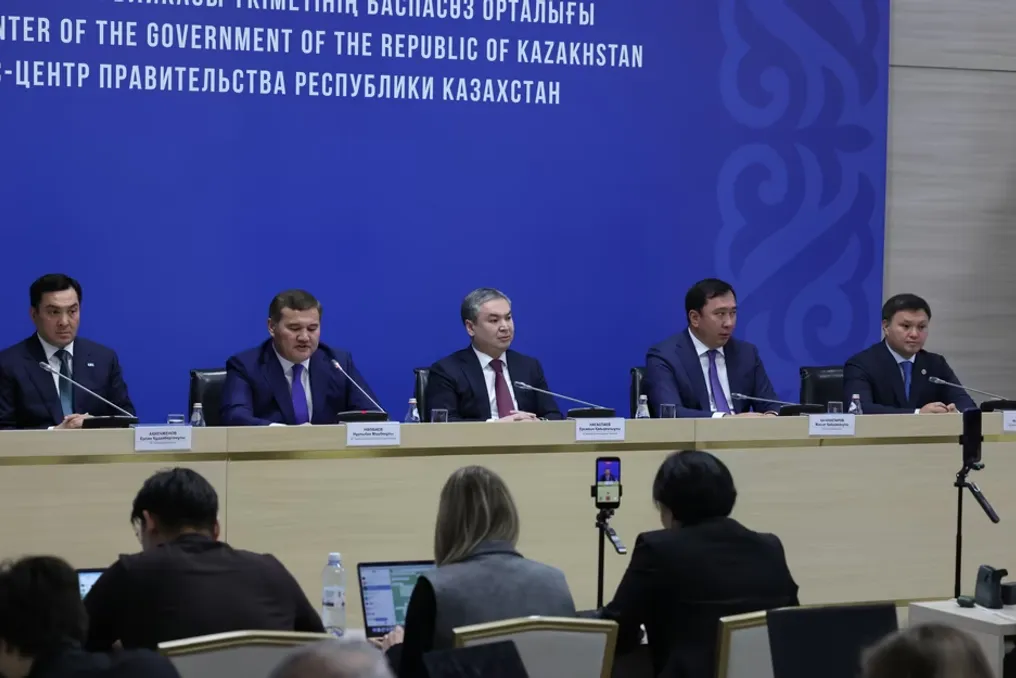
The Minister of Energy of Kazakhstan, Yerlan Akkenzhenov, reported on the progress of the project on November 4. He specified that the parties are currently agreeing on the key aspects of the proposed deal, including construction timelines. Kazakhstan aims to complete the construction of both nuclear power plants by 2035.

The second station is intended to be located on the shore of Lake Balkhash, in the Zhambyl district of the Almaty region. Previously, the Kazakh Atomic Energy Agency informed that CNNC would lead the consortium responsible for building this NPP, but the final terms of the project are still under development.

The first nuclear power plant, named 'Balkhash,' is planned to be built with the involvement of a Russian consortium led by Rosatom.

Additionally, it has become known that Uzbekistan is studying the possibility of building a second and third nuclear power plants. President Shavkat Mirziyoyev intends to discuss the issue of building a second NPP with potential investors and new partners.

The first nuclear project in Uzbekistan is being implemented in the Farish district of the Jizzakh region. On June 4, the presidents of Uzbekistan and Russia, Shavkat Mirziyoyev and Vladimir Putin, began the construction of the first unit of the integrated NPP via video conference, during which the 'first concrete' was poured into the foundation of the future station.

Similar stories

Alexey Likhachyov stated that Uzbekistan will continue to develop nuclear energy after four reactors
Read more
nuz.uz

Alexey Likhachyov stated that Uzbekistan will continue to develop nuclear energy after four reactors

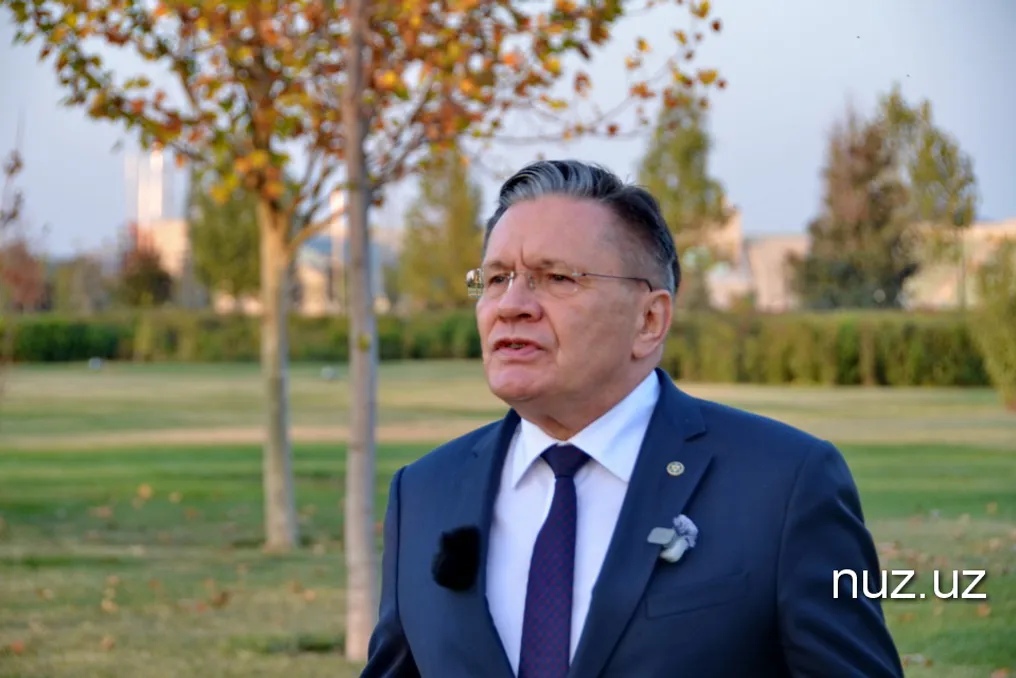
During his visit to Uzbekistan, Rosatom head Alexey Likhachyov held a meeting with President Shavkat Mirziyoyev. He also inspected the construction site of the NPP in Jizzakh region and the Central Asian regional youth nuclear platform located at the Tashkent branch of NUPI MEPhI. Before returning home, Alexey Likhachyov gave an interview to foreign and Tashkent journalists.

Responding to questions about Uzbekistan's plans for building the second and third NPPs, Likhachyov noted that the meeting took place against the backdrop of active construction of all four units. He emphasized that the project in Uzbekistan is outstanding because two gigawatt facilities and two small-power reactors are being built simultaneously. He paid special attention to the financial scheme, which includes an international financial institution, as well as the fact that Atomgrad is developing in parallel with modern infrastructure, education, and medicine.

Likhachyov stated that Uzbekistan will not be limited to four reactors but will move forward, and Rosatom is ready to participate in this. He added that the choice of partners remains with the customer, and Russia is not afraid of competition, as serial production helps reduce costs and increase competitiveness.

Significant work is underway to train qualified personnel, confirmed by the establishment of the Central Asian regional youth nuclear platform at the Tashkent branch of MEPhI. The first specialists for small NPPs in Uzbekistan should be hired next year, marking the beginning of a long-term mutually beneficial partnership between Russia and Uzbekistan.

Regarding the progress at the NPP in Jizzakh region, Likhachyov reported that the process is active. He noted the significant role of the local subcontractor, which allows the level of competence localization to reach 40%, which is beneficial both economically and in terms of personnel stability. Specialists from Belarus, and later from Uzbekistan, will be able to participate in other Rosatom projects in third countries. This year, the completion of the concrete pouring of the foundation slab for the reactor department of the small blocks is planned, after which the construction of control, reactor, and machine halls will begin. The reactor body for the small station weighing over 200 tons is already being manufactured, while the customer's controllers are present at all stages of production abroad.

Next year, the completion of surveys and design for the large station, as well as the transition to full-scale construction, is planned. The number of personnel at the site will double, reaching a peak of 12–13 thousand people. About 350 people are studying at the Tashkent branch of MEPhI, and approximately 900 at universities in Russia, with all construction participants working in coordination.

Likhachyov considers personnel training a critically important element in the nuclear industry, given the work with high technologies and huge volumes of energy. Specialists must possess not only basic knowledge and practical skills (acquired through internships at operating Russian reactors, training halls, and the technical academy) but also undergo individual licensing. In addition to professional skills, general values such as prioritizing safety, striving for continuous self-improvement, and a sense of service are extremely important, as the nuclear facility is equated to a state facility and civil service. Work with young people should begin as early as possible. Furthermore, communication with young specialists helps form strategic development plans for the period 2050–2060s, taking into account their vision and aspirations.

Commenting on Kai Callas' statement about the European Union's intention to achieve free passage along the Northern Sea Route, despite perceiving Russia and China as a threat, Likhachyov noted an obvious contradiction in the statements of European leaders. He emphasized that the Arctic Ocean is an open territory, but only Russia possesses the necessary icebreaker fleet to ensure safe navigation. Within its economic zone, Russia provides a comfortable transport corridor, offering icebreaker escort, navigational support, rescue services, and communication. Moreover, there is no fee for passage along the NSR; only ancillary services are charged at reasonable prices.

Rosatom is ready to cooperate with European companies on the principles of development. Representatives from South Korea (which conducted a test voyage and is preparing for systemic cooperation), India, Vietnam, and China are showing interest in working together. Likhachyov added that there are no unfriendly peoples in Russia, and unfriendly rulers will eventually go down in history.

Regarding Reuters' report on the possible change of contractor by Hungarian authorities during the expansion of the 'Paks' NPP, Likhachyov stated that 'there is no news.' He specified that the situation remains in a state of 'neither peace nor war': the audit of the Hungarian contractor 'Paks-2' is ongoing, deadlines are shifting, and information on the audit results is unavailable. Nevertheless, work on the production program for 'Paks-2', approved by the Hungarian government for the current year, has not been suspended. He expressed a desire for clarity, as 'Paks-2' is a sought-after product in the global nuclear market, and Hungarian companies are counting on its success. The Russian side is ready to demonstrate the effectiveness of its technologies, which surpass similar European and American projects in terms of timing and cost, while respecting the sovereignty and decisions of the Hungarian government.

Concerning the dispute with the Finnish company Fennovoima in the International Arbitration Court, Likhachyov explained that the final winner has not yet been determined, as arbitration instances lie ahead. The legal dispute is divided into three parts: the legality of contract termination (where previous instances, including the court in Sweden, recognized the termination by the Finnish side as unlawful); the reasons for delays (the court confirmed that the almost five-year delay was due to the client, as the contractor moves at the speed set by the client); and the financial issue. Rosatom's claim amounts to over 2 billion dollars, covering investments in Fennovoima's charter capital and the issued loan. Taking into account mutual offsets, the court's decision is generally in Russia's favor, both regarding the termination and the reasons for delays, which gives the right to demand the full amount to be paid.

On the situation at the Zaporizhzhia NPP, Likhachyov reported that new strikes hit the station's infrastructure in Enerhodar, damaging the printing house, garage cooperative, and transport department. Fortunately, unlike the previous day, there were no casualties among the staff, but the city continues to live under heavy frontline conditions. Work continues in stealth mode on the energy infrastructure, which must be completed at night to strengthen the external energy security of the station. He assured that the situation is under control, the station is in a safe condition, and the staff continues to heroically perform their duties to preserve it.
Over 900 Students from Central Asia Discuss the Development of the Nuclear Industry in Tashkent
Read more
nuz.uz

Over 900 Students from Central Asia Discuss the Development of the Nuclear Industry in Tashkent

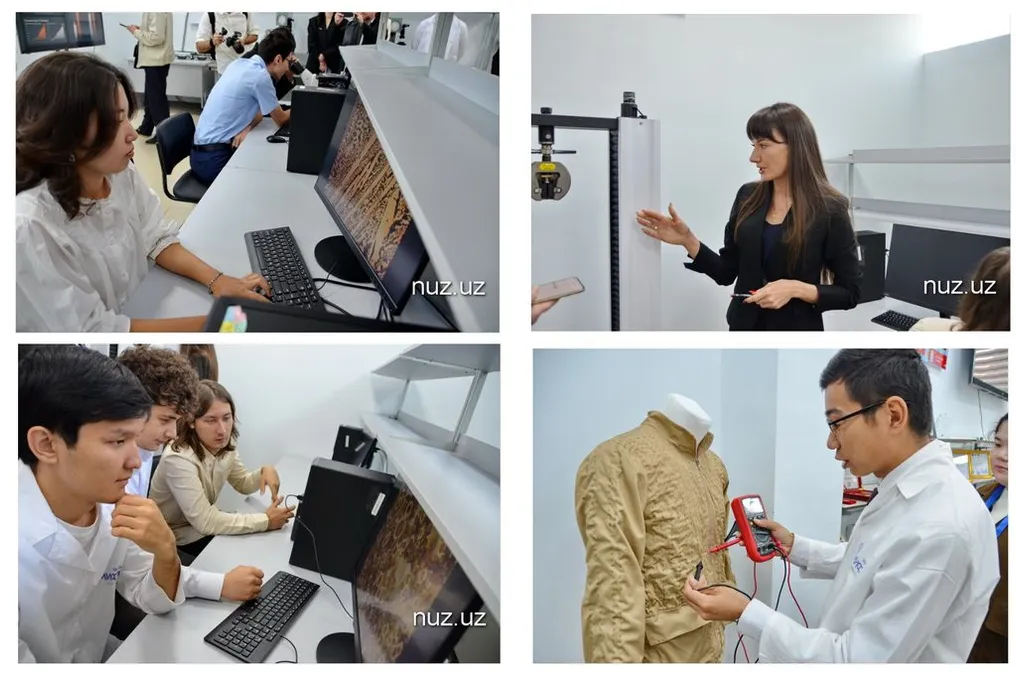
A meeting titled 'Central Asia – Atom 2050' was held in Tashkent, gathering over 900 students from Central Asian countries. The young participants presented their ideas regarding the improvement of nuclear energy and the training of future qualified personnel.

The key idea of the event was the establishment of a Youth Platform for Atomic Cooperation in the region. Alexey Likhachev, head of Rosatom, approved this concept and suggested making such meetings regular, planning the next program for 2027.

The event took place at the Tashkent branch of the National Research Nuclear University 'MIFI'. The total number of participants exceeded 900: 200 were present physically, and the remaining more than 700 connected remotely.

Leaders of the atomic structures of Uzbekistan, Kazakhstan, Kyrgyzstan, and Tajikistan, as well as representatives of the state corporation Rosatom, took part in the discussion. Among those present were corporate CEO Alexey Likhachev, Director of the Atomic Energy Agency under the Cabinet of Ministers of Uzbekistan Azim Akhmedhajaev, and Deputy Chairman of the Atomic Energy Agency of Kazakhstan Timur Zhantikin. Additionally, the Deputy Minister of Energy of Kyrgyzstan Mirlan Parkhanov and the General Director of JSC 'TAUZ Hydro' Abdulvakil Rasulov were observed at the meeting. Tatiana Terentyeva, Deputy General Director of Rosatom for Personnel, moderated the event.

Participants of the international youth advisory council Impact Team 2050 shared the results of four national nuclear dialogues. These dialogues took place from September to October 2026 in Uzbekistan, Kazakhstan, and Kyrgyzstan, with young people from Tajikistan participating. A total of 1,050 people from 18 different universities were involved in these discussions. The organizers collected 800 questionnaires in which students indicated obstacles to choosing a profession in the atomic sphere and ways to increase its attractiveness.

The main problems identified during the survey include a shortage of practical experience and experienced mentors, as well as a lack of information about available professions and educational opportunities. Participants from Kyrgyzstan and Tajikistan expressed particular concern regarding the safety of atomic technologies most frequently.

Nevertheless, the study results showed that the priority for young people is concrete opportunities to start a career. Practical experience and mentorship were named by 69% of respondents, clear career paths by 62%, industry openness by 54%, and support at the beginning of a career by 47%.

Reports were presented by leaders of the Impact Team 2050 council: Mukhiddin Umidov, a postgraduate student at the Institute of Atomic Energy of NIIA MIFI from Uzbekistan; Diana Gamazova, a council mentor from Kazakhstan and head of the project 'Atom Energy for Central Asia'; and Bektan Kydiyev, a council leader from Kyrgyzstan and chairman of the Association of Students of Kyrgyzstan.

After the presentations, the young delegates discussed their proposals with industry representatives and received feedback from them. The main goal of the meeting was to form a Youth Platform for Atomic Cooperation in Central Asia, which could serve as a permanent venue for exchanging ideas, developing joint projects, and direct communication between young specialists and industry management.

Participants suggested holding platform sessions in different countries of the region to ensure regular exchange of experience among young people and joint work on initiatives in the field of atomic technologies. Alexey Likhachev, CEO of Rosatom, supported the idea of holding the 'Central Asia – Atom 2050' meeting annually, noting that the next stage of the youth program could take place in 2027 under the auspices of the Impact Team 2050 council.

Likhachev commented: 'One of the key ideas of the atomic youth of Central Asia was the proposal to make today's event annual. This will allow future atomic specialists from all countries of the region to regularly exchange experiences, participate in additional professional education programs with the involvement of leading lecturers from NIIA MIFI, and work together on projects for the development of atomic energy and technologies. I am confident that this initiative will lay the foundation for long-term and strong youth cooperation and will allow young atomic specialists to jointly create the future of the Central Asian nuclear industry. We fully support this format and are ready to work with colleagues in the nuclear sector in the countries of the region so that the next youth program can take place in 2027 under the auspices of the Impact Team 2050 council.'

Tatiana Terentyeva, Deputy General Director of Rosatom for Personnel, emphasized that the development of the industry requires not only informing young people about opportunities but also considering their opinions and requests. She stated: 'It is important not only to tell young people what we can offer but also to hear what they themselves need from the nuclear industry. To design the future and shape the strategic and international agenda in dialogue. Today, young leaders told us how they want to see the future of the industry and showed that they are ready to take responsibility for its creation. Our task is to give them all the opportunities for this. The 'Central Asia – Atom 2050' meeting is an important part of this great joint work.'

Impact Team 2050 functions as an international youth advisory council under the CEO of Rosatom. Alexey Likhachev announced the creation of the council in 2021 at the Global Impact Conference. The council unites young leaders from different countries to discuss issues of nuclear technology development, sustainable development, and international cooperation. Its tasks include preparing proposals for interaction with international youth, attracting young specialists to educational and partnership projects, and promoting the peaceful use of atomic energy.

In 2027, with the support of Rosatom, the 'Atom 2050' project will also begin. It will involve 100 young people from different countries. Together with scientists, engineers, experts, strategists, and futurists, they will try to answer the question of what the world might look like by 2050 and what role atomic and related technologies will play in its development. Participants can expect excursions to Rosatom facilities, meetings with experts, 'knowledge laboratories', and joint development of future scenarios. At the end of 2027, the team will present its vision of the future to decision-makers who determine the development of technologies, industries, and countries.

Rosatom Head Alexey Likhachev Inspected Nuclear Power Plant Construction in Uzbekistan
Read more
nuz.uz

Rosatom Head Alexey Likhachev Inspected Nuclear Power Plant Construction in Uzbekistan

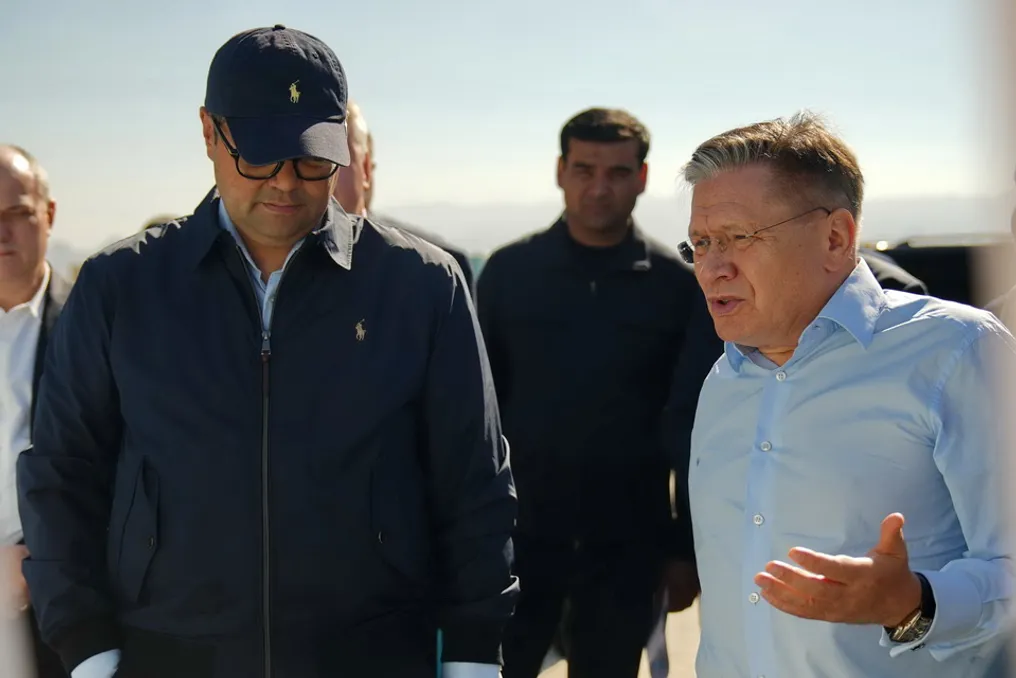
The CEO of the state corporation Rosatom, Alexey Likhachev, visited the construction site of the integrated nuclear power plant in the Jizzakh region of Uzbekistan. During the visit, he familiarized himself with the current status of the work, where concrete pouring for the foundation slab of the first small-scale power unit has been underway since June 4, 2026.

Currently, the process of concreting the reactor building's foundation slab is ongoing at the site, utilizing 25 units of equipment. It is planned that the construction of the foundation slab for the reactor section of the first power unit will be completed by the end of 2026, which will require pouring 10,000 cubic meters of concrete.

Alexey Likhachev noted that this stage is the fundamental basis for such a large-scale project, which holds immense significance both for the energy and economy of Uzbekistan, as well as for strengthening ties between Russia and Uzbekistan. He emphasized that this is not just about building a nuclear power plant, but about creating a modern scientific and industrial cluster and an atomic city.

A future city for atomic industry workers is also planned in the region. It is expected that over 30 thousand specialists and their families will live in this 'atomic city'. Furthermore, an industrial cluster will be formed within a 25-kilometer radius of the NPP construction site.

This station is being built under the world's first export contract for the construction of an integrated nuclear power plant. The project involves integrating two large-capacity power units, each with a capacity of 1,000 MW, and two small-capacity power units of 55 MW each. After reaching its design capacity, the station should provide electricity generation at a level of 17.2 billion kWh annually.

The nuclear power plant in Uzbekistan represents a unique project for the state corporation Rosatom, as it is being implemented under the world's first export contract for the construction of a small modular nuclear power plant (SMR). Cooperation was expanded after the signing of an intergovernmental protocol amending the intergovernmental agreement from 2018, which took place on May 27, 2024. This protocol concerned the construction of SMRs in Uzbekistan and was accompanied by a corresponding contract.

An additional agreement to the contract, providing for the construction of the integrated NPP in Uzbekistan, was signed by the parties on March 24, 2026. Previously, on September 26, 2025, in Moscow, during the international forum 'World Atomic Week', documents were signed to expand the partnership between Rosatom and the Atomic Energy Agency under the Cabinet of Ministers of the Republic of Uzbekistan, 'Uzatom.'

The solemn ceremony marking the start of construction of the first power unit of the integrated NPP in the Farish district of the Jizzakh region of Uzbekistan took place on June 4, 2026. This event was marked by the pouring of the 'first concrete' into the foundation slab of the future small-scale NPP as part of the integrated project. The ceremony was broadcast via telebridge between the construction site in Uzbekistan and St. Petersburg, where the President of the Russian Federation Vladimir Putin and the President of the Republic of Uzbekistan Shavkat Mirziyoyev granted permission for the construction of the first power unit.

Russia continues to actively develop its international trade and economic relations, paying special attention to interaction with friendly states. Rosatom and its enterprises contribute significantly to increasing the export potential of the domestic economy through the supply of goods, services, and raw materials worldwide.

Popular