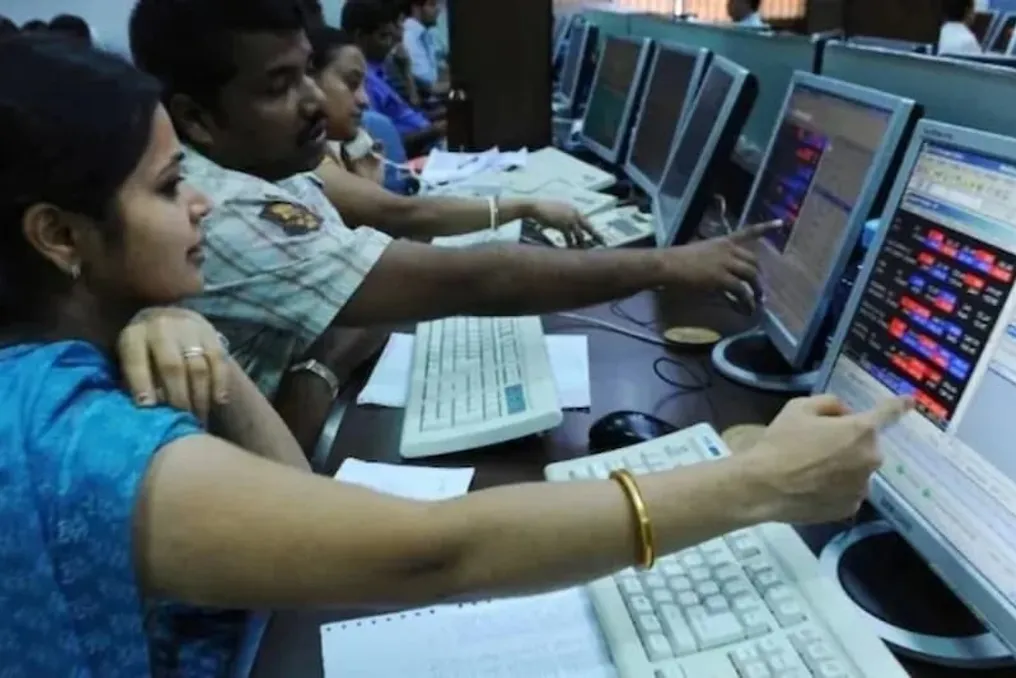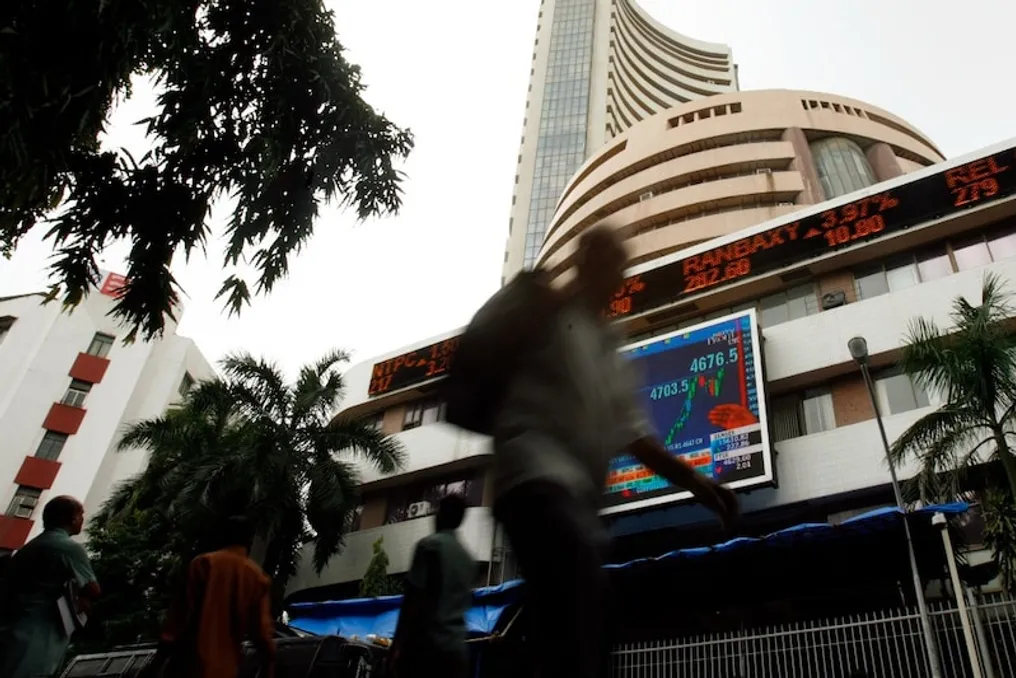
The Sensex and Nifty 50 stock indices continued their upward trend for the sixth consecutive week on Thursday. The growth was driven by softening crude oil prices, an inflow of funds from foreign funds, and the results of the US midterm elections.
The BSE Sensex opened positively at 78,910.94, showing a rise of 1,609 points or 2.08 percent. The Nifty 50 increased by 418 points or 1.74 percent, starting the session at 24,378.05. Both indices gained initial momentum: Sensex reached a daily high of 78,922, and Nifty 50 touched the level of 24,423.
VK Vijayakumar, Chief Investment Strategist at Geojit Investments, noted that due to strengthening economic support factors, the upward market trend is likely to continue. He emphasized that the sharp drop in Brent crude oil prices was the strongest positive factor for the market.
He explained that this decline is linked to hopes for a swift resolution of the conflict between the US and Iran, as this conflict and high commodity prices significantly contributed to the Republicans' defeat in the midterm elections.
By 9:50 AM, the BSE Sensex was trading at 78,884, representing a rise of 1,576 points or 2.04 percent. The Nifty 50 rose by 454 points or 1.90 percent, reaching 24,414. All sectors saw gains, with Nifty Auto, Nifty Financial Services, Nifty Realty, and Nifty Cement showing increases of over 2 percent. Broader markets also demonstrated increased activity: Nifty Midcap 100 and Nifty Smallcap 100 indices advanced by approximately 0.9–1.1 percent.
Thanks to today's rise, the market capitalization of companies listed on the BSE increased by 6.6 trillion rupees, reaching 501.1 trillion rupees at the open. In the previous session, India's total market capitalization stood at 494.4 trillion rupees.
Oil Price Decline
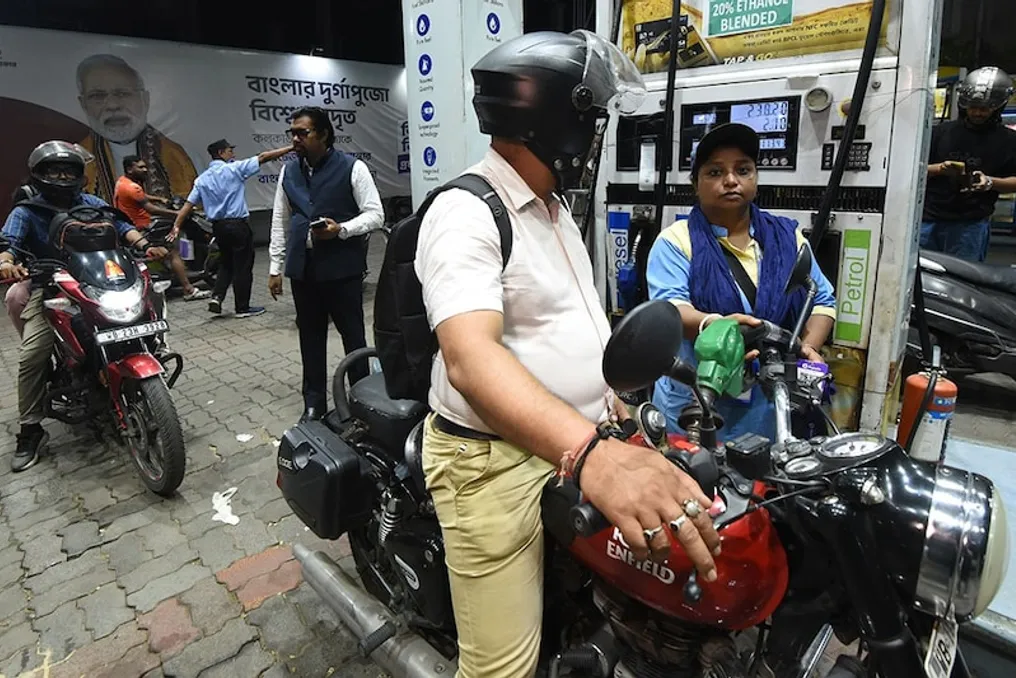
Brent crude futures fell by more than 10 percent, trading below $100 per barrel after the announcement of the US midterm election results. In the last check, Brent Crude dropped by 0.49 percent to $94.09, while WTI crude fell by 0.82 percent to $87.40. Furthermore, according to PTI, Iran lifted transit restrictions on commercial vessels in the strategic waterway of the Strait of Hormuz for four countries, including India.
Devarsh Vakil, Head of Primary Research at HDFC Securities, stated that global energy markets experienced a sharp downturn when Brent Crude prices plummeted by 10 percent below the $100 per barrel mark. The prolonged fall in oil prices was caused by the shift in power balance in Congress and hopes for de-escalation in the ongoing conflict involving Iran. The reduction in energy costs served as a favorable factor for stocks.
Shift in Iranian War Strategy
Experts believe that the Democrats' victory in the US midterm elections could lead to a faster conclusion of the months-long conflict with Iran, which has disrupted global energy markets. US President Donald Trump told the Financial Times that he has no immediate plans to escalate military action in West Asia. Meanwhile, Vice President JD Vance directly linked the Republicans' defeat to the foreign conflict.
Ankita Pathak, Head of Global Investments at Ionic Asset, noted that the year following the midterm elections is historically favorable for stocks. She added that inflation, yield, the dollar, and the situation in the US and Iran are now of greater importance. She suggested that one of the major sources of market uncertainty would be behind after this event and historically preceded year-end growth in the following three months.
India-US Trade Negotiations
According to experts, the Republicans' defeat may provide India with more opportunities to conduct a more balanced trade agreement with the US, even if President Donald Trump may increase pressure on New Delhi to conclude a deal quickly. Richard Rossow, Senior Fellow and Chair for India and Developing Asia at CSIS, believes that the election result will increase Congress's attention to the President's trade policy and potentially limit his ability to impose unilateral tariffs.
Tanay Dalal, Senior Vice President of Economic Research at Axis Bank, noted that the US midterm elections turned out stronger than many observers expected, as several traditionally Republican strongholds came under pressure. One possible consequence could be a more fragmented approach to AI regulation. For India, he believes that 'a less uniform regulatory environment could support demand for outsourced technology and business services exports.'
FII Activity
According to exchange data, Foreign Institutional Investors (FIIs) purchased shares worth over 17,000 crore rupees during the first three sessions of this week (3,114.68 crore rupees on Monday, 6,836.81 crore rupees on Tuesday, 7,284.03 crore rupees on Wednesday).
Vijayakumar added that the drop in crude oil prices occurs against the backdrop of significant resilience shown by the Indian economy and substantial improvement in corporate earnings. He also mentioned that the hope for the cancellation of the long-term capital gains tax in the upcoming budget completely changed the FII stance towards India.
Nifty Technical Analysis
Pabitro Mukherjee, Deputy Vice President of Research at Bajaj Broking, stated that keeping Nifty above the 24,000 level will usher in a new phase of growth towards levels of 24,400 and 24,700 in the coming sessions. A pause in the current strong rally will only signal if a lower high and a lower low are formed on the daily chart.
He also noted that the short-term support for Nifty has been revised upwards to levels of 23,200–23,400, which is the intersection point of the 50-day EMA and the current week's breakout zone. Remaining above this level will support the overall positive sentiment, and dips should be used as buying opportunities.