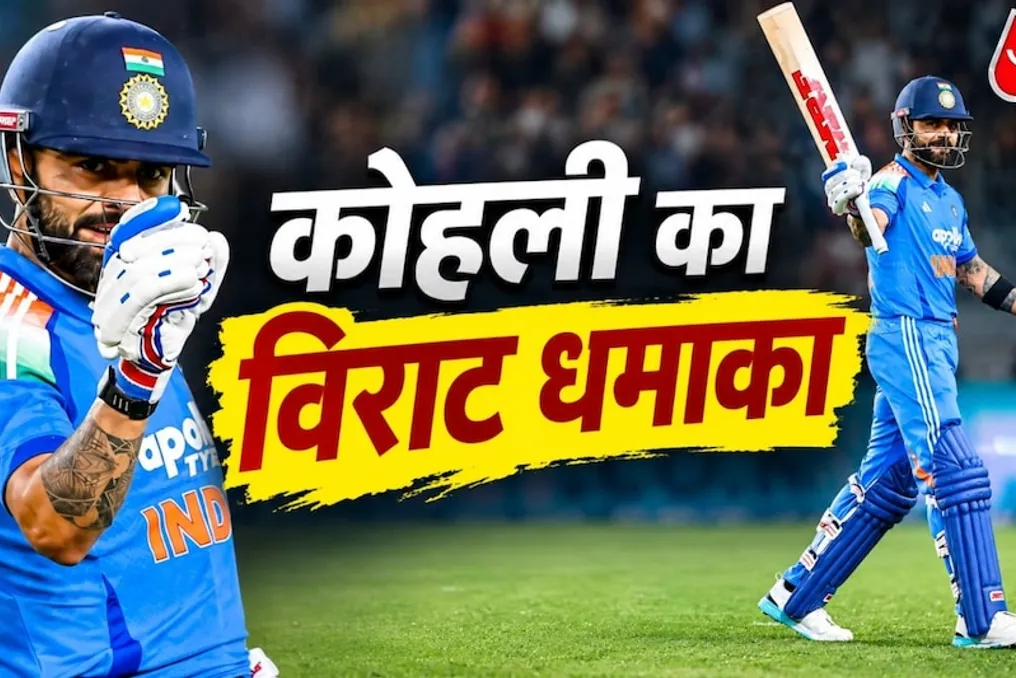
Questions about what constitutes good cricket and how to judge the quality of a shot when the pitch itself tests the player were answered by Virat Kohli at Eden Park in Auckland on Tuesday. He emphasized that on a difficult surface, it is enough just to respect the ball, but sometimes good cricket involves responding to the bowlers' deliveries in the same manner, taking risks.
The Indian team was aiming for 186 runs. The pitch was characterized by strong bounce and seam movement. Under these conditions, Shubman Gill and Virat Kohli demonstrated two completely different approaches to the game. Before the match was interrupted by rain, both players added 53 runs in the second wicket. Gill scored 17 runs off 32 balls, while Kohli had 29 runs off 27 balls.
Statistically, Gill's game appeared more cautious; he controlled almost every shot, allowing the ball to come close to him and hitting shots near his body, avoiding unnecessary risk. On the other hand, Kohli missed 10 times in 27 balls, actively attacking balls that bounced heavily. He did not hesitate to drive even balls that other players avoid hitting even on flat pitches.
However, the scoreboard told a different story: Kohli led Gill by 12 runs. This was the approach Virat demonstrated—he took risks, but at the same time, did not miss opportunities to put pressure on the bowlers.
Just before the rain started, Kohli played a shot that will be remembered for a long time. Against a good delivery from Blair Tickner, he stepped out and hit the ball so that it flew not into the air, but with stunning timing between short extra cover and mid-off. Both fielders were within the 30-yard circle, but the ball zipped past them at lightning speed.
This shot was not simple. Due to the heavy bounce of the ball, it was difficult to strike it correctly, but Kohli not only understood the bounce but also delivered it to the boundary in his style.
The danger from heavy bounce at Eden Park could be seen in how the New Zealand batsmen failed. Four New Zealand players lost control while attempting a pull shot. Even skilled pull-shot players like Gill could not track the ball correctly due to the extra bounce.
The situation with Shreyas Iyer also showed this bounce in three different ways. First, he got the top edge while attempting a pull shot, and the ball went for four runs. Then, the ball accidentally lifted into the air and went through the side screen behind the wicket for six runs. Finally, his control was lost on another pull shot, and he was caught at mid-wicket.
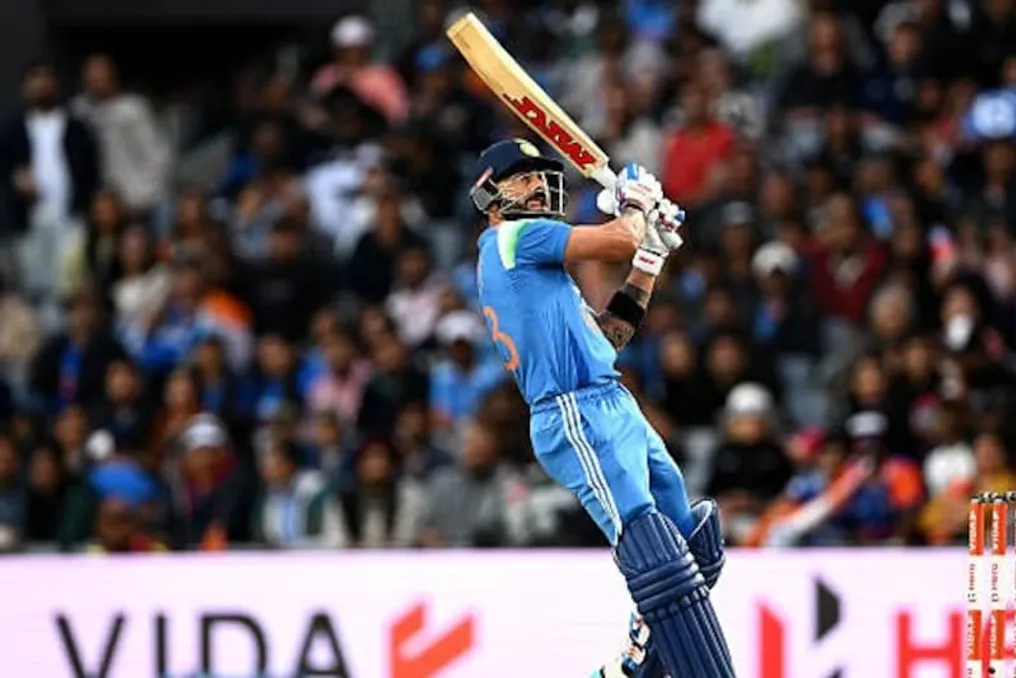
Kohli was also dismissed while attempting a pull shot. However, by that time, he had already demonstrated brilliant play in this shot. He attempted a pull shot 12 times, earning five fours and one six. When he returned to the dressing room, having scored 74 runs off 51 balls, the spectators stood up to greet him.
Usually, when talking about great pull shots in cricket, Rohit Sharma and Ricky Ponting are the first ones recalled. The new generation praises Shubman Gill and Mitchell Marsh, and Henri Klaasen's pull shot is distinguished by its uniqueness against spin bowling. Old cricket connoisseurs also include Gordon Greenidge, Alex Stewart, Arvind DC Silva, and Inzamam-ul-Haq in this list.
In this discussion, Virat Kohli's name is often absent. The reason is that Kohli's pull shot is usually defensive. He moves his body towards the off-side, rises over the bouncing ball, and keeps the ball on the ground by bending his wrist. His usual style does not involve hitting sixes on pull shots, like Rohit Sharma, who hits from bottom to top.
However, in Auckland, Kohli left his safe style behind and demonstrated many variations of the pull shot. He directed the ball towards backward square leg with wrist strength on a ball coming to Jakeb Dafif's waist. On Kyle Jamieson's ball, he played a pull shot, quickly rotating his body, and sent the ball to the boundary, touching the ground left of deep square leg.
After this, on a ball that bounced high off Tickner's shoulder, Kohli turned completely around, not trying to keep the ball on the ground, but hit it for a six over square leg. Against Tickner, he also hit the ball twice powerfully with a straight bat directly standing, beyond mid-on.
This was the image of Virat where technique, aggression, and the courage to take risks were clearly combined.
It is also worth considering Kohli's performance in the context of significant changes in his game after the conclusion of the Test series matches in ODI format.