India's Second Spaceport in Kulasakarapattinam: First Launch Scheduled for 2027
Read more
Aaj Tak
www.aajtak.in

India's Second Spaceport in Kulasakarapattinam: First Launch Scheduled for 2027

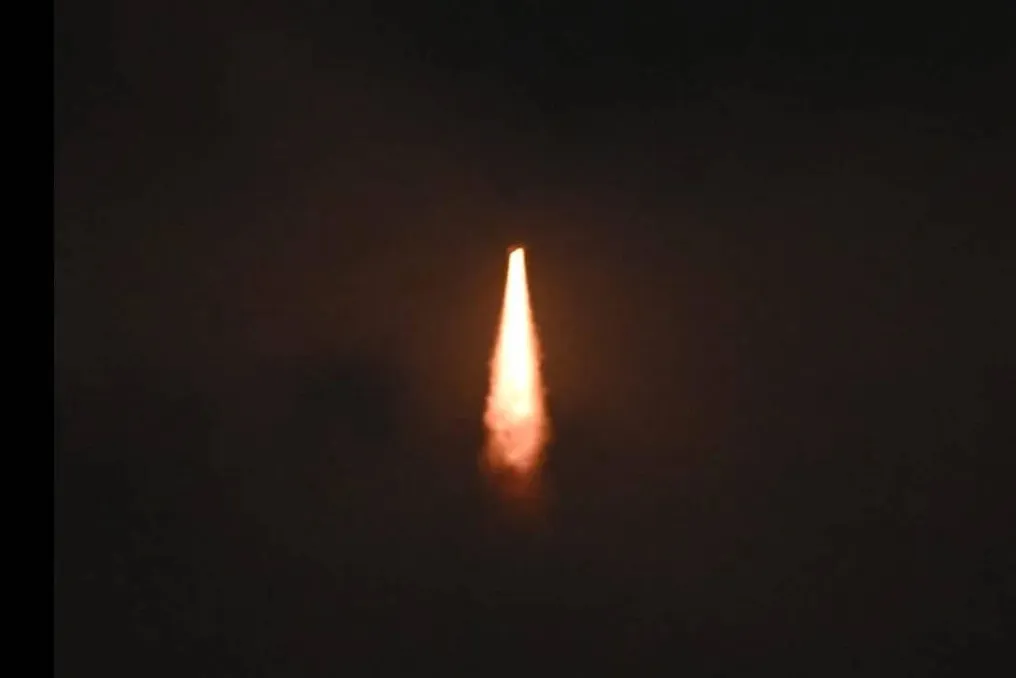
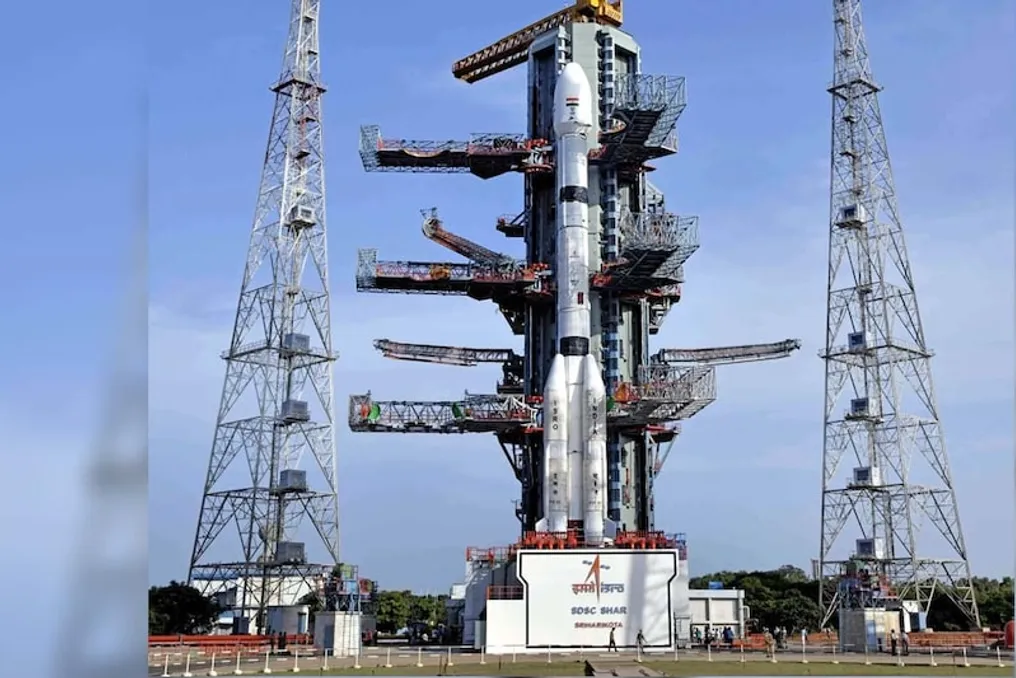
The Indian Space Research Organisation (ISRO) has announced a significant step in the space sector. ISRO Chairman, V. Narayanan, reported that the first rocket launch from the Kulasakarapattinam spaceport, located in the Tuticorin district of Tamil Nadu state, is expected in March or April 2027.

This facility will be the second operational spaceport in India after the Satish Dhawan Space Centre in Sriharikota. With a reduced dependence on Sriharikota, the country's launch potential will be expanded. The foundation of this project was laid by Prime Minister Narendra Modi in February 2024, and construction work is progressing rapidly.

The geographical location of Kulasakarapattinam gives it special significance as it is situated on the southern coast of India, allowing rockets to fly directly over the Indian Ocean. This reduces the risk of flying over densely populated land areas and enhances safety. The primary focus here is on launching small launch vehicles, such as the SSLV.

The SSLV is designed to send small satellites into space at low cost; it is capable of carrying a payload of up to 500 kilograms. Global demand for small satellites is growing rapidly, especially in the fields of communications, Earth observation, and internet services. The new spaceport will allow India to increase its share in this market.

Until now, almost all of India's orbital launches have been conducted from Sriharikota. The excessive number of launches in one location creates pressure on time and resources. The new spaceport will help distribute this load. Furthermore, it will provide opportunities for private companies.

India actively encourages private participation in the space industry, and many startups are involved in creating small satellites and providing launch services. Kulasakarapattinam will become a convenient location for these companies, leading to an increase in both public and commercial launches. ISRO's goal is to have four operational launch sites by 2029, and this new base will play an important role in achieving this.

The project will also have a positive impact on the local economy of Tamil Nadu by creating new jobs and fostering technical expertise. This will strengthen India's image on the international stage. India is already competitive in launching small satellites, and the new spaceport will increase launch frequency and reduce costs.

Overall, the Kulasakarapattinam spaceport will make India's space program more self-sufficient and expansive. The first launch in 2027 will be a major milestone in this direction, demonstrating India's continuous progress in the space sector and strengthening its global presence. Construction includes modern facilities such as integration buildings, launch pads, and tracking systems.

Similar stories

India's next space startup may still be in the learning phase
Read more
yourstory.com

India's next space startup may still be in the learning phase

India already has its first unicorn in the space technology sector. The company Skyroot Aerospace reached a billion-dollar valuation in May 2026, and two months later, its Vikram-1 rocket became the first private Indian rocket to reach orbit. These achievements confirm that India's private space ecosystem has gone far beyond mere aspiration.

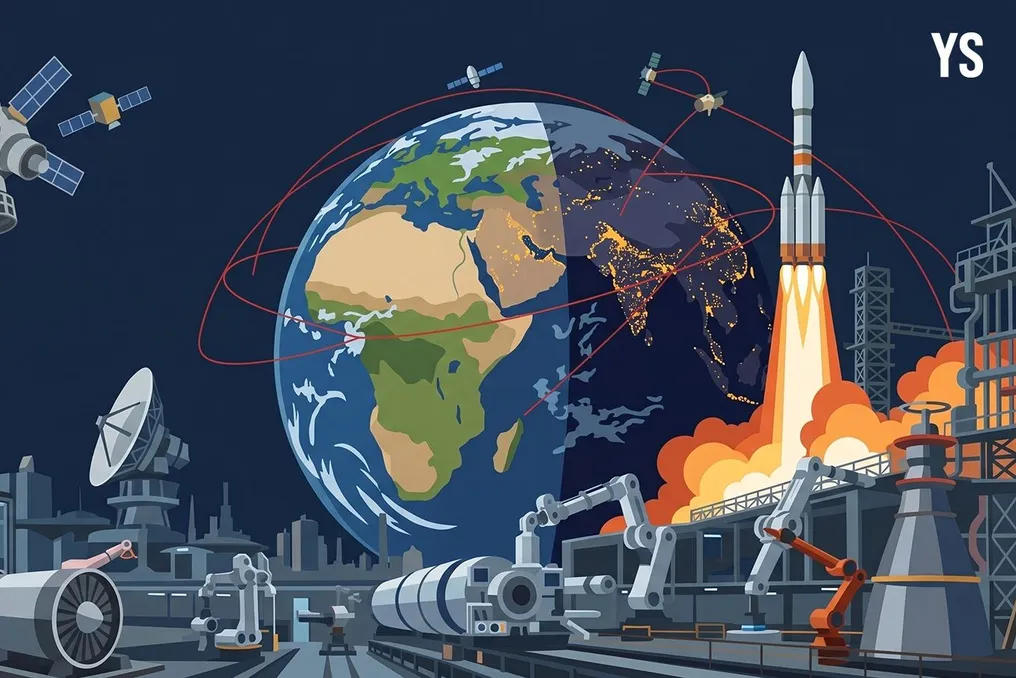
A more interesting question is what happens next and whether the next breakthrough should be sought in the right places. India's potential in space is not limited to creating another rocket company; it lies in building an entire space economy. This economy must include infrastructure, components, manufacturing systems, robotics, software, and services that will make space increasingly accessible, industrial, and eventually habitable.

This economy will form in stages. The first stage is cheaper and repeatable access to orbit. Thanks to reusable launch systems and the growing private launch market, space travel can gradually transform from an exceptional event into an economic activity. Once access becomes more reliable, the next stage will be orbital infrastructure, consisting of more advanced stations, platforms, communication networks, and servicing systems.

Infrastructure, in turn, creates conditions for industrial development. Manufacturing and refueling can move into orbit. The vacuum environment and microgravity can enable forms of high-precision manufacturing that are difficult to replicate on Earth, and resources in space can ultimately reduce the need to lift all materials from the surface. Components, fuel, and equipment must pass through a supply chain that extends beyond Earth.

Robots will be the first workforce in this economy. They will build, service, and operate facilities in environments where constant human presence is not yet practical. Over time, closed environments may begin to grow plants and produce food, initially managed largely by autonomous systems. After infrastructure, industry, and life support systems have been demonstrated at increasing levels of complexity, sustainable animal, and then human habitation will become a reality. Thus, the path looks like this: cheap transport, then infrastructure, then industry, and after that robotics and life support systems. It is a long journey on which humanity becomes a truly interplanetary species. Each stage creates a market and technical requirements for the next.

Viewing it this way, the next major Indian space company may not even build a rocket. It might focus on developing propulsion systems, energy systems, sensors, communications, navigation, orbital robotics, satellite servicing, space situational awareness, Earth observation tools, advanced materials, in-space manufacturing, or data processing applications built upon them. Some of these ventures do not even call themselves space companies today.

India's ambitions themselves reflect the scale of this opportunity. The government estimates that the domestic space economy could grow from about $8.4 billion in 2022 to $44 billion by 2033, including $11 billion in exports. A handful of flashy companies cannot achieve this; hundreds of specialized enterprises building different layers of the system will be required.

About 440 space technology startups are registered on the Startup India portal. Separately, Tracxn tracks 285 space technology companies that have raised about $871 million across 241 funding rounds. Only 72 of these companies have received institutional equity financing, and over 60% of the capital was directed to the ten most funded startups. Although these two datasets use different definitions, they point to the same reality: entrepreneurial activity is expanding much faster than institutional capital can keep up.

The government has begun to respond to this gap by creating a much broader capital and infrastructure architecture. The IN-SPACe venture capital fund of 100 billion rupees was launched jointly with SIDBI Venture Capital. IN-SPACe also launched a Technology Incubation Fund worth 50 billion rupees, seeding and pre-incubation programs, common technical facilities, the Satellite Bus as a Service initiative, access to ISRO infrastructure, and technology transfer pathways.

By July 2026, 118 technology transfer agreements covering 83 technologies from ISRO and the Department of Space were signed with Indian industry. Support goes beyond space. A research, development, and innovation program worth 100 billion rupees is designed to provide long-term, low-cost funding for indigenous technologies at Technology Readiness Levels 4 and above. The Startup India Fund of Funds 2.0 adds another 100 billion rupees with separate windows for deep tech funds, micro-venture funds, and technology-oriented manufacturing.

These are important signals that policy actively recognizes that advanced technologies require different timelines, tools, and readiness to support them on a large scale. However, the remaining problem is not whether India is doing enough in absolute terms, but how early the various parts of this architecture connect with the founders and technologies that will give rise to the next layer of the space economy.

A Series A check is important for a company ready to scale. It does not solve the problem faced by a two-person team in a university lab that is still trying to determine if an engine design works outside of simulation. This is a structural problem of deep tech funding. Traditional venture capital operates within a specific fund lifespan and seeks commercial viability in a relatively short period. Deep tech companies often cannot operate on this schedule. They may require years of research, specialized infrastructure, testing, and certification before they can enter a significant commercial market.

Patient capital is sometimes mistakenly taken for undisciplined capital. In fact, it is the opposite: capital that applies the right discipline to the right stage. It is just that the stages are achieved in a different order—first proof of science, prototype, reliability, certification, first customer, and then scaling. The path from technical proof to significant revenue is often measured in years, not months. This makes patient capital not just useful, but necessary. It also means we need to rethink where this journey begins, including the role of universities and campuses in generating science, talent, and early-stage startups that will ultimately underpin advanced industry.

This is where campuses are crucial. The Campus Fund has tracked and invested in student entrepreneurship in India over the past few years, and this shift is hard to ignore. In 2025, over 7,300 startups entered the Campus Fund pipeline, with DeepTech becoming its largest category by almost 17% (compared to 8.4% in 2024), and the profile of founders is changing. The number of founders with a PhD in the pipeline grew from 35 in 2020-21 to 237 in 2024-25, nearly seven times. Startups in Edtech built around coaching and content decreased by 36%, while traditional service startups decreased by 52%. Students are clearly choosing more complex and defensible problems over simpler ones.

This is important because many technologies that will define the next decade are being developed not in corporate strategy rooms, but in university labs by students and researchers who spend years on narrow, inconspicuous tasks. They often have access to professors, laboratories, equipment, and technically skilled peers. What they lack is institutional trust and an early source of venture capital. A student with a working prototype may face difficulties attracting the first check. The same founder several years later, having a company, customers, and external validation, may find it much easier to raise several crores of rupees. The first institutional check must follow technical insight and proof that something is possible.

None of this will work if we pretend that early-stage deep tech is a safe bet, because it is not, and never has been. Some of these propulsion systems will not ignite. Some sensors will work perfectly in a lab but prove impossible to manufacture at cost. Some technologies will only be ready to discover that the market has changed or a competing technology has emerged. Others will simply be displaced by better technologies. Such is the nature of cutting-edge technology. But if capital only flows after product-market fit is established, we risk filtering out precisely those technologies that need time and early support to realize their potential. A small pre-seed check to a student team is not just an investment in a startup. It helps sustain research within the university system and gives founders the opportunity to build a company around work that might otherwise remain in the lab.

The first Indian space unicorn is no longer a prediction. A more complex question is whether we can find the next one before the rest of the world learns its name. It may not be sitting in a boardroom. It may still be in a dorm room, where two founders are arguing at 2 AM about whether the prototype can actually work.
Isro GSLV-F18/NVS-03 Mission Successful: Next-Generation Navigation Satellite Launched into Orbit, Strengthening NavIC Constellation
Read more
timesofindia.indiatimes.com

Isro GSLV-F18/NVS-03 Mission Successful: Next-Generation Navigation Satellite Launched into Orbit, Strengthening NavIC Constellation

India's regional satellite navigation system, NavIC, has received a significant boost following the successful launch of the NVS-03 satellite. This launch was conducted by the Indian Space Research Organisation (Isro) on the night from Friday to Saturday.

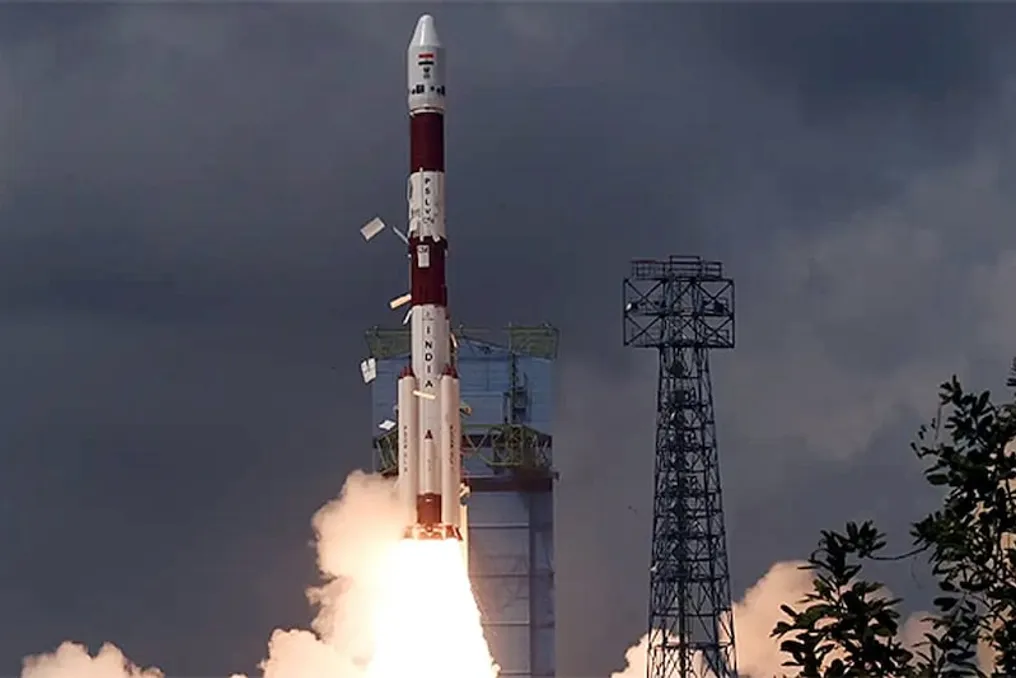
The GSLV-F18 rocket, which carried the 2250 kg NVS-03 satellite, took off from the second launch pad of the Satish Dhawan Space Centre (SDSC-SHAR) in Sriharikota at 23:51 on Friday as scheduled. This marked the twentieth flight of the Geosynchronous Satellite Launch Vehicle (GSLV). Approximately 18 minutes after liftoff, the NVS-03 satellite was placed into a Geostationary Transfer Orbit (GTO) with an apogee of 37,023 km and a perigee of 170 km.

NVS-03 is the third satellite in Isro's next-generation navigation system, designed to ensure continuous services within the Indian Regional Navigation Satellite System (IRNSS), known as NavIC. The satellite is equipped with both domestic and acquired atomic clocks. Furthermore, it transmits an L1 frequency signal in addition to the existing L5 and S-band signals.

NavIC is India's independent regional satellite navigation system, intended to provide Positioning, Navigation, and Timing (PNT) services across the country and in a zone extending approximately 1500 km beyond the Indian subcontinent. The addition of the L1 signal, alongside existing signals, is expected to enhance compatibility with other satellite navigation systems and expand NavIC's civil applications.

The NVS-03 mission aligns with Isro's plan to deploy five second-generation navigation satellites—NVS-01 through NVS-05—to augment the existing NavIC constellation and improve the reliability and continuity of navigation services. The launch is crucial because NavIC previously could not provide autonomous positioning services due to a shortage of operational satellites.

Previously, on July 29, Minister of State for Space Affairs Jitendra Singh stated in a written reply to the Lok Sabha that the constellation had only three satellites providing PNT services, whereas a minimum of four is required for basic services. Although the timing service remained operational, the commissioning of NVS-03 could help restore autonomous positioning capability. The Minister noted at the time: 'Since NavIC is used in an environment with multiple constellations for most use cases, users are not vulnerable. The next NavIC satellite, NVS-03, is ready for launch, and two more satellites, NVS-04 and NVS-05, are in advanced stages of development.'

The constellation issue arose after the failure of NVS-02, which was launched on January 29, 2025, but failed to execute orbital insertion maneuvers. The Isro committee found that the electrical signal did not reach the pyrotechnic valve in the satellite's oxidizer line, preventing the ignition of the propulsion system and the achievement of the planned orbit. This failure prompted Isro to implement corrective measures for subsequent missions.

The first satellite of the second generation series, NVS-01, was launched aboard GSLV-F12 on May 29, 2023, and was the first in this series to be equipped with domestic atomic clocks.

ISRO plans to use four launch pads for space launches in India
Read more
www.aajtak.in

ISRO plans to use four launch pads for space launches in India

The Indian Space Research Organisation (ISRO) is developing a large-scale plan to strengthen its space capabilities. The head of ISRO, V. Narayanan, announced that four launch pads will begin operating in the country by 2029.

To implement this plan, a new spaceport covering approximately 2000 acres is being created in the Kolsekarpattinam area of Tamil Nadu, where rockets for launching small satellites will be prepared. This step will allow India to meet the growing demand both domestically and globally for satellite launches.

V. Narayanan presented this information on October 25 at a graduation ceremony at a private university in Chennai. He also noted that ISRO is preparing for the first unmanned test as part of the Gaganyaan mission. Furthermore, joint work with the Japanese space agency will be conducted on the Chandrayaan-5 mission.

A launch pad is a location from which a rocket is sent into space. Increasing the number of such pads can facilitate the launch of more satellites, providing ISRO with additional opportunities for various space missions. According to Narayanan, the new spaceport in Kolsekarpattinam (Tamil Nadu) will have buildings for assembling rockets and satellites, as well as systems for monitoring the rocket's flight and collecting relevant data.

ISRO's plans also include the construction of a third launch pad in Sriharikota (Andhra Pradesh). However, full information regarding the location of all four launch pads and their methods of use has not yet been disclosed.

The head of ISRO emphasized that the organization will not be privatized and will remain a government institution. Nevertheless, the assistance of private companies and startups will be sought to meet the increasing demand for satellite launches. ISRO will provide technical support to these companies and assist in their work, which could potentially stimulate the development of the space business in the country and create thousands of new jobs in this sector.

Gaganyaan represents India's first crewed space mission, aimed at sending Indian astronauts into space. Before sending humans, ISRO will conduct three uncrewed tests. Narayanan reported that the first test is scheduled for the next two months, followed by two more. These tests will focus on verifying the systems related to the condition and safety inside the modules intended for astronauts.

These systems will also be tested under changes in temperature, pressure, and humidity. The emergency rescue system for astronauts will also be studied. According to Narayanan, about 8000 ground experiments have already been conducted for the Gaganyaan mission, and four selected astronauts are undergoing special training.

ISRO plans to collaborate with the Japanese space agency on the Chandrayaan-5 mission. During this mission, a rover weighing about 350 kilograms will be sent to the lunar surface to conduct scientific research in situ for 100 days. Full information regarding the launch date and other preparations for this mission has not yet been provided. The main objective of the mission is to conduct scientific research on the lunar surface.

Overall, ISRO is working to expand its rocket launch capabilities in the coming years, complete preparations for the Gaganyaan mission, and send new missions to the Moon, while simultaneously advancing India's space industry through the private sector.

Popular