Woman Employee in Baksa Protests Salary Delay for 11 Months of Work
Read more
Aaj Tak
www.aajtak.in

Woman Employee in Baksa Protests Salary Delay for 11 Months of Work

In Baksa, Bihar, a female government employee was forced to protest her salary payment from her own department, drawing attention on social media. Alipita Singh, an employee of the Rural Development Department, sat with a bowl outside the Block Brahmpur office.

She stated that out of 11 months of service, she had only been paid for three months. Due to not receiving her salary for the last eight months, Alipita Singh faced serious financial difficulties and held the protest for two days, sitting with a bowl.

After this incident went viral on social media, the district administration began to act. The administration requested an explanation from the Block Development Officer (BDO) of Brahmpur.

After photos of the woman employee protesting with a bowl went viral on social media, the Baksa district administration took action. An explanation was sought from the Block Development Officer of Brahmpur regarding the reasons for suspending the employee's payments. The administration demanded clarification on the basis upon which the employee's salary was blocked, what the reasons for the suspension of payments were, and at what level such a decision was made.

The administration emphasized that any employee's salary should not be suspended without adhering to established rules and the permission of competent authorities. In this regard, necessary administrative measures are being taken in the case. The administration also instructed all relevant officials and employees to ensure compliance with state norms and established procedures. Furthermore, it was stated that issues concerning both the public and employees would be resolved in a timely and accountable manner.

Discussions about this situation intensified within the administrative apparatus. According to sources, the reason for the delay in payments might be a conflict between the Block Development Officer of Brahmpur and the Rural Development Department employee Alipita Singh. Currently, the administration has launched an investigation by requesting a response from the BDO. Now everyone awaits what explanation will be given in the official response regarding the reasons for the suspension of payments, and when the arrears for eight months will be paid.

Similar stories

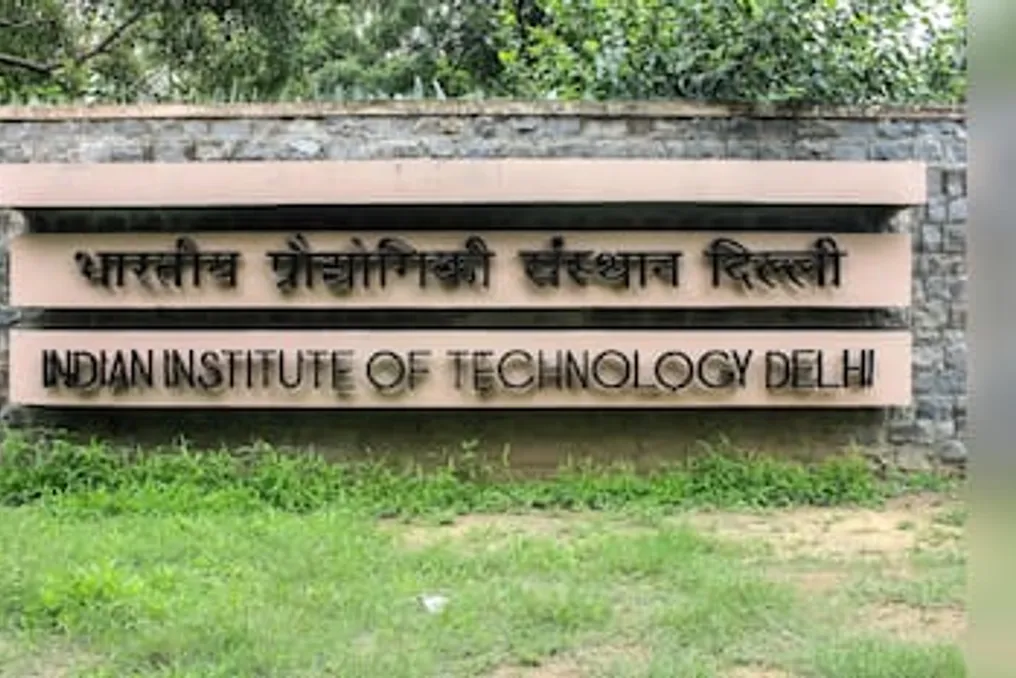
Average salary in IIT more than doubled over eight years, according to EAC-PM study
Read more
business-standard.com

Average salary in IIT more than doubled over eight years, according to EAC-PM study

According to the working paper of the Economic Advisory Council to the Prime Minister (EAC-PM), the average salaries of graduates from Indian Institutes of Technology (IITs) have more than doubled between the period 2015-16 and 2023-24, and the number of employed students has also increased.

The report, titled 'How India is transforming educational potential under the New Education Policy 2020,' analyzes employment outcomes and nominal salary trends in fixed groups comprising 17 IITs, 14 Indian Institutes of Management (IIMs), and 22 National Institutes of Technology (NITs). The study showed an improvement in employment and salary indicators across all three groups over the eight-year period, despite the expansion of IITs and NITs beginning to question the capacity of job markets to absorb graduates at the previous pace.

The working paper also points to a broader issue for India's higher education system: expanding access to degrees has not guaranteed a uniform distribution of program quality, employer confidence, or employment opportunities.

Average salary in IIT reached 19.08 lakh rupees

Within the scope of the study, the average salary in 17 IITs grew from 8.80 lakh rupees in 2015-16 to 19.08 lakh rupees in 2023-24, exceeding a doubling over this period. The number of students registered as employed in these institutions also rose from 4,737 to 8,411.

Similar data indicates that in IIMs, the average salary increased from 14.25 lakh to 25.59 lakh over the same period, and the number of employed students grew from 3,776 to 5,965. As for the 22 NITs, average salaries more than doubled—from 5.23 lakh in 2015-16 to 10.65 lakh in 2023-24. Meanwhile, the number of employed students in NITs increased from 9,246 to 13,419.

The report notes that these results reflect the sustained market value of the competencies, selection processes, and networks associated with these educational institutions.

Expansion puts pressure on job markets

Despite the long-term improvement in employment rates and salary levels, the document's authors express concerns about the job ecosystem's ability to keep pace with the expansion of these institutions. The study analyzed changes in enrollment in core programs between 2019 and 2025 within the same institutional panels.

Enrollment in IITs increased by 57.8 percent, reaching 50,595 students from 32,063. In NITs, the growth was 29.7 percent, rising from 57,405 to 74,457. IIMs demonstrated an increase of 38.9 percent, growing from 8,966 to 12,456 students.

The authors point out that the latest expansion has tested the capacity of IIT and NIT job markets to absorb graduates at the previous volume. This implies that improvements in employment and salary indicators over a long period should be viewed against the backdrop of a growing number of students entering these educational institutions.

Comparisons cover four-year undergraduate programs in IITs and NITs, as well as two-year master's programs in IIMs. Employment data pertains to graduating cohorts, while enrollment data compares student numbers in 2019 and 2025.

Higher education expands, but results remain uneven

The study compares these findings with the broader expansion of India's higher education system. The estimated total number of students in higher education has grown by 31.5 percent—from 34.2 million in 2014-15 to 45 million in 2023-24. The number of registered colleges increased from 38,498 to 48,246, and universities and university-level institutions grew from 529 to 1,289.

The authors emphasize that as higher education becomes more accessible, the importance of program quality and the transition from learning to work increases. They term this the problem of 'qualification congestion,' where students increasingly rely on degrees as the most recognized path to better jobs, while employers differentiate between graduates based on their institution, field of study, exam results, experience, and professional connections.

The report also highlights the limited coverage of vocational education. According to the Periodic Labour Force Survey (PLFS), formal vocational or technical training covered only 5 percent of people aged 15-29 in 2025. The authors conclude that India needs stronger alternatives to the traditional degree path, including recognized professional qualifications, structured apprenticeships, and pathways for transitioning between work and further study. They argue that the expansion of higher education must be accompanied by sufficient faculty, infrastructure, and reliable career paths to ensure a successful transition of a larger number of graduates into the labor market.

Doubao Work takes first place in the SuperCLUE-Office benchmark among office agents
Read more
pandaily.com

Doubao Work takes first place in the SuperCLUE-Office benchmark among office agents

The Chinese evaluation group SuperCLUE published the results of its SuperCLUE-Office benchmark, which assesses the performance of office agents at the end of October 2026. According to data published on the SuperCLUE website and relayed by IT Home, ByteDance's Doubao Work product secured the top spot with an overall score of 85.33.

Kimi Work from Moonshot AI took second place with a result of 84.57, while WorkBuddy from Tencent ranked third with a score of 83.99. It is important to note that this ranking is an industry benchmark from SuperCLUE, and Pandaily publishes the organizer's assessments, not independent retesting.

The SuperCLUE-Office test checks the ability of office agents to perform real-world tasks in programs such as Word, PowerPoint, Excel, and charts. The October round covered three areas: document processing, material composition, and data analysis, within 13 secondary tasks. Five competency areas were evaluated: file and environment operations, multi-file planning, constraint adherence, content quality, and security and permission boundaries.

Eight Chinese office agents participated in the competition: Doubao Work, Kimi Work, WorkBuddy, Baidu Dazi, QwenWork from Alibaba, Raccoon Work from SenseTime, Spark Work from iFLYTEK, and Nano Work from 360.

The leaders in the ranking were quite close, as the top four shared a difference of only 2.65 points. Baidu Dazi scored 82.68, QwenWork scored 78.38, Raccoon Work scored 69.20, and iFLYTEK Spark Work scored 69.12, while Nano Work received 53.13. SuperCLUE noted that the overall gap between the highest and lowest scores was 32.20 points, indicating a clear performance gradient below the leading group.

The leaders demonstrated differences across categories. Doubao Work led the document processing category with a score of 87.12, surpassing the next participant by almost five points; all eight products scored above 72 in this area, with Baidu Dazi and WorkBuddy trailing behind. Kimi Work led in data analysis with a score of 88.00, followed by WorkBuddy (86.13) and Doubao Work (81.50). SuperCLUE indicated that this category had the largest spread, with a difference of 72 points between the best and worst results and an average of 71.72. In the material composition category, the difference was smaller but uneven further down the table, reaching a maximum gap of 47.75 points with an average of 73.62.

SuperCLUE concluded that office agents are gradually integrating into daily workflows, but they remain heterogeneous when performing more complex tasks related to analysis and document creation, which was noted as the next focus of competition. Since the results are based on a set of tasks and tools from one organizer, readers should view them as a public ranking, not as a universal classification of all office agents.

France faces strikes amid economic problems that could affect other countries
Read more
noticiasaominuto.com

France faces strikes amid economic problems that could affect other countries

The economic and social situation in France is deteriorating, and the country has faced a general strike. Analysts believe these problems could affect other European economies, including Portugal.

The country is facing protests over issues such as the rising cost of living, leading to school blockades by students and episodes of violence, culminating in today's general strike.

France's economy and public finances are going through a difficult period. Karsten Brezski, global head of macroeconomics at ING bank, noted that 'France is not Greece,' referencing the 2009 financial crisis that shook the European Union.

However, the root of France's economic difficulties lies in the government's inability to meet target expenditures and growth rates, as well as in austerity goals.

National debt has reached 119% of GDP, and the government reported that the budget will again exceed European Union spending limits, pushing national debt close to 122% of GDP, a new record.

On October 30, Fitch revised its sovereign debt outlook for France from 'stable' to 'negative,' although it maintained the long-term credit rating at 'A+' due to worsening growth prospects, increased financing costs, and strained public finances.

Fitch forecasts that France's national debt will rise from 115.7% of GDP in 2025 to approximately 124% in 2028, higher than their previous estimate of 122.7%.

Regarding the economy, the Bank of France signaled a possible downward revision of the 2026 growth forecast after French GDP contracted by 0.1% in the third quarter compared to the previous quarter, driven by a decline in net exports and capital investment.

According to the Competitiveness Forum analysis, political and budgetary problems in France 'significantly affect its interest rates and are likely to slow down this economy (our third trading partner), affecting other European countries.'

The text notes that French interest rates have risen significantly, returning to levels seen during the 2011 and 2012 crises and surpassing similar rates in Italy, and subsequently Spain and Portugal in 2025. This political deadlock and sharp rate increase 'should affect growth in France and harm its main trading partners, including Portugal.'

According to Forum economists, high interest rates on debt issued in Paris could trigger a debt crisis that spreads beyond the country, reaching even Lisbon.

Nevertheless, the Forum notes that the depreciating euro exchange rate may counteract the recessionary consequences of this situation.

The Banque Caregoza also emphasized that France is increasingly standing out with a negative position in the Eurozone sovereign debt market. Despite the 'A+' rating assigned by Fitch, which is identical to Portugal's, 10-year French treasury bonds offer a yield of 5%, the highest since July 2002, compared to 3.95% for Portuguese debt, while France pays more than Italy and Greece.

The reason lies in the trajectory of national debt against budget deficits exceeding 5% and weak economic growth. Portugal, conversely, 'is following the opposite path, with a falling debt ratio and more balanced public finances, which explains the lower yield than its rating suggests.'

However, analysts warn that since France is the second-largest economy in the Eurozone, maintaining this deterioration of its public finances represents an 'increasingly higher risk for the entire European Union.'

Oxford Economics also warns that France's budget crisis may worsen before improving. Spreads could rise above the peak of 200 basis points, projected in the base scenario until the presidential elections in April, without triggering a debt crisis.

Risks that could cause a new rise in spreads include protracted mass protests, a government collapse due to budgetary disagreements, a decrease in the polling gap between Jean-Luc Mélenchon and Marine Le Pen in the second round, and persistent doubts about the budgetary reliability of Le Pen's party, the 'National Rally' (RN).

Macron cannot run for a third consecutive term in 2027, and ultra-right leader Marine Le Pen leads in polls ahead of the first round of presidential elections on April 18. The second round is scheduled for May 2.

Organizers of today's stoppage and mobilization include trade unions, student associations, and 'yellow vests,' who expect to gather hundreds of thousands of people across the country.

The day of strike and national mobilization was dedicated to protesting against the rising cost of living and defending public education and healthcare.

Popular