How to make besan laddu: A recipe for homemade sweet from 1 cup of besan and ghee
Read more
Aaj Tak
www.aajtak.in

How to make besan laddu: A recipe for homemade sweet from 1 cup of besan and ghee

During Diwali, besan laddu holds great significance, and they are traditionally offered to the god Shiva-Ganesha. However, there is a risk of impurities in store-bought sweets, and they can also be too dry or heavy. Therefore, during this festive period, it is recommended to make laddu at home instead of buying them from the store, ensuring they are as crumbly, aromatic, and melt-in-your-mouth as halwai's, using only 1 cup of besan and pure ghee.

The following ingredients are needed for preparation: 1 cup of besan (it is best to use coarsely ground besan for laddu), half a cup and slightly more melted ghee, half a cup and slightly more tagar or bor (or powdered sugar), half a teaspoon of cardamom powder, and 1-2 tablespoons of chopped nuts (cashews, almonds, pistachios) as an option.

Laddu should always be made from besan with a coarser texture. If coarse besan is unavailable, you can add 1 teaspoon of dry grain (sooji) to fine besan or sprinkle hot oil with milk to give it a crumbly texture.

Besan must be roasted in a thick-bottomed pan over low heat, stirring constantly. If you fry the besan on high heat in a hurry, it will remain raw and start to burn.

In a thick-bottomed pan, heat half a cup of ghee. Add 1 cup of besan and begin frying over low heat, stirring continuously. As the besan fries, it will release oil and turn golden brown. When a fragrance starts spreading in the house and the besan feels lighter, it means it is well roasted (this takes about 15-20 minutes).

After this, sprinkle 1 teaspoon of water into the fried besan (this will cause bubbles to form and make the besan very crumbly). Continue stirring for another minute until the water evaporates, then turn off the heat.

Remove the pan from the heat and let the mixture cool completely (it is important to remember that adding sugar to hot besan will cause the sugar to melt, making the laddus hard like cotton candy).

When the mixture is warm or completely cool, mix in the tagar (bor), cardamom powder, and chopped nuts, stirring thoroughly by hand. Then take a small amount of the mixture in your hands and shape it into the desired laddu form, rolling them.

Your magnificent, pure, and crumbly besan laddus are ready. They should be stored in an airtight container and enjoyed during the festival.

Similar stories

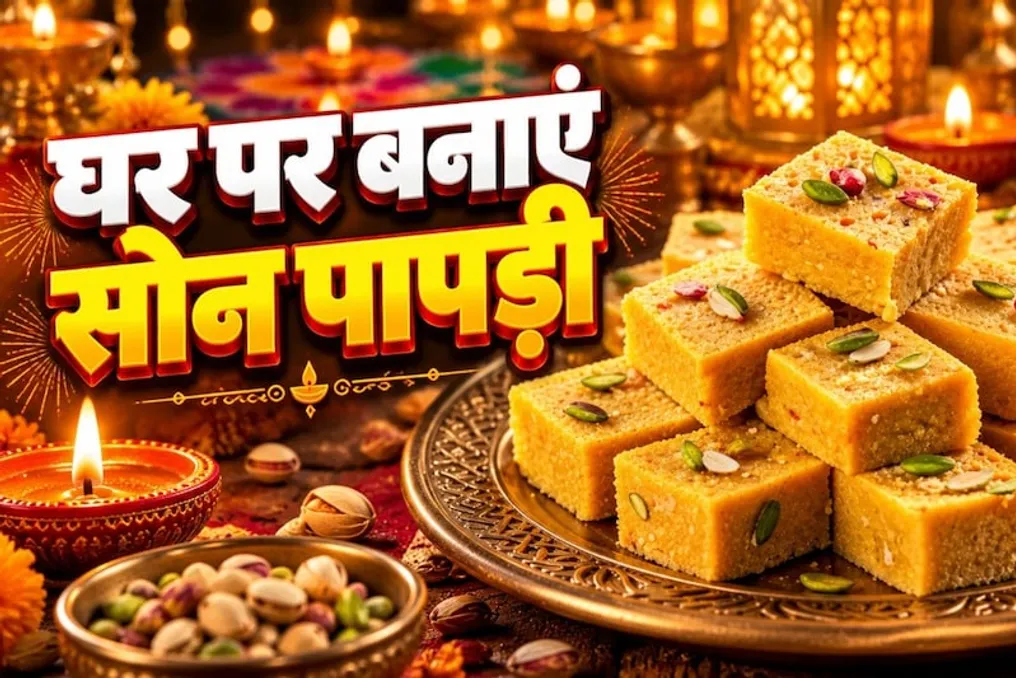
How to make delicious Son Papdi at home from chickpea flour, avoiding store-bought options
Read more
www.aajtak.in

How to make delicious Son Papdi at home from chickpea flour, avoiding store-bought options

As the sacred festival of Diwali approaches, the aroma of various sweets spreads through homes. Son Papdi packaging is almost always present in Diwali gift boxes. However, store-bought Son Papdi is often too sweet or dry, and there is also a risk of impurities.

During this special Diwali moment, instead of buying expensive sweets from the store, it is recommended to prepare equally tasty, crispy, and melt-in-your-mouth Son Papdi at home using chickpea flour, which is kept in the kitchen. Making this dessert is not only engaging but also incredibly delicious. Below is the simplest instruction and secret tips for its preparation.

The following ingredients will be needed: 1 cup of sifted chickpea flour (besan), 1 cup of wheat flour (maida), 1–1.5 cups of pure ghee, 2.5 cups of sugar, 1 cup of water, 1 teaspoon of glucose syrup or lemon juice (to prevent crystallization of the sugar syrup), as well as cardamom powder and chopped nuts for garnish.

Chickpea and Wheat Flour Mixture: It is crucial to mix the chickpea flour and wheat flour in equal proportions to achieve the ideal texture of Son Papdi. Thanks to the wheat flour, the finished product achieves elasticity and forms good fibers.

Preparing the Sugar Syrup: It is critically important that the sugar syrup has the correct consistency. It should not be too runny nor too hard, otherwise, the fibers will not stretch properly.

Step-by-step instructions

Take a thick-bottomed pot and heat half a cup of ghee. Add the sifted chickpea flour and wheat flour. Stir the mixture constantly over low heat until a fragrant aroma appears and the color turns light golden. Then remove the mixture and let it cool on a plate.

In another vessel, boil the sugar syrup by adding sugar, water, and glucose syrup (or half a teaspoon of lemon juice). Cook the syrup until it reaches the hard-ball stage. After that, remove the syrup from the heat and pour it onto a smooth plate or marble countertop. When the syrup cools slightly (to a touchable state), start pulling it, lightly greasing your hands with ghee.

Stretching the Fibers: Stretch the syrup by rotating it in a circle and folding it repeatedly until golden and white fibers begin to form.

Combining Components: Now place these ready sugar syrup fibers over the roasted chickpea and wheat flour mixture and gently mix, enveloping the chickpea flour with the fibers so that it is evenly distributed within them.

Shaping and Cutting: Grease a mold or plate with a small amount of ghee and sprinkle with chopped pistachios and almonds. Spread the prepared Son Papdi mixture over this surface and press down lightly. When the mass cools, cut it into squares using a knife. The finished, pure homemade Son Papdi is ready to eat!

Recipe for Crispy Besan Puri from Chickpea Flour for Festive Table with Chana and Paneer
Read more
www.aajtak.in

Recipe for Crispy Besan Puri from Chickpea Flour for Festive Table with Chana and Paneer

As the holiday season approaches, homes begin preparing various dishes. At this special time, when it comes to luxurious treats, having hot puris served with delicious vegetable dishes like chana and paneer is essential. If you want to move away from regular wheat or corn puris and try something new and very appetizing, be sure to make crispy puris from chickpea flour. These puris, made from a mixture of chickpea flour, wheat flour, and carefully selected spices, are not only delicious but also significantly enhance the flavor of chana or paneer.

Below is a simple instruction on how to prepare this dish.

Ingredients Needed

To prepare, you will need: chickpea flour (besan) — 1 cup; wheat flour (gehun ka atta) — 1.5 cups; ajwain seeds — half a teaspoon; fennel powder (saunf powder) — 1 teaspoon; dried fenugreek leaves (kasuri methi) — 1 large tablespoon (crushed); asafoetida (hing) — 2 pinches; turmeric and red chili powder — to taste; salt — to taste; 2 tablespoons of hot oil or ghee for greasing (moyan); and oil or ghee for frying the puris.

Secret Tip for Crispy Texture

Making besan puris requires adding a small amount of wheat flour so that the dough does not stick to the board when rolling and rises easily. Furthermore, adding two tablespoons of hot oil to the dough (moyan) makes the puris very crispy and flaky.

Preparation Instructions

First, mix the flour and chickpea flour: sift the chickpea flour and wheat flour into a large bowl. Then add ajwain, fennel powder, crushed dried fenugreek, asafoetida, turmeric, red chili powder, salt, and hot oil (moyan), mixing all components thoroughly.

After that, start kneading the dough, gradually adding water to obtain a firm dough, similar to puri dough. It is important to remember that chickpea flour absorbs more moisture, so the dough should not be soft. Cover the dough and let it rest for 10–15 minutes.

Take small pieces of dough and roll them into a round shape, lightly brushing them with oil. Then heat the frying oil in a deep pan to medium-high heat. Carefully drop the rolled puris into the hot oil and gently press them with a spoon so they puff up like balloons. Fry on both sides until golden and crispy.

Serve the hot, crispy besan puris with delicious chana or shahi paneer, and everyone will enjoy this combination.

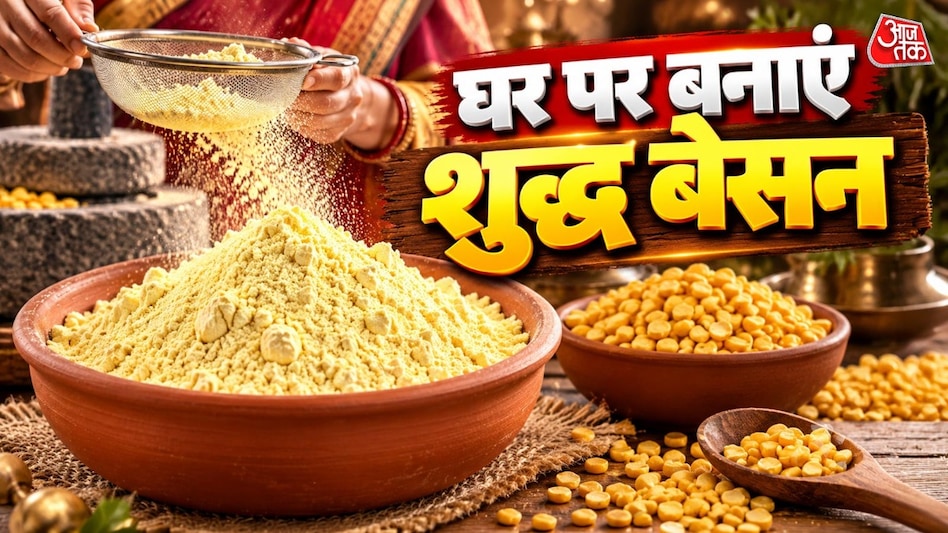
How to Make Pure Besan at Home: Two Methods Using Chickpea Flour
Read more
www.aajtak.in

How to Make Pure Besan at Home: Two Methods Using Chickpea Flour

Besan is one of the most essential ingredients in Indian cuisine, as it is used to prepare dishes such as pakora, curry, chila, laddu, and many other delicious snacks. Furthermore, various sweets are made from besan during festivals, so it is often present in most homes. However, some people worry about the purity of besan purchased from stores. In such cases, you can prepare besan yourself from chickpea flour, which does not require many ingredients. This article presents two simple methods for making besan at home that will allow you to easily obtain a fresh product.

How to make besan at home:

To make besan at home, you will need 500–600 grams of chickpea flour. There are two approaches to preparation.

First method: preparation without roasting

To prepare besan without prior roasting, you must first thoroughly clean the chickpea flour. Then, this flour should be dried in bright sunlight for one to two days to completely remove moisture. When the flour is completely dry and hard, gradually add it to a dry blender jar and grind it into a fine powder. The resulting besan should be sifted through a fine sieve. If large particles remain in the sieve, they can be ground and sifted again. Thus, the besan will be ready for use at home.

Second method: preparation by roasting in a pan

If you prefer lightly roasted besan, first clean the chickpea flour and dry it in the sun for one day. After that, heat a pan and add the flour, roasting it over low heat for 3–4 minutes. It is important to monitor so that the color of the flour does not become too dark and does not burn. Then, let the flour cool completely. After cooling, grind it in the blender in small batches. The finished besan needs to be sifted through a sieve, and any remaining large particles can be ground again. This way, your besan will be ready for use.

To ensure that besan remains in good condition for a long time, proper storage is crucial. After cooling completely, the besan should be placed in a clean, dry, airtight container. A glass jar can be used. When taking out besan each time, use a dry spoon and close the container lid tightly. Store the besan away from moisture and heat to prevent clumping and premature spoilage. If the besan has an unpleasant odor or insects appear in it, its use should be stopped.

Homemade besan can be used to create many recipes. From it, you can make besan laddus, besan barfi, curry, chila, and pakora. Additionally, you can prepare onion pakora, bread pakora, cheese pakora, as well as various vegetable dishes based on besan. If you like crunchy snacks, you can make a dish like besan chakli.

Important note: For preparing besan from chickpea flour, it is critically important that the flour is completely dry. If moisture remains in the flour, it will be difficult to grind, and this will negatively affect the quality of the besan. Therefore, be sure to dry the flour thoroughly and always store the besan in clean, dry containers.

Popular