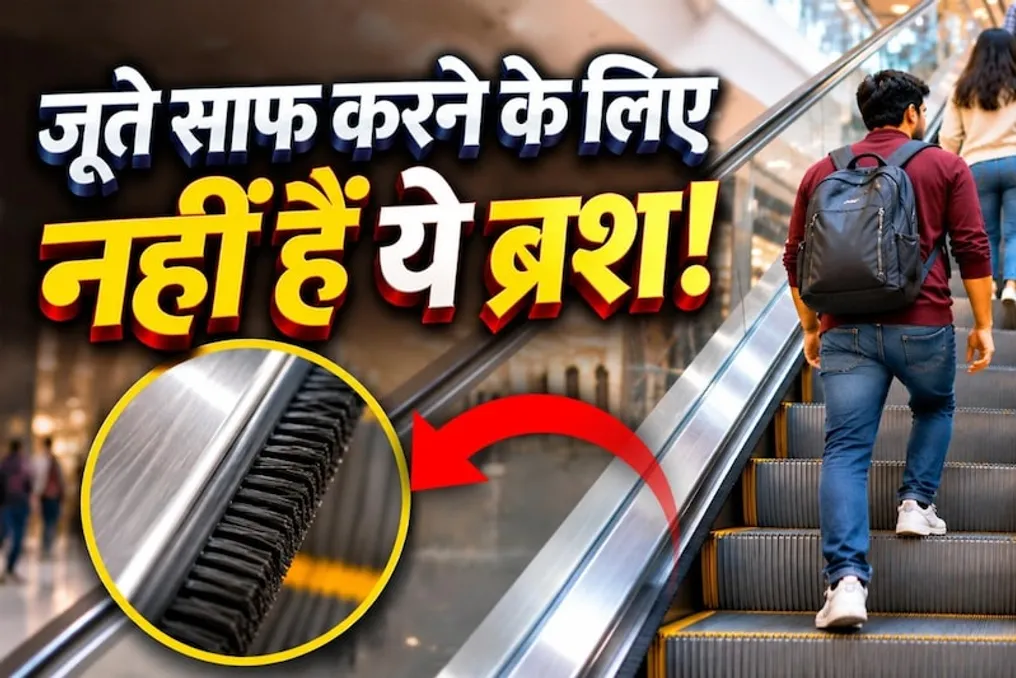
The purpose of brushes on the sides of escalators: they are designed for safety, not for cleaning shoes
Read more
Aaj Tak
www.aajtak.in

The purpose of brushes on the sides of escalators: they are designed for safety, not for cleaning shoes

You have probably used escalators in shopping malls, train stations, or airports. If you look closely, there are small brushes installed on both sides of these structures. Many people mistakenly believe that these brushes are used to clean dust and dirt from shoes, but this is not the case.

In fact, these brushes are installed as part of the escalator's safety measures. Their main function is to warn people and prevent their shoes, clothing, or other items from getting stuck in the side parts of the escalator.

Escalator stairs are constantly moving, and there is a side panel on both sides. There is a small gap between the steps themselves and this panel. If a person places their foot too close to this edge, part of their shoe or slipper can fall into this open space, creating a risk of injury. Children's shoes, loose clothing, and slippers pose a particular danger as they can get caught in the side parts. The brushes are installed precisely to reduce this risk.

When a person's foot or shoe touches the brush, it gives them a slight sensation, prompting them to move their foot to the center of the step.

Yes, one of the functions of these brushes is to keep people away from the edges of the escalator. However, it should be understood that they are not a solid wall or a guard capable of completely preventing shoes from getting inside. Their main goal is to warn people in advance so that they keep their feet away from the edges.

Always try to stand in the center of the step. Keep your shoes or slippers away from the edges. When boarding an escalator, hold your child's hand. Ensure that loose clothing does not touch the edges of the steps. Running or playing on the escalator should also be avoided. Therefore, the next time you see brushes on the edge of an escalator, do not perceive them as shoe cleaning tools; they are installed for your safety.
Similar stories

Explanation of the installation of perforated tiles on sidewalks in Delhi
Read more
www.aajtak.in

Explanation of the installation of perforated tiles on sidewalks in Delhi

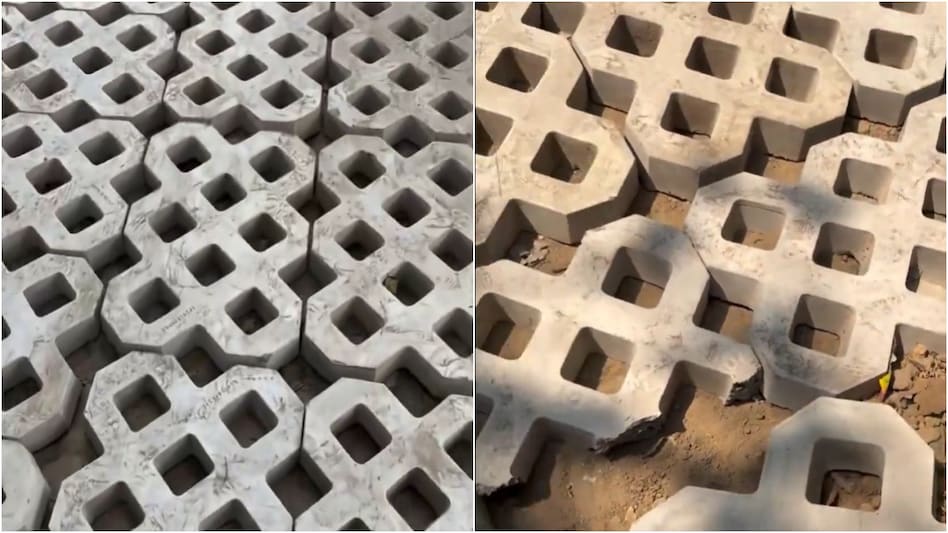
Perforated, or grid, tiles are being installed on sidewalks along roads in Delhi. This raises questions about the reasons for such installation and what these elements are called. In fact, they are not tiles, but concrete blocks similar to paver blocks, but with gaps between them.

These grid pedestrian blocks are known as grass-grid paver blocks. They are a special type of grid block made from durable plastic or concrete. These blocks have large open spaces inside. Their structure includes a load-bearing grid that can withstand the load from vehicles and pedestrians, preventing compaction or damage to the underlying soil. Soil is then filled into these open cells, and grass is planted.

Thanks to this design, the grass growing in the openings absorbs rainwater directly into the ground. This helps avoid mud problems on sidewalks during the rainy season and contributes to water conservation, as well as preventing soil erosion.

The vegetation growing between the grass-grid pavers protects the concrete blocks from overheating on hot days. This ensures safety when walking barefoot. This material is used in areas where dust and dirt accumulation, as well as water overflow, are issues. It is used for both commercial and residential parking areas where a natural look is preferred over solid concrete. Furthermore, it is used on earthen embankments or dams with slopes where there is a risk of soil erosion.

These blocks are actively used on pathways in parks and on sidewalks along roads because mud often forms there during rainy periods. The installation of such blocks eliminates the problem of mud and prevents soil erosion. People also use them to create sturdy paths in open parking lots that maintain a lawn or landscape design appearance while providing a reliable route for cars and vans.

Popular