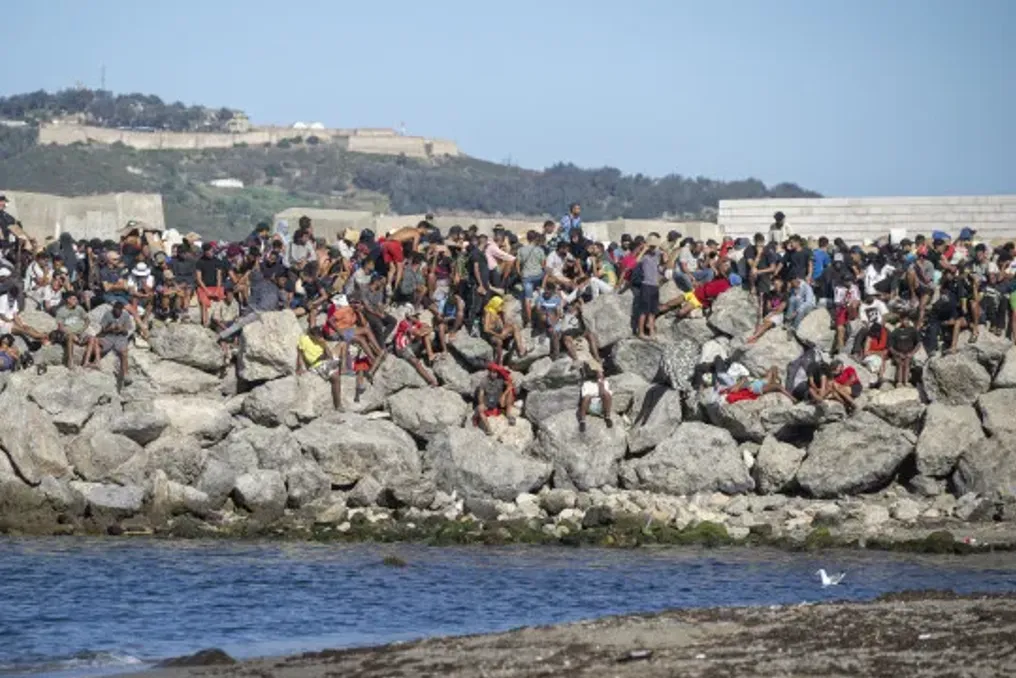
Amnesty International (AI) released a new report detailing 28 more incidents of aggression, humiliation, and abuse perpetrated by military personnel against migrants residing in Ceuta, bringing the total documented cases to fifty since the arrival of a large number of people in July.
The NGO demands an immediate, impartial, and thorough investigation into these abuses, calling for the preventive removal of involved military personnel and the establishment of appropriate criminal and disciplinary responsibilities.
Inquiries made to the Public Prosecutor's Office of Ceuta and the Ministry of Defence revealed that the organization had no knowledge of any soldier being under investigation or having been removed from service, nor did it know if the victims or witnesses of these alleged 'human rights abuses' were receiving any protection against retaliation.
The new document reveals that 18 of these cases occurred after the Ministry of Defence announced the opening of an internal investigation, prompted by the NGO's first complaint; however, AI stated it had not received any official information from the Government regarding these investigations.
Additionally, following initial complaints from AI and information published by elDiario.es, several courts in Ceuta initiated investigative procedures.
Besides the aggressions by members of the armed forces, this publication, resulting from a new visit to the autonomous city between October 23 and 26, recorded seven cases of mistreatment committed by the National Police and the Civil Guard.
In the report, the organization documented ten more situations—four of which involved minors—of cruel, inhuman, or torture treatment prior to the Ministry of Defence announcing the investigation. Among these are four particularly serious cases that may constitute acts of torture.
All incidents follow a similar pattern: they begin with kidnapping and transport in military vehicles to isolated areas, using handcuffs to immobilize the victims' hands.
One cited example is that of M., a 20-year-old young man who used to mime in the streets of Ceuta. He was taken for fifteen minutes to an isolated area where he was surrounded by about sixteen or seventeen soldiers who ridiculed him and forced him to remove all his clothes. One of the military personnel filmed the event with a mobile phone and demanded that he dance. Unable to resist, he was beaten, and a soldier pointed a weapon, shouting: 'If you don't dance, I will bury you right here.'
AI also recorded assaults and beatings following the disclosure of the first investigation, involving punches, kicks, baton strikes, and the use of a 'taser' by military personnel, generally from the regular force, against vulnerable individuals sleeping on the street. These attacks resulted, according to the NGO's graphic documentation with medical reports and testimonies, in limb and orbital fractures, bruises, erosive wounds, lumbar hematomas, or lacerations on the head compatible with baton blows, among other injuries.
Testimonies such as that of R., who woke up on October 24 while sleeping on Sidi Embarek road feeling a taser applied to his chest, causing dizziness, vomiting, and fainting, and that of Tunisian M., aged 40, who was sleeping on Benítez beach with three other Moroccan youths when four soldiers assaulted him in the face, causing a contusion that left him blind in one eye for two weeks, were recorded.
Authorities were also accused of committing aggressions against minor migrants, some of whom reported military abuses such as baton strikes while sleeping, theft, and destruction of belongings, including documents, in addition to threats, aggressions, and humiliations.
In the report, AI questions the police conduct at the NGO's No Name Kitchen headquarters on October 22 and the 'false accusation' of providing pepper spray to migrants, which would be part of a strategy to 'silence those who help and provide humanitarian aid.' The organization also criticizes the 'extremely worrying' stance of the Public Prosecutor's Office of Ceuta in this case, which requested preventive detention for two activists, which drastically contrasts with the lack of initiative in investigating the torture and mistreatment by military personnel.