China International Import Expo (CIIE) transforms from a trade platform to the foundation of daily life and industry
Read more
CGTN
cgtn.com

China International Import Expo (CIIE) transforms from a trade platform to the foundation of daily life and industry

A small bazaar, featuring products from over twenty countries and regions, is located on the fourth floor of a shopping center on Nanjing East Road, Shanghai's busiest pedestrian street. At the entrance, there is a free tasting area where visitors can sample Iranian saffron, Italian canned tuna, and coffee from Timor-Leste. Buyers can examine goods before purchasing; for instance, a bottle of Irish tonic water costs 9.9 yuan (approximately $1.49). One pensioner, who previously worked at a research institute, visits this spot almost every week to buy yogurt from New Zealand.

A buyer named Ma regularly stocks up on Australian rapeseed oil when their home supply runs out. Nearly all these items first appeared at the China International Import Expo (CIIE), which took place across the city in the National Exhibition and Convention Center—a vast four-leaf clover-shaped complex.

After nine sessions, this exhibition, which became the first national exposition dedicated to global imports, is measured not so much by square meters as by what ends up on tables in Shanghai. Products that debuted on the booths continue to appear in regular stores, a process the expo calls 'transforming exhibitions into goods.'

From Booth to Shelf

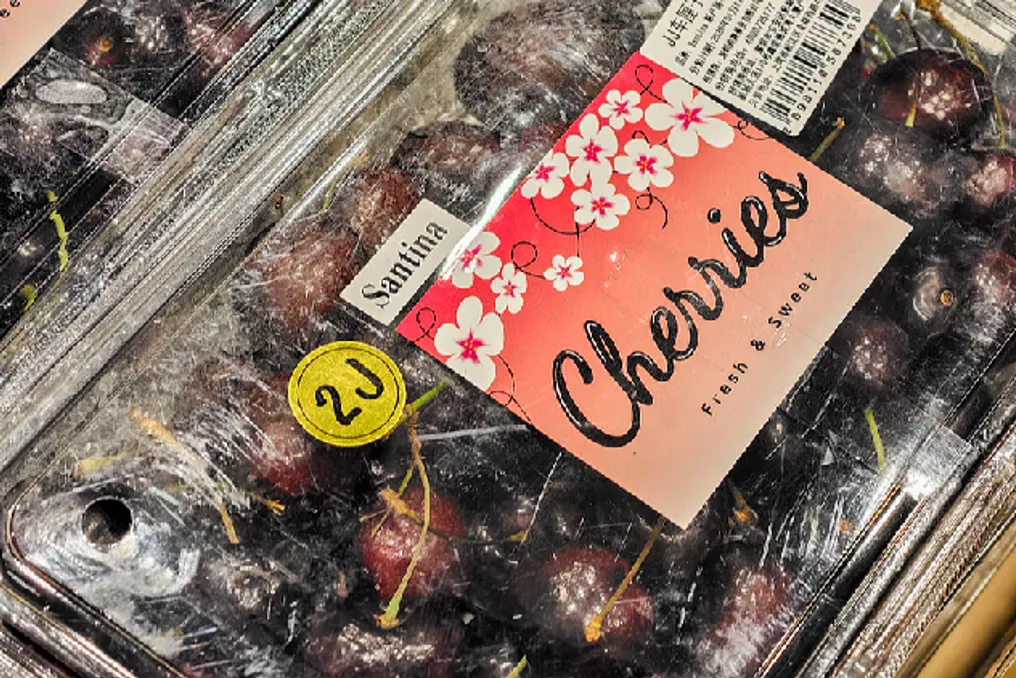
Consider the fresh produce section. In the first nine months of this year, Norway supplied China with 98,376 tons of salmon, a 42% increase from the previous year. According to the Norwegian Fishery Council, this volume is enough to make China the second-largest salmon market. Chile also contributed by exporting more than nine out of every ten tons from approximately 550,000 tons of cherries shipped last season, which arrived in just 23 days by sea. This volume has impacted prices, with wholesale prices dropping to a quarter.

Medicine followed a similar but quieter path. Boston Scientific, which first exhibited at the expo in 2019, has since received Chinese approval for 24 products it debuted at the event. Its intravascular ultrasound system, originally purely imported, is now manufactured in the Lingang area of Shanghai and subsequently sent to other markets. In 2025, Sanofi presented aficamten, a drug for heart disease, at its world debut at the expo, receiving Chinese approval the following month, ahead of Europe and the United States.

This year, Sanofi will showcase the world debut of rovadicitinib—a new Class 1 drug developed in China for treating myelofibrosis, a rare bone marrow disorder. Class 1 is China's category for a drug that has never been sold anywhere else.

From Goods to Industry

What China imports is also changing. According to the General Administration of Customs, imports grew by 22.3% in the first quarter of this year, outpacing exports for seven consecutive months. In September, imports exceeded 2 trillion yuan for the first time in a single month. A significant portion of this volume is related to factory procurement—only memory component imports increased by 150% as enterprises stockpile parts for production and sales of their own products.

For foreign suppliers, the expo has become a channel into the production chain, not just a retail shelf. Jungheinrich, a German intralogistics company, participates in every session. Over the years, the annual growth of its automated warehousing projects has risen from less than 20% to over 50%, and the share of local components in its equipment has increased from 51% to 80%. Equipment designed at the company's plant in Qingpu is now supplied to over 40 countries through the Jungheinrich network, and its division in Hongqiao has become the group's second global software center and a global OEM center.

Schneider Electric, another participant in the nine sessions, considers China its second-largest market and one of its four research bases. At the end of last month, the company began production in the Xianyang industrial park in Xi'an—its largest medium-voltage electrical equipment manufacturing base, which, once fully operational, will allow for a 60% capacity increase.

A Bigger Table

When the doors open on Thursday, the ninth CIIE will be the largest of all previous editions, adhering to the long-standing theme of 'New Era, Shared Future.' Approximately 162 countries, regions, and international organizations are participating; Canada and Sri Lanka are guest of honor, while Moldova, Romania, and UNDP are participating for the first time.

In terms of business, a record number of 4,142 foreign companies have registered, and for the first time, over 300 of the 500 largest global companies and industry leaders will be present at the expo. More than 480 products will debut in the global, Asian, or Chinese markets. The total exhibition area has exceeded 440,000 square meters for the first time. Among participants, American companies have reserved over 50,000 square meters, securing the largest exhibition space for the eighth consecutive year.

Running parallel to the CIIE is a key component of the expo—the International Economic Forum in Hongqiao, held under the slogan 'Stability and Cooperation: Jointly Building an Open World Economy.'

Similar stories

Buy Diwali Goods in Various Delhi Markets: From Decor to Discounted Gifts
Read more
www.aajtak.in

Buy Diwali Goods in Various Delhi Markets: From Decor to Discounted Gifts

Preparing for the Diwali festival involves decorating the home with beautiful diyas, colorful lights, candles, and other decorative items, as well as purchasing sweets, dried fruits, and other gifts for relatives and friends. Although markets become filled with new arrivals during Diwali, people's expenses often rise due to high prices, which disrupts the festive budget.

If you live in or around Delhi, instead of visiting large shopping malls or department stores for Diwali purchases, you can look into well-known local markets. Delhi has many such markets that offer a wide selection of goods—from decorative items and clothing to jewelry, handicrafts, and gifts. Some markets are known for wholesale purchases and budget shopping, while others are famous for their unique and traditional goods. Here, shoppers can choose items according to their taste and budget, sometimes achieving discounts of up to half price.

Best Markets for Diwali Shopping:

1. Sadar Bazaar: For Bulk Purchases on a Small Budget

It is impossible to talk about Diwali shopping without mentioning Sadar Bazaar. This market is one of Delhi's well-known wholesale markets and is popular because it allows people to buy many items within a budget. It is suitable if you need to purchase a large quantity of items for home decoration or prepare many packaged gifts for friends and relatives during Diwali. During this festival, decorative lights, candles, diyas, bandanwars, festive accessories, and various household items are sold here.

If you are buying many items at once, it is profitable to compare prices in different shops. Here you can buy: decorative items, lighting fixtures, candles, diyas, and giftware at an affordable price.

2. Chandni Chowk: Best Selection for Traditional Decor and Gifts

It is extremely difficult to discuss Diwali shopping in Delhi without mentioning Chandni Chowk. In the old lanes of this area, you can find many things related to the festival. If you want to decorate your home in a traditional style, you can look for diyas, decorative items, clothing, jewelry, and other festive items here.

Kinari Bazar here is particularly known for items like gota-patti, zari, and decorative lace ribbon. Furthermore, Dariba Kalan houses numerous shops selling jewelry and traditional goods. Thus, if you need not only to decorate your home for Diwali but also to make traditional purchases for the family, this market will be a good option.

Here you can purchase: traditional decorative items, decorative lace ribbon, clothing, jewelry, and festive goods.

3. Lajpat Nagar: Options from Clothing to Home Decor

If you plan to buy new clothes for Diwali and simultaneously decorate your home, you can visit the Central Market of Lajpat Nagar. It features shops selling clothing, footwear, fashion accessories, and various household items. During the festive season, you can also find options for decorative items, candles, diyas, and gift sets.

A feature of this market is the availability of options for different budgets. This allows you to combine the purchase of clothing for yourself and your family with the selection of Diwali decorative items in one visit.

Here you can purchase: ethnic wear, accessories, home decor items, candles, and small gifts.

4. Dilli Haat: Come Here to Give Something Special

If you want to give someone something unusual, different from the goods available in regular markets, you should visit Dilli Haat. This market, located in INA, is known for handicrafts and traditional goods from various regions of the country. Here you can find pottery, decorative lamps, textiles, jewelry, and many beautifully made handmade items. These items can be used to decorate your own home or as a special gift for friends and relatives. However, the assortment of goods here may change over time.

Here you can purchase: handicrafts, pottery, decorative lamps, traditional jewelry, and home decor items.

5. Janpath Market: Purchases of Small Gifts and Accessories

If you need to buy small gifts for friends or relatives for Diwali, Janpath Market is also a good choice. This market, located near Connaught Place, offers accessories, decorative items, handicrafts, and various small things. You can choose items according to your budget. If you prefer to give something beautiful and useful rather than an expensive gift, a walk through this market will be worthwhile. When shopping, be sure to check the quality and price in different shops.

Here you can purchase: small decorative items, accessories, handicrafts, and budget-friendly gifts.

6. Karol Bagh: For Buying Clothing, Jewelry, and Festive Goods

If you want to buy new clothes for Diwali or purchase traditional gifts for the family, Karol Bagh can also be on your shopping list. Along Ajmal Khan Road and in nearby areas, you can find clothing.

New popular shopping center in Teresina will provide 377 kiosks for street vendors, reports the city hall
Read more
g1.globo.com

New popular shopping center in Teresina will provide 377 kiosks for street vendors, reports the city hall

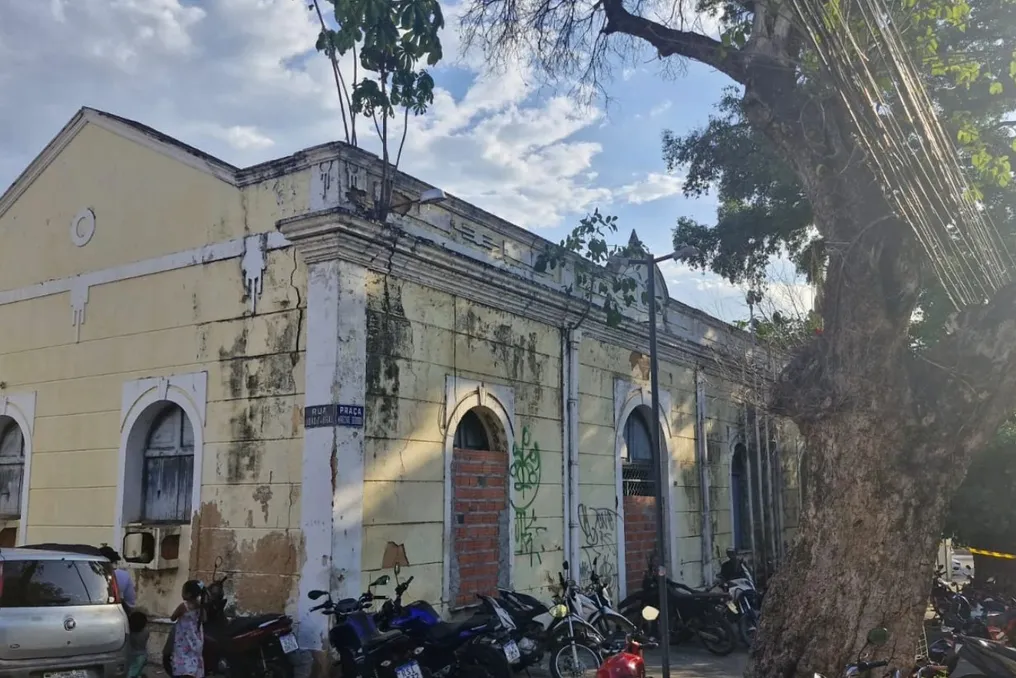
The new popular shopping center in Teresina will be located in the building of the former Companhia Editorial do Piauí (Comepi), which is in the center of the capital. This premises was transferred by the State Government to the Teresina City Hall for a period of 20 years.

The total planned investment volume for this project is 26 million Brazilian reais. Previously, this building served as the location of the Official State Gazette and Comepi itself.

Before the start of construction work, the project must undergo a tender process. Currently, the city hall has not announced the timeline for launching the tender, nor has it set forecasts regarding the start and completion of construction.

About the space

The new enterprise will become the second unit of Shopping da Cidade and will include 377 kiosks intended for the sale of goods by street vendors.

Shenzhen Bay MixC Phase II: Project integrates retail, culture, and urban infrastructure
Read more
archdaily.com.br

Shenzhen Bay MixC Phase II: Project integrates retail, culture, and urban infrastructure

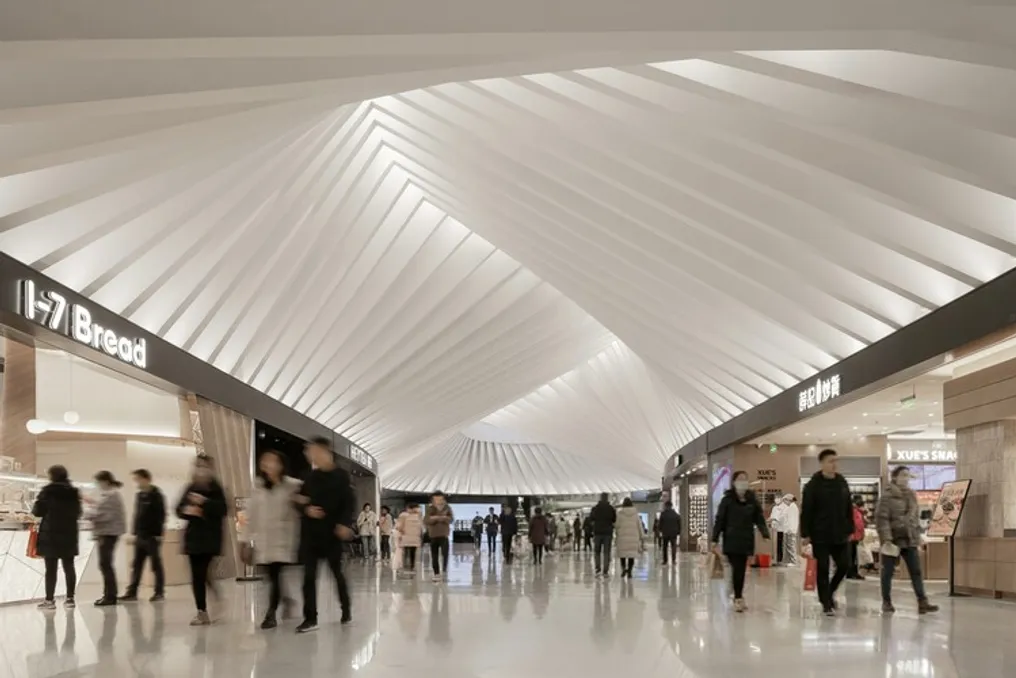
The description provided by the project team details how Shenzhen Bay MixC Phase II is redefining the concept of global shopping centers, transforming them from mere consumption points into multifunctional social and cultural ecosystems. This cutting-edge retail development, built by China Resources Land in Shenzhen, prioritizes user experience, connectivity, and urban integration, moving away from traditional commercial planning.

Spanning over a kilometer, the project serves as a new urban backbone for the district, linking Shenzhen's dense commercial center to the parks located on the shores of Shenzhen Bay. This connection is not just physical; it establishes a new experience-focused urban hub operating across various dimensions and levels.

The magnitude and complexity of the project transcend the definition of an ordinary mall. It is integrated with metro systems, adjacent developments, elevated walkways, and underground circulation, becoming a vital component of the urban infrastructure that supports the city's daily life. However, its goal goes beyond mere mobility efficiency; the project converts the act of moving into an experience.

Along the complex, there is a continuous spatial spine connecting retail, leisure, culture, and landscaping into an uninterrupted three-dimensional journey. Visitors move easily between commercial areas, public gathering spaces, dining options, cultural moments, and contact with nature, without rigid boundaries between these elements. This layered integration results in a more engaging and resilient urban environment, stimulating longer stays, repeat visits, and a deeper emotional bond with the location.

The central premise of the project lies in the idea that movement itself can define the identity and lived experience of the space. Inspired by Shenzhen's dynamic rhythm of transformation, the design structures the visitor's journey as a progression through constantly changing spatial atmospheres. Two circulation systems work together to organize this experience.

A straight and direct route functions as a functional urban corridor, facilitating intuitive navigation along the kilometer-long stretch and reinforcing the logic of the city's infrastructure network. Parallel to this, a succession of winding paths offers opportunities for exploration and pauses. These quieter environments house designer boutiques, restaurants, social areas, and informal meetups, allowing visitors to interact with the project on a more personal and experiential scale. The balance between speed and pause gives the development a unique rhythm, catering to both the intensity of metropolitan life and the desire for leisure, discovery, and connection.

To enhance orientation and intensify immersion, the project is divided into three distinct atmospheric zones: Envision, Life, and Memory, representing the future, the present, and the past, respectively. Instead of using literal themes, these identities are communicated through subtle changes in materiality, lighting, scale, and climate.

Near the city limits, the spaces appear vibrant and future-oriented, characterized by reflective surfaces and an expanded sense of movement. Deeper within the project, the atmosphere becomes more stable and social, accommodating daily activities and interaction. Towards the waterfront, the experience softens even further, reconnecting visitors to the landscape, memory, and civic space. These transitions allow people to intuitively perceive their location within the larger trajectory while building a richer emotional connection with the environment.

Various large public spaces punctuate the project's spine, transforming movement into a sequence of memorable urban moments. Large-scale reception areas from the metro, immersive digital environments, civic plazas, and sculptural installations act as visual landmarks throughout the complex. These moments not only aid in orientation through the project's expressive scale but also establish places for meetings, interaction, and shared experiences. Together, they reinforce the notion that the mall transcends the role of a mere commercial destination, configuring itself as a civic environment that supports urban life during the day and caters to various user profiles.

In summary, Shenzhen Bay MixC Phase II proposes a new relationship between commerce and the city. By merging commerce with infrastructure, culture, leisure, and nature, the project moves beyond the conventional shopping center model, heading towards a more flexible and experience-centered urban typology. The final result is not just a place to shop, but a dynamic urban structure that evolves through movement, interaction, and routine, mirroring the continuous metamorphosis of Shenzhen itself.

Popular