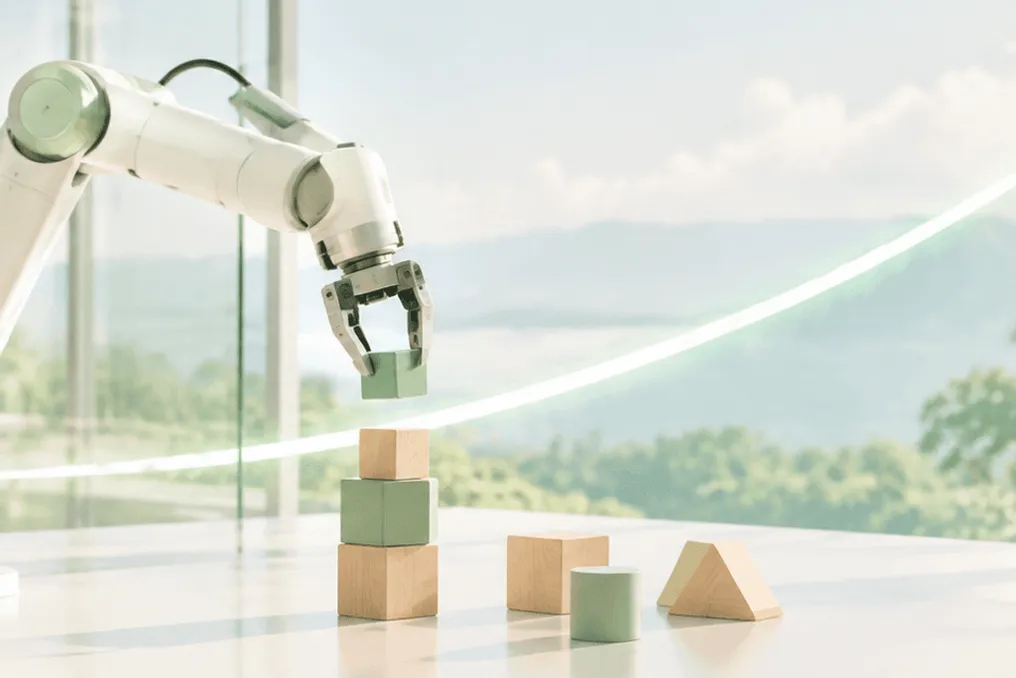
Moxin Technology presents MoWorld 2.0 — a 4D world model with physics simulation based on Ascend
Read more
Pandaily
pandaily.com

Moxin Technology presents MoWorld 2.0 — a 4D world model with physics simulation based on Ascend

Moxin Technology has introduced MoWorld 2.0, a four-dimensional world model that was trained and launched directly on Huawei Ascend hardware. The presentation took place at the World Internet Conference forum in Uzhgen on November 4th.

This release is an evolution of the previous MoWorld 1.0 version, released in July. According to the company, the main improvement is the implementation of physical processes. MoWorld 2.0 integrates factors such as gravity, elasticity, buoyancy, lighting, and heat, as well as the properties of solids, soft bodies, liquids, and deformable materials into the process of building and interacting with space.

The result of this work is 4D Gaussian assets, which can be used for simulations, rendered in real-time, and reused multiple times. Thanks to the modeling of numerous physical aspects, Moxin asserts that the model generates not only the appearance of space and objects but also determines in real-time how objects interact, how external forces act on them, and how the environment changes.

During the demonstration, it was shown how a light breeze makes the pages of a book flutter, and how a bookmark falls onto the floor. This required accounting for the force and direction of the wind, the flexibility of the paper, the weight of the bookmark, and the rigidity of the floor. Other examples demonstrate scenes that can be edited and interacted with, as well as the ability to speed up or slow down time.

MoWorld 2.0 was developed and launched on a fully domestic Ascend computing base. Moxin reported that it collaborated with Huawei teams on optimizing inference systems, multi-NPU scheduling, and training long sequences. In their own estimation, the inference cost can be reduced by up to 30% compared to the cost of installing a GPU of similar scale.

The company also noted an increase in speed: video inference increased from a peak of 50 frames per second in version 1.0 to approximately 70 frames per second. Rendering of 3D and 4D Gaussian assets exceeds 500 frames per second, and mobile phone tests reach about 100 frames per second. Previously, Moxin had presented a lightweight version of MoWorld on Huawei's Mate 90 phone.

Moxin is working with partners to validate and implement the technology in various fields. For embodied AI, MoWorld 2.0 creates virtual environments with spatial structure and basic physical feedback, allowing robots to train and repeat actions in simulation. In autonomous driving, the model generates scenarios with rare phenomena such as rain, snow, potholes, and sudden obstacles. Other applications include creating industrial digital twins of production lines and mines, urban planning, virtual tourism, and creating reusable scenes for film and game production that support free camera movement, object editing, and weather changes.


Similar stories

AgiBot unveiled GO-3 Preview robot, which ranked first in three ratings and plans to become an open-source project
Read more
pandaily.com

AgiBot unveiled GO-3 Preview robot, which ranked first in three ratings and plans to become an open-source project

AgiBot released the GO-3 Preview model on October 29. This embodied artificial intelligence model is capable of continuous learning at all stages: during pre-training, after it, and even after deployment into operation. AgiBot intends to make the full model publicly available by the end of 2026.

GO-3 Preview is based on an architecture that AgiBot calls WRAM, or World Reasoning Action Model. This architecture links task reasoning, future event prediction, and action generation, allowing the robot to understand instructions, anticipate outcomes, and perform corresponding movements.

The model recently won first place in three embodied AI rankings: RoboDojo, RoboTwin, and RoboColiseum. AgiBot claims that the model scales in two directions. On one hand, rich examples of object processing and task development are provided by first-person videos of people, while robot trajectories link observations with actions and physical results.

On the other hand, the model's higher learning capacity transforms this disparate experience into skills that can be applied to new tasks. After pre-training, the company notes that robots can perform unfamiliar tasks in homes, kitchens, multi-robot systems, and execute fine manipulation without additional fine-tuning.

With several demonstrations, the model is capable of mastering long and delicate operations, such as making jianbing—a Chinese savory crepe. After fine-tuning and step coordination by the agent, the robot can also assemble Lego pieces.

For the post-training phase, AgiBot developed the Genie Evolver distributed learning system, which combines about one hundred real robots with physics simulation and world models. In a table curling game, the robot surpassed the average tested human after four hours of online training. In a block tower game, it managed to pull out five blocks consecutively while maintaining the tower's stability.

After deployment, the Genie Master agent structure ensures communication between reasoning, execution, and feedback, allowing robots to continuously improve during operation. The AgiBot G2 robot, operating in a real 24-hour store, independently detected the causes of its own failures, adjusted its approach, and retained the acquired knowledge without human intervention or tuning. This robot's success rate in a full workflow increased from 28.6 percent on the first day to a stable 85.7 percent after five days.

In a task similar to hanging small hooks, AgiBot states that this method increased the success rate of the individual task by 17.7 percentage points compared to traditional controlled fine-tuning, and the training process continues online.

MOSI and OpenMOSS release open-source MOSS-Image model for text and layout control
Read more
pandaily.com

MOSI and OpenMOSS release open-source MOSS-Image model for text and layout control

The MOSI Intelligence team, in collaboration with the OpenMOSS team, has introduced MOSS-Image—a 5-billion parameter text-to-image conversion system. This system is designed to create graphic materials such as product shots and posters, where not only high image quality but also dense text placement and precise layout adherence are critical.

The release includes two versions: MOSS-Image-Base and a fine-tuned version, MOSS-Image-SFT. The weights for these models are available on Hugging Face and ModelScope under the Apache 2.0 license. A technical report indicates that MOSI Intelligence, the Shanghai Institute of Innovation (SII), Fudan University, and Shanghai Jiao Tong University were involved in the development.

Within days of its launch on October 16, Chinese tech media reported that the model had taken leading positions in the Hugging Face text-to-image trends list. Community activity was high: downloads and stars on GitHub grew rapidly, and the official repository exceeded 1,400 stars. It should be noted that these figures are community data, not verified company metrics, and they are constantly changing due to the emergence of numerous mirrors and distilled checkpoints.

Developers on Reddit and X have already published comparative tests against other open-weight models. The community has also released distillations with steps 8 and 4, quantization packages, and workflows for ComfyUI.

The main advantage offered by the team is control. MOSS-Image accepts prompts up to 4096 tokens long and can utilize a structured JSON layout that defines text and objects using bounding boxes, rather than relying solely on natural language composition. According to the team's test on the Long Long Text Benchmark, the model demonstrates an average text coverage of 96.3 percent among open-weight models.

On the RealLayoutArena benchmark, which is an end-to-end blind design test, the model's Elo rating is 1698.70. This score trails GPT Image 2 when using brief design prompts but reaches 1807.34 when applying general enhanced prompts, placing it first in the second tier according to the team's own evaluation system.

Architecturally, MOSS-Image is a single-stream diffusion transformer pre-trained from scratch. The unified generative path is powered by a frozen text encoder Qwen3.5-9B and a FLUX.2 variational autoencoder. According to the team, the training recipe involved filtering AI-generated images to maintain greater photographic diversity, and the training was conducted on heterogeneous GPU platforms. Adapters for Diffusers, ComfyUI, SGLang, and vLLM-Omni are already available, and a hosting API has been launched on the MOSI platform.

Providing open weights gives designers and agent developers a compact foundation for complex layout work without needing to wait for access to a closed API. It is important to emphasize that all benchmarking figures and rankings presented are based on the team's report and community data, and should be viewed as self-reported or community-sourced signals, not independent laboratory results.

ShengShu streams Motubrain 2.0 training process before model release
Read more
pandaily.com

ShengShu streams Motubrain 2.0 training process before model release

The global models team at ShengShu Technology has started a live stream of the entire training process for Motubrain 2.0, the next version of its embodied artificial intelligence model for robots. The broadcast began on October 21st and is scheduled to last about two weeks.

The company announced that Motubrain 2.0 will soon be released to the public and decided to demonstrate the training process before this release.

The Motubrain models represent a family of fundamental robot models from ShengShu, aimed at providing robots with a universal brain capable of applying skills across various tasks, scenarios, and robot types. The first version of Motubrain was introduced in April as a global model. It is worth noting that ShengShu is more widely known for its Vidu video generation models.

Stream Structure

The live stream is divided into four stages. The pre-training stage explores how training scale affects performance and zero-shot generalization ability. Subsequent training focuses on performing specific tasks to improve execution. This is followed by an agent task stage, which tests whether the model can transfer acquired knowledge to other assignments. The final stage is dedicated to recursive self-improvement to determine if the model can evaluate its actions based on execution feedback and improve them.

The real-time streaming page displays the training steps and success metrics as they are updated.

The main idea behind this demonstration is transparency. Progress in embodied AI is usually assessed by external observers through polished robot demonstrations, benchmark tables, and scientific papers, which rarely reveal exactly how capabilities are formed during training or what problems arise. ShengShu claims that the stream will show not only successes but also errors, the trial-and-error process, and adjustments, and hopes to share open questions regarding scaling, cross-task generalization, and autonomous improvement with other researchers.

This step aligns with a broader trend among Chinese AI teams who publicly share their training progress. Previously, Luo Fuli, head of Xiaomi's MiMo models, published details of the reinforcement learning training phase for MiMo-V2.6.

Nevertheless, there are limitations to what a live stream can prove. The model weights have not yet been released, and the company itself states that the research remains exploratory, and the results will require subsequent experiments and evaluation for confirmation. The announcement was made by ShengShu and covered by Chinese tech media. The true test will be the public release and whether its benchmarks match what was shown in the stream.

Popular