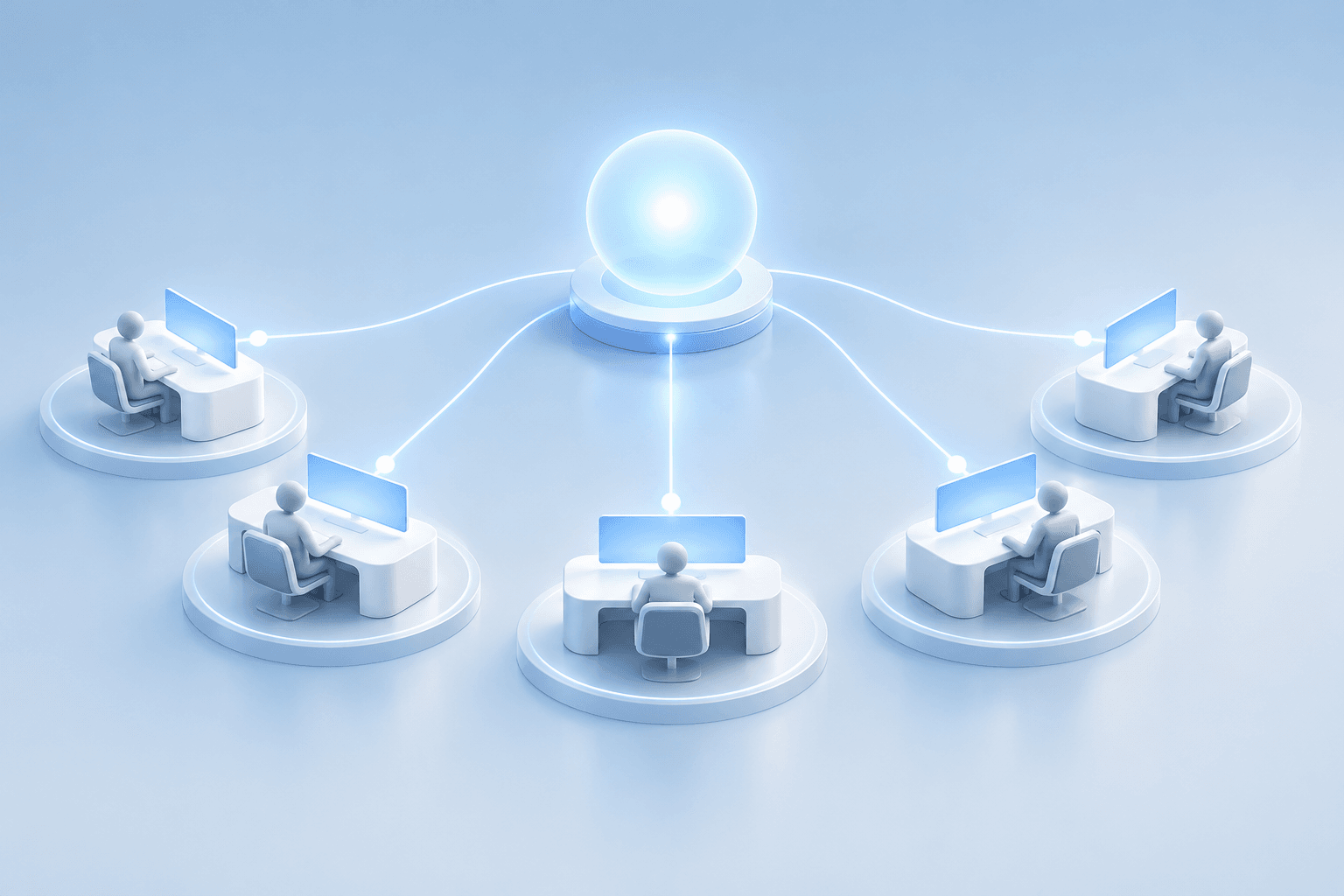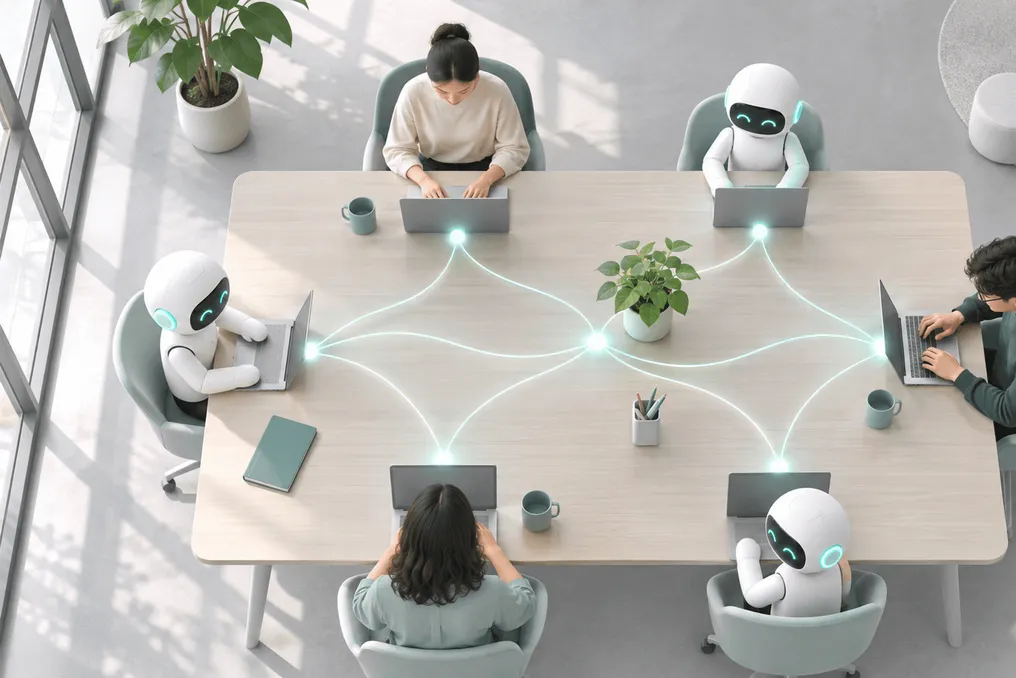
openJiuwen, an open agent community supported by Huawei, has released Hyper-Agent—a swarm architecture that moves agents from isolated chat sessions into real group work chats, transforming them into permanent digital employees. This was reported by IT Home as part of the community's publication.
The functionality is available in openJiuwen WorkSwarm, whose code is open-sourced on GitHub under the name JiuwenSwarm. The main change lies in altering the principle of agent connection to sessions. Instead of an agent being tied to a single conversation, the Persistent Agent retains its identity and state, continuously performing tasks while sessions become a base resource that the system distributes, schedules in parallel, and resumes while preserving context.
The system includes a gateway connecting instant messaging applications and a web interface, along with an AgentServer responsible for planning agents and work sessions. According to the community, this development builds upon previous work on Persistent Sessions and allows one agent to perform multiple tasks across various third-party group chats.
In WorkSwarm, users create these agents through an employee center, using either ready-made expert templates or creating them from scratch. When configuring, responsibilities, working style, delivery requirements, skills, connectors, knowledge sources, and even a dedicated email address are specified. When the context window approaches its limit, the agent switches to a new one, passing a summary of goals, progress, and next steps, and retrieves archived history if necessary.
There are two operating modes: passive mode only responds when mentioned, and adaptive mode decides whether to ignore a message, reply, or intervene based on its role and the flow of the conversation. An activity panel displays each agent's activity, token usage, and recent response time.
The same agent can operate in office applications such as Feishu and DingTalk, accepting a request in one channel and providing the result in another. Approval is required for information exchange between groups: users verify the source group, the recipient, and the content, after which they grant permission once or permanently, which can be revoked later.
Team members can also run WorkSwarm on their own devices, allowing agents on cloud servers and personal PCs to collaborate in the same group using locally authorized files and tools.
For larger projects, WorkSwarm utilizes the SwarmEngine group chat, which unites users, persistent agents, individual experts, and expert teams in one space. The expert team has a leader who takes tasks, reports progress, and organizes deliverables, while team members work in the background. Experts can be drawn from third-party agents like Codex and Claude Code and mixed with internal digital employees.
The community notes that future plans include the possibility of coordinating personal and cluster computing resources, active learning, and failure recovery to ensure longer-term collaboration.