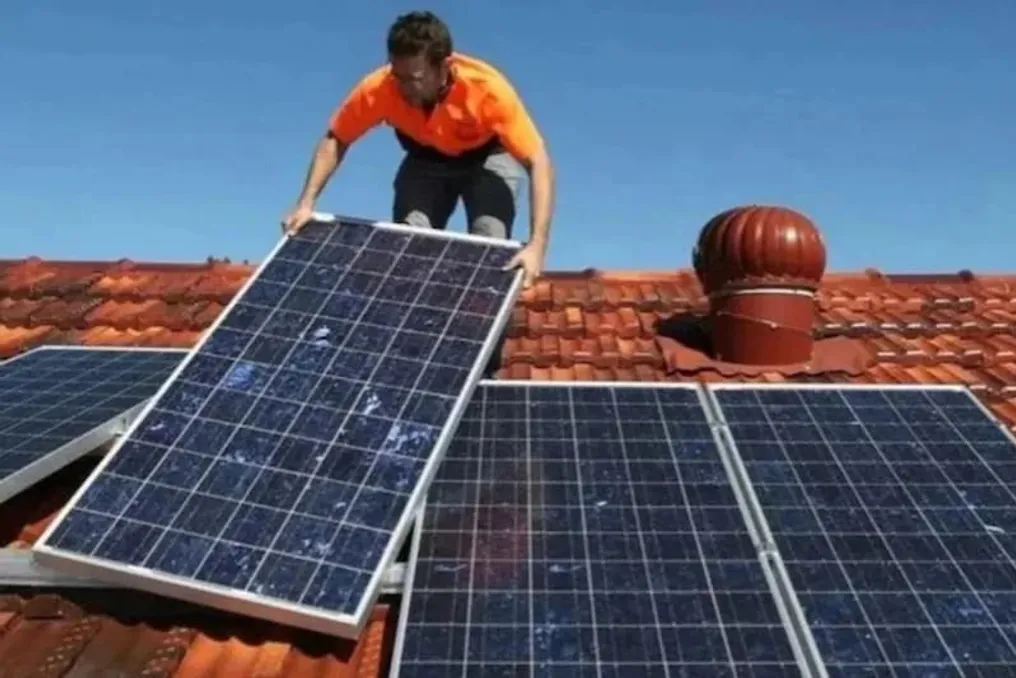
PM Surya Ghar State Program Offers 300 Units of Free Electricity; Minister Comments on Solar Panel Installation Rates
Read more
Aaj Tak
www.aajtak.in

PM Surya Ghar State Program Offers 300 Units of Free Electricity; Minister Comments on Solar Panel Installation Rates

The central government's free electricity scheme, PM Surya Ghar, is seeing high demand, and the number of its beneficiaries is growing daily. Under this program, recipients not only receive 300 units of free energy but can also qualify for a subsidy of up to 78,000 rupees.

Union Minister Prakash Joshi reported on the pace of solar panel installations on rooftops, noting that India will be able to install 100,000 rooftop solar systems every 4-5 days in the near future.

As the cold weather sets in, homes are actively using heaters and water heaters. However, the use of these appliances often raises concerns due to rising electricity bills. Nevertheless, people who have installed solar panels on their home roofs under the PM Surya Ghar Muft Bijli Yojna state program are using these devices without worry, having eliminated the problem of bill payments.

It is worth noting that Prime Minister Narendra Modi launched the PM Surya Ghar Muft Bijli Yojna program in February 2024. The benefits of this scheme contribute to its growing popularity. This government initiative provides 300 units of free electricity, along with a significant subsidy of up to 78,000 rupees for costs associated with installing a rooftop solar panel. The total cost of the program is 75,000 crore rupees, and its goal is to provide up to 300 units of free electricity monthly to 100 million homes through the installation of rooftop solar panels by March 31, 2027.

Union Minister for New and Renewable Energy, Prakash Joshi, told Business Today that the work on installing rooftop solar panels under PM Surya Ghar is progressing rapidly. He also noted that new solutions will emerge as India's power system becomes decentralized.

During the BRE 2026 summit, Joshi stated that approximately one hundred thousand rooftop solar systems are currently being installed in India every six days, and this pace is expected to accelerate further. The minister emphasized that in the coming weeks, the interval between every hundred installations will be only four or five days.

He added that structural changes are occurring in the energy sector: in addition to traditional power plants, homes and farmers are also becoming electricity producers. Previously, the number of generation points was very low, but now there are thousands and millions. Now every home can generate electricity, farmers produce energy, and some even sell it to DISCOMs.

Over 65 Million Homes Illuminated

According to the latest data on the PM Surya Ghar Muft Bijli Yojna program, over 88.3 million applications were received as of November 2, and more than 55.3 million rooftop solar systems have been installed. According to the National Portal for Rooftop Solar, this has resulted in over 65.4 million homes receiving illumination.

Joshi explained how the rapidly evolving rooftop solar ecosystem is transforming the country's energy landscape, creating both new opportunities and challenges for utilities and grid operators. In response to questions about the program's progress, Joshi expressed confidence that the government will meet the planned milestones and achieve the program's targets.
Similar stories

Indus Towers plans to reach 100 thousand solar installations by the 2029 fiscal year
Read more
business-standard.com

Indus Towers plans to reach 100 thousand solar installations by the 2029 fiscal year

Indus Towers, India's largest provider of telecommunication towers, aims to equip 100,000 towers with solar panels by the 2028–2029 fiscal year (FY29). The company, supported by the Bharti group, plans to increase the number of such towers from the current 50,000 to 100,000, based on its base of 280,000 towers as of September 2026. The use of solar energy at Indus towers began in mid-FY24.

Currently, the installed solar systems generate 300 megawatts (Mw), which covers the power needs of existing sites and reduces the company's rising costs caused by increasing diesel fuel prices. This was reported by Managing Director and CEO Prachur Sah during a conversation with Gulvin Aulakh.

Listen to this article

Indus is actively using artificial intelligence (AI) to improve operational performance, which will eventually lead to reduced operating expenses. Sah also noted that the company's entry into the African market, covering three countries, is a long-term strategy aimed at building new towers at lower costs, making offerings attractive to African telecom operators.

Responding to the question about mitigating the impact of rising fuel costs due to the Middle East conflict, Sah specified that the 50,000 solar installations provide a total installed capacity of 300 MW. He stated that, according to their research, this makes them the largest company of its kind globally. Previously, the towers were powered by electricity, diesel fuel, and batteries, and the increase in solar energy usage started about two and a half years ago. The ambition to reach 100,000 solar towers by FY29 not only saves money but also reduces emissions.

Furthermore, in the first half of FY27, the company managed to reduce diesel consumption by 11% compared to the first half of FY26, thanks to a combination of solar energy, fuel, batteries, and the use of AI for energy management. This significant reduction is notable given the sharp rise in diesel prices, allowing them to offset the increased cost. Some sites in Jammu and Kashmir, for example, are completely self-sufficient, running only on solar energy and batteries without the need for diesel.

Expansion to batteries?

Sah added that two to three years ago, the company made a comprehensive decision regarding its energy operations, including the implementation of solar systems and the transition from old lead-acid batteries to lithium-ion ones. This process is ongoing, and all sites will be converted to lithium-ion storage in the coming years. The goal of this transition is to enable fast charging at the sites for energy storage, guaranteeing customers reliable, uninterrupted tower operation.

Regarding the use of AI in tower management, 3,000 towers were launched and 8,000 lease agreements were signed in the second quarter of FY27. The company has a healthy order book, and the rollout of the second client (Vodafone Idea) is also gaining momentum. There are no issues with land access rights. Sah emphasized that demand for towers will be stimulated by the growth in data usage, and the company meets the requirements of telecom operators. Internally, Indus uses AI to integrate all its towers, having full control over all electrical equipment at the sites. If a problem arises on a solar tower, the system automatically creates a ticket, and it is addressed immediately. Currently, nearly 250,000 sites transmit data in real time.

What is the expansion plan in Africa?

The company has begun operations in three African countries—Nigeria, Zambia, and Uganda—and has obtained the necessary licenses. The first installations took place in Uganda and Zambia in September. Africa is viewed as a long-term strategy: the company intends to pursue greenfield expansion, distinguished by lower capital expenditure per tower and reduced energy costs. This is a development plan for the coming years, as Africa represents a growing and promising market.

Concerning further expansion beyond these three countries, Sah noted that a decision will be made after the company solidifies its position in the current market.

Regarding the use of AI to improve tower management, he explained that active work is underway to change operating methods. The goal is to establish a standard service level for clients. The company uses AI-based image and video analytics to inspect sites, which increases production efficiency and safety, especially during critical events such as floods. AI is used for maintenance and site surveillance. Since many sites are connected, two-way communication is possible, which aids in inventory management. Additionally, all diesel generators are equipped with sensors that allow for real-time tracking of fuel levels, simplifying the determination of the required replenishment volume.

Farmer in Rajasthan Used Land for Growing Crops and Installing Solar Power Plant
Read more
www.aajtak.in

Farmer in Rajasthan Used Land for Growing Crops and Installing Solar Power Plant

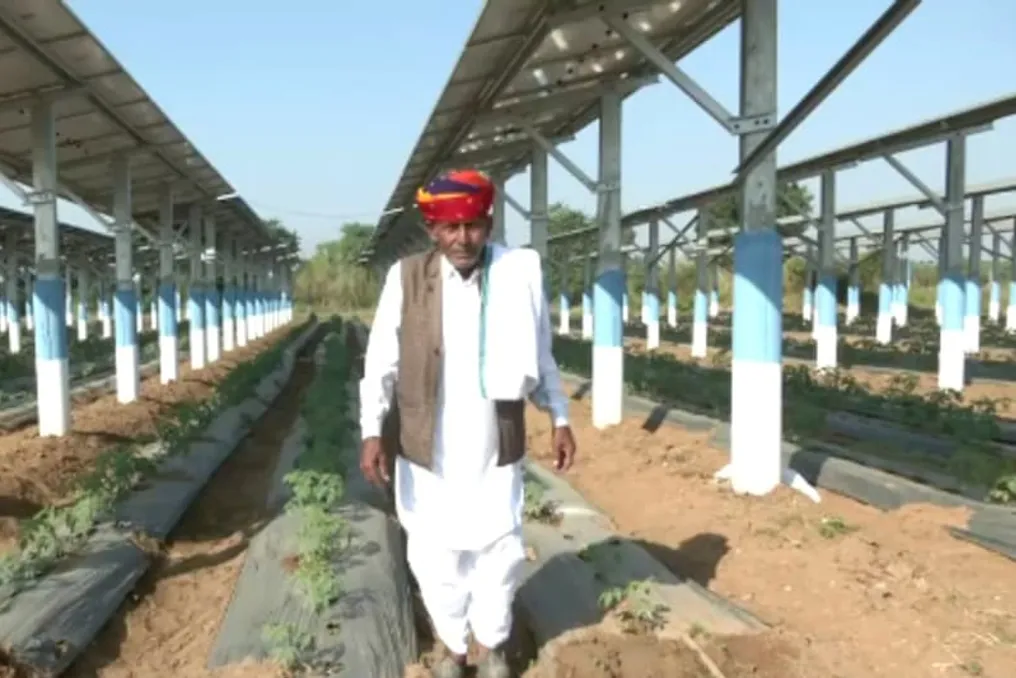
In the context of intense heat, water scarcity, and limited income in Rajasthani agriculture, farmer Kajormal Jhaat from the village of Kundanpura found an innovative way to combine farming and solar energy production. On his field, crops are growing simultaneously with solar panels installed above them, demonstrating that with the right application of technology, one piece of land can be used for both agriculture and electricity generation.

Initially, Kajormal Jhaat was engaged in growing wheat and millet. After installing the solar power plant, he gained a new source of income from electricity generation, but traditional farming on this land became difficult. Nevertheless, as a farmer, he could not give up the land and decided to implement a model that allows him to continue growing crops parallel to solar energy production.

According to this idea, the agro-photovoltaics (agro-PV) technology was applied to his field. According to this technology, solar panels were installed at a height of about 11 feet above the ground to ensure enough space for farming below. Currently, corn, chili peppers, and tomatoes are being grown under these panels, with tomatoes appearing the most abundant. Thanks to the panel height, it is still possible to conduct agricultural activities and care for the crops on the ground.

One of the potential advantages of this technology is the change in the microclimate on the field. Partial shade from the solar panels can help preserve soil moisture and somewhat reduce the impact of intense sun. However, the actual benefit depends on the crop, weather, irrigation systems, and local conditions.

Kajormal Jhaat's solar power plant has a capacity of about 600 kilowatts. The electricity generated by it is fed into the grid, while agricultural production continues on the same land. The feature of this model is that after installing the solar station, the land is not necessarily limited only to energy production; combining agriculture and energy production opens up opportunities to increase the efficiency of using one piece of land.

This experiment showed the potential to increase the farmer's income. If previously the annual income from traditional farming was estimated at about 40 thousand rupees per acre, the total income from combining agriculture and solar energy could exceed four hundred thousand rupees. It is important to clarify whether this amount is the total income or the net profit after deducting expenses. Actual earnings depend on yield, electricity generation, maintenance, and other costs.

Kajormal Jhaat's initiative came at a time when options for increasing farmers' incomes and more efficient use of agricultural land are actively being sought. If this technology is adapted to local needs, costs, and crop types, it could become a path for farmers to connect to solar energy without giving up farming. This combination of crops in the field and electricity from above represents a new prospect for the future of agriculture.

Popular