Eighteen years ago, when I received the news that Virat Kohli was at a bat factory in Madhavpur, Meerut, I immediately went there. I learned the way, found the factory, and finally met the young man who had brought India victory in the 2008 U-19 World Cup just a few months prior. He had come to Meerut to buy a new bat before traveling to Sri Lanka. His international cricket career had not yet begun. We talked for about half an hour. He told me that he had to prove himself. At that time, no one could imagine that this young man would one day make all the bowlers in the world tremble, and that his name would one day be associated with the word 'King.'
Today, Virat Kohli is 38 years old. Sometimes in life, there are encounters whose significance we do not understand at the moment. Time passes, years go by, and when we look back, we realize that it was not just an ordinary meeting. For me, the meeting with Virat Kohli at the bat factory in Meerut was exactly like that.
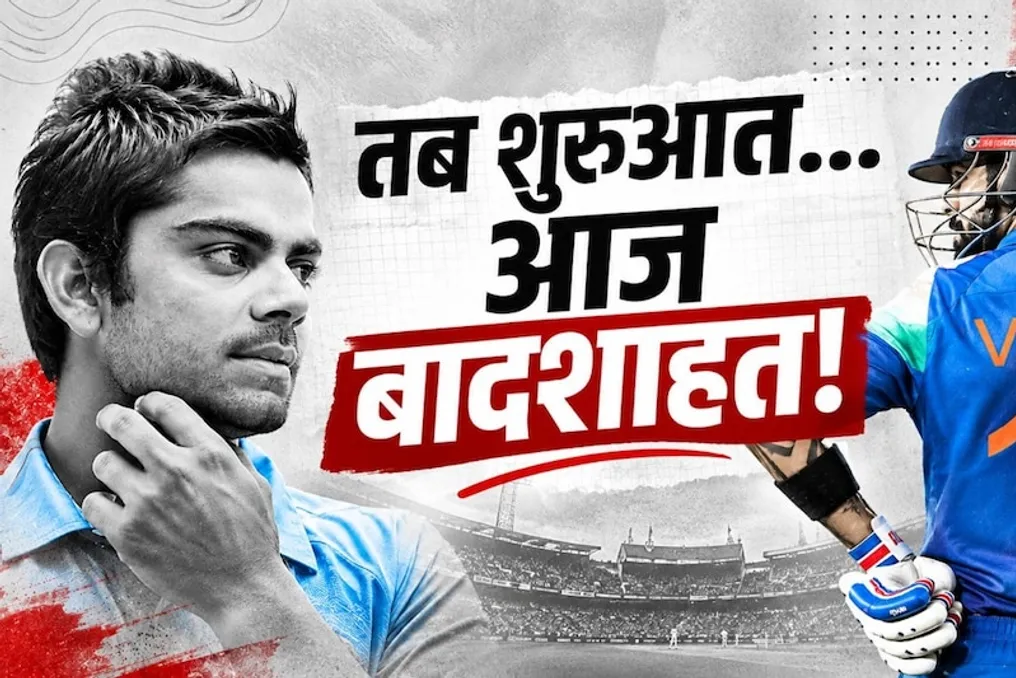
Today, Virat Kohli's name is known to everyone. His aggressive style on the field, long list of records, century celebrations, and passion to fight until the end for victory make him a favorite of millions. However, in 2008, he was a young player on the threshold of establishing himself in Indian cricket. There were no mustaches on his face, no beard, no pomp of stardom, and no crowd of fans around. Just a young cricketer facing a big dream.
This was in March 2008. Under Virat Kohli's leadership, India won the U-19 World Cup title in Kuala Lumpur. This victory brought him fame in the world of cricket. Now people knew at least that there was a guy from Delhi named Virat Kohli. He made India the youngest world champion under his leadership.
Virat debuted in first-class cricket for Delhi back in November 2006. After winning the U-19 World Cup, he was invited by the Royal Challengers Bengaluru (RCB) team for the first season of the IPL (Indian Premier League). But his performance in the 2008 IPL did not allow him to become widely known. In 12 matches, he scored 163 runs, averaging 15, with a best score of 38 runs. The situation in RCB was also not good: the team managed only four wins in 14 matches.
The first IPL season ended on June 1, 2008. Shortly after this, Virat's career changed in a way that led him to the doors of the Indian national team. But to understand the story of this turn, one needs to go back a little further.
Former chief selector Dileep Vengsarkar played a crucial role in promoting Virat Kohli to the Indian national team. In one interview, he said that he first saw Virat at the age of 15. At that time, Virat was playing for the Delhi U-16 team against Mumbai (then Bombay) in Kolkata. The team was led by Tejashwi Yadav. After watching the game, Vengsarkar noted: 'He impressed me very much.' That is, even before being selected for the Indian national team, Virat attracted Vengsarkar's attention with his talent.
The victory in the U-19 World Cup strengthened this trust due to Virat's captaincy and play. After that, he was chosen to participate in the Emerging Players tournament in Australia. On July 18, 2008, Virat scored 120 not out against the Emerging New Zealand team and led India to victory. Vengsarkar himself attended this match. This innings convinced him of Virat's talent and psychological maturity.
Finally, on August 7, 2008, the Indian squad for the trip to Sri Lanka was announced. Virat Kohli's name was included in the 16-man ODI squad. The five-match series was set to begin on August 18. Virat was set to debut in international cricket.
And before this trip, Virat came to Meerut. He needed a new bat.
Meerut is famous for its cricket bats. Bat factories here were known across the country. Virat also had long-standing connections with this city. His childhood coach Rajkumar Sharma connected him with BDM even in his teenage years. Virat wanted to advance in cricket and was looking for a good bat. His coach Rajkumar Sharma recommended representatives from BDM. The company provided him with two bats annually during his childhood. This continued for some time after he joined the Indian national team.
Virat came to Meerut even before the trip to Sri Lanka. He did not know that this young player, who came looking for a bat, would one day leave an indelible mark on the world of cricket with such a bat that his name would become a brand.