Driver develops application to help colleagues calculate the real profit of the work
Read more
Olhar Digital
olhardigital.com.br

Driver develops application to help colleagues calculate the real profit of the work

At the end of each workday, ride-share drivers check their statements to see the amount collected from trips. However, this amount rarely reflects the net profit, since costs such as fuel, maintenance, taxes, and other expenses reduce what is actually left in the pocket. Without adequate control of these expenses, many professionals have difficulty understanding their real earnings from the activity.

A survey conducted by the Brazilian Institute of Geography and Statistics (IBGE), released in September 2026, indicated that drivers working for digital platforms undertake longer shifts and receive an hourly rate lower than drivers who do not use apps.

According to this report, in 2025, professionals linked to platforms worked an average of 45.9 hours per week, earning R$14.40 per hour. In comparison, other car drivers recorded 40.4 hours per week and earned R$16 per hour.

This panorama underscores the relevance of monitoring the costs inherent to the profession. This need motivated Luís Carlos Colucci, a driver and developer residing in São Paulo, to create Visione Motorista, an application designed to record both revenues and expenses, thus allowing the calculation of the financial result of the work.

A study published in June by the Superior Labor Court (TST), conducted by the Center for Judicial Research, Statistics, and Data Science, points out that the monthly expenses of a ride-share driver can exceed R$5 thousand. The research detailed costs of R$5,566 for those using their own vehicle and R$5,706 for those operating with rented cars. This estimate was based on an eight-hour daily shift, for 22 days a month, at an average speed of 25 km/h.

The items considered in this calculation include fuel, maintenance, vehicle depreciation, insurance, taxes, mobile internet, fines, and food. These are expenses directly attributable to the workers and which often do not appear in the daily calculation of the money received from rides.

However, the Brazilian Association of Mobility and Technology (Amobitec), which represents companies in the sector, contested these figures. In a technical note, the entity questioned the methodology used in the survey and argued that the presented costs were not accompanied by the calculation of the revenues of the same profile of driver.

To support its position, the association cited a study commissioned to the Brazilian Center for Analysis and Planning (Cebrap), conducted between May 2023 and April 2024. This study combined administrative records from the companies with interviews conducted with three thousand workers. Under the scenario of a 40-hour weekly shift, the projection of monthly net income for drivers was between R$3,083 and R$4,400.

The results obtained are not directly comparable, as they employ different methods and criteria. However, this disparity demonstrates the complexity of defining a single value for the costs and earnings of those who work with ride-sharing transport.

According to IBGE data, about two million individuals worked through digital service platforms in the country in 2025. Of this total, approximately 1.2 million were involved in passenger transport. Specifically, there were about 905 thousand people working as car drivers using platforms as their main activity.

The average monthly income of these drivers reached R$2,873, slightly higher than the R$2,805 registered among drivers who did not rely on apps. This difference changes when considering the time dedicated to the activity: platform professionals worked, on average, 5.5 hours more per week and earned less per hour.

Another relevant piece of data is that only 25.5% of ride-share drivers had social security coverage in 2025. This implies that a considerable portion of professionals lacked this protection, which is essential in cases of retirement, disability leave, or death benefits for dependents.

IBGE classified these findings as experimental statistics, still subject to adjustments and methodological improvements. Despite this caveat, the numbers highlight why the analysis of the activity cannot be restricted solely to the money received from rides.

Although Colucci had over twenty years of experience with technology, he himself faced difficulties tracking the financial outcome of his shifts. He reported: 'I drove all day picking up passengers, but I arrived home without knowing how much I had actually earned, after deducting gas. And there's also car maintenance and that break to eat something at the snack bar that most people forget to include in the bill.'

As a Computer Science student, the developer decided to create a tool to record financial movements without requiring prolonged interruptions from work. He explained: 'I thought of an intuitive, simple-to-use app that I could quickly open between one ride and another to record earnings and expenses. That way, I see the real profit, without complication.'

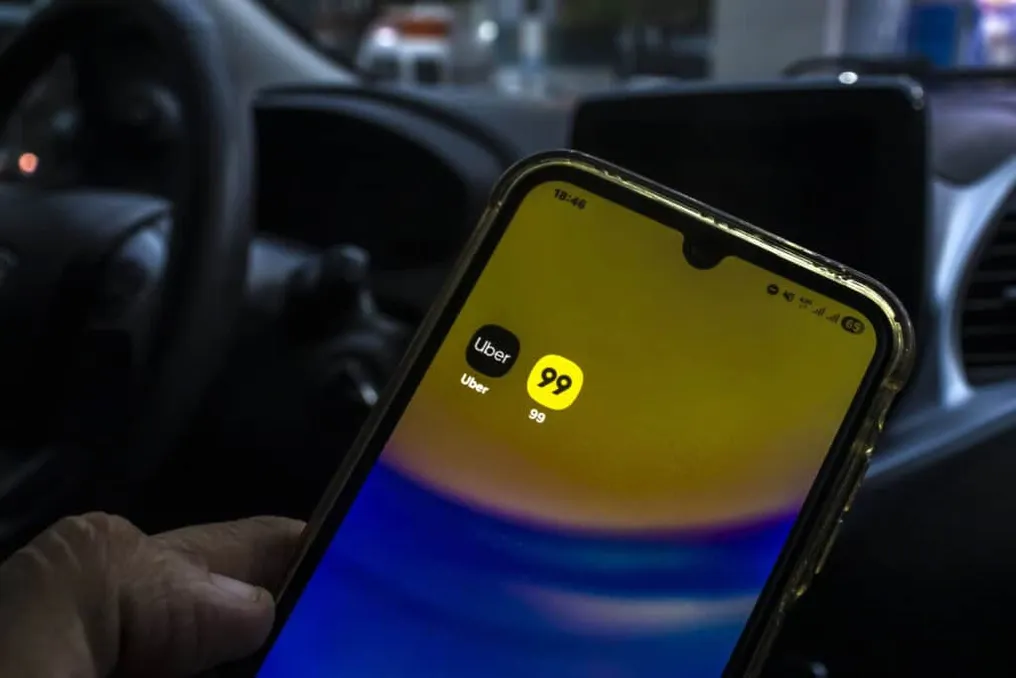
The application does not automatically import data from platforms like Uber and 99; the driver must manually enter the amounts received and the expenses incurred. With these records, the system calculates the daily result and allows for the tracking of financial goals.

Features include fuel control, calculation of average fuel consumption, and maintenance logging. There is also a calendar to organize private passengers and recurring services, such as school transport. An additional feature uses artificial intelligence to assist in analyzing financial information, and reports can be exported in PDF or CSV formats.

It is crucial to note that the result depends on the correct data entry by the user. If an expense is not recorded or the received amounts are entered incorrectly, the calculation will not reflect the real profit. Additionally, the application does not automatically calculate vehicle depreciation based on usage.

Visione Motorista is the first product of Visione Soluções Tecnológicas, a company co-founded by Colucci and his wife, Michele Barros Colucci, who is a journalist and marketing professional. While he focuses on development and technology, she handles communication and market strategy.

Available on Google Play for Android, the application offers a free version with ads and two paid options. The Basic plan costs R$9.90 monthly or R$99 annually. The Complete plan, for R$24.90 monthly or R$249 annually, includes passenger schedule management and financial analysis features, plus seven days of free trial.

Colucci's initiative highlights a fundamental issue: generating revenue is not the same as making a profit. Ultimately, what truly matters is not the volume of rides or the statement amount, but whether the remaining amount justifies the effort and hours spent behind the wheel.

Similar stories

Capricorn Horoscope for November 4, 2026: Recommendations for Driving, Career, and Finances
Read more
www.aajtak.in

Capricorn Horoscope for November 4, 2026: Recommendations for Driving, Career, and Finances

According to the Capricorn horoscope for November 4, 2026, owners of this zodiac sign are advised to exercise caution when operating vehicles. It is also noted that this is a suitable time for career advancement.

Furthermore, more effort is required to achieve financial gain. It is recommended to maintain high morale and not give up in any endeavor.

General Motors pays R$ 1.2 billion to resolve accusations regarding customer driving data usage
Read more
autopapo.com.br

General Motors pays R$ 1.2 billion to resolve accusations regarding customer driving data usage

General Motors (GM) reached a $220 million settlement, equivalent to approximately R$ 1.2 billion, with 35 American states and the District of Columbia. This agreement was announced on Thursday (29) to finalize allegations that the automaker provided drivers' location and driving data without proper permission.

GM stated that it does not admit any fault in this process. The amount paid represents eleven times the value the company would have gained from commercializing this data, according to an estimate by the California Attorney General.

The issue originated with Smart Driver, a free feature offered by OnStar, GM's connected services system. This feature aimed to help customers drive more safely and enable insurance discounts. The system assigned a score to the driver based on factors such as sudden braking, vigorous acceleration, and stretches driven over 129 km/h.

However, this data was sent to the companies LexisNexis and Verisk, which are responsible for compiling consumer reports, functioning like a 'traffic Serasa'. These entities, in turn, resold this information to insurance companies, resulting in increased insurance premiums for some customers without them knowing they were being monitored.

Prosecutors alleged that many individuals were included in the program through dealership salespeople, who received bonuses for each subscription. Furthermore, the OnStar app mistakenly notified over 370,000 drivers that they were not participating in Smart Driver, even though data collection continued.

GM discontinued the program in 2024. As part of the agreement, the company must ensure explicit authorization is obtained before collecting or sharing such data, submit to external audits, and revise the training provided at dealerships, thereby preventing any pressure on customers to subscribe to the service.

The automaker argues that the agreement pertains to a product that has already been terminated and serves to reinforce the privacy protection measures it was already implementing. It is important to note that OnStar is also present in Chevrolet vehicles sold in Brazil since 2015, but the litigation in question involves exclusively American customers.

In the Brazilian context, this type of data collection must comply with the General Data Protection Law (LGPD), which requires unequivocal consent for sharing personal information. The National Data Protection Authority (ANPD) has the authority to impose fines of up to 2% of the company's revenue in the country, with a ceiling of R$ 50 million per infraction; the agreement signed by GM exceeds this established limit by more than twenty times.

GM is not the only one under scrutiny. In the United States, a Toyota RAV4 owner filed a lawsuit against the brand after discovering, during an insurance quote, that the insurer possessed detailed records of their driving habits. Toyota maintains that the customer accepted the terms of the connected services, and the case was sent to arbitration, a form of private judgment.

Questions Arise Regarding Transport Bills During Ujjain Conference: E-Rickshaw and Moped Numbers Mistakenly Listed as Innova and Traveler
Read more
www.aajtak.in

Questions Arise Regarding Transport Bills During Ujjain Conference: E-Rickshaw and Moped Numbers Mistakenly Listed as Innova and Traveler

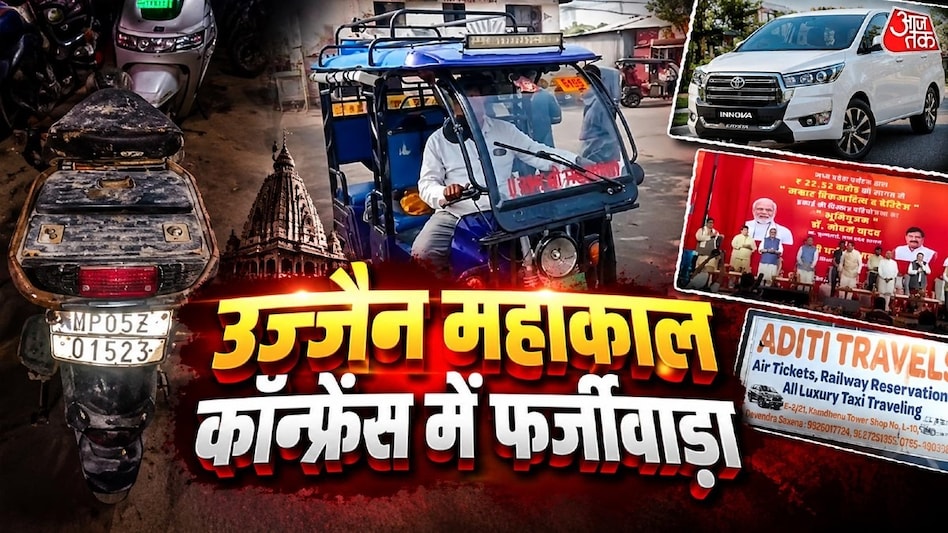
In April 2026, the international conference 'Mahakal: Master of Time' held in Ujjain, Madhya Pradesh, raised serious questions regarding vehicle rental invoices. It was discovered that vehicles listed on the bills as Innova and Traveler were, in fact, e-rickshaws, mopeds, and motorcycles. These discrepancies led to payments exceeding 57 million rupees, prompting scrutiny over billing verification and payment processes.

According to director Dr. Anil Kotari of Mapkast, a four-member committee was formed to investigate the matter. The 'Mahakal: Master of Time' conference took place from April 3 to 5, 2026, at the Zodiac Dome complex in Vasant Vihar, Ujjain. The event aimed to discuss ancient Indian dating systems, astronomical traditions, and Ujjain's positioning within the historical meridian context.

Topics discussed at the conference included astronomy, astrophysics, cosmology, space economy, and Indian knowledge traditions. Organizational activities were conducted with the participation of the Madhya Pradesh Council for Science and Technology (MPCST) and other relevant institutions. However, the identified inconsistencies in transport bills for guest rentals cast doubt on the procedures for verifying public expenditures.

The vehicles were rented from Aditi Tour and Travels in Bhopal. Specifically, in bill No. 3061, a vehicle with registration number MP13-ZP4512 was listed as an Innova Crysta, but according to Ujjain RTO records, this number is registered to an e-rickshaw. The e-rickshaw driver, Ritesh Shrivastava, stated that he uses the e-rickshaw for passenger transport and did not provide it for any government purposes.

A second incident relates to bill No. 3054, where a vehicle with registration number UP65-ED1523 was named a Tempo Traveller. The bill states that it traveled 186 kilometers in one day, for which a payment of 29,242 rupees was recorded. Upon checking, it was found that this number belongs to a moped registered in Uttar Pradesh. This raises the question of how a bill for a Traveller could be issued for a moped's number, and whether documentation for the vehicle was cross-checked before payment was made.

Motorcycle and truck numbers also came under close scrutiny. It was claimed that the bill for a 26-seater Tempo Traveller listed the number DD01R9228, which, according to RTO data, belongs to a truck. Furthermore, it was alleged that an Innova Crysta vehicle with registration number MP09VC6903 was listed as a motorcycle. It needs to be determined whether there was an error in entering the numbers into the bills, if different transport was used, or if there are other discrepancies in the documents related to the payment.

The owner of Aditi Tour and Travels, Devendra Saxena, provided explanations for these discrepancies. He stated that the submitted invoices were correct, but due to drivers' errors, the vehicle numbers were recorded in the wrong order, causing confusion. Nevertheless, confirming this explanation is only possible after a thorough review of the original invoices, vehicle registration certificates, time sheets, and payment records.

Furthermore, questions arose regarding odometer readings. According to available data, the Tempo Traveller record for April 3 shows a starting reading of 39,419 km, and for April 4, an ending reading of 39,616 km. However, on the following day, April 5, the starting reading was recorded as 62,324 kilometers. This creates a gap of 22,708 kilometers between the ending reading of April 4 and the starting reading of April 5. The reason for such a large discrepancy must be ascertained by checking the original logs, odometer readings, and actual use of the vehicle.

It is also worth noting that the total funding for the 'Mahakal' conference amounted to 6.29 crore rupees from Mapkast. According to available information, Facility Enterprises received 4.18 crore rupees for work related to tents, lighting, sound, projection, branding, and promotion, while M/s Pro. Event received 22.12 lakh rupees. Veer Bharat Nyas was also reported to have received 12.82 lakh rupees as service fees, and 1.32 crore rupees was spent on catering.

Popular