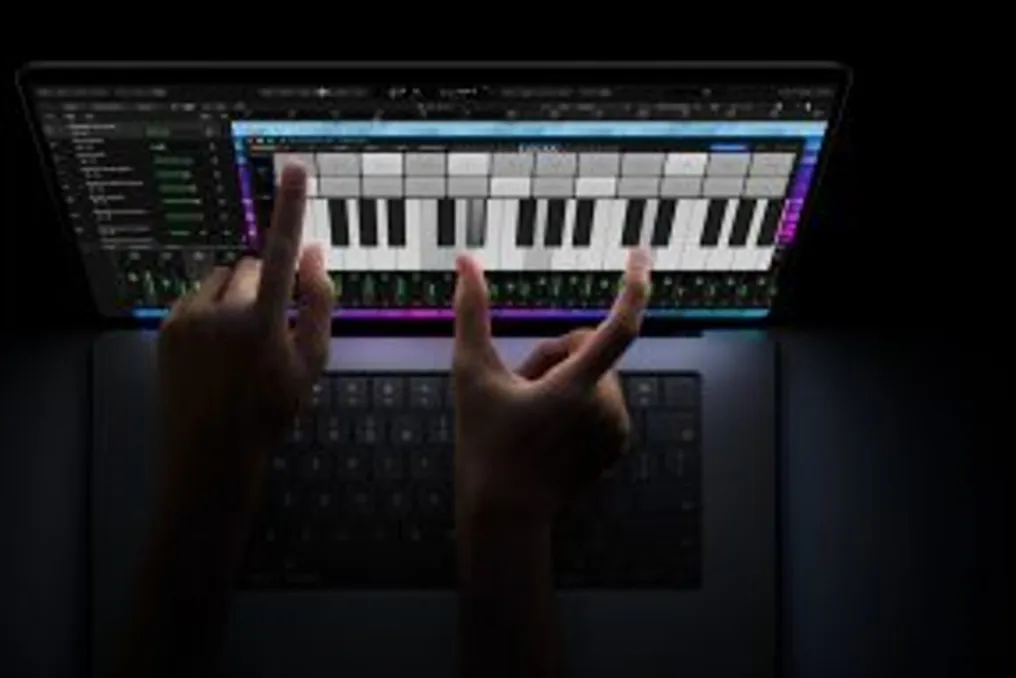
Launch of Touchscreen MacBook Pro may signal the end of non-touch versions
Read more
Tecnoblog
tecnoblog.net

Launch of Touchscreen MacBook Pro may signal the end of non-touch versions

The emergence of new MacBook Pros equipped with touchscreens suggests that traditional versions without this feature may be heading towards discontinuation. According to information from journalist Mark Gurman of Bloomberg, the trend points to touch screen models gradually replacing conventional models.

This possibility arose shortly after the launch of the first MacBook Pros incorporating touch OLED screens. Currently, Apple still offers previous notebooks with mini-LED panels in its catalog as more affordable options.

By introducing the first MacBook Pros with touchscreens, Apple decided not to immediately eliminate its entire product line. The 14 and 16-inch models, which use mini-LED screens and are equipped with M5 Pro and M5 Max chips, remain available for purchase. These models start at R$ 24,999, which is R$ 10,000 cheaper than the touchscreen version.

Gurman indicated that this distinction between the lines should only be temporary, as maintaining two types of professional notebooks would increase the complexity involved in the development, production, and commercialization of the devices.

The expectation is that Apple will direct the focus of its product line towards touch display models as technology evolves. However, this does not imply that current models have a set date for being removed from the market; Gurman stated that the company has not yet established a timeline for the discontinuation of these devices.

Apple is reportedly preparing a new generation of touch-capable MacBook Pros for late 2027. These future notebooks are expected to integrate M7 Pro and M7 Max processors, which, according to reports, will include extra cores dedicated to artificial intelligence tasks. It is important to note that the M6 chip, present in the standard MacBook Pro, is not expected to receive more powerful versions.

The base 14-inch model will also undergo a revision. The version with the M7 chip, expected in the first half of 2027, should feature a thinner and lighter design, in addition to having reduced bezels around the screen, mirroring the style of higher-end professional models.

The potential unification of the lines began to materialize at the end of October, when Apple launched its first MacBook Pros with touchscreens. The 14 and 16-inch models use an OLED panel called ProLED XDR, which offers a variable refresh rate of up to 120 Hz.

To optimize the tactile experience, Apple also reinforced the notebook hinges to minimize any screen movement during touch use. The interface supports gestures such as pinch-to-zoom, selecting tools, and manipulating elements displayed on the panel.

These notebooks are configured with M5 Pro or M5 Max, capable of reaching up to 128 GB of unified memory and 16 TB of SSD storage. In the Brazilian market, the touchscreen models are available at the Apple store with prices starting at R$ 34,999 for the 14-inch version and R$ 41,999 for the 16-inch version.
Similar stories

Apple's MacBook Pro to receive touchscreen
Read more
cgtn.com

Apple's MacBook Pro to receive touchscreen

Apple has introduced its newest MacBook Pro model, which will now be equipped with a touchscreen feature. This decision became possible after the company long refused this technology, dating back to when Steve Jobs rejected it in 2010.

Apple plans to launch touch screen MacBook after years of hesitation
Read more
olhardigital.com.br

Apple plans to launch touch screen MacBook after years of hesitation

Apple is expected to unveil its first touch screen MacBooks this Wednesday, marking the end of a long resistance to the feature. This launch is part of a series of company updates before the year-end shopping season, and the event, held in Los Angeles, may conclude an old debate about including touch screens in the brand's computer line.

Reviewing Apple's Historical Stance

In 2010, Steve Jobs had classified touch screens on laptops as 'ergonomically terrible.' Two years later, Tim Cook, who was the company's CEO at the time, compared combining these distinct technologies to trying to put a toaster and a refrigerator together.

Meanwhile, the competition followed a different path. Windows operating system laptops have offered this feature for over ten years, and a new generation of consumers has become accustomed to interacting directly with smartphone and tablet screens.

Anshel Sag, an analyst at Moor Insights & Strategy, considered Apple's stance misguided. He stated: 'I believe they have always been wrong to resist touch, and now reality is setting in,' adding that 'some things are simply inevitable.'

New MacBooks May Retain Current Chips

The presentation comes after the launch of the iPhone Duo in September and a smart home hub earlier this month. This week, Apple also announced an updated entry-level MacBook Pro version that uses the M6 chip.

According to Bloomberg News, the models that will come with touch screens are expected to use the M5 Pro and M5 Max processors, which are already available in other versions of the laptop. Consequently, these new models should not show a drastic leap in performance terms.

This detail is important because part of the recent increase in Mac sales comes from corporations and enthusiasts who use the computers to perform local artificial intelligence (AI) tasks. Jason Calacanis, a technology commentator and host of the All-In podcast, emphasized this priority in an X post, stating: 'The only thing people want is more memory and better processors for local models!'

The introduction of touch has the potential to change how users interact with MacBooks. However, it remains uncertain whether this feature will be enough to attract consumers who are also awaiting improvements in equipment processing power.

Popular