
Structural Impact of the End of Sports Betting on the Brazilian Esports Market
Read more
Olhar Digital
olhardigital.com.br

Structural Impact of the End of Sports Betting on the Brazilian Esports Market

The author analyzed the outcome of the provisional measure that prohibited betting house operations in Brazil, observing the financial impact of this decision on the esports sector. While acknowledging the moral value of the prohibition for society, the focus of the analysis is on the vulnerability of the competitive gaming industry's capital structure.

The cessation of betting activities constitutes a regulatory shock that exposes market fragility. For those following financial reports, the ban causes an immediate and severe loss of liquidity in a circuit that has become excessively dependent on sponsorships to maintain its operations.

Unlike conventional sports leagues, which have billion-dollar revenues from ticket sales and television broadcasting rights, esports organizations rely mainly on payments from partner brands. Betting companies acted as a vital support during periods of low activity in the sector, helping to cover high budgets when global venture capital investment decreased, which in reality masked the lack of a solid business model.

Based on his experience in business management and structuring, the author emphasizes the rule of never allowing a single revenue source to exceed twenty percent of total revenue. He points out that depending on a single large payer puts the survival of an esports organization in Brazil at extreme risk.

The market has faced similar shocks in the recent past, when large banking institutions and schools drastically reduced their contributions to the ecosystem, demonstrating that any operation can suddenly lose its main contract, whether due to corporate decisions or legal actions, such as the one affecting betting currently.

Examining the main global centers of the segment, it is clear that Brazil is not the first territory to undergo this course correction due to the rules of the game. In established markets in Europe and structured leagues in North America, teams have already experienced commercial deserts after local regulations or the gaming companies themselves banned the display of betting houses.

The crucial lesson from these countries is not to lament the loss of revenue, but rather to adopt the solutions found. In these locations, the sudden removal of logos forced teams to reformulate their value propositions, shifting from merely selling jersey space to offering data intelligence, real conversion, and qualified engagement to traditional and non-sector-related brands.

Given the current prohibition, the national market is moving toward an inevitable and necessary consolidation process, similar to the bursting of a liquidity bubble. The immediate way out for survival does not lie in finding a new sponsor to compensate for the betting losses, but rather in merging smaller entities strategically to gain scale and renegotiating advertising spaces with traditional commerce, accepting lower margins and more predictable cash flows.

The elimination of this speculative capital ends the phase of accelerated artificial growth and imposes mandatory professionalization on the entire production chain. The end of betting does not mean the end of esports in Brazil, but rather a painful and essential transition process to differentiate those who built a genuine corporate business from those who merely capitalized on a passing wave of easy money.

Similar stories

Analysis of the factors that lead players to abandon games, such as difficulty and duration
Read more
olhardigital.com.br

Analysis of the factors that lead players to abandon games, such as difficulty and duration

Many players acquire a title, dedicate a few hours to exploring the game's universe, but end up not returning. This pattern of behavior is more frequent than imagined, given that in many games, less than half of participants manage to reach the end of the narrative, which raises the question: what leads so many people to quit a game?

The cause may seem simple, such as excessively challenging games or campaigns that are too prolonged. However, examples like Elden Ring and Senua’s Saga: Hellblade 2 demonstrate that the correlation between difficulty, playtime, and completion is much more intricate.

Although the notion that only four in ten players finish a game serves as a starting point for debating this phenomenon, there is no universal completion rate applicable to all titles. These indices fluctuate depending on the specific game, the platform used, and the period when the data was collected.

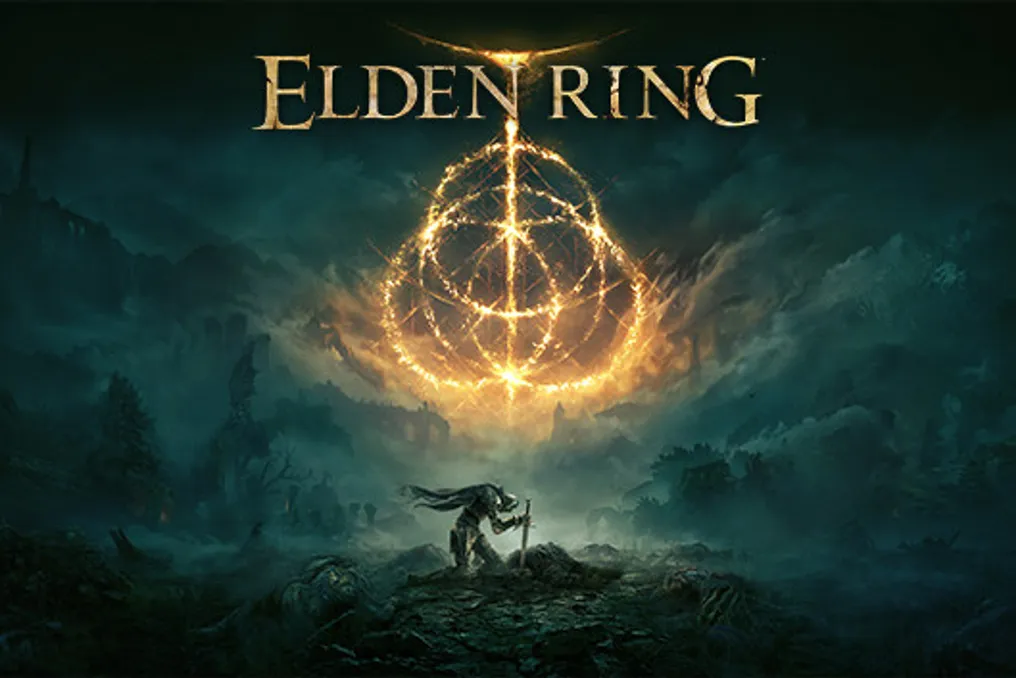
When Elden Ring was released, nearly three weeks after its launch in March 2022, achievement data released by Gamereactor indicated that only 17% of players on the Steam platform had reached one of the endings of the RPG developed by FromSoftware. At that time, approximately 30% had still not managed to defeat Margit, one of the first major bosses in the adventure.

These numbers highlight how difficulty can act as an obstacle to progress, especially in games that require continuous learning, exploration, and repeated confrontations.

There is also the element of perceived challenge. In 2025, creators of The First Berserker: Khazan observed that a portion of players chose to stop the campaign instead of selecting Easy difficulty. Creative Director Junho Lee reported that the name of this mode generated a stigma that discouraged its use. In response, the team implemented new difficulty settings, including a Beginner mode. This case demonstrates that simply providing alternatives is not enough; the way they are presented also influences the decision to continue playing the game.

If duration were the determining factor, shorter campaigns should show considerably higher completion rates. However, this is not always the case. Senua’s Saga: Hellblade 2, released in May 2024, has an estimated duration of six to seven hours. Despite this, about two weeks after its release, only 13% of players had unlocked the completion achievement on Xbox. On Steam, the completion rate was approximately 33% during that period.

The disparity between platforms suggests that access to the game can also impact the results. Since Hellblade 2 was available on Xbox Game Pass from the start, subscribers could experience the game without an individual purchase cost, making it easier for players to start the campaign out of mere curiosity and abandon it if they were not interested in the experience.

It is crucial to note that these percentages reflect specific moments after the releases and do not constitute final completion rates, given that many players continued advancing in their respective campaigns.

Although difficulty and duration can contribute to abandonment, they are not the complete explanation. A game may lose public interest due to repetitive progression, a slow narrative pace, unengaging mechanics, or simply by competing with other releases for players' available time.

There is also a distinction between quitting a game out of frustration and pausing a campaign because the experience has already satisfied what the player was looking for. In open worlds, for example, exploring the map and completing side activities can be more appealing than finishing the main plot.

Additionally, achievement statistics cannot reveal individual motivations. They only quantify how many people reached a specific goal, but they do not clarify why the others stopped.

The cited examples of Elden Ring, Hellblade 2, and Khazan converge on one conclusion: there is no single reason why players leave a campaign. More than seeking ideal duration or difficulty, the developers' challenge lies in sustaining the public's interest throughout the journey, as finishing a game is not necessarily the only way to appreciate it.

Gamification goes beyond games and changes the interaction between brands and consumers
Read more
olhardigital.com.br

Gamification goes beyond games and changes the interaction between brands and consumers

Mechanics characteristic of video games, such as points, missions, rankings, and rewards, are no longer exclusive to the gaming sector. These elements are increasingly integrated into digital platforms, loyalty programs, and applications, transforming how companies motivate consumer engagement.

The strategy known as gamification involves applying typical game elements to actions that are not games themselves. In Brazil, the adoption of these experiences contributes to a high level of public familiarity with this field. According to the Pesquisa Game Brasil 2025 study, about 82% of Brazilians consume digital games.

In practice, gamification uses tools such as achievements, levels, challenges, and rewards to stimulate specific behaviors. For example, a loyalty program may award points for purchases and provide bonuses as the customer advances through levels. Similarly, educational platforms can apply daily goals and achievements to maintain continuous learning.

This logic is also evident in fitness apps, financial services, and advertising campaigns. According to a survey cited by Gamers Club, 34% of Brazilian players participating in the study state a constant desire to improve their results and overcome difficulties.

According to Jonathan Pereira, Marketing Director of the company, it is this habit that helps explain the expansion of this strategy. He notes: 'The logic of gamification does not arise from nothing; it stems from behavior that has been consolidated among gamers over many years. Competition, development, and recognition are part of this experience.'

Although rankings and competitions are common elements, gamification does not necessarily require pitting users against each other. The feeling of progress can also stimulate participation, especially when rewards are tied to clear goals. Pereira explains: 'Not everything has to turn into direct competition. It engages the feeling of evolution, the feeling of achievement. Competition is one way, but not the only one.'

Nevertheless, the growth of these strategies raises questions about using mechanisms that encourage constant presence on platforms. This becomes particularly relevant when rewards and challenges are applied in the financial services sector or in money-related experiences. According to the director, the main task is to prevent gamification from becoming solely a tool to increase usage time. He concludes: 'When the experience becomes merely a stimulus for retention at any cost, it loses value. What truly works is what has a purpose and represents a meaningful path for the user.'

The spread of gamification demonstrates how elements developed and popularized by video games have begun to influence other industries. The current challenge is to use these mechanics to create meaningful experiences without turning every interaction into an obligation to compete or accumulate rewards. The article was first published in Olhar Digital.

Popular