WHO estimates that one in four adolescents does not engage in physical activity in 2025
Read more
Noticias ao Minuto
noticiasaominuto.com

WHO estimates that one in four adolescents does not engage in physical activity in 2025

The World Health Organization (WHO) estimated that one in four adolescents does not engage in any type of physical activity in 2025. This trend of sedentary behavior persists globally without changes since 2010.

The data was presented in the United Nations agency for Health report, focusing on physical activity trends among young people aged 11 to 17. The study concluded that approximately 25% of adolescents reported having no active day throughout a week.

The assessment of physical activity levels was conducted using a questionnaire administered to over 3.2 million adolescents from various countries. This questionnaire asked how many days in the previous week they had accumulated at least 60 minutes of moderate to vigorous physical activity, covering both school and free time.

It is estimated that the roughly 25% who did not have active days correspond to about 240 million adolescents worldwide. The report warns that only 14% of respondents stated they remained active during the seven days, with an average of only 2.7 days per week.

The new projections indicate that, in total, 86% of adolescents reported having fewer than seven active days in 2025, a figure that has not changed since 2010.

During a press conference to present the findings, the director of the WHO's Department of Health Determinants expressed concern, regretting that 'progress has stagnated over the last 15 years and, therefore, we are far from being on track to achieve the 2030 goal for physical activity.'

Etienne Krug clarified that physical activity is not limited only to going to gyms or playing sports, but also includes daily habits. This suggests the need to make activities such as walking or cycling safer for young people.

The WHO also observed that girls showed a lower level of activity compared to boys in most of the countries analyzed. For the organization, this disparity reflects 'unequal opportunities for participation and persistent social, cultural, and environmental barriers, rather than differences in interest or ability.'

Despite the increased recognition of the relevance of physical activity, the WHO emphasizes that 'global levels have barely changed since 2010,' warning that current trends suggest that no country is following the appropriate path to achieve the global goal of reducing physical inactivity by 15% by 2030.

The document emphasizes that 'without accelerated actions, inactivity among adolescents will remain practically unchanged for the rest of the decade.' It advocates that all sectors must contribute to reversing this situation, including health, education, transport, sport, urban planning, youth development, and community.

Among the measures proposed by the WHO to modify inactivity rates, improving safety on public roads, open spaces, and transport systems stands out, aiming to encourage the use of bicycles and walking, with a special focus on the needs of girls and women.

According to the head of the Unit for Surveillance, Monitoring and Notification of Non-Communicable Diseases, transforming the current scenario requires physical activity to be more accessible in daily life and for all adolescents to have access to these opportunities, including in schools.

Leanne Riley warned that 'it is quite obvious that more of the same will not solve this problem that the data shows has been stagnant for the last 15 years.'

Similar stories

Shagun and Samir Danny debunk fitness myths, showing that dancing and training are suitable for everyone
Read more
www.aajtak.in

Shagun and Samir Danny debunk fitness myths, showing that dancing and training are suitable for everyone

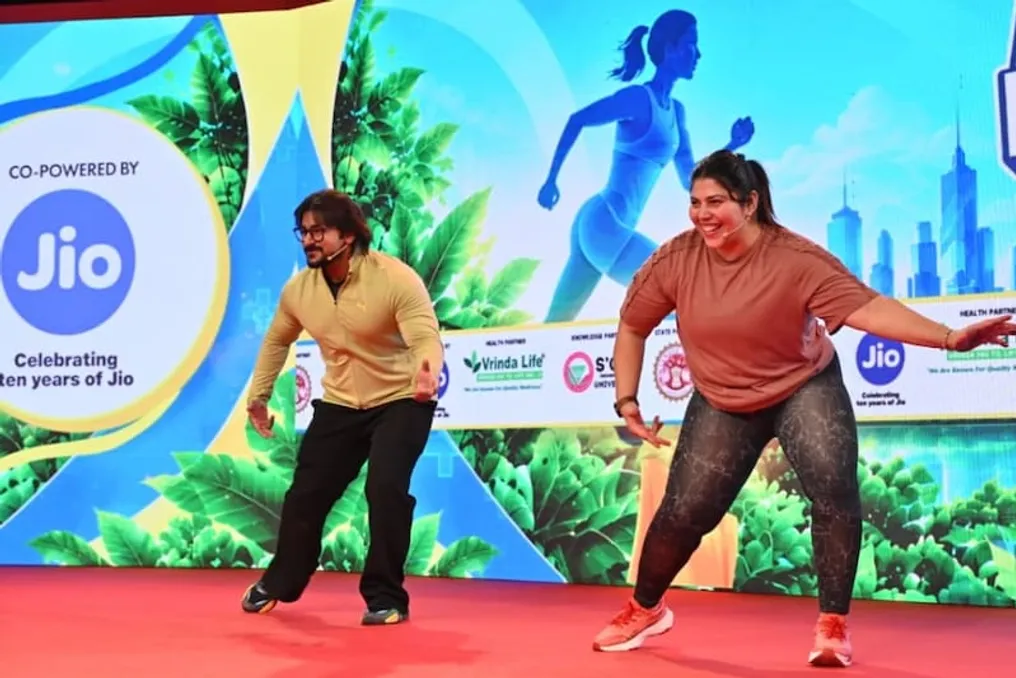
When it comes to health and physical fitness, many people often picture heavy equipment in gyms, strict diets, and intense exercises. However, the question arises: is fitness something more than that? During the 'Bhangra Night' session, dedicated to fitness and fun, held at the Health Wealth Summit venue, participants inspired the youth.

Shagun, a powerlifter and two-time national gold medalist, as well as a 'strong woman,' kicked off the session by decisively refuting the outdated notion that overweight individuals cannot exercise. She emphasized that as a woman and powerlifter, she knows that anything can be achieved through hard work and determination.

Meanwhile, fitness expert Samir Danny captured the attention of the youth as soon as he took the stage. He stated that women and girls should never be considered weak because 'standing rivers are often very deep.'

Samir Danny highlighted the most common mistake made by young people visiting the gym. He noted that young people often come to the gym and immediately start heavy workouts without any preparation, which can be dangerous. On stage, he demonstrated the correct ways to perform warm-ups, such as hand and palm stretching exercises. He advised that preparing the body is extremely important before starting any physical activity at home or in the gym.

The atmosphere became even more exciting during the session when a fitness challenge began between the youth present on stage and the audience. The competition included push-up and squat exercises with free weights, in which both boys and girls actively participated. This proved that fitness is not just theoretical knowledge, but also a game that requires endurance and active participation.

To the sound of music and Bhangra rhythms, the entire hall danced. This session served as an example that maintaining shape does not necessarily require boring exercises; one can stay fit by doing Bhangra and dancing. Due to time constraints, the session had to end, but it left a wide smile and a new surge of energy for sports among all attendees.

JIC Report Shows 75% of Students Made Errors on Complex Questions in JEE Advanced 2026 Physics, Chemistry, and Mathematics
Read more
www.aajtak.in

JIC Report Shows 75% of Students Made Errors on Complex Questions in JEE Advanced 2026 Physics, Chemistry, and Mathematics

According to the recently published official report by the Joint Implementation Committee (JIC), the most challenging part of the JEE Advanced 2026 exam was not the questions students skipped, but those they answered incorrectly, leading to point deductions due to negative marking.

Analysis of statistics for individual questions showed that a significant number of applicants made serious errors in solving tasks in three subjects—Physics, Chemistry, and Mathematics—reaching levels from 60 to 75 percent.

Specifically, Question number 14 from Physics, Part-2, caused the most difficulty among students, as 74.84% (approximately three quarters) of participants gave an incorrect answer. Only 10.59% of students demonstrated foresight and chose to skip this question.

Furthermore, in Physics, Part-1, Question number 9 was incorrectly solved by 69.01% of students, and in Physics, Part-2, Question number 13—by 67.79%.

The situation in Mathematics was also tense. In Mathematics, Part-2, Questions number 11 (67.24%), number 14 (66.49%), and number 18 (66.01%) had an incorrect answer percentage exceeding 66%. Nevertheless, some students exercised caution by not attempting to solve complex tasks, such as Questions number 5 and number 7 from Mathematics, Part-2, which were not attempted by 56.96% and 56.35%, respectively.

Significant errors were also noted in Chemistry: in Chemistry, Part-1, Question number 10 was answered incorrectly by 67.06% of students, and in Chemistry, Part-2, Question number 13—by 66.51%.

This data represents not just a statistical summary, but an important lesson for those preparing for JEE in subsequent years. The statistics demonstrate areas where knowledge weakened under exam pressure, as well as instances where negative marks were received due to excessive overconfidence or choosing false options. Therefore, future applicants are advised to conduct an in-depth analysis of such high-error-rate questions and learn to select appropriate tasks while focusing on time management.

Study shows decline in life satisfaction among Gen Z generation in the USA
Read more
www.aajtak.in

Study shows decline in life satisfaction among Gen Z generation in the USA

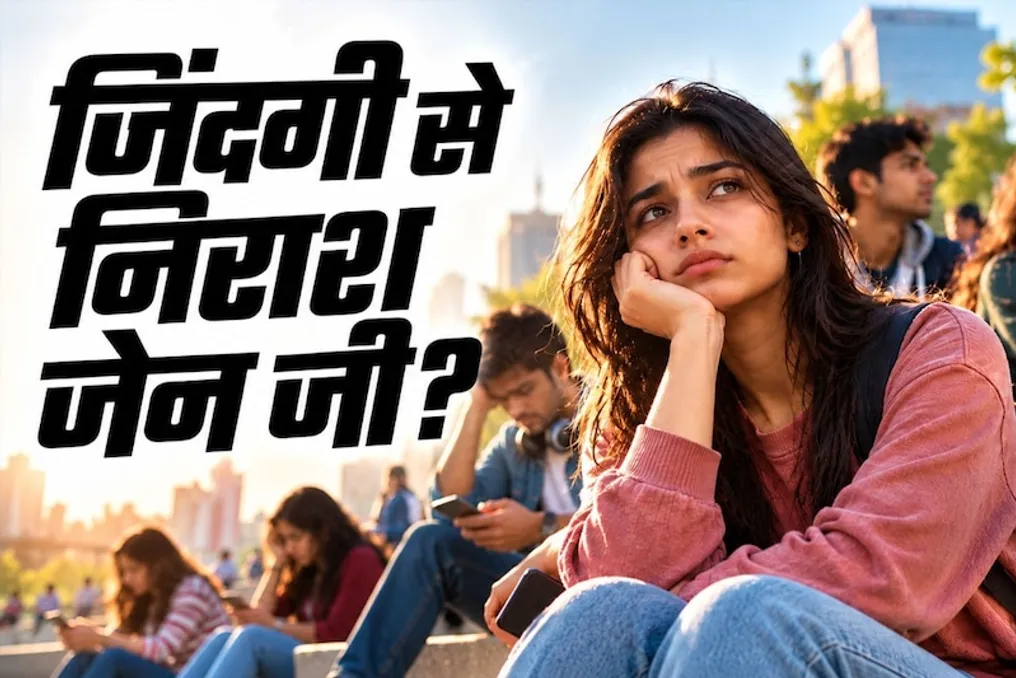
Despite external well-being, such as having a good job, income, and striving to achieve personal goals, Generation Z faces various difficulties. New data obtained in the USA reflects this trend: the share of young people who rate their lives positively has decreased compared to previous periods, while the level of satisfaction among older people has increased.

According to data from the American research institute Gallup, only 44% of youth aged 18 to 29 in the USA consider their lives good and fall into the 'thriving' category. This figure dropped from 64% in 2010, representing a decrease of 20 percentage points over 16 years. In 2020, during the COVID pandemic, this percentage fell further to 39%, but by 2023, it improved to 51%, after which another decline was observed.

Mental health issues are also a concern. The report indicates that 27% of youth aged 18 to 29 in the USA either struggle with depression or are undergoing treatment for it. This figure increased by 11 percentage points compared to 2019. Furthermore, only 64% of young people reported feeling joyful the day before, and only 28% stated they felt active and productive daily over the past week.

In contrast to Gen Z, older people in the USA demonstrate a higher level of life satisfaction. Among people aged 65 and older, 53% fall into the 'thriving' category. This figure rose from 38% in 2008, reaching a record level of satisfaction in this age group.

These statistics clearly illustrate the difference between the two generations: while satisfaction is growing among older age groups, young people are becoming less optimistic about their future. Although these figures themselves do not explain the reasons for this decline, they emphasize the need to pay attention to the happiness and mental health of Generation Z.

Popular