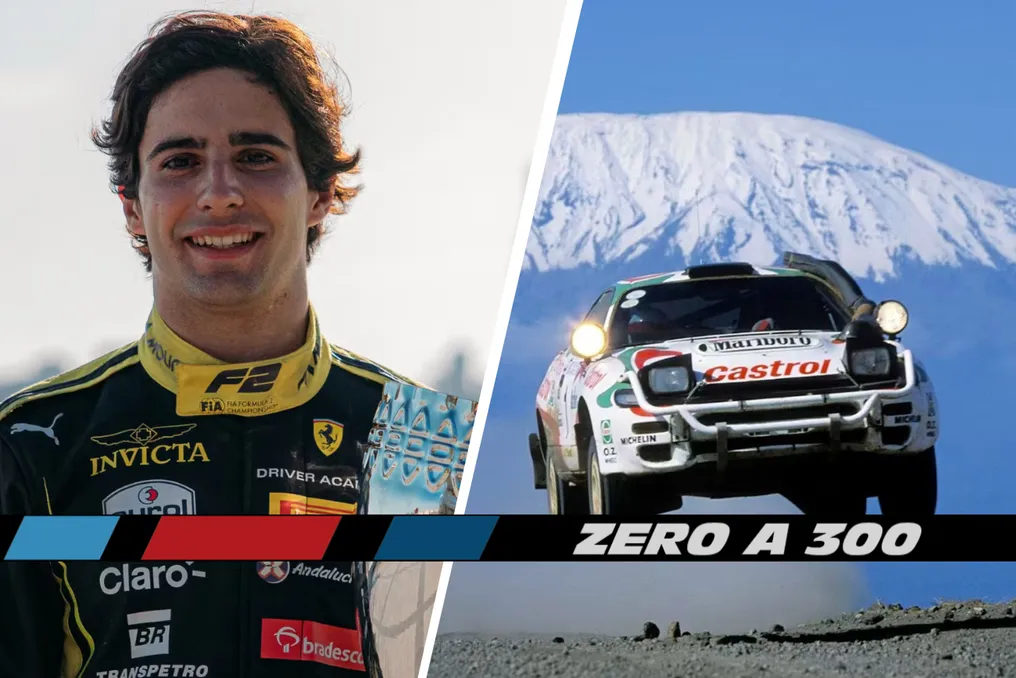
Rafael Câmara debuts at Haas in Interlagos; Toyota confirms Celica's return to WRC
Read more
FlatOut
flatout.com.br

Rafael Câmara debuts at Haas in Interlagos; Toyota confirms Celica's return to WRC

Rafael Câmara will make his debut with the Haas team ahead of schedule. Although initially contracted for the 2027 Formula 1 season, the Brazilian driver will participate in the next round in Interlagos, which takes place this weekend. Haas officially announced this change yesterday (3).

The change in plans occurred due to a disagreement between Esteban Ocon and team principal Ayao Komatsu during the Mexican Grand Prix. As a consequence of this discussion, Ocon was prematurely removed from Haas, and reserve driver Ryo Hirakawa took his place starting from the third free practice.

This will be the first time since 2016 that two Brazilian drivers will be on the F1 grid in Interlagos, the time when Felipe Massa (Williams) and Felipe Nasr (Sauber) competed for the championship. Haas also confirmed Rafael Câmara's presence at the Las Vegas Grand Prix, scheduled for the 22nd. However, in the two most recent races of the season—the Qatar and Abu Dhabi GPs—the Pernambuco native already has commitments with the Formula 2 finals, which will take place in a double round on the same weekends. Currently leading the championship, Câmara chooses to focus on winning the F2 title while awaiting his definitive spot at Haas.

Toyota confirms Celica's return to WRC

The Toyota Celica, which transcends the status of a mere street classic or Gran Turismo icon, has a long history in the WRC. In the 1990s, the GT-Four versions (ST165, ST185, and ST205) brought four titles to the manufacturer in the World Drivers' Championship (in 1990 and 1992 with Carlos Sainz, 1993 with Juha Kankkunen, and 1994 with Didier Auriol) and two in the Constructors' World Championship (in 1993 and 1994). Now, it is returning to competition.

Toyota confirmed that its next competitor in the WRC will be a new Celica, debuting in the 2027 season, competing alongside the GR Yaris. Both models are going through the final homologation phases for the new championship regulations, which will be implemented starting next year. According to Motorsport.com, the new Celica will be driven by Elfyn Evans, Oliver Solberg, and Sami Pajari, while the GR Yaris will feature Ott Tänak, Takamoto Katsuta, and Kalle Rovanperä.

Images of prototypes photographed and filmed months ago, which increasingly resemble a mid-rear engine sports car, suggest they are the preliminary version of the new Celica. However, this does not clarify the future of Toyota's new street sports cars, given that both the return of the Celica and a new MR-2 have recently generated speculation. The manufacturer neither confirms nor denies anything, only suggests that both cars may materialize in the near future.

October Sales and Automotive Launches

Analyzing the October sales ranking, it can be noted that the Fiat Strada maintains its leadership in the Brazilian market, as has been happening in recent months. However, looking at lower positions, the BYD Dolphin Mini stands out, having surpassed the Fiat Argo and the Volkswagen Polo, two of the country's most popular vehicles.

In October, the Strada secured overall leadership for the tenth consecutive month, with 14,566 registrations. Second place was occupied by the Hyundai HB20, which rose from 11th place in September to register 9,037 units, representing a 43.1% increase in just one month. The biggest transformation came with the BYD Dolphin Mini, which reached third place with 8,432 registrations, slightly surpassing the Fiat Argo (8,331 units) and widening the gap to the Volkswagen Polo, which dropped from second place to fifth place, with 8,125 units. This is a significant achievement for an electric vehicle introduced in Brazil less than three years ago, which now competes directly with combustion compact hatchbacks, historically the highest volume models in the national market.

The rest of the ranking demonstrates market evolution. Among the top ten best-selling vehicles are three SUVs: the Volkswagen T-Cross (sixth, with 7,567 units), the VW Tera (seventh, with 7,489), and the Toyota Yaris Cross (which finished the ranking with 6,243 registrations). The Chevrolet Onix (7,016 units) and the Renault Kwid (6,346 units) also featured. In total, 253,298 new passenger cars and light commercial vehicles were registered in October, representing a 5.3% reduction compared to September, but a 2.2% increase compared to the same period in 2025. Electrified vehicles accounted for 24.4% of this volume, and Chinese brands achieved a 22.7% market share. BYD alone registered 24,114 vehicles, equivalent to 9.5% of the market. That is, almost one in ten new vehicles sold in Brazil in October was a BYD.

Finally, an important correction: previous interpretations regarding BYD's leadership in retail sales as an indication of predominantly private purchases cannot be made solely with this data. According to Fenabrave, the distinction between retail sales and direct sales does not depend on the buyer's profile, but rather on who issues the invoice. When the invoice is issued by the manufacturer, the transaction is classified as direct sale, even if mediated by a dealership. In other cases, it is considered retail sale. Both modalities can involve buyers with CPF or CNPJ. Therefore, BYD's leadership in retail does not allow us to state that its cars are predominantly bought by individuals, just as the volume of direct sales does not reveal how many vehicles were destined for rental companies, fleets, or individual buyers; for that, it would be necessary to know the buyer's profile, not just the billing channel.

Pagani Huayra 70 Anima Revealed with V12 Biturbo and Manual Gearbox

There is always deep respect for Pagani, as the manufacturer is one of the main contributors to the popularization of carbon fiber in supercars, and its creator, Horacio Pagani, is an example of fidelity to his ideals. Pagani follows its own guidelines in manufacturing its vehicles, maintaining this tradition, and works closely with clients to customize each unit, ensuring that no Pagani is identical to another of the same model. This constitutes the concept of tailor-made.

In this context, the last of the Huayra 70—a trio of cars built custom to celebrate Horacio Pagani's 70th anniversary—was presented yesterday (3). The mere existence of this vehicle is remarkable: even with Pagani producing the Utopia, its successor, the Huayra still demonstrates technical capability. Its mechanical package reflects principles and personality: the engine is the well-known 6-liter Mercedes-AMG derived V12 biturbo, generating 862 hp at 6,000 rpm and 112.2 kgfm of torque. The gearbox is a seven-speed manual from the Xtrac brand, and the drivetrain is rear-wheel drive, equipped with a mechanical locking differential, without electric motors.

The chassis adopts the classic Huayra configuration, including overlapping triangular wishbone suspension, electronic adjustable dampers on all four wheels, carbon-ceramic brakes with Brembo calipers, and imposing 20-inch wheels in the front and 21-inch wheels in the rear, using Pirelli P Zero Trofeo R 265/30 and 335/25 tires, respectively. Pagani demonstrates an ability to build an extremely refined supercar, which certainly demands a skilled driver if the goal is to use it rather than keep it in a climate-controlled environment.

It is impossible to ignore the car's style. Naturally, the Huayra is an elaborate and, to some extent, exaggerated vehicle, which is part of its essence; those seeking elegance and discretion should look to the competition or give up on a supercar. In the specific case of the Huayra 70 Anima, the level of ostentation can be excessive. The combination of blue over blue colors, the chrome trim (both on the body and in the cabin), and the white leather upholstery highlight that the owner likes to attract attention and does not want to be compared to other Huayra owners. However, as mentioned earlier, part of the charm of owning a Pagani lies in the possibility of choosing every finishing detail.

The Huayra 70 Anima reminds one of some Jacob & Co. watches, those grandiose pieces with unconventional style, often inspired by supercars, which sometimes feature miniature replicas of V12 engines operating alongside the caliber. They are impressive complications, encased in high jewelry worthy cases, but everything is very flashy, bordering on vulgar. One admires and respects the art, but one cannot say it is beautiful in the strict sense of the word. However, the mechanical package deserves emphasis: V12 biturbo, manual gearbox, rear-wheel drive, and absence of electric motors. This is where the importance lies.

Cadillac May Sell Formula 1 Team After Only One Season

Cadillac invested over US$ 1 billion to enter Formula 1 in 2026, but it seems the team owners are already considering selling the venture, potentially for more than the amount invested. According to a Sportico article published on Monday (2), businessman Mark Walter, controller of TWG Global, is evaluating the sale of his stake in the team for a minimum value of US$ 3 billion. Furthermore, there are already at least seven potential interested buyers.

The Cadillac team is managed by TWG Motorsports, a division of Walter's group that also manages operations such as Andretti Global and Wayne Taylor Racing. General Motors acts as a partner and provides the Cadillac name to the project, although the exact distribution of shares has never been disclosed. Thus, the US$ 3 billion refers to the valuation of the entire team, and not necessarily the amount Walter would receive for his share.

This figure is notable because Cadillac is still in its first season in Formula 1 and faces challenges in establishing itself competitively. The operation required about US$ 450 million just to compensate other teams for the entry of a new participant in the championship, in addition to an initial investment of at least US$ 1 billion in competition infrastructure, facilities, and development. Despite this, the valuation proposed by Walter approaches the average of Formula 1 teams, which reached US$ 3.42 billion in 2025.
Similar stories

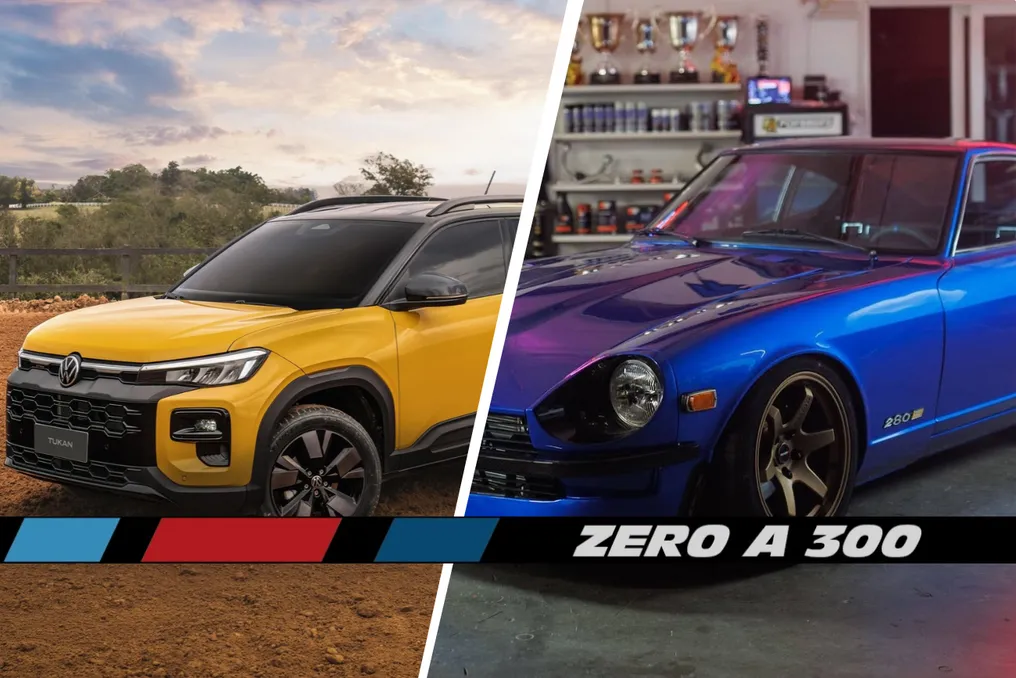
Volkswagen Tukan set for early 2027 with four versions, while Nissan adapts V6 biturbo engine to Datsun 240Z
Read more
flatout.com.br

Volkswagen Tukan set for early 2027 with four versions, while Nissan adapts V6 biturbo engine to Datsun 240Z

The Volkswagen Tukan, the automaker's long-awaited monocoque pickup truck, has finally received a launch date. Ricardo Ploguer, Vice President of Product Development for Volkswagen South America, announced at an event in Germany that the vehicle will be introduced in early 2027.

In Brazil, the Tukan will be offered in four configurations: two double-cab and two single-cab. When exhibited in Barretos (SP), the pickup was seen in the Extreme variant, featuring a double cab and premium trim, and the Robust variant, focused on work, characterized by unpainted bumpers and stamped steel wheels without hubcaps.

During the same event in Germany, VW also presented the Tukan Magnet, its more economical double-cab option. Compared to the Extreme, this Magnet version eliminates the glossy black paint on the grille and replaces the 17-inch wheels with a 16-inch set. The displayed model had body-colored mirrors, side steps, and front LED lighting, although it was not confirmed whether these items would be standard or optional.

The name for the intermediate single-cab version, which is above the Robust, has not yet been officially announced by Volkswagen, despite examples seen in tests bearing the 'Iron' emblem. So far, the press has only had access to the exterior of the Tukan, leaving the dashboard design a mystery. However, since the pickup uses the MQB-A0 platform, shared with the Taos, T-Cross, and Nivus, a similar internal architecture is expected.

Regarding mechanics, complete details are unavailable, but it is known that the VW Tukan will debut with a 12V mild-hybrid system for the more expensive versions, while the Tukan Robust should retain the 1.6 MSI engine from the Saveiro.

Possibility of Chinese electric vehicle in Brazil

Continuing the topic of the Volkswagen event in Germany, the manufacturer mentioned the possibility of forming a partnership with Chinese companies to introduce a more affordable electric model to the Brazilian market. The goal would be to compete directly with the BYD Dolphin Mini, one of the main drivers of entry-level electric vehicles in the country.

Other brands are already moving in this sector: it is speculated that Chevrolet will bring the Wuling Bingo Pro under the name Joy EV, and Stellantis is evaluating the Leapmotor A05 and B03X models to create its own entry-level electric vehicle in Brazil.

For Volkswagen, the chances of collaboration lie in its current partnerships in China, such as Saic, FAW, and JAC. Two of these companies have ties to Brazil: Saic assisted in the development of the VW Taos (derived from the Chinese VW Tharu) and supplied the platform used in the future Amarok; and FAW is involved in the project for the future hybrid VW Taos, scheduled for 2028 in Brazil. The connection with JAC is currently limited to China, but it is relevant because they are responsible for the entire line of electric vehicles built on the MEB platform sold by VW in China.

Although the project is still in the initial stages of development and the final solution is not defined, the plan is for it to be ready and available for sale within the next two years.

Nissan adapts V6 biturbo engine to classic Datsun 240Z

Nissan will present at SEMA in Las Vegas a reinterpretation of the first Z, the Datsun 240Z, originally launched in 1969. This project, named Datsun S30 Concept, was developed in collaboration with Formula Drift three-time champion Chris Forsberg, combining the classic sports car body with the mechanical package of the contemporary Nissan Z.

The original inline six-cylinder engine was replaced by the three-liter, twin-turbo V6 VR30DDTT from the modern Z. This engine was equipped with Garrett PMAX turbos, Nismo intake and intercooler, and mated to the new Z's six-speed manual transmission, which includes a dual-disc clutch and Nismo R200 locking differential. The exact power output of the unit was not disclosed, but the original Z engine reaches 400 hp (405 hp) in the standard version.

In addition to the engine, the S30 received suspension improvements, including adjustments, new anti-roll bars, and revised geometry, along with modified steering and Wilwood brakes with six-piston calipers in the front and four in the rear. The body maintained the original proportions but featured carbon fiber hood, fenders, bumpers, and tailgate, along with 17-inch Nismo forged wheels. The interior features OMP racing seats, analog instruments, and a sports steering wheel.

The Datsun S30 Concept will be displayed alongside two other Nissan projects for SEMA: a Z prepared for the SCCA Touring 2 category and a 300 hp Sentra Spec-V with a manual transmission and competition components.

BAIC confirms B30 hybrid for Brazil in 2027

BAIC, the Chinese manufacturer that began operations in Brazil in August with the Arcfox T1 and T5 electric vehicles, confirmed the launch of its first hybrid model in the country, the B30. This SUV, inspired by robust designs like Defender/Wrangler and focused on off-road use, is scheduled to arrive between March and April 2027.

Known as the BJ30 in other markets, the vehicle has a length of 4.73 meters, a wheelbase of 2.82 meters, and a ground clearance of 220 mm. Its powertrain combines a 1.5-liter turbocharged gasoline engine with two electric motors, one on each axle, utilizing a two-speed DHT transmission. The manufacturer announces a total power of 409 hp from the three motors, but has not yet specified the effective combined power of the unit. According to factory data, it can accelerate from zero to 100 km/h in 6.9 seconds.

BAIC is also working with Bosch on developing a flex hybrid version for the Brazilian market, but this is only expected to launch in 2028. In the future, the brand plans to introduce the B60, a larger SUV that will use electric propulsion supplemented by a combustion engine acting as an autonomy extender. Sales prices have not yet been disclosed.

Alpine does not rule out combustion engine for new A110

It is common for manufacturers to announce new sports cars as fully electric, promising to replicate the experience of a combustion engine car. After public reaction, some companies reconsider, opting to keep the traditional engine. Alpine is the focus of this discussion.

The French company had previously indicated that the next generation of the A110 would be exclusively electric. However, it seems the company took into account enthusiast feedback, who considered it a waste to transform such a well-designed car, as seen at the Paris Motor Show, into a battery-only vehicle.

Philippe Krief, Global Head of Alpine, and Nicola Burnside, Brand Director in the UK, stated that the manufacturer has not ruled out the possibility of including a combustion engine in the structure of the new car, aiming to facilitate its commercialization in various global markets. In an interview with TopGear.com, Burnside clarified that the brand's new architecture, called APP (Alpine Performance Platform), was designed to offer flexibility. Although the brand is fully committed to the initial electric launch, believing it can elevate the status of the sports car, she emphasized that it is not closing any doors.

If the 100% electric path is followed, engineering guarantees the maintenance of the lightness and agility that defined the coupe. Burnside confirmed that the new electric A110 will have a maximum weight of 1,500 kg and will maintain the low driving position of the current model, thanks to an arrangement that distributes batteries between the front and rear around the driver, preventing the feeling of being on a heavy block. Additionally, the APP platform was designed to support various body types (such as convertibles and 2+2 versions) and unique engine configurations at the rear or dual.

The executive invited the most rigorous critics to test the battery model before passing judgment, summarizing the French manufacturer's goal for the future: 'My vision is that we become the electric brand of choice for petrolheads.'

Rubinho returns to Interlagos with Williams; BMW reveals unprecedented compact and automotive news
Read more
flatout.com.br

Rubinho returns to Interlagos with Williams; BMW reveals unprecedented compact and automotive news

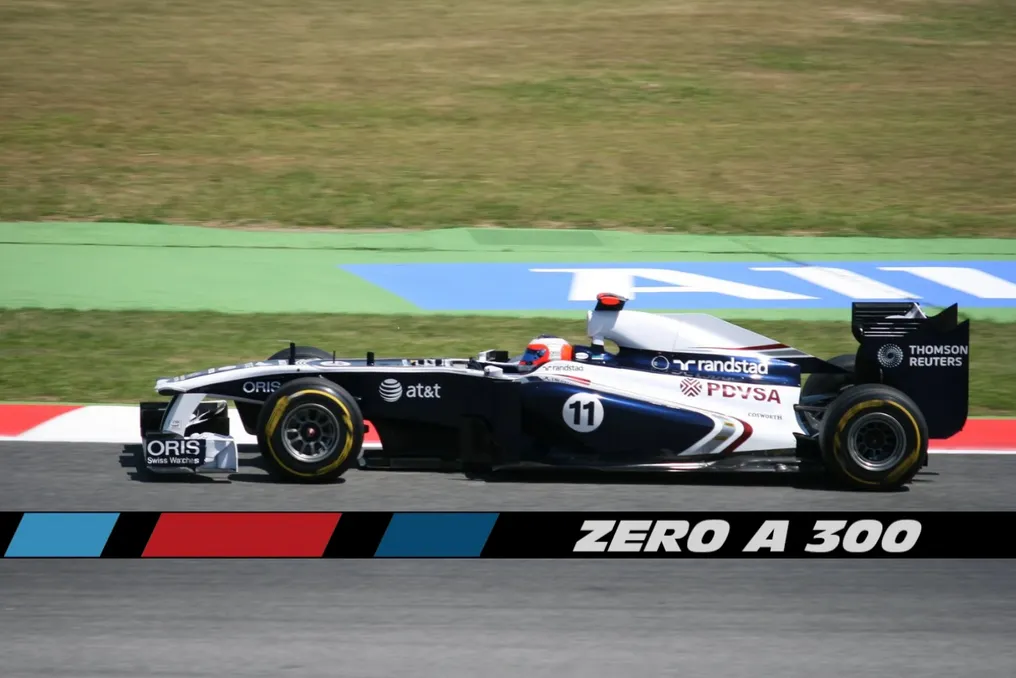
Rubens Barrichello, known as Rubinho, will return to the Williams FW33 cockpit at Interlagos. This car, with which he finished his Formula 1 career in 2011, will be used on November 8th, before the start of the São Paulo GP, under the initiative called Historical Lap.

This event is part of the celebrations of Rubinho's 45-year career and is sponsored by ALE Combustíveis. The driver will have about ten minutes on track with the Williams, which will be equipped with the 2.4-liter naturally aspirated Cosworth V8 engine.

The choice of this vehicle carries a particular significance, as Rubinho competed in his last F1 race at the 2011 Brazilian GP, finishing in 14th place with the FW33. That season, Williams only scored five points in the championship. Although he tried to return to the grid in 2012 and came close to competing in the 2014 Brazilian GP for Caterham, the team's financial problems prevented this return.

When announcing the event, Rubinho expressed that he did not imagine it would be his last farewell in Interlagos in 2011, stating: 'I didn't think it would be the last goodbye when I greeted my audience in Interlagos in 2011. And it's a good thing it wasn't.' He promised to accelerate intensely, saying: 'I want to tear up the Interlagos straight with you.'

BMW reveals never-before-produced four-door Series 3 E36 Compact

A functional prototype of a four-door variant of the BMW Series 3 E36 Compact, which was never put into production, was revealed by BMW Classic. This novelty intrigued because the initial idea was for a two-door hatchback with the style of the E36 sedan and rear-wheel drive.

The exhibited example, of the 316i variant, was the most basic model, equipped with a 1.6-liter four-cylinder engine producing 102 hp. Unlike simply adding two doors to an E36 Compact, this project started from a sedan, whose trunk was shortened and received the hatchback tailgate.

The car's construction featured unusual characteristics, such as the center console having controls for all four windows, while the rear ones used a crank. BMW was apparently testing proportions and shapes, opting to create a functional car rather than a model. Originally, the vehicle was supposed to be 'Boston Green', but ended up receiving the 'Hellrot' red paint.

The main reason the Series 3 E36 Compact was never manufactured was the high production cost. BMW sought to minimize expenses on the hatchback, even using components from the E30 generation, such as the rear suspension with semi-trailing arms and much of the interior.

Alfa Romeo: 'Time to end screens in cars'

Alfa Romeo has joined the movement advocating for the end of touchscreens in vehicles. According to Alejandro Mesonero-Romanos, the brand's head of design since 2021, the industry has exaggerated in this aspect, and it is time to reevaluate this trend.

The designer told Autocar that there was a 'war for screen centimeters,' which made no sense, as the screens had already become excessively large and were dominating the dashboard design. He also raised the issue of durability, predicting that these screens would become obsolete and expensive in a few years.

In response, the Cuorerosso concept, supervised by Mesonero-Romanos, eliminated a conventional multimedia unit. In its place, there is only a small screen on the center console that hides when not in use, sharing space with real physical controls.

Another highlight of the car is the instrument panel, which reinterpreted the traditional Italian concept of two circular dials, the cannochiale. These dials are digital and can reorganize to form a single screen, displaying only essential information without causing distraction. Mesonero-Romanos expressed a desire to drive at night with a single red-lit cannochiale.

Sensor tires may reduce braking distance

Cyber Tyre technology, presented by Pirelli in 2019, consisted of a tire with a sensor capable of communicating with the car's electronic systems. Tests conducted by the British magazine evo on a wet track demonstrated that a car equipped with the Cyber Tyre needed 5.7 meters less to stop from approximately 110 km/h compared to a car with equivalent tires but without the connected system.

The difference of the Cyber Tyre is not just pressure monitoring; each tire contains an internal sensor that collects data such as pressure, temperature, wear, load, and grip level. This information is transmitted in real-time to the vehicle's electronic control unit, which uses Pirelli algorithms to adjust the operation of ABS, stability control, and traction control according to the immediate conditions of the tire.

This overcomes a limitation of current systems, which operate with more generic calibrations. With the electronic sensor, the car precisely identifies the tire used, its condition, and its grip level, allowing for more precise interventions instead of just reacting to loss of traction. According to evo, the improvement was noted in both braking and wet cornering behavior, where the car maintained its trajectory for longer before exhibiting understeer.

Ram 2500 gets new top-of-the-line version

The Ram 2500 has received a new top-tier version in Brazil, the Laramie Night Edition. This version stands out for its darkened aesthetic appeal, replacing chrome elements with more sober finishes, such as grille trim, mirror caps, side steps, 18-inch wheels, and emblems. The bumpers are also painted in the body color.

To give it a more robust look, the hood now includes a central air intake, giving the front of the vehicle a sporty touch. This dark treatment extends to the interior, where seats, dashboard, steering wheel, and doors are upholstered in black leather. The equipment remains identical to the Ram 2500 Laramie, including a 12-inch multimedia center with wireless pairing for Android Auto and Apple CarPlay, a 12.3-inch digital dashboard, 360-degree external cameras, a complete ADAS package, ventilated and heated front seats with electric adjustments, and dual-zone air conditioning.

The mechanical assembly remains unchanged, maintaining the 6.7-liter Cummins turbodiesel, which generates 436 hp and 148.7 kgfm of torque, coupled with the eight-speed ZF TorqueFlite transmission. The drivetrain offers 4x2, 4x4, and 4x4 low options, and the brakes consist of ventilated discs with dual pistons and floating calipers. The load capacity is 1,287 kg, and the maximum towing capacity reaches 8,948 kg.

Since it is essentially an aesthetic package, the Ram 2500 Laramie Night Edition does not present an exorbitant price increase, costing R$ 10,000 more than the standard Laramie, totaling R$ 569,990 against R$ 559,990 for the common version.

Gunther Werks creates 872 hp Porsche 911 in tribute to Martin Brundle

Martin Brundle, known in Brazil as a rival to Ayrton Senna in English Formula 2, accumulated a vast career, competing in 158 Formula 1 GPs, winning the endurance world title, and winning the 24 Hours of Le Mans. He is currently recognized for his interviews on the starting grid of Formula 1.

In his honor, Gunther Werks produced a 872 hp Porsche 911. The special project was designed by Brundle's own daughter, Charlie Brundle, who is an automotive designer and has collaborated with McLaren, Aston Martin, and Jaguar Land Rover.

The vehicle, named Gunther Werks Brundle Edition Turbo, is based on the Porsche 993, but with an increased displacement to 4.0 liters and the addition of two turbos, resulting in 872 hp and 84.4 kgfm. It features a six-speed manual transmission and rear-wheel drive. The 911 Brundle was enhanced with independent suspension using overlapping triangular arms, Brembo carbon-ceramic brakes, modified aerodynamics with an adjustable rear wing, and forged magnesium wheels. Martin Brundle participated in tuning the suspension and the Sport and Track modes.

Charlie handled the aesthetics, creating a two-tone pearlescent paint inspired by her father's helmet. The name Brundle replaces the Porsche logo on the rear, and the initials MB are engraved on the carbon fiber seats. There are also references to the driver's career in the interior finish, including a Bell helmet with the same paint, signed by Brundle. On the dashboard, Charlie included a recurring phrase from her father: 'The most important bit of the car is the nut holding the steering wheel.'

Only five units of the Brundle Edition Turbo will be manufactured. Gunther Werks has not yet disclosed the price, but given that other modified 911s from the company exceed US$ 1,000,000, a high price is expected.

Popular