Not every software bug in a video game requires fixing. Sometimes a flaw in the code can generate such an interesting mechanic that developers decide to leave it. In other cases, unexpected behavior becomes so popular among players that it is integrated into subsequent titles.
This is how some of the most famous features of games emerged, including combos in fighters and one of the most recognizable enemies in Minecraft.
Let's look at six examples where bugs, development errors, and even misinterpretations have left their mark on video game history.
Executing a sequence of several hits is a key characteristic of fighting games today. However, in Street Fighter II, released in 1991, this possibility arose completely by chance. During development, the Capcom team noticed that certain attack animations could be interrupted, allowing a new hit to land on the opponent before they could recover. Since executing these sequences required high precision, the developers decided to keep this behavior. What seemed like a minor feature of the combat system turned into one of the most important mechanics of the genre, influencing franchises such as Mortal Kombat, Tekken, and The King of Fighters.
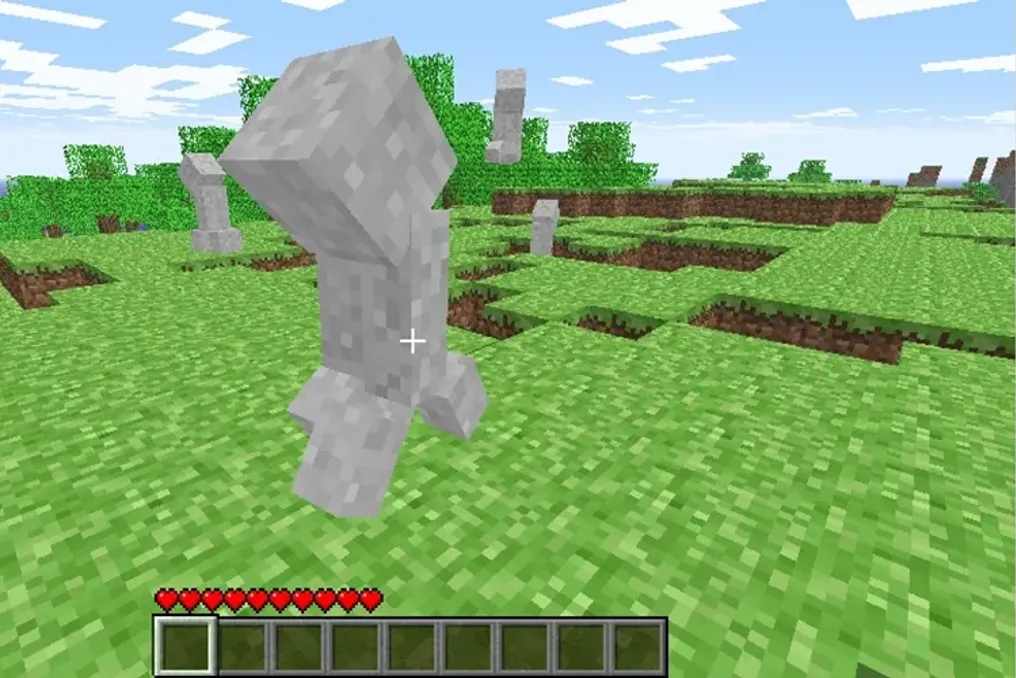
One of Minecraft's most famous adversaries originated from an error while creating another animal. Markus Persson, known as Notch, was working on a pig model but changed the height and length dimensions of the creature. The result was a tall, narrow character, significantly different from the original concept. Instead of discarding this model, the developer used its shape to create the Creeper—an enemy that quietly approaches players and explodes. This creature became one of Minecraft's main symbols.
In Quake, released in 1996, players discovered that they could use the explosion of their own rockets to reach higher places. This technique, known as rocket jumping, involves launching explosive weaponry near one's feet to utilize the impulse from the blast. Although creative use of physics was not initially presented as an official skill, this technique gained popularity within the community and became an important part of competitive gameplay. The concept also influenced other games, particularly the Team Fortress franchise. Before becoming a standalone franchise, Team Fortress appeared as a Quake modification. During mod development, an error caused some players' identifiers to display in the color of the opposing team, creating situations of confusion. This idea inspired developers to create a specialized class for disguise and infiltration. Thus, the Spy appeared, a character capable of impersonating a member of the enemy team and catching opponents off guard. This mechanic remains in Team Fortress 2, released in 2007.
Anyone who has encountered a giant in The Elder Scrolls V: Skyrim has likely experienced one of the strangest situations in Bethesda's RPG. When giants strike a character with their huge clubs, they can toss them to incredible heights, causing the body to cross the map's sky. This behavior is related to a game physics error, but it became so well-known that it entered community humor. Instead of disappearing entirely, this effect remained one of the most memorable situations for Skyrim players.
Unlike previous examples, Ermac did not arise directly from a bug, but from a misinterpretation of a development tool. In the internal logs of the first Mortal Kombat, related to errors, there was a reference to ERMACS, an abbreviation for error macros. This phrase sparked rumors about the existence of a secret fighter, often associated with a red version of the ninja franchise. Although the character did not exist in the original game, the popularity of this legend prompted the team to officially include him in Ultimate Mortal Kombat 3, released in 1995. Ermac became a permanent character in the series, demonstrating that even a rumor based on technical information can influence game development.
These cases show that not every innovation is born from a planned idea. Some arise from how players explore systems, find unforeseen behavior, and uncover possibilities that the developers themselves did not foresee. The difference lies in the decision to take advantage of the outcome. While some bugs degrade the gaming experience and require fixing, others can open up space for new mechanics, characters, and ways to play. Ultimately, some of the most memorable features of video games exist precisely because someone decided not to fix the error.