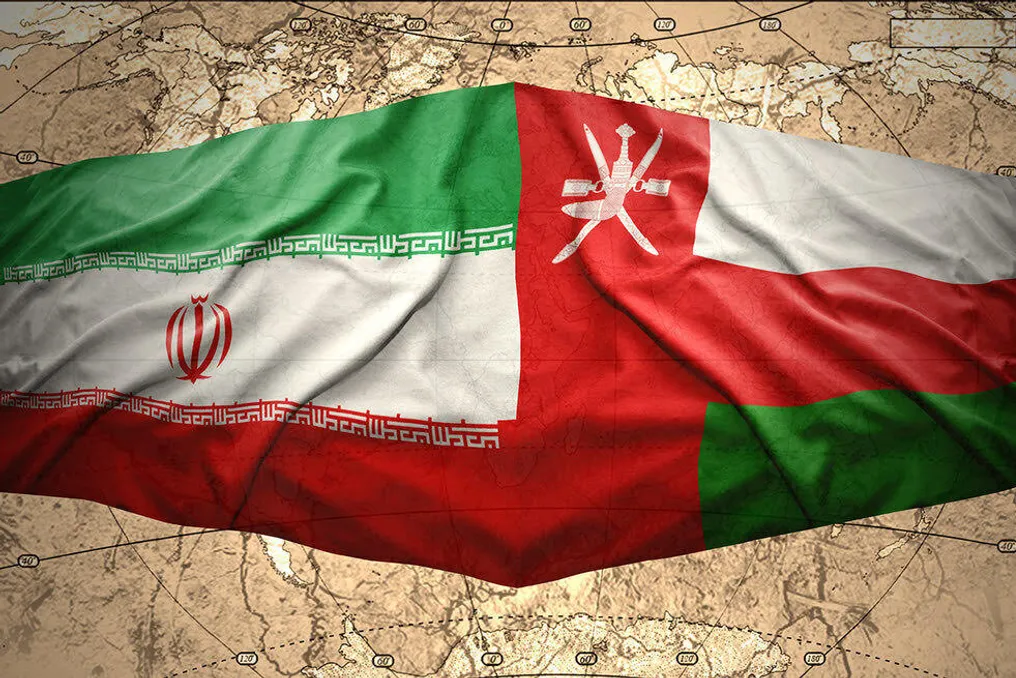
Iran's trade relations with neighboring countries are gaining increased importance in the context of changing regional circumstances, and strong economic ties between Tehran and Muscat serve as a prime example of this. While recent events have overshadowed trade with some Persian Gulf countries, Oman stands out as a reliable and growing market for Iranian products.
According to the latest data provided by the Iranian Trade Promotion Organization, exports from Iran to the Sultanate increased by an impressive 23 percent in the first half of the current Iranian calendar year. This highlights the resilience of bilateral trade and the potential for further expansion. As both countries work on a preferential trade agreement and strengthening customs cooperation, the trajectory of trade between Iran and Oman represents a promising model for regional economic interaction.
The Director General of West Asia and Africa at the Iranian Trade Promotion Organization noted the positive trend in Iran's trade with some West Asian countries. He reported a 23 percent increase in Iran's exports to Oman during the first six months of the current Iranian calendar year (from March 21 to September 21) compared to the same period last year.
According to Abdolamir Rabihavi of the Public Relations Department of the Iranian Trade Promotion Organization, the regional situation has affected the volume of Iran's trade with some Persian Gulf countries. However, Oman, despite its location in the Persian Gulf, has been less affected by these conditions.
Rabihavi specified that Iran's exports to Oman grew by 23 percent in the first six months of 1405 compared to the same period in 1404, with export value rising from 948 million US dollars to 1.164 billion US dollars. He also mentioned the development of trade routes and the country's borders, noting that after lifting some restrictions on land routes, there is an opportunity to more actively utilize the capacity of land borders, despite issues with southern waterways.
Rabihavi expressed hope that if the positive trend in exports to regional countries continues in the second half of the year, Iran will see further growth in trade in this region. Furthermore, he announced that the preferential trade agreement with Oman has been finalized after completing administrative procedures and has been sent to Parliament for final consideration.
In an exclusive interview with IRNA, Rabihavi discussed the measures taken by the Trade Promotion Organization during its 14th term and the significant progress in trade diplomacy, as well as in the development of port and border infrastructure with neighboring countries. He stated that the organization intends to promote and increase trade with regional countries through the actions of the last two years.
At the end of June, heads of the customs services of Iran and Oman, speaking at the World Customs Organization summit, emphasized the need to implement the provisions of the agreement on mutual administrative assistance in customs matters and proposed creating a joint committee to monitor the implementation of this agreement.
During a bilateral meeting, Forouhad Asgari, the Minister of Economy and Head of the Customs Administration of the Islamic Republic of Iran, and Said bin Khamis Al Ghaiti, the Head of the Royal Customs of Oman, focused on increasing and expanding customs cooperation in accordance with the terms of the signed agreement. Topics discussed included conducting familiarization visits to the customs offices and ports of donor and recipient countries, as well as regular meetings between the customs authorities of the two countries.
The development of mutual cooperation and experience exchange in combating smuggling and customs violations was also discussed, as well as holding regular joint meetings of customs officials for maximum coordination to facilitate trade. Within the framework of this meeting, Iranian customs raised the issue of conducting joint educational events, considering the establishment of the Regional Training Center (RTC) by the Customs Administration of the Islamic Republic of Iran.
During the official two-day visit of Iranian President Masoud Pezeshkian to Muscat in May 2025, Iran and Oman signed 18 memoranda of understanding on various fronts. These agreements, concluded on the sidelines of the Iran-Oman Joint Economic Committee meeting, aimed to deepen ties in sectors such as law, economy, politics, culture, education, healthcare, defense, media, technology, energy, and mining.
As a symbolic confirmation of cultural and historical ties, representatives of both countries presented a commemorative joint postage stamp. President Pezeshkian arrived in Muscat on May 27 at the official invitation of the Sultan of Oman, Haitham bin Tariq. After the official welcoming ceremony at Muscat International Airport, Pezeshkian met with the Sultan of Oman, followed by a joint session of high-level delegations from both countries.
During the meeting, Pezeshkian stated Iran's readiness to intensify cooperation with Oman in all areas, adding that both countries possess capabilities that can be used for the benefit and progress of their own nations, as well as other regional states. He emphasized: 'We are ready to do everything within our means for the dignity and greatness of Muslims. Each of us possesses potential that can be used for the benefit and progress of each other and other nations in the region.'
Sultan Haitham also welcomed closer ties, stating that he agrees that if channels for business activity open up, both countries 'will see a significant leap in bilateral relations.' He added: 'Relations between Iranian and Omani ports must develop, and the railway capacity from north to south of Iran is of great commercial importance to us,' noting the need for greater support for cooperation in the energy sector.
The 23 percent growth in Iran's exports to Oman in the first half of 1405 is not just a statistical achievement; it reflects deliberate and sustainable efforts to strengthen bilateral ties through trade diplomacy, infrastructure development, and institutional cooperation. From the completion of the preferential trade agreement awaiting parliamentary approval to high-level meetings on customs issues and the signing of 18 memoranda of understanding during President Pezeshkian's visit to Muscat, a foundation is being laid for deeper economic integration. As both countries look to the second half of the year, the continuing positive trend in exports—supported by improved access to land borders and expanded port relations—provides grounds for optimism. With political will from both sides and a common commitment to overcoming regional challenges, Iran and Oman are well-positioned to turn these successes into long-term and mutually beneficial commercial partnerships.