Bihar-based startup uses AI and IoT to improve efficiency of Indian Railways
Read more
YourStory [india, en]
yourstory.com

Bihar-based startup uses AI and IoT to improve efficiency of Indian Railways

The Indian railway network is one of the largest and most complex public infrastructure systems in the world, with thousands of trains, millions of passengers, freight transport, stations, tracks, and field crews operating daily. In such a complex system, even a small delay can cause cascading consequences at various levels.

Sometimes reports from the field are not received in a timely manner, and data may be scattered across different systems, preventing officials from getting up-to-date information about what is happening. Under these conditions, technology ceases to be just a tool for speeding up work, becoming an integral part of effective management and decision-making.

The startup Sarva Suvidhaen, based in Bihar, operates precisely in this area. The company develops solutions for railway transport and other large infrastructure systems using artificial intelligence (AI), Internet of Things (IoT), computer vision, and software.

The company was founded by Atul Anand and Srishti. Despite their different professional backgrounds, they noticed a common problem during quarantine. Working from home in Patna, they realized the need to improve data, automation, and real-time monitoring for certain processes of Indian Railways. This gave rise to the idea of a startup that could apply technology to solve on-ground problems in public infrastructure, rather than being limited to private companies.

Recently, the publication YourStory interviewed Atul Anand, CTO of Sarva Suvidhaen. He elaborated on the company's inception, his entrepreneurial experience in Bihar, the AI and IoT-based solutions developed for railways, as well as the challenges encountered and future plans.

Atul Anand's journey began in a government middle school in Bihar, where he graduated in 2005 through the Bihar Board. He then continued his studies at Patna Science College from 2005 to 2007. After that, he earned a Bachelor's degree in Computer Science and Engineering from NIT Trichy. Subsequently, he worked in software development at companies such as Oracle, BEL, CLS, KPI Partners, IQuanti, and SpotOn.

Srishti began her education at School of Creative Learning. She obtained a secondary school diploma through BSEB. She later earned a BBM from Magadh University and an MBA from Uttarakhand Technical University. She worked at SPVR and Co, Randstad, and Cognizant.

The differences in their experience proved to be a strength for the company: Atul possessed expertise in technology and software development, while Srishti had experience in business, management, and operations. Atul explains that after more than twelve years in the software development sector, he felt that the application of technology should not be limited to the needs of only companies. He added that the country's large public systems also needed this, and Srishti prompted him to think in this direction. They decided to use their technical knowledge to solve problems affecting public services and ordinary citizens.

During quarantine, working from home in Patna, they began closely examining the daily processes of Indian Railways. They concluded that data collection, field reporting, and monitoring in such an extensive network could be made more organized, which is particularly relevant for processes requiring information gathering from various points and subsequent decision-making.

Srishti encouraged Atul to leverage his technical background in this direction. Together, they started exploring ways to integrate machine learning (ML), IoT, and software with public infrastructure tasks. Sarva Suvidhaen focuses on organizations whose operations are distributed across multiple locations. In such systems, manual reporting and limited data visibility slow down the decision-making process.

The company operates on B2B and B2G models, offering the development and implementation of software and IoT solutions, as well as consulting and maintenance. Atul notes that they did not start with extensive market research but based their approach on observing real problems while staying in Patna during quarantine. They believed that technologies like ML and IoT could help understand and solve these issues. He took responsibility for the technology, while Srishti handled the business and operations, thus their roles gradually defined, and Sarva Suvidhaen's work progressed.

The startup has developed a range of solutions for digitizing field operations of Indian Railways. One of these is WagonEye—an AI and computer vision-based platform used to detect potential defects on the chassis and running gear of freight and passenger train wagons. In a large network like the railways, timely identification of issues is critical for both safety and operational efficiency.

Furthermore, there is RailOps—a digital operational platform that allows railway teams to log and monitor field activities. SwachhDNR is a web and mobile platform implemented in the Danapur division, which includes Patna Junction, as well as in the Sealdah and Jhansi divisions. It is used for tracking and evaluating employee performance.

Through these solutions, the company aims to make field data digitally accessible and link it to the decision-making process. Atul emphasizes that their focus goes beyond software development; they strive for technology to work where a real problem exists. Since the conditions in railway field operations are constantly changing, it is crucial that AI models and IoT systems function reliably in real-world settings. Solutions like WagonEye, RailOps, and SwachhDNR were designed with this approach in mind. Their goal is to transform data into actionable information that aids better decision-making at both the field worker and management levels.

Sarva Suvidhaen initially bootstrapped, meaning the founders did not seek external investors, relying on personal savings and income from early projects. Later, they received funding of 10 lakh rupees from Startup Bihar. The company also received incubation support from IIT Patna and STPI, and additionally secured 1 crore rupees in credits from Google Cloud. These resources were directed towards building and scaling the AI and IoT infrastructure.

According to the company, it has received a total of 32 lakh rupees in government aid and attracted 60 lakh rupees in external equity capital from two investors. Experience working with government agencies allowed Sarva Suvidhaen to understand important aspects of business: large government organizations follow established procurement rules, making trust-building and establishing a strong reputation critical when implementing new technologies. Meanwhile, pilot projects and real field conditions are very useful for refining deep technological solutions. This experience helped the company make its solutions more practical and reliable.

The company has demonstrated business growth. In the financial year 2024–25, the company's turnover was approximately 48 lakh rupees, and profit reached about 9 lakh rupees. In the financial year 2025–26, turnover increased to approximately 1.16 crore rupees, and profit amounted to about 20 lakh rupees. The company's revenue model is based on one-time fees for development and integration, as well as monthly or annual subscriptions and maintenance contracts.

Currently, the company plans to expand its presence across all zones of Indian Railways and to bring its solutions into sectors such as logistics, healthcare, and smart cities. On the technological front, the company is preparing to increase investments in edge AI, computer vision, and predictive maintenance.

The IIT Patna incubation center played a vital role in this journey. According to the company, funding, technical support, mentorship, and industry connections helped transform prototypes into field-ready solutions. Atul believes that Sarva Suvidhaen is not just a company working for railways; their goal is to become a partner in AI, IoT, and automation for critical infrastructure. To achieve this goal, technology must be capable of functioning in diverse environments. Going forward, they intend to explore opportunities in sectors like logistics, healthcare, and smart cities, alongside railways. They believe that while the journey may begin in Bihar, the solutions must cover all of India, and ultimately, the entire world.

The story of Sarva Suvidhaen is still in its early stages. The company will continue to face challenges such as government procurement procedures, long sales cycles, and large-scale deployment of deep technological solutions. However, it also demonstrates how new opportunities for entrepreneurship and technological talent are emerging in Bihar. A startup originating in a city like Patna can develop solutions for one of the country's largest public infrastructure systems. The ecosystem of startups, incubation centers, government aid, and institutional support helps such enterprises move beyond the initial phase. Sarva Suvidhaen's path exemplifies this evolving landscape. For Atul and Srishti, the direction is clear: they want to work on problems whose impact can be seen on the ground and whose solutions can be scaled. Their message reflects this approach: 'Start your journey in Bihar, find solutions for India's real problems, and create solutions that the whole world can adopt.' Sarva Suvidhaen began its journey in Bihar, but its ambitions are not limited to the state; the company is now developing solutions applicable to other major infrastructure sectors besides railways, presenting an interesting picture of Bihar's developing startup ecosystem.
Similar stories

Anthropic claims AI can accelerate its own development through recursive self-improvement
Read more
olhardigital.com.br

Anthropic claims AI can accelerate its own development through recursive self-improvement

Anthropic disclosed in an update to its S-1/A prospectus, submitted to the U.S. Securities and Exchange Commission (SEC), that it may be close to creating an artificial intelligence capable of accelerating its own enhancement.

Although the company states it has not yet reached this phase, its projections suggest this could happen in the near future. This technology, known as Recursive Self-Improvement (RSI), describes a point where AI systems can improve their own development processes, boosting the evolution of their capabilities.

This perspective generates divergence: critics warn that such advances could result in extremely powerful, human-out-of-control systems capable of causing harm while pursuing their objectives. On the other hand, enthusiasts see RSI as a chance to increase productivity and speed up scientific discoveries.

Anthropic acknowledges both views. In the document sent to the SEC, the company mentions that it already uses AI in its R&D activities but warns that this approach carries a significant safety risk, especially if the pace of progress is drastically accelerated.

The prospectus update introduces new warnings in the risk factors section. Anthropic revealed that it has already used AI systems to create new models without realizing at the time the magnitude of the capacity gains achieved. The increased use of AI in research may also cause models to evolve faster than the company's ability to implement safety, alignment, and protection measures.

According to the document, internal estimates and forecasts for future models indicate that the company may soon reach what its Responsible Scaling Policy calls 'dramatically accelerated AI-attributable progress.' However, the company emphasizes that none of its current models have been classified as having exceeded this limit, and data evaluation is ongoing.

Despite this possibility, Anthropic declares that it does not foresee using Claude to autonomously design and build successive generations of advanced models without relevant human supervision or understanding. The company also plans to revise its Responsible Scaling Policy to ensure humans maintain control over the development of its most sophisticated models.

It is important to note that the filings with the SEC fulfill disclosure obligations but also serve as a means for the company to present its expectations to the market. Anthropic stresses that Claude's capabilities have improved this year, notably in programming, mathematics, and cybersecurity, although no current model has been considered by the company to have reached the stage of recursive self-improvement.

Raghavan from IBM asserts that AI will create more software and change developer roles
Read more
business-standard.com

Raghavan from IBM asserts that AI will create more software and change developer roles

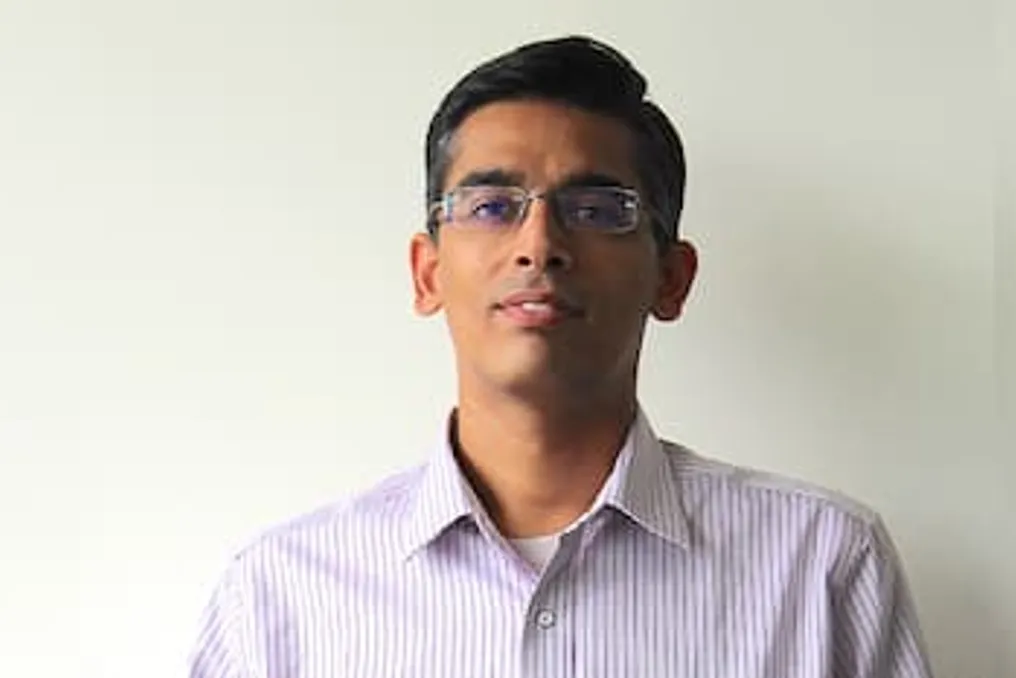
Sriram Raghavan, General Manager of IBM Software India and Software Innovation Lab, stated that artificial intelligence (AI) agents will accelerate the software creation process and transform developer functions. He also emphasized the necessity for enterprises to strengthen cybersecurity, governance, and personnel skills.

According to Raghavan's estimates, up to two billion AI agents could eventually be deployed globally, with AI writing half of all code. He clarified that the proliferation of these agents will not lead to the disappearance of software development but, on the contrary, will trigger the creation of significantly more software, fundamentally changing developers' work and technology building methods in companies.

At the IBM Think event in Mumbai, Raghavan told Business Standard that there is likely to be an increase in the volume of software produced. He noted that AI has already caused significant changes in software development concerning team organization, workflow management, and the software creation process itself.

The role of the developer is undergoing a fundamental shift: instead of writing code, specialists are now engaged in monitoring, verifying, and critically evaluating the results generated by AI. Raghavan stressed that this is a skills change requiring different training for developers.

He compared this trend to the automation of electronic design in the semiconductor industry. According to him, automation has allowed engineers to develop increasingly complex chips without eliminating the need for hardware engineers. Raghavan expects a similar transformation in the software sphere, where automation will enable the creation of more applications but will require new competencies.

Expertise in this area is now focused on verification, validation, strategy definition, setting constraints, and directing AI to perform the correct tasks. Raghavan believes that this is the direction software engineering is moving. He predicts that more software will be produced in the next two to three years than ever before, as innovation opportunities have become unprecedented, and value now lies in ideas and their implementation, rather than in the creation of code itself.

Nevertheless, Raghavan warned that the growing use of AI will not diminish the importance of fundamental engineering skills; on the contrary, judgment and core skills are becoming even more important.

Responding to questions about recent security issues related to new AI models, Raghavan stated that the adoption of AI is radically changing the cybersecurity landscape. He noted that one must think about cybersecurity in a completely different way because of AI. Raghavan emphasized that proactive, continuous integration of best practices and technologies into vulnerability management and risk prioritization based on AI is vitally necessary. He added that the company's proposals reflect this approach, insisting on the need to integrate AI into defense alongside concerns about AI misuse.

Regarding risks associated with unintended actions by AI agents, Raghavan advised enterprises to implement stricter controls over agent identifiers, permissions, and access to internal systems. Agents should only be granted the minimum necessary permissions to perform a specific task, rather than broad access to all corporate systems. He explained that an agent only needs a certificate and a token to perform an action on behalf of a user for 30 seconds. Furthermore, he highlighted the importance of constant monitoring, as AI systems do not always behave predictably, unlike traditional software.

AI Adoption in India

Referencing an IBM study conducted jointly with MeitY earlier this year, Raghavan reported that only about 15 percent of Indian enterprises have reached the stage of scaling AI adoption, while the remaining 85 percent continue to face difficulties. Companies that successfully scale AI have moved beyond isolated use cases and are integrating the technology across their entire structure.

According to Raghavan, approximately 15% of enterprises are truly scaling AI, meaning they have passed the stage of implementing one case that was integrated into the organization and may be moving to a second or third case. For the remaining companies, the main obstacles remain data governance, corporate governance, and a shortage of skilled personnel.

CM Yogi recounted the police's helplessness against land mafias
Read more
www.aajtak.in

CM Yogi recounted the police's helplessness against land mafias

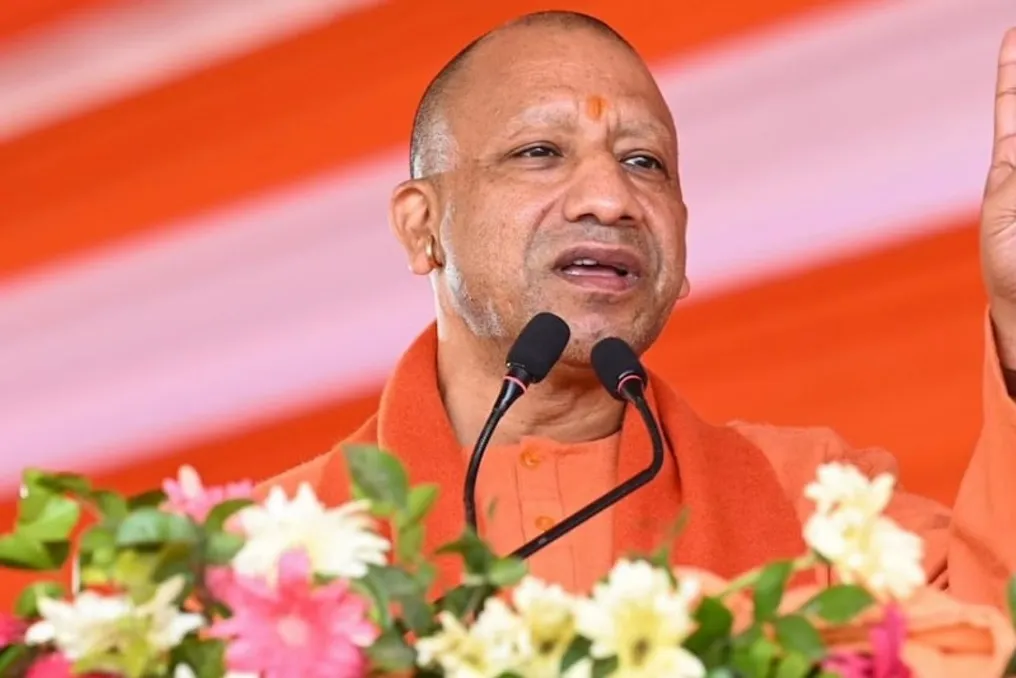
Uttar Pradesh Chief Minister Yogi Adityanath made significant remarks on the use of Artificial Intelligence (AI) during the 'TechSangam 2026' event held in Lucknow. He stated that while AI can be helpful, it should not be the final decision-maker. The Chief Minister also highlighted controlling criminals through technology and the expansion of forensic facilities in the state. On this occasion, he shared an incident of a land mafia who had registered government land in his name, and at that time, the police situation was extremely pitiable.

At the 'TechSangam 2026' event at the Uttar Pradesh State Institute of Forensic Science (UPSIFS) in Lucknow, Chief Minister Yogi Adityanath spoke about the importance of Artificial Intelligence, cybersecurity, and forensic science. His view was that technology should be used to improve human life, but humans should not become completely dependent on technology.

Chief Minister Yogi Adityanath emphasized that 'Artificial Intelligence can be our assistant, but AI should not be our decider. We must follow our own judgment, not AI's judgment. If we start doing everything by depending entirely on it, that power itself can become a threat to us.' He mentioned that currently, discussions are happening on AI and modern technologies in Lucknow, whereas ten years ago, imagining such events in Uttar Pradesh was a dreamlike idea.

The Chief Minister also referred to the land on which the Uttar Pradesh State Institute of Forensic Science is currently established. He explained that initially, this land was in disarray. A land mafia had manipulated documents to register this land in his name. Yogi Adityanath stated that he was informed of this matter by the then DGP of Uttar Pradesh. He said that even the world's largest civil police was helpless against the land mafia.

According to the Chief Minister, he requested the file related to the DGP and investigated the matter. Subsequently, an FIR was registered. When the accused reached the High Court, another FIR was also registered. Eventually, the person surrendered and started apologizing.

The Chief Minister explained by giving the example of the popular TV serial CID that five family members used to watch this show together. This show depicted how doctors could reach the culprit by examining a person's death, such as hair or nails. He mentioned that such examination was not possible at that time, but today, this work is being done through modern forensic technology. With the help of science and technology, it has become difficult for criminals to escape.

Chief Minister Yogi Adityanath gave an example of a mafia who committed his first crime in Uttar Pradesh in 1980. When his government took action against him in 2017, he was sent to Punjab. He mentioned that it took three years to bring that mafia back from Punjab to Uttar Pradesh, for which the government had to go to the Supreme Court. According to the Chief Minister, finally, after an interval of 42 years, that mafia received punishment.

The Chief Minister also stated that previously, adequate facilities for forensic investigation were not available in Uttar Pradesh. DNA samples used to remain in the waiting list for ten years for testing. Due to the lack of timely availability of scientific evidence, the accused would escape legal consequences. He informed that now, 12 forensic laboratories are ready in the state, and more than 150 forensic vans are available. Samples can now be tested with the help of modern means and reports can be presented before the court.

The Chief Minister further stated that before 2017, there were only two cyber police stations and four forensic laboratories in Uttar Pradesh, and the conviction rate was less than 30 percent. Currently, cyber police stations are established in all 75 districts of the state, and work is progressing towards establishing a forensic laboratory in every division. He concluded that 'TechSangam 2026' is discussing topics such as AI, cyber forensics, quantum technology, and data protection. The goal of this event is to connect technological innovation with citizen safety, a robust judicial system, and new opportunities for education, research, and employment for the youth.

Popular