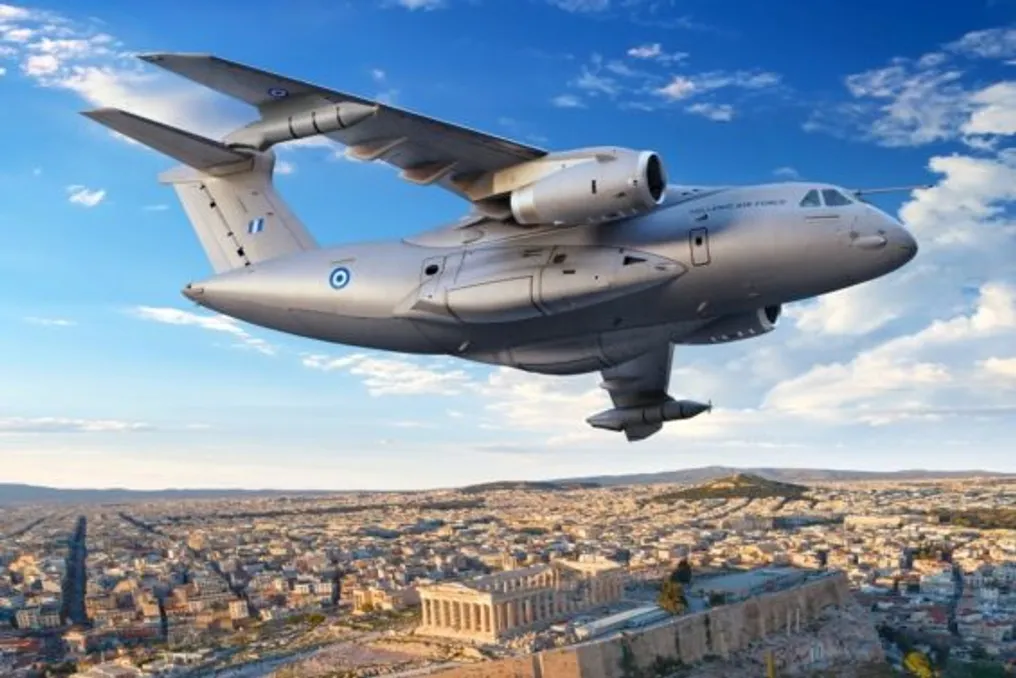
Embraer sells KC-390 freighter to Greece, becoming the seventh European country to acquire the Brazilian aircraft
Read more
AutoPapo
autopapo.com.br

Embraer sells KC-390 freighter to Greece, becoming the seventh European country to acquire the Brazilian aircraft

Embraer has secured another military customer on the European continent. The Greek Ministry of National Defence formalized a contract this Monday (the 2nd) for the acquisition of three KC-390 Millennium aircraft, the military freighter manufactured by the Brazilian company, with an additional option for three more units.

The delivery of the first unit is scheduled to take place with the Greek Air Force in 2027, and all three aircraft must be operational by 2030.

This deal was concluded through a governmental agreement between Greece and Portugal. Portugal, which already uses the KC-390, will offer support to the Greeks in areas such as training, logistics, and technical assistance.

The Portuguese government released resources estimated at R$ 3.6 billion (equivalent to 589.9 million euros) for this operation, a value that covers the three aircraft equipped with electronic warfare systems, as well as the necessary support and training.

The new KC-390s will replace the C-130 Hercules models currently used by the Greek Air Force. This model, produced by the American Lockheed Martin, made its first flight in 1954. With the introduction of the Brazilian aircraft, Greece can expand its tactical transport and air refueling capacity, thus facilitating joint operations with NATO partners.

Greece becomes the seventh European country to opt for the KC-390, joining Portugal, Hungary, the Netherlands, Austria, the Czech Republic, and Sweden. Furthermore, Greece is a member of NATO since 1952. Internationally, the KC-390 has already been adopted by Brazil, South Korea, Uzbekistan, the United Arab Emirates, and Colombia.

For the Brazilian Air Force (FAB), the entity for which the aircraft was originally developed, there are a total of 19 contracted units.

The specifications of the KC-390 include a cargo capacity of up to 26 tons, a cruising speed of up to 870 km/h, and suitability for operating from short, unpaved, or improvised runways. Its functionalities cover troop and supply transport, paratrooper deployment, humanitarian missions, aeromedical evacuation, firefighting, and search and rescue operations.

Additionally, equipped with a quick installation kit, the freighter has the capability to function as a tanker aircraft, supplying fuel to other aircraft while they are in flight.

Similar stories

Indian airline IndiGo is negotiating with Embraer to purchase 100 regional aircraft
Read more
business-standard.com

Indian airline IndiGo is negotiating with Embraer to purchase 100 regional aircraft

According to information from three sources close to the situation, India's largest airline, IndiGo, is discussing the possibility of acquiring 100 regional aircraft from the Brazilian manufacturer Embraer, with a potential option for an additional 50 units. This could become one of the largest orders placed with the Brazilian manufacturer.

Sources who wished to remain anonymous emphasized that negotiations are in the early stages and the deal is not yet guaranteed. Furthermore, they noted that the aircraft model has not yet been determined, and the final order volume may change. It is anticipated that any deliveries may not begin before 2030.

This volume of discussed aircraft has come to public knowledge for the first time. No immediate responses were received from IndiGo or Embraer regarding requests for comments.

The successful sale of 100 aircraft could cost billions of dollars at base prices, although such deals often include discounts. Previously, Embraer promoted its regional aircraft among Indian airlines and concluded a non-binding agreement with Adani Defence & Aerospace this year to study the possibility of establishing an final assembly line for older E175-E1 models, which carry up to 88 passengers, in India.

The company also produces larger models, the E190-E2 and E195-E2, equipped with more modern and fuel-efficient engines capable of carrying 114 to 146 passengers, respectively.

Advantage for Embraer

A successful deal would be a significant success for Embraer in the world's third-largest domestic aviation market, where airlines are expanding their fleets to capitalize on long-term air travel demand.

Currently, Star Air, a small regional airline, is the only Indian company operating Embraer aircraft. In March, Embraer CEO Francisco Gomes Neto told Reuters that the plan to establish an assembly line in India depends on orders of at least 200 aircraft, and that aircraft assembled in India could be delivered starting in 2028 if orders are placed by the end of the current year.

The order from Embraer would allow IndiGo to increase routes to regional areas and replace some of its turboprop ATRs, which would enable it to offer more seats on existing routes.

IndiGo CEO Willie Walsh, who took over in August, stated that IndiGo will expand long-haul flights without sacrificing its low-cost short-haul business. The company plans to grow its fleet to approximately 600 aircraft by 2030, up from 442 in September. The core of the fleet consists of narrow-body Airbus aircraft, but the fleet also includes 44 turboprop ATRs.

Gol Linhas Aéreas will end direct flights between Rio Branco and Porto Velho after two months of operation
Read more
g1.globo.com

Gol Linhas Aéreas will end direct flights between Rio Branco and Porto Velho after two months of operation

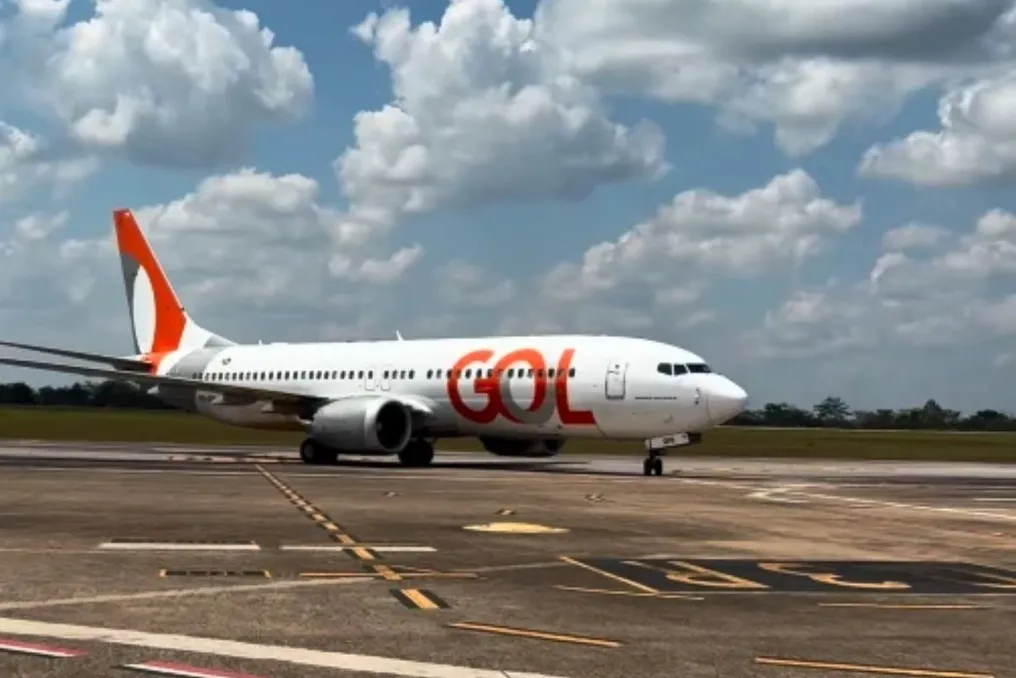
Gol Linhas Aéreas plans to discontinue the operation of direct flights connecting Rio Branco to Porto Velho, Rondônia, shortly after the route was resumed, just over two months later. The company informed g1 that the last flight on this route should take place during November, although a precise date has not yet been set.

Furthermore, the airline announced that the route between Rio Branco and Manaus (AM) will be discontinued starting in February 2027. Decisions regarding the closure of these routes are based on the number of tickets already sold.

Artur de Andrade, Gol's communications consultant, clarified that the review of the air network is due to the increase in costs associated with fuel. However, the company noted that it does not rule out the possibility of reintroducing the routes if there is sufficient demand.

According to Artur de Andrade's statement, the interruption of the routes is due to continuous increases in the cost of aviation fuel (QAV), which has doubled and accounts for approximately 40% of the Company's operating expenses. For this reason, Gol is making adjustments to the routes, which implies reducing or suspending services on certain segments.

The termination of direct flights between the capital of Acre and Porto Velho occurred about two months after Gol announced the return of this segment, which had been suspended since August 2020. A survey conducted by g1 among the three companies operating in the state found no direct flights to Rondônia.

Gol advised passengers who purchased tickets directly from the company on how to proceed: they can reschedule their trips, request credit, or ask for a refund through the Customer Service Center at 0300-115-2121. Artur added that if the passenger does not accept the offered options, they can choose to keep a credit with the company or request a refund.

For customers whose tickets were purchased using miles, reservation management must be done directly with Smiles, at the number 11 991 824 233. Those who bought tickets through agencies must contact the selling agency.

Popular