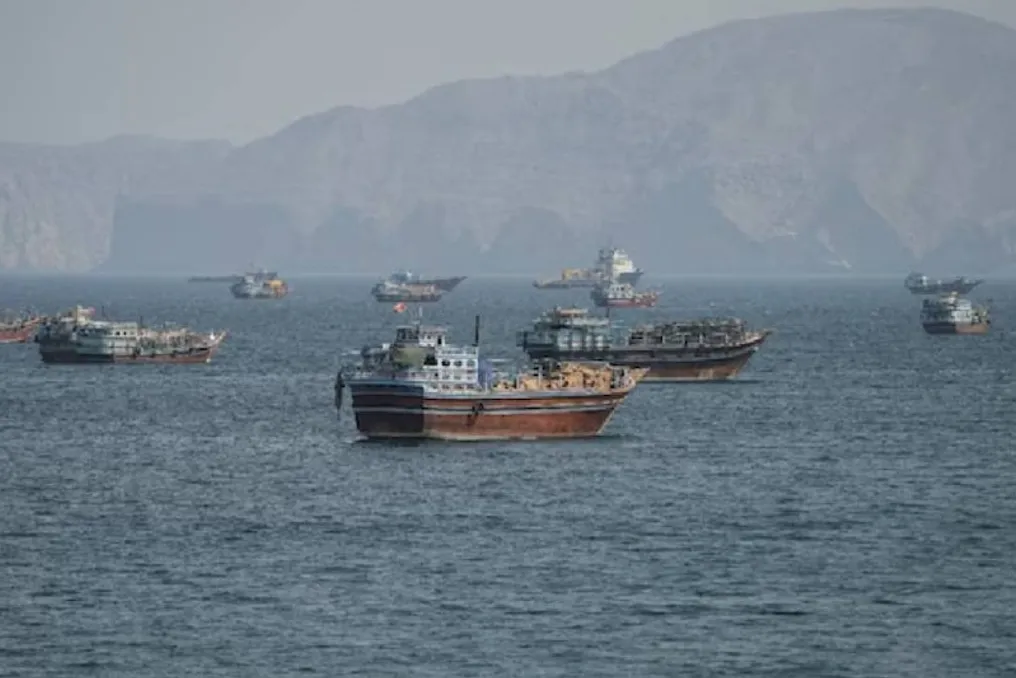
Iran grants sanctions exemptions for ships from India, China, Iraq, and Qatar passing through the Strait of Hormuz
Read more
Aaj Tak
www.aajtak.in

Iran grants sanctions exemptions for ships from India, China, Iraq, and Qatar passing through the Strait of Hormuz

Amid tensions in the Middle East, positive news has emerged for India. Iran has announced the lifting of restrictions for vessels transiting the Strait of Hormuz, including ships from India, China, Iraq, and Qatar.

Trade along this maritime route had become extremely difficult due to the ongoing conflict between Iran, the US, and Israel. However, this decision is expected to significantly ease shipping and the supply of energy resources to India.

Amir Hayat Mokaddam, Deputy Chairman of the Iranian Parliament's National Security and Foreign Policy Committee, revealed this information in an interview. He explained that this system is based on the interests of four countries: Iran, India, China, Iraq, and Qatar.

Mokaddam stated: 'We have temporarily exempted India, China, Iraq, and Qatar from transit restrictions in Hormuz. Ships from these countries pass freely, and even Americans do not stop them.'

According to local media reports, one of the key reasons for granting India an exemption is Iran's need for vital medicines. Due to strict international sanctions and the ongoing war, Iran faces difficulties in procuring pharmaceuticals on global markets. The Indian pharmaceutical sector is a key supplier for Iran, and allowing Indian ships passage will simplify the import of necessary goods and medicines.

Regarding China, Iran's strategy is to gain political support. China is a major partner of Iran in the fields of energy and trade, and Beijing's diplomatic support is highly significant for Iran amid pressure from the US.

Hormuz, located between Oman and Iran, is one of the world's most important sea routes, connecting the Persian Gulf with the Arabian Sea. For India, this route is critically important as a 'vital energy artery.'

According to the Ministry of Oil, before the conflict began in 2026, about 45 percent of India's crude oil imports and approximately 90 percent of its liquefied gas (LPG) imports passed through this route. Furthermore, a significant portion of India's LNG supplies, especially from Qatar and the UAE, is transported via this route.
Similar stories

Audi Quattro receives reimagining based on RS4 and powerful V8 engine
Read more
autopapo.com.br

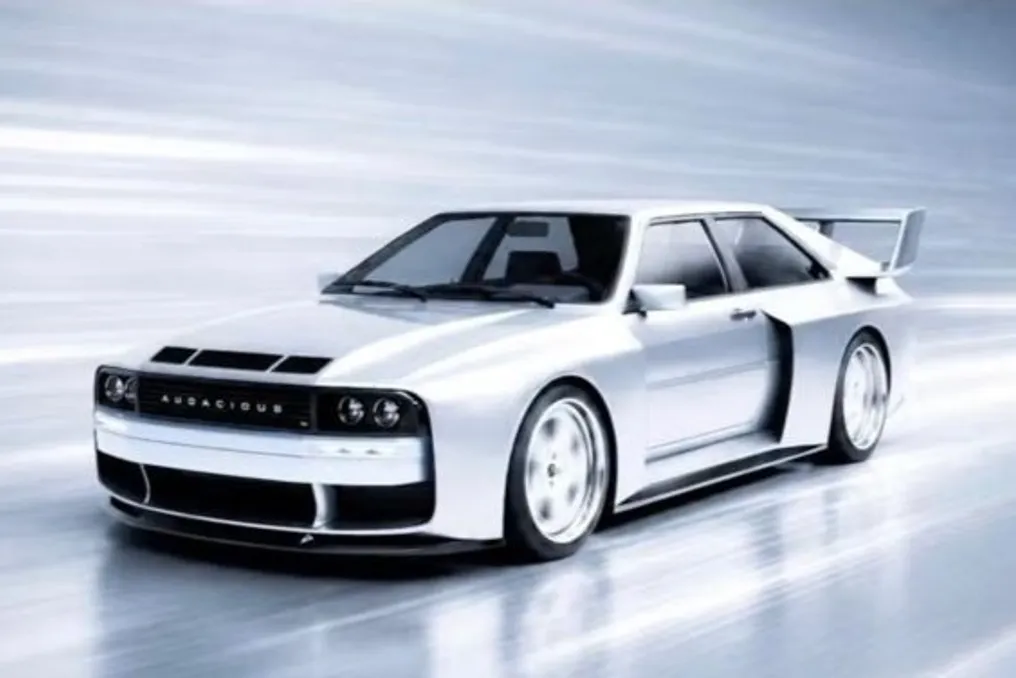
Audi Quattro receives reimagining based on RS4 and powerful V8 engine

The iconic Audi Quattro, known for popularizing all-wheel drive in both tracks and rally competitions during the 1980s, has been reformulated with a V8 engine capable of generating up to 760 horsepower.

This new project, named Audacious IV, is developed by Audacious Automotive, a Scottish company planning to manufacture a total of 50 units. The estimated initial cost for acquisition is approximately R$ 2.58 million (equivalent to 350 thousand pounds), excluding taxes and accessories.

It is a restomod, a type of classic vehicle that is mechanically modernized while maintaining its original appearance. Although it preserves the square silhouette of the original model, it replaces the five-cylinder engine and the entire mechanical assembly.

The structure of the Audacious IV uses the chassis of the B7 generation Audi RS4, produced between 2006 and 2008. From this base, the car inherits components such as the chassis, suspension, brakes, and part of the electrical system.

Aesthetically, the vehicle features wheel arch flares and large exhaust outlets reminiscent of Group B cars, famous for their extreme models in the 80s World Rally Championship. The customer has the option to choose between a body built from steel and aluminum, incorporating parts from an original Quattro, or a body made entirely of carbon fiber; 40 of the 50 units will be in carbon.

In the interior, the RS4 panels are replaced by analog gauges and physical buttons.

Under the hood, there is the RS4's 4.2L V8 engine, coupled with the Torsen all-wheel-drive system and a six-speed manual gearbox. The entry version comes with a compressor and delivers 608 hp. The second version, which also has a compressor, receives internal reinforcements and an improved cooling system to reach 760 hp.

Two other configurations, still under development with the tuner LAA Performance, a specialist in Audi engines, can spin up to 10,000 revolutions per minute. One of these options is naturally aspirated, and the other is turbocharged.

According to the company, the car can accelerate from 0 to 96 km/h in just 3.4 seconds and reach a top speed close to 320 km/h. The carbon version should weigh 1,200 kg, while the metal version weighs between 1,400 kg and 1,450 kg.

Each unit is assembled manually, and the manufacturing process takes about three years. The first deliveries are scheduled for the end of 2027.

Rational use of land and water resources is necessary
Read more
uza.uz

Rational use of land and water resources is necessary

As part of the large-scale reform process underway in the country, special attention is being paid to the issues of rational use of land and water resources, attracting investment to the agricultural sector, as well as increasing the responsibility and interests of landowners.

Popular