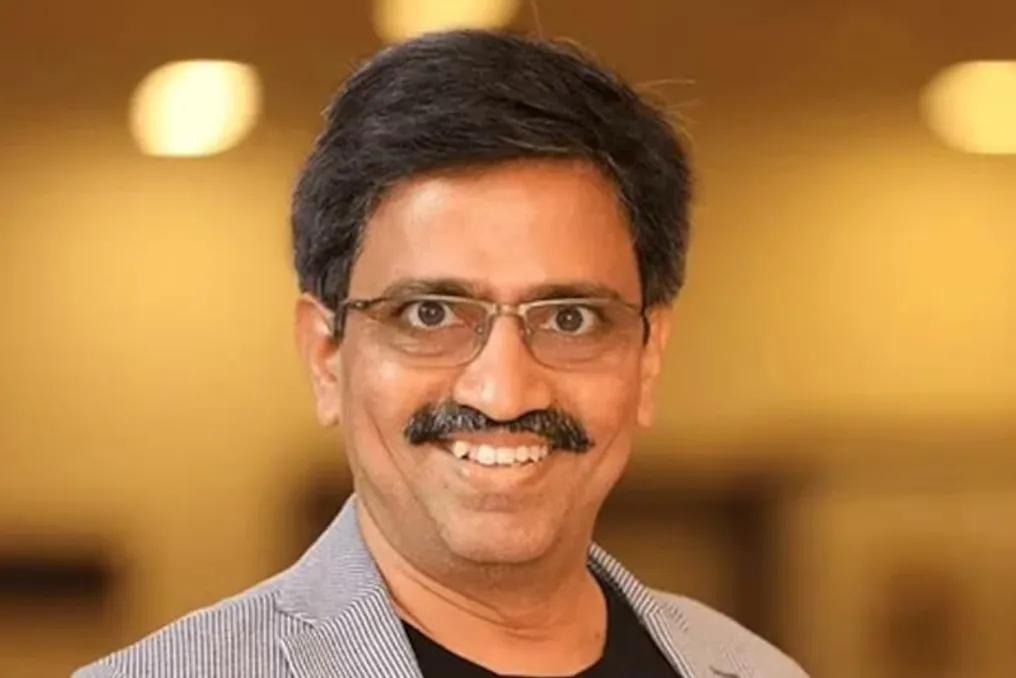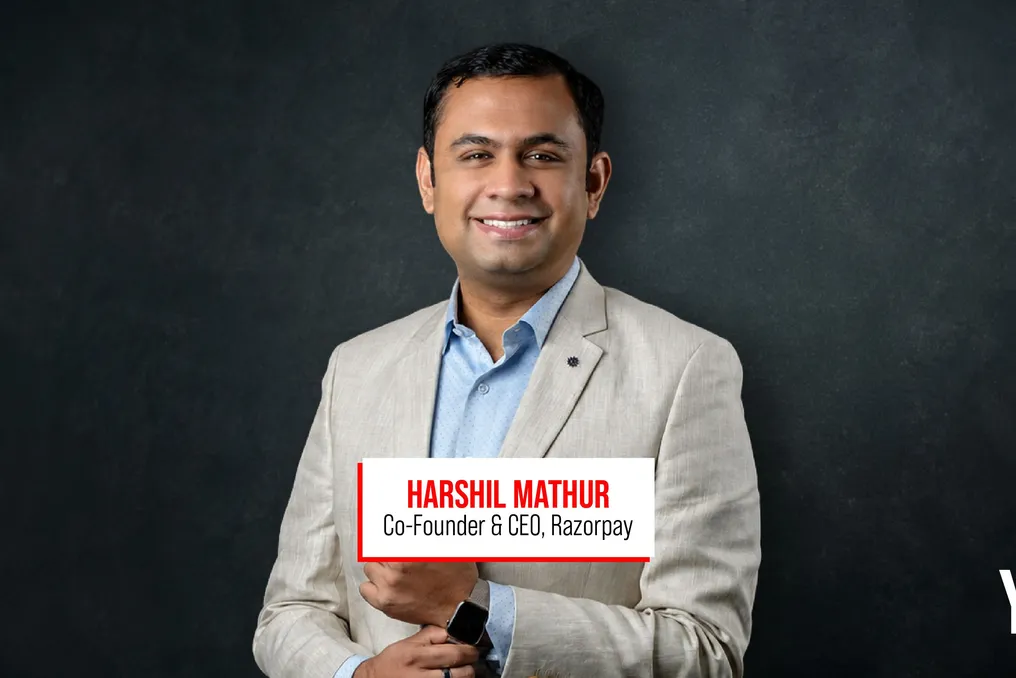
Razorpay receives SEBI approval for an IPO worth ₹5,000–6,000 crore, targeting a $5 billion valuation
Read more
YourStory [india, en]
yourstory.com

Razorpay receives SEBI approval for an IPO worth ₹5,000–6,000 crore, targeting a $5 billion valuation

The financial technology company Razorpay has received approval from the market regulator SEBI to conduct its proposed Initial Public Offering (IPO) worth between ₹5,000 and ₹6,000 crore, sources familiar with the matter reported on Wednesday.

Through this public offering, the company plans to achieve a valuation of approximately $5 billion. This move followed Razorpay's submission of draft IPO documents to SEBI via a confidential channel in June, initiating the process of going public.

Razorpay was founded in 2014 by Harshil Mathur and Shashank Kumar. The company provides various financial services, such as payment acceptance, banking operations, payouts, payroll, and lending, using an integrated platform.

The company serves millions of businesses across India, including startups, small and medium enterprises, and large corporations. In 2020, Razorpay achieved unicorn status and has since expanded its offerings beyond payments, creating a broader ecosystem of financial services for businesses.

The company's offerings allow sellers to manage fundraising, payouts, payroll, cash flow, and access capital through a single platform. Investors backing the company include Peak XV Partners, GIC, Tiger Global, Ribbit Capital, Lone Pine Capital, Alkeon Capital, and TCV.

The confidential filing route allows companies to submit draft issuance documents to SEBI for review without immediately disclosing sensitive business information to the public.

As a competitor, the IPO of fintech company PhonePe was temporarily suspended after the company officially halted the process in March 2026 due to geopolitical tensions in the Middle East and market instability. PhonePe aimed to raise over $1 billion at a valuation of $9–$10.5 billion.

Similar stories

Razorpay receives final license from GIFT City to expand cross-border payments
Read more
business-standard.com

Razorpay receives final license from GIFT City to expand cross-border payments

Omnichannel payment platform Razorpay, which serves businesses in India, has received the final Payment Service Provider (PSP) license from the International Financial Services Centres Authority (IFSCA) to operate in GIFT City.

This license enables the company to facilitate the movement of funds into and out of India via GIFT City within a unified regulatory framework. This marks a significant regulatory step for Razorpay following preliminary approval in April 2026, as the company aims to ensure legal cross-border financial flows to and from India.

Rahul Kotari, Chief Operating Officer of Razorpay, noted that the company is already engaged in cross-border payments in both directions: Indian consumers pay global companies for services, and Indian businesses receive funds from clients worldwide.

Kotari added that the new license expands the company's portfolio by allowing it to move money in foreign currency, hold it in multi-currency accounts, and service flows that its domestic mechanism could not cover, including Indian investments abroad and the needs of residents supporting families back home. He emphasized that the infrastructure for cross-border operations must comply with domestic payment market standards as India's connections with the world deepen.

Razorpay has developed a comprehensive infrastructure based in GIFT City to help Indian investment platforms offer seamless, compliant, and scalable global investments for Indian residents. This infrastructure is ready, and banking integrations with RBL Bank and ICICI Bank have already been established. Key investment platforms are expected to start operations soon, followed by other banks.

Despite growing demand—Indian residents invested $2.65 billion in foreign stocks and bonds in FY2026, a 56 percent increase from the previous year—the necessary infrastructure to support this demand remains complex and fragmented. Today, an investment platform wishing to offer global stocks must integrate numerous banks, compliance systems, and remittance partners, leading to longer registration times, fragmented user experience, and operational uncertainty.

Simultaneously, regulators are increasingly directing cross-border investment flows through GIFT City, making the presence of appropriate infrastructure not just important, but essential. Razorpay's infrastructure transforms a multi-stage process into a single flow, allowing investment platforms to integrate once to offer globally compliant investments under FEMA and GIFT City regulations. The integration process, which usually takes months, can now be completed in two to three weeks.

Atomberg Technologies receives SEBI approval for Initial Public Offering
Read more
yourstory.com

Atomberg Technologies receives SEBI approval for Initial Public Offering

Home appliance manufacturer Atomberg Technologies has received approval from the Securities and Exchange Board of India (SEBI) to conduct an Initial Public Offering (IPO).

This IPO will be a combination of a new equity issuance and a public offering. Atomberg plans to raise ₹450 crore through the new equity issue, in addition to selling 76,542,051 shares with a face value of ₹10 each.

The funds raised from the IPO are intended by the company to be used for debt repayment, investments in brand awareness enhancement and marketing, research and development (R&D), as well as general corporate purposes.

According to its reporting, Atomberg's revenue reached ₹1293.77 crore for the fiscal year 2026, compared to ₹959.51 crore in the fiscal year 2025, demonstrating a growth of 34.83%. However, in the fiscal year 2026, the company recorded a loss of ₹148.88 crore.

Founded in 2012, Atomberg produces a wide range of home appliances, including blenders, water purifiers, and cold-press juicers. Furthermore, the company develops, manufactures, and supplies proprietary and critical components, such as motors and controllers, for corporate clients, including Voltas, Godrej, and BlueStar.

Atomberg's products are sold through an omnichannel distribution model. This model covers both offline channels, such as general market distributors, retailers, modern retail chains, and institutional partners, and online channels, including e-commerce marketplaces, quick delivery platforms, and its own website.

Revenue from online channels increased to ₹456.45 crore in the fiscal year 2026, up from ₹234.51 crore in the fiscal year 2024. Meanwhile, revenue from offline channels grew to ₹820.11 crore from ₹562.47 crore during the same period. The online channel accounted for approximately 35.76% of the home appliance business revenue.

Atomberg operates two leased manufacturing facilities in Pune, Maharashtra, which support the operations of its home appliance and proprietary component manufacturing businesses. The factory in Chakan, located in Pune, which commenced operations in the fiscal year 2022, produces ceiling, table, floor, and wall fans, exhaust fans, blenders, cold-press juicers, and smart locks.

SEBI fines Avadhut Sathe Academy and its directors 11.5 million rupees and orders repayment of 546.17 million rupees
Read more
www.aajtak.in

SEBI fines Avadhut Sathe Academy and its directors 11.5 million rupees and orders repayment of 546.17 million rupees

When an academy charges for stock market trading education, it is expected to provide quality training. However, the situation becomes complicated if instead of education, advice on buying and selling stocks is provided without the necessary registration. This is exactly what happened with the Avadhut Sathe Academy.

The Securities and Exchange Board of India (SEBI) imposed a total fine of 11.5 crore rupees on the academy itself and its directors. Furthermore, it was decided that the Academy and its founder, Avadhut Sathe, must return 546.17 crore rupees to clients who paid for services rendered without proper registration. SEBI also required the payment of interest amounting to 67.87 crore rupees.

Avadhut Sathe and his academy have been banned from engaging in stock market operations. SEBI assigned individual fines: 6 crore rupees to Avadhut Sathe Academy, 4 crore rupees to Trading Guru Avadhut Sathe, and 1.5 crore rupees to Gauri Avadhut Sathe. The total fine amounted to 11.5 crore rupees. Avadhut Sathe and his academy will be barred from operating in the stock market for two years; this restriction may be extended if the refund process takes more than two years. Gauri Sathe was restricted for six months.

According to SEBI data, the Academy did not just provide information about the stock market but also gave specific recommendations on buying and selling certain stocks. These tips were broadcast through live sessions and WhatsApp. Clients were told which asset to buy or sell, what its potential price might be, and at what level to sell the stock in case of losses. Providing such consultations requires SEBI registration.

The regulator noted that the Avadhut Sathe Academy provided such services without the requisite registration. SEBI also questioned the promotional materials and testimonials that featured promises of very high profits from trading. During the investigation, instances of trading losses were identified. Moreover, these statements continued to be circulated despite a warning from the Avadhut Sathe Academy in March 2024.

SEBI required the Academy and Avadhut Sathe to publish a notice regarding the refund within 30 days of receiving the order. This notice must be published in newspapers in English, Hindi, and local languages. It must specify who is entitled to claim a refund and what steps need to be taken to receive the money. Payments will be made through banking channels to track each transaction. The verification process will be monitored by an independent chartered accountant. To collect the required amount, SEBI also placed a ban on the sale of assets belonging to the Academy and Avadhut Sathe, except in necessary cases, and restricted withdrawals from their bank accounts until the required amount is transferred.

In the SEBI order, Gauri Avadhut Sathe's role was examined separately. The regulator found no evidence that she personally advised on investments, planned this activity, or gained illegal profits. Nevertheless, she was fined 1.5 crore rupees and restricted from participating in stock market trading operations for a period of six months. Individuals who paid for the Academy's services can apply for a refund based on the information published in the newspapers.

Popular