ANP imposes fines exceeding R$ 700 million on fuel distributors for abusive pricing
Read more
AutoPapo
autopapo.com.br

ANP imposes fines exceeding R$ 700 million on fuel distributors for abusive pricing

The National Agency of Petroleum, Natural Gas and Biofuels (ANP) has imposed fines exceeding R$ 700 million on fuel distributors due to what are considered abusive price increases.

According to the agency, which presented the balance sheet this Tuesday (3), inspections revealed unjustified increases of up to 4,000% in the difference between the acquisition cost and the selling price of the products. The condemned companies are responsible for over 45% of the volume traded in the national market in 2026, as they acquire fuel from refineries and importers for resale at stations.

ANP chose not to disclose the names of the companies, allowing them to appeal internally within the agency. Since the first notifications issued in April, stations and distributors have contested the inspection methodology, arguing that ANP compared invoices from different periods and disregarded costs such as freight.

The investigations took place while two provisional measures, decreed by the federal government starting in March after the rise in global oil prices motivated by the war in Iran, were in effect. These measures gave the agency the prerogative to inspect and penalize such practices.

With the expiration of these provisional measures, ANP lost the ability to fine companies specifically for abusive price increases. Remaining cases will be directed to the National Consumer Secretariat (Senacon) and partner state and municipal Procons, following a preliminary analysis of the invoices.

Additionally, last week, the ANP board authorized the submission of 11 administrative proceedings against ten distributors to the Administrative Council for Economic Defense (Cade). The purpose is for this council to evaluate whether there was behavior that harms competition. ANP clarified that the referral does not imply that the agency has confirmed violations of economic order, as this analysis belongs to Cade, although the collected data may support the council's evaluation.

Similar stories

New retail prices for liquefied gas and compensation mechanism for the population approved in Uzbekistan
Read more
podrobno.uz

New retail prices for liquefied gas and compensation mechanism for the population approved in Uzbekistan

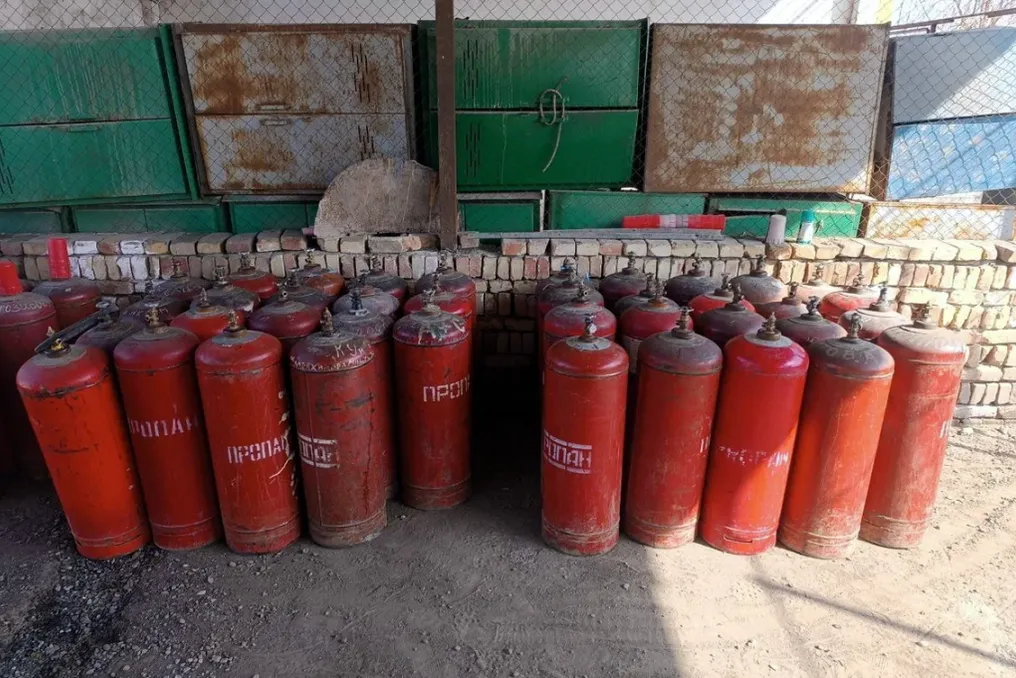
Updated retail prices for liquefied gas have been approved for residents of Uzbekistan, and a mechanism for compensating costs has been introduced for socially vulnerable groups.

Starting November 15, the retail price of liquefied gas for the population will be set at 5 thousand soms per kilogram, including VAT. Concurrently, a limited price for gas supply to the population from the company LPG-Trade was approved, amounting to 1.3 thousand soms per kilogram, including VAT. It is important to note that the entire batch of liquefied gas produced or imported into Uzbekistan is now sold exclusively through stock exchanges.

Priority for supplies to the population is maintained, and the preferential price level will be supported by a new institution—LLC 'CIS-Trade'. This organization will receive budget subsidies to cover expenses and maintain prices at the level determined by the state.

Support mechanisms for families

Material assistance is provided for three groups of families: those included in the Social Register; those who meet the registry criteria but whose average monthly income per person does not exceed two minimum consumer expenditures; and families raising orphans or children deprived of parental care.

These families can receive compensation for part of the liquefied gas expenses until January 1, 2030, in the amount of 3 thousand soms per kilogram, with a limit of no more than 20 kilograms per month. A separate administrative regulation has been developed for processing this public service.

Furthermore, it was recalled that needy households in Uzbekistan will receive support for paying for heating and utility services during the winter period. In November, they are entitled to a payment of one million soms, and the criteria for receiving compensation for electricity, gas, and coal will be revised.

Expert warns of potential rise in gasoline and diesel prices after Diwali due to global oil prices
Read more
www.aajtak.in

Expert warns of potential rise in gasoline and diesel prices after Diwali due to global oil prices

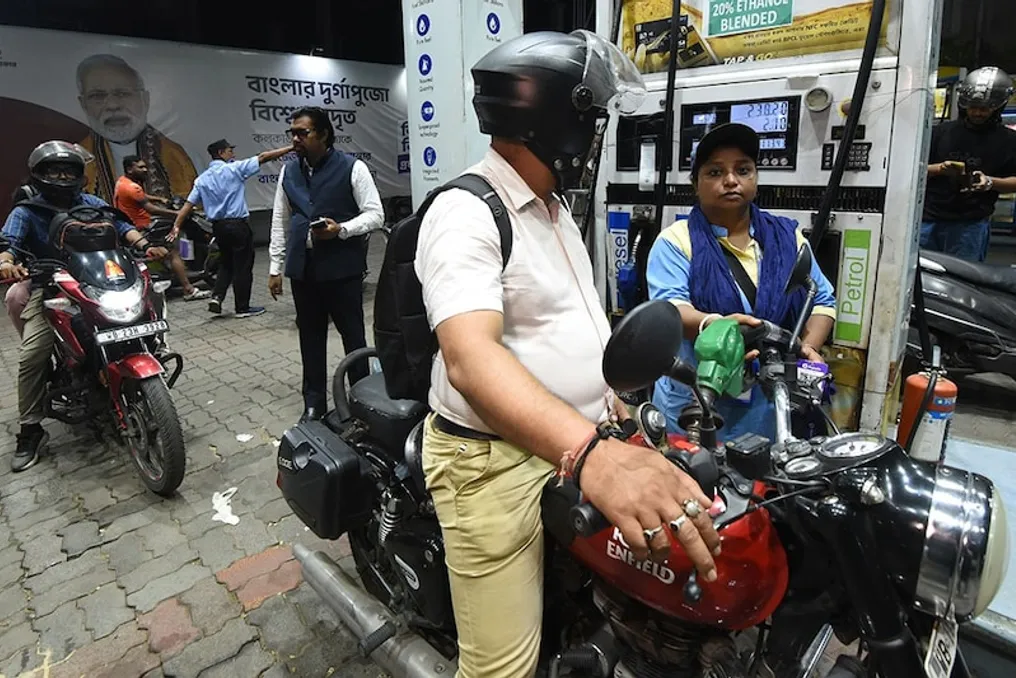
Gasoline and diesel prices in India may increase after the Diwali festival as rising global crude oil prices increase the burden on the government and state-owned oil refining companies. Energy expert Narendra Tanedge told Business Today TV that changes in domestic fuel prices could occur between Diwali and Christmas.

He warned that people cannot remain unaffected by growing global energy tensions. The rise in global prices will inevitably affect India, which could lead to an increase in the cost of gasoline and diesel fuel.

Tanedge added that a fuel price hike after Diwali and before Christmas is expected, noting that it will be extremely difficult for the government and oil companies to constantly cope with rising prices. Currently, Indian oil companies are under pressure due to high oil prices.

This pressure exceeds the headlines of crude oil prices. According to an Axis Bank Research report from October 23, the price of Brent Crude rose above $110 per barrel, and Dated Brent reached $140. Tanedge explained that the actual price paid by Indian refineries could be significantly higher than the stated market price due to increased costs for freight, marine insurance, and tanker crew wages.

He specified that when considering the landed price, it could be at least $20 higher than this base price, depending on the company and region. For India, additional costs could amount to about $25–$27 per barrel, depending on the source of raw materials and the refinery.

The average price of the Indian crude oil basket from October to October 26 rose by approximately 4% month-on-month, reaching $120.46 per barrel, the highest monthly average since March 2012. This increase occurred amid heightened tensions in the Middle East, leading to increased geopolitical uncertainty, marine insurance premiums, and freight rates. By October 26, the price of the Indian crude oil basket reached $123.72 per barrel.

Meanwhile, in 2026, global crude oil prices have risen by almost 80%; on Tuesday evening, Brent traded at $114.6 per barrel, WTI at $100.9, and Murban at $117.7. Increased transportation costs, marine insurance premiums, and geopolitical tensions in the Middle East have further increased the cost of crude oil imports.

The central government, state governments, state-owned oil refining companies, and the Reserve Bank of India are jointly bearing the brunt of the oil crisis. Axis Bank Research suggested in its October 23 report that this support would amount to 1.7% of GDP, based on an assumed average crude oil price of $100 per barrel; furthermore, every $10 increase in retail fuel prices increases the burden on GDP by 20 basis points. From April to September, India's crude oil imports grew by 46.3% year-on-year, reaching $90.6 billion.

Tanedge cautioned that the government and oil companies cannot indefinitely shield consumers from financial strain. He also emphasized the need to invest in foreign oil and gas assets to diversify crude oil supplies and ensure long-term supply for India.

Axis Bank Research forecasts that fiscal measures, such as increased duties and economic stabilization funds, could free up the equivalent of 0.6% of GDP, helping to limit the central government's financial decline by 20–30 basis points in the 2027 fiscal year. However, maintaining high crude oil prices in the long term may shift the majority of costs onto consumers.

Government extends diesel subsidy; analysis of agribusiness vulnerability to fuel price hikes
Read more
g1.globo.com

Government extends diesel subsidy; analysis of agribusiness vulnerability to fuel price hikes

The federal government decided to extend the diesel subsidy for another thirty days this Tuesday (27), maintaining the benefit at R$ 2.12 per liter. This action aims to mitigate the impacts caused by rising international oil prices, whose increase is driven by conflicts in the Middle East and the war between Russia and Ukraine.

The price of Brent crude oil, used as a global reference, fluctuated between US$ 100 and US$ 106 in the first half of October and reached US$ 113.17 on the 22nd. For the government, any value above US$ 70 generates considerable pressure on domestic market prices.

In addition to the rise in the commodity, the devaluation of the Brazilian currency, the real, also contributes to the increased cost of diesel production and importation. Although Brazil is a large oil producer, about one-fifth of the diesel consumed is imported, according to data provided by the National Petroleum Agency (ANP).

In August, the volume of imported diesel represented 23.14% of national sales of Diesel A, which does not yet have the mandatory biodiesel blend. The combination of these factors resulted in significant increases: common diesel rose by 6.67% in the first half of October, reaching an average of R$ 7.20 per liter, according to the Edenred Ticket Log Price Index (IPTL). S-10 diesel saw an increase of 5.07% in the same period, reaching R$ 7.46 per liter. Compared to January, common diesel registered a cumulative increase of 15.2%.

Prices also show regional variations. In the North, common diesel cost an average of R$ 7.75 per liter, and S-10 had an average price of R$ 7.80. In Roraima, common diesel reached R$ 8.19, and in Acre, S-10 reached R$ 8.30. In the South and Southeast regions, the average price for common diesel was R$ 6.97 per liter. This increase directly impacts cargo transport carried out mainly by trucks in Brazil. In agribusiness, the most expensive fuel raises freight and production costs, which may be passed on to food prices.

Why does Brazil need to import diesel?

Between January and August, Petrobras's diesel production managed to grow by 18.5%, increasing from 32.7 million to 38.7 million barrels. Even so, domestic production proved insufficient to meet all demand for the fuel.

In the first half of 2026, total diesel consumption in Brazil was 213.2 million barrels. According to ANP, national production reached 154.8 million barrels, while imports totaled 43.5 million barrels, equivalent to 20.4% of consumption during that period.

This dependence on imports is linked to the country's refining capacity. It is important to note that crude oil extraction differs from fuel production, as oil needs to be processed in refineries to be converted into diesel and other derivatives used by vehicles, agricultural machinery, and trucks.

In recent years, Petrobras has sold refineries to private companies as part of an asset divestment program. This movement gained momentum during the mandate of Jair Bolsonaro (PL), when the state-owned company negotiated units in the refining sector.

Paulo Feldmann, a professor at the Faculty of Economics, Administration, Accounting, and Actuarial Science of the University of São Paulo (FEA-USP), raises questions about the production costs of diesel in these refineries, alleging that, under certain circumstances, fuel produced in Brazil may be more expensive than imported fuel.

Francismar Ferreira, from the Institute of Strategic Studies of Oil, Natural Gas, and Biofuels (Ineep), argues that reducing import dependence requires expanding and modernizing Brazilian refineries, in addition to reviewing investments made by Petrobras in this segment.

Why does the diesel hike weigh so heavily on Brazil?

Starting in the second half of the 20th century, Brazil began prioritizing the use of highways for cargo transport, while railways lost relevance. This transition occurred parallel to the growth of the automotive industry and the expansion of road infrastructure.

Currently, the strong reliance on roads implies that the increase in diesel raises freight costs and, consequently, the cost of transporting goods. Paulo Feldmann, from FEA-USP, emphasizes:
Popular