In Bhopal, the 'Kachra Cafe' allows exchanging plastic bottles and old newspapers for food
Read more
The Better India
thebetterindia.com

In Bhopal, the 'Kachra Cafe' allows exchanging plastic bottles and old newspapers for food

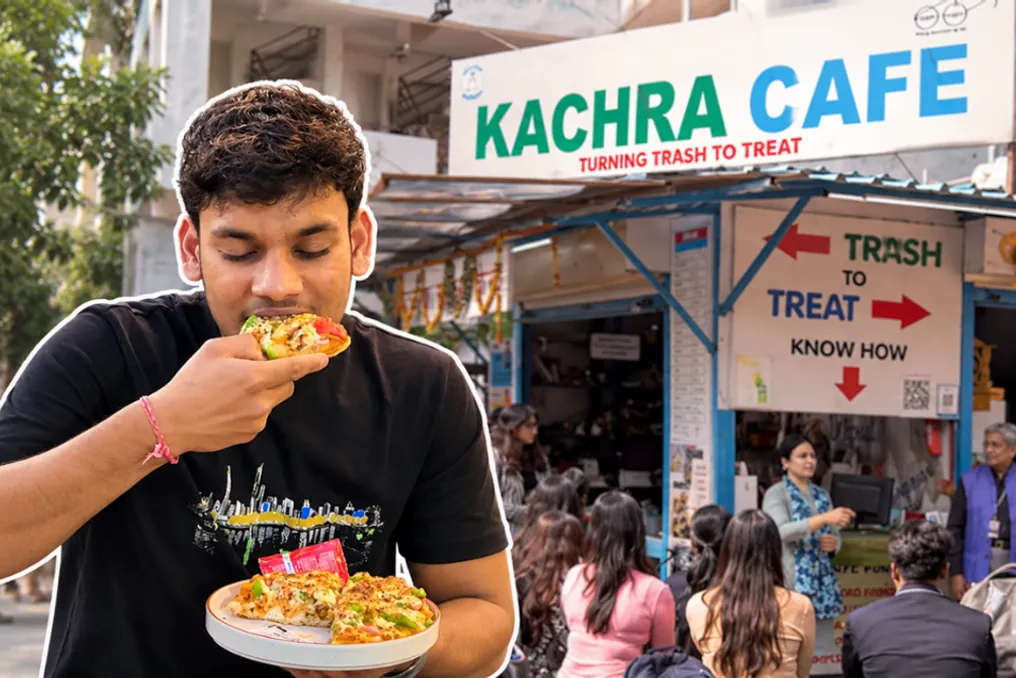
Plastic bottles, old newspapers, and cardboard boxes accumulate in many homes, eventually being thrown out with the trash. However, in Bhopal, there is an opportunity to turn this pile of waste into a full meal.

Housewife Anjita Sabhlok is realizing this idea through 'Kachra Cafe,' where visitors can exchange household waste for food, drinks, and essential items. In just eight months, the cafe has directed over 45 tons of waste for recycling.

This initiative was launched by Anjita Sabhlok through her NGO 'Mannat' in collaboration with the Bhopal Municipal Corporation. The concept is based on a simple principle: waste has value, and people are more willing to manage it responsibly when they see that value directly.

For years, Anjita worked through 'Mannat,' educating people about waste management and ecology. Nevertheless, mere awareness raising proved insufficient to achieve the desired changes.

She asked herself: 'We educate people, but are we truly seeing changes?' This question prompted her to consider a different approach. Instead of simply demanding responsible waste disposal from people, she decided to give them an incentive to collect and sort.

Thus, the idea of 'Kachra Cafe' was born, where people bring plastic, paper, and other household waste in exchange for food and necessary goods. A fixed price is set for every kilogram of waste, making the exchange simple for anyone who brings collected materials.

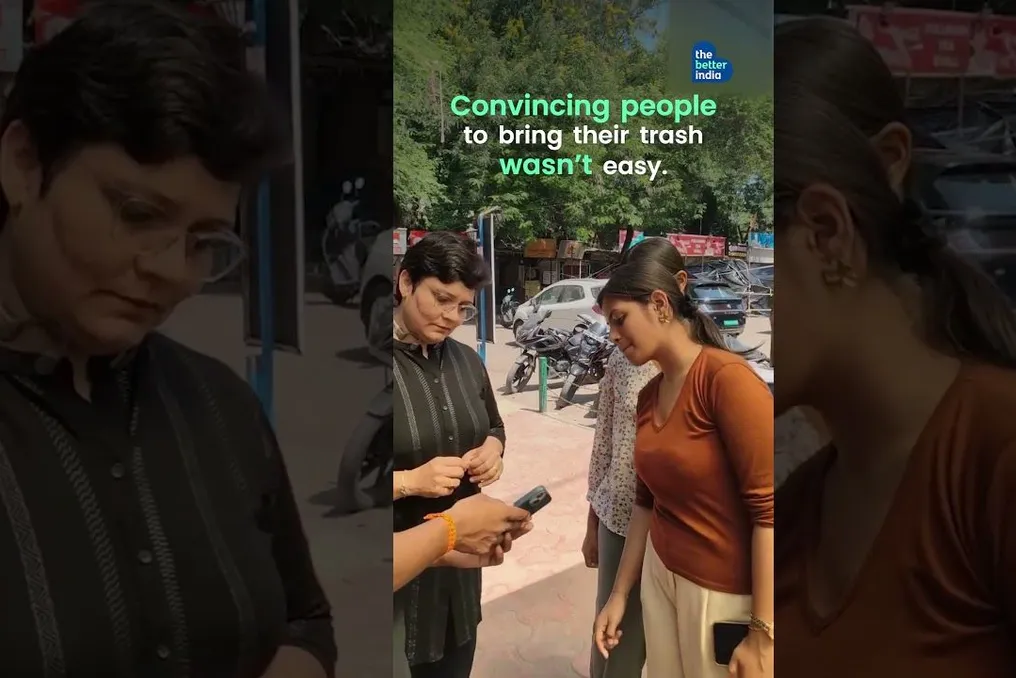
Initially, attracting people to bring waste to the cafe was not easy. Changing daily habits takes time, especially when waste is usually perceived as something to be thrown away, not collected.

Over time, awareness increased. People began bringing their trash to the cafe, learning to sort different materials and helping ensure that collected waste enters recycling channels. In eight months, the cafe facilitated the sending of over 45 tons of waste for recycling. This figure demonstrates the potential that can be achieved when an environmental message is combined with practical action accessible in daily life.

Instead of relying solely on information campaigns, the cafe provides residents with a direct way to participate. They can start with the waste generated in their own homes and see how that waste is used differently.

For Anjita, this concept is not limited to one cafe in Bhopal. She aims for other cities to recognize that waste is not useless and to explore ways to encourage people toward better management of it.

'Kachra Cafe' combines two basic needs: finding a responsible place for household garbage and ensuring access to food or essential items through exchange. Next time a mountain of plastic or paper accumulates at home, it is worth thinking twice before throwing it away. In Bhopal, this waste can become the very element that provides you with food.
Similar stories

How to make pure and fresh hoia at home from milk, avoiding store-bought additives
Read more
www.aajtak.in

How to make pure and fresh hoia at home from milk, avoiding store-bought additives

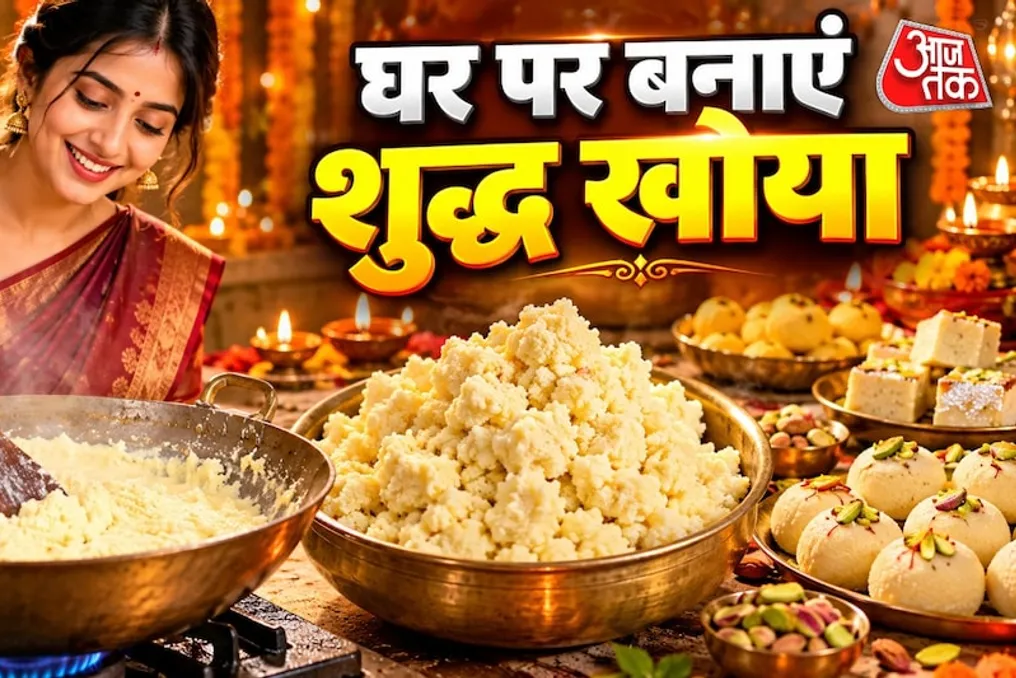
With the approach of Diwali, various sweets are prepared in many homes, either made by themselves or purchased from stores. Hoia is a key ingredient for making delicious desserts such as laddu, gulab jamun, peda, and barfi.

However, during the festive season, there is a high risk of impurities in commercially sold hoia, which not only degrades the taste of the sweets but can also be harmful to health. If you want your sweets this time to be one hundred percent pure, tasty, and healthy, it is best to prepare pure hoia yourself instead of buying expensive and suspicious mawa from the store.

Making hoia by evaporating milk in a pot is very simple. Below is a simple instruction and secret tips for preparing perfect, granular, and pure hoia.

For preparation, you will need: 2 liters of whole-fat milk (preferably using thick buffalo milk), a heavy pot, and a wide spoon.

Pot Selection: Always use a wide pot with a thick bottom made of cast iron, aluminum, or steel when making hoia. A thick bottom prevents the milk from burning to the bottom, and wide cookware promotes rapid steam formation.

Tip to prevent milk from sticking: Before pouring the milk into the pot, lightly spray it with 1-2 teaspoons of water. This will help the milk not to stick to the bottom.

For white hoia: The milk must be cooked over medium or high heat, stirring constantly. Prolonged cooking over low heat may cause the color of the hoia to turn yellow or brown.

Bring the milk to a boil: In a thick-bottomed pot, after spraying with water, pour in 2 liters of whole milk. Set the heat to high and bring the milk to a boil.

Stir constantly: As soon as the milk boils, reduce the heat to medium or high. Stir constantly, scraping the bottom of the pot with the spoon so that the milk does not burn. You must also scrape off the cream that collects around the edges of the pot and mix it back into the milk.

Let it thicken: After continuous cooking for about 20-25 minutes, the milk will reduce in volume by half and begin to thicken. At this stage, the heat should be reduced to medium.

Transition stage from khoya to mawa: When the milk becomes thick and takes on the consistency of cottage cheese (rabdi), do not stop. Continue to stir intensely and continuously. Soon the milk will completely separate its liquid and start to pull away from the sides of the pot.

Hoia is ready: When the mass begins to form a single lump and stops sticking to the sides of the pot, turn off the gas.

Cooling: Do not leave the hoia in the pot; immediately transfer it to a plate or bowl to let it cool. After cooling, it will become soft and granular.

First cafe opened in Bhopal, India, where trash is exchanged for food
Read more
thebetterindia.com

First cafe opened in Bhopal, India, where trash is exchanged for food

A unique concept has been implemented in the city of Bhopal, India, presented by Kachra Café. Here, people can exchange plastic and other types of waste for food products and essential items. This initiative gives value to collected materials, motivating people to collect waste instead of throwing it on the street.

The main idea is that waste is not always useless. When the population is encouraged to separate and recycle discarded items, daily habits contribute to larger environmental transformations.

Kachra Café functions not just as an eating place; it serves as a reminder that creative community projects can make waste management more accessible while encouraging people to take responsibility for the environment. Next time you feel like throwing away plastic, remember that trash retains its value when handled responsibly.

Modern Toilet Cafe in Taiwan Popular for Its Unique Toilet Theme
Read more
www.aajtak.in

Modern Toilet Cafe in Taiwan Popular for Its Unique Toilet Theme

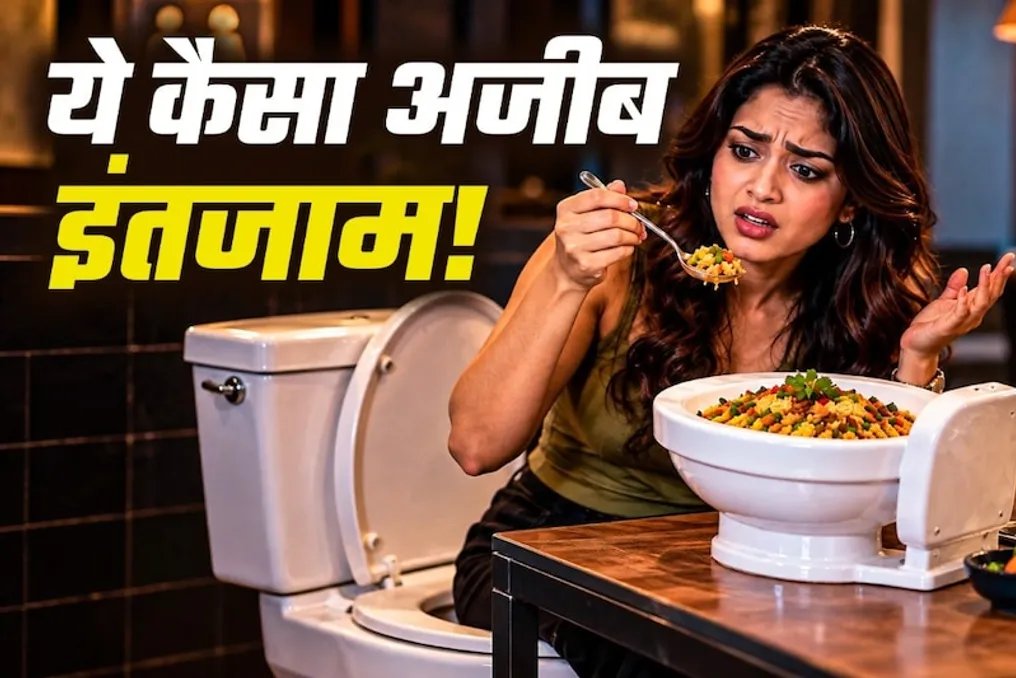
There is a cafe in Taiwan that attracts visitors due to its unusual design: patrons sit on toilet seats, eat from toilet-shaped dishes, and drinks are served in cups resembling urinals. This concept elicits mixed reactions from people.

Recently, Indian content creator Akankha Monga visited this establishment and shared her experience on social media, drawing public attention. The restaurant is called Modern Toilet and is known for its unique theme based on bathroom items integrated into the dining process.

Unlike ordinary restaurants where guests are offered comfortable chairs, clean tables, and beautiful plates, the atmosphere in this cafe is completely different. All interior elements related to the toilet are designed such that the entire restaurant looks like a separate, whimsical world. Notably, the toilet theme is evident not only in the wall decor but in everything: from seating to dish presentation.

The main reason for the cafe's popularity is its tableware. Instead of standard plates or bowls, food is served in small containers stylized as toilets. The initial impression of such decor might seem strange to many. The goal of this food presentation is to provide guests with a unique experience unavailable in regular establishments. Visitors are interested not only in the food but also in photographing this unusual setting. Urinal-shaped holders are used for drinks, emphasizing the unified theme across all aspects—from tableware to beverages.

The innovations extend beyond tableware to the seating areas. Instead of regular chairs, the cafe features seats mimicking a toilet. The table design and overall ambiance also conform to this theme. As soon as one enters the restaurant, they realize it is not an ordinary cafe. The entire concept aims to surprise guests and make their visit unforgettable.

Although some may find this idea amusing, others might feel uncomfortable about eating in such conditions. This is why such restaurants become subjects of widespread public discussion.

Indian content creator Akankha Monga also recorded a video about her experience at this cafe, showcasing various areas of the restaurant and the manner of serving dishes. Particular attention in her video was drawn to a chocolate dessert created in a bizarre, highly realistic shape. Upon seeing this dessert, Akankha jokingly remarked that she would never look at dark chocolate ice cream the same way again.

Her reaction shows that the experience at this cafe goes beyond mere taste. The way food is presented and its appearance can surprise visitors. According to Akankha, the cafe experience itself received a 10 out of 10, while the taste of the food was rated 5 out of 10. This suggests that for her, the most interesting element was not the quality of the dishes but their unconventional presentation.

Various comments were posted on social media regarding Akankha's video. Some users found the restaurant's idea creative and funny, while others questioned why one should eat from toilet-like dishes at all. For some, it is a new experience, but for others, combining food and toilet fixtures is unacceptable.

In the age of social media, such unusual places quickly attract attention. People watch their videos, share them with friends, and express their opinions. However, the viral popularity of a place does not guarantee that the food there will appeal to everyone.

Nowadays, many restaurants strive to offer guests not just food but also a special experience. Some use animal themes, others draw inspiration from films or books, and a third group attracts visitors specifically through the way dishes are presented. Modern Toilet follows this trend by using an everyday object—the toilet—as part of the restaurant experience, something people usually do not consider when eating.

Popular