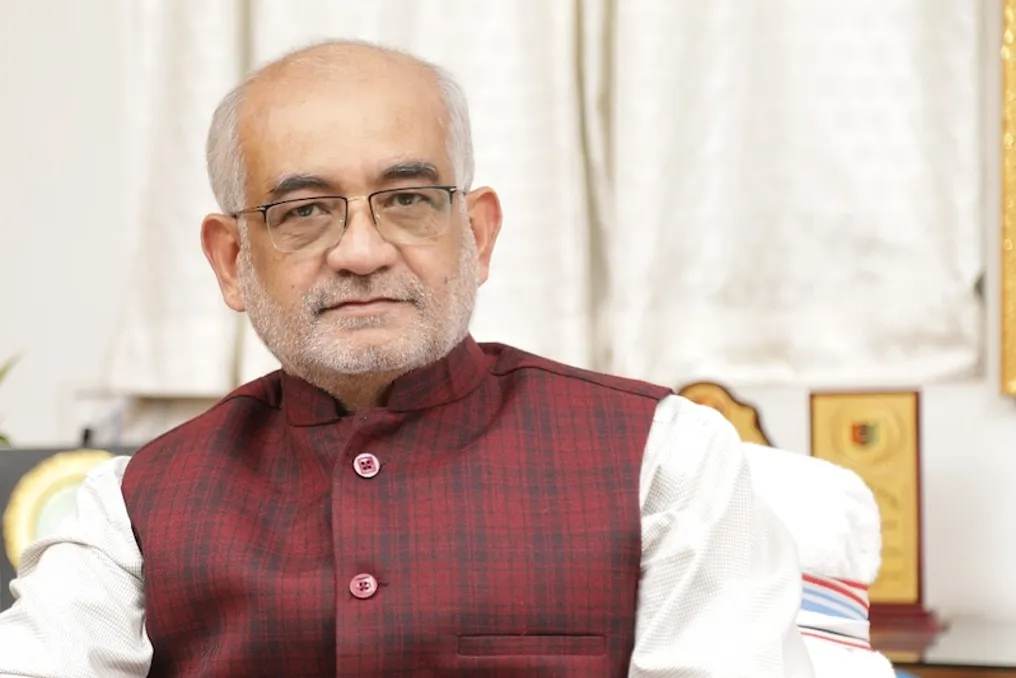
Former IIT Kanpur Director Advocates for Major Changes in Education System in the Age of AI
Read more
Aaj Tak
www.aajtak.in

Former IIT Kanpur Director Advocates for Major Changes in Education System in the Age of AI

Professor Indranil Manna, former Vice-Chancellor of BIT Mesra and Director of IIT Kanpur from 2012 to 2017, has called for a revision of workforce training methods to align with the changing needs of the country's labor market.

Professor Manna, a former chairman of the Indian National Academy of Engineering, noted in an exclusive interview with 'India Today' that while short courses and periodic upskilling help employees acquire skills for specific roles, it is crucial that the foundation of education always remains based on fundamental principles.

Since artificial intelligence (AI) is impacting professions across all sectors, Professor Manna believes the main question is not whether the era of diploma programs has ended, but whether the country's youth and professionals can adapt when their current skills prove insufficient.

He posits that if people are given a strong grasp of fundamentals, they can be quickly trained in skills relevant to technological changes. Thus, the key question is whether one should simply take countless upskilling courses, or if educational institutions can create clear learning pathways that allow people to absorb knowledge, apply it in practice, and move into specific career fields.

Professor Manna clearly distinguished between training for a specific task and education that enables a person to start a new job. He explained that a diploma or certificate course may suffice to master the operation or maintenance of a particular machine.

He cites an example from the large manufacturing industry, particularly the equipment sector, where the workforce structure typically includes about 5-6 diploma holders and 10-12 certificate holders per engineer.

However, those who wish to deeply understand the system, design it, or adapt to changes in its design require a solid conceptual base. For those seeking specific skills, he says a short-term training program is suitable. Nevertheless, he warns that such training should never be considered a substitute for a degree.

In Professor Manna's view, one cannot expect any skill to remain relevant throughout a person's working life. As industries change, employees must have the opportunity to return to learning and update their knowledge.

He emphasized: 'There is no guarantee that what you learn today will remain relevant forever.' He added that continuous updating is necessary. Furthermore, he noted that such training should not be limited only to technical skills. Since one discipline rapidly learns another, basic knowledge must be reviewed periodically.

As an alumnus of IIT himself, Professor Manna explained why specialists need to go beyond their traditional disciplines, citing the growing link between physics and biology. He stated, 'Physics now understands biology better,' and added that 'both physicists and biologists need to integrate these two sciences or at least maintain contact.'

He provided medical practice as another example of this interaction. He noted that modern doctors use numerous technologies, and healthcare workers may need training in areas unknown to them during formal education. He argued that this exchange must happen in reverse as well: people trained in technology must also understand how 'physiological or any biological systems' work.

Explaining the necessity of updating engineers' knowledge amid technological changes, Professor Manna gave an example: 'When we transition from internal combustion engines to hybrid or electric drives, the vehicle design remains the same. Only the power generation and transmission design changes.'

He continued that training an engineer in only one type of vehicle limits their effectiveness. 'If you train someone only for a hybrid car, that person can only service a hybrid car, not others.'

Professor Manna believes that the impact of AI will not be limited to engineering but will extend to medicine, sports, music, literature, and creative fields.
Similar stories

Mirziyoyev stated that quality education is a key condition for the development of Central Asia
Read more
podrobno.uz

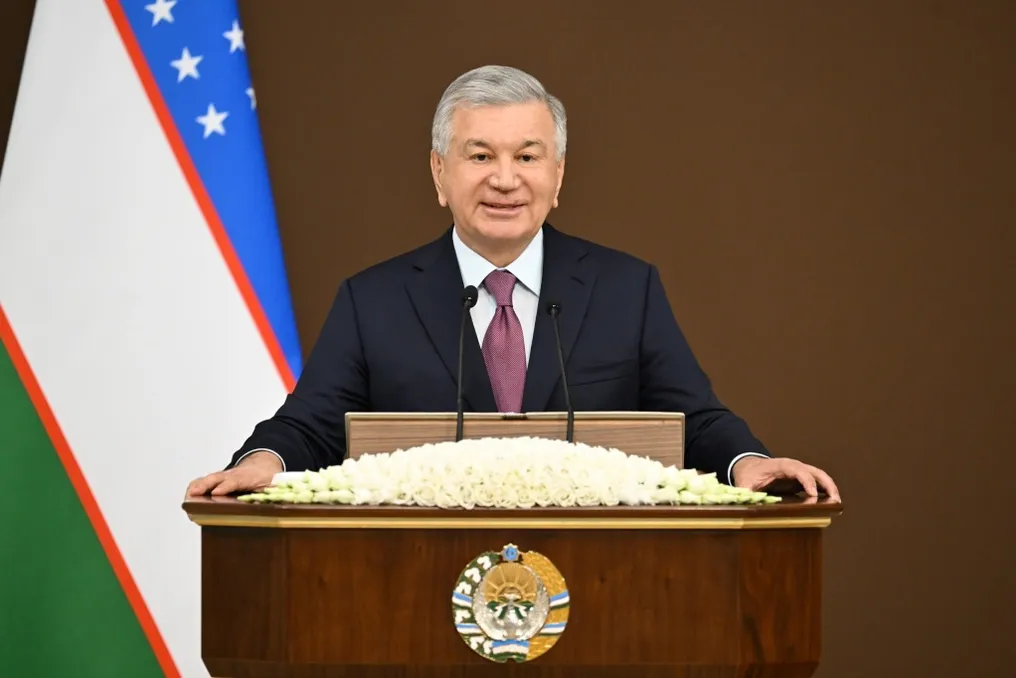
Mirziyoyev stated that quality education is a key condition for the development of Central Asia

President Shavkat Mirziyoyev called for deepening educational and scientific cooperation between the states of Central Asia. He emphasized the need to implement joint programs as well as organize exchanges for students and researchers.

According to the head of state, modern and high-quality education should serve as the foundation for transforming the region's demographic potential into a powerful intellectual force. These statements were made by Mirziyoyev during his address to participants of the International Educational Forum of Central Asia, which took place in Tashkent on October 28.

The Importance of Education for Regional Development

Mirziyoyev noted that the countries of the region continue to strengthen good neighborly relations and mutual trust, which is why cooperation in the field of education gains critical importance for their further progress. According to World Bank forecasts, the economy of Central Asia will show growth of 5.8% by 2026. At the same time, the population of the region amounts to about 85 million people, and youth are considered the most important resource.

The head of state recalled that in Uzbekistan, education has been recognized as one of the main priorities of state policy. A decree was recently adopted that consolidated the management of preschool, school, vocational, and higher education, as well as scientific activity, into a single system. This decision is designed to guarantee the continuity of the educational process, from mastering basic knowledge to training highly qualified specialists and scientists.

The President stressed that many new specialties will emerge over the next ten years, and the requirements for existing ones will change. Therefore, the education system must not only function as a knowledge transfer mechanism but also promote qualities such as independent thinking, creativity, sense of responsibility, and readiness for continuous learning among young people.

Priorities and Directions for Development

Among the key tasks named by Mirziyoyev are increasing the status of teachers, developing professions demanded by the labor market, and strengthening ties between educational institutions (schools, technical colleges, universities) and industry. Special attention, he said, requires focusing efforts on expanding access to education for girls, residents of rural and remote areas, as well as for young people with special educational needs.

Furthermore, the president highlighted the need to promote artificial intelligence, digital technologies, and modern engineering, as well as to transform universities into centers of scientific research and support for young researchers.

A Comprehensive Approach to Challenges

Discussing regional interaction, the head of state pointed out that global problems such as water scarcity, ensuring energy security, climate change, and technological changes in the labor market require collective efforts. In light of this, he called for expanding partnerships between universities, launching joint scientific projects and educational programs, and supporting the exchange of scientists and students.

Mirziyoyev concluded his speech with a statement that the main strategic goal in this area is to transform Central Asia into a unified intellectual space based on mutual trust and friendship, which unites science, innovation, and high technology.

Uzbekistan Education Minister States New Education Laws Are Unnecessary as All Conditions Have Been Created by the State
Read more
podrobno.uz

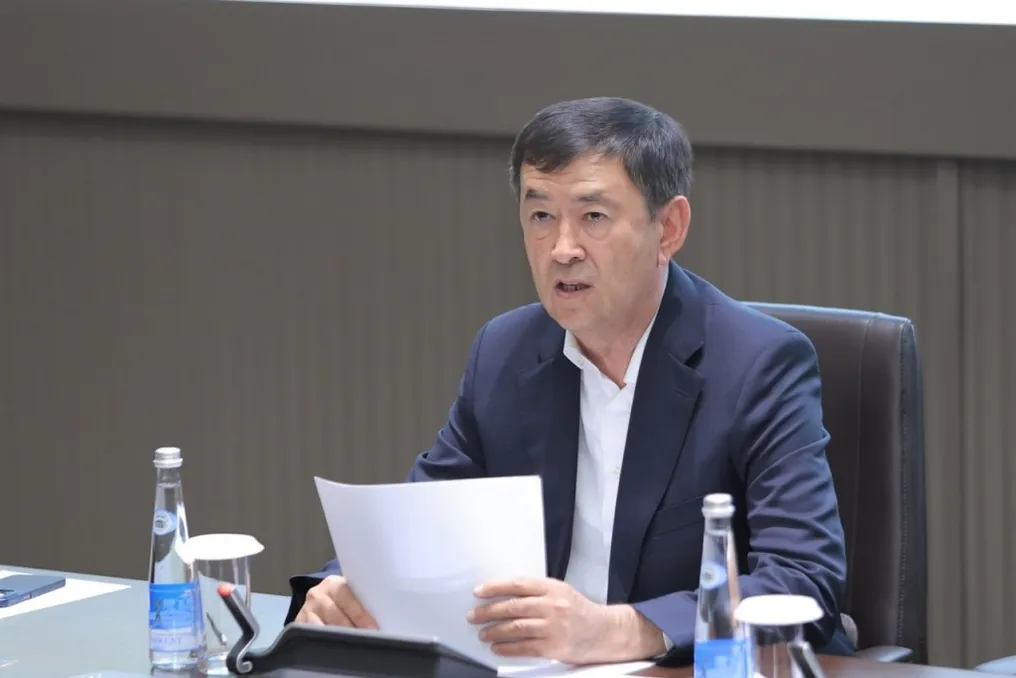
Uzbekistan Education Minister States New Education Laws Are Unnecessary as All Conditions Have Been Created by the State

The First Deputy Prime Minister, who is also the Minister of Higher Education and Science, Erkinjon Turdimov, emphasized that the state has provided everything necessary for the learning process. He noted that future success in education will depend on how strictly parents adhere to established requirements and actively participate in their children's education.

Speaking about the need to increase respect for teaching staff, Turdimov called on adults to stop criticizing teachers and dedicate time to daily lessons with their children. However, he deliberately avoided discussing teacher salaries and working conditions.

Turdimov stated: 'Everything is created by the state today. What is missing for your education, for your children?' In his opinion, parents should become more actively involved in the educational process instead of limiting themselves to complaints about schools and teachers. The minister asked how much time adults dedicate daily to studying with their children and admitted that most citizens do not do this.

He added: 'We must study with our children, ask them questions, and teach them. If we don't study with our children and continue to scold teachers, when will their status improve?' Turdimov linked the improvement of educators' social standing to a change in parents' approach to school education, asserting that education is a common task for the entire society, and every participant must fulfill their role.

Furthermore, the minister opposed the introduction of new legislative acts to solve problems in the education sector. In his conviction, existing norms are sufficient, and the authorities' task is to maintain order and ensure compliance with current requirements. He concluded: 'There is no need to reinvent the wheel. I only want to establish order and requirements to achieve effective results. We will not adopt new laws—everything is already there.'

It is worth noting that previously, parents of schoolchildren from Tashkent and other regions of Uzbekistan had filed complaints regarding a lack of educational materials, especially in classes where instruction is conducted in Russian.

Popular