Every year, as temperatures begin to drop in northern Eurasia, millions of migratory birds embark on long journeys in search of warmer regions where they can find food, shelter, and suitable wintering grounds. As part of this remarkable natural route, Iran stands out as one of the most important destinations in West Asia, providing a network of wetlands, lakes, coastal habitats, and lagoons for birds traveling from Siberia and other northern areas.
According to statistics, approximately two million migratory birds arrive in Iran annually to spend the winter in the country's wetlands, making it the most significant wintering site in West Asia. Furthermore, the country serves as a major stopover point on the migration route connecting Siberia with the Nile; about 16 percent of birds following this route choose Iran as their wintering location.
More than 160 species of aquatic and coastal birds have been identified in the country, highlighting Iran's importance for the conservation of regional and international biodiversity. These birds are distributed across approximately 450 wintering sites, particularly along the coasts of the Caspian Sea and the Persian Gulf.
The Country on Major Migration Routes
Iran's geographical position, linking Central Asia, the Caucasus, and the Indian subcontinent, has made it a crucial link in international bird migration routes. The country's diverse climate and geographical features provide various habitats for migratory species throughout the year. From wetlands and lagoons on the Caspian coast in the north to the marshes of Khuzestan and the coastal ecosystems of the Persian Gulf in the south—these natural areas offer necessary feeding and resting spots for birds undertaking long flights.
The Caspian Sea coast holds particular significance in autumn and winter, when large flocks of waterfowl arrive in the northern provinces of Gilan, Mazandaran, and Golestan. Among the most well-known destinations for migratory birds in the country are the wetlands of Anzali, the Miankaleh Peninsula, Ghomishan, as well as the areas around Fereydunkenar and Sorkhroud.
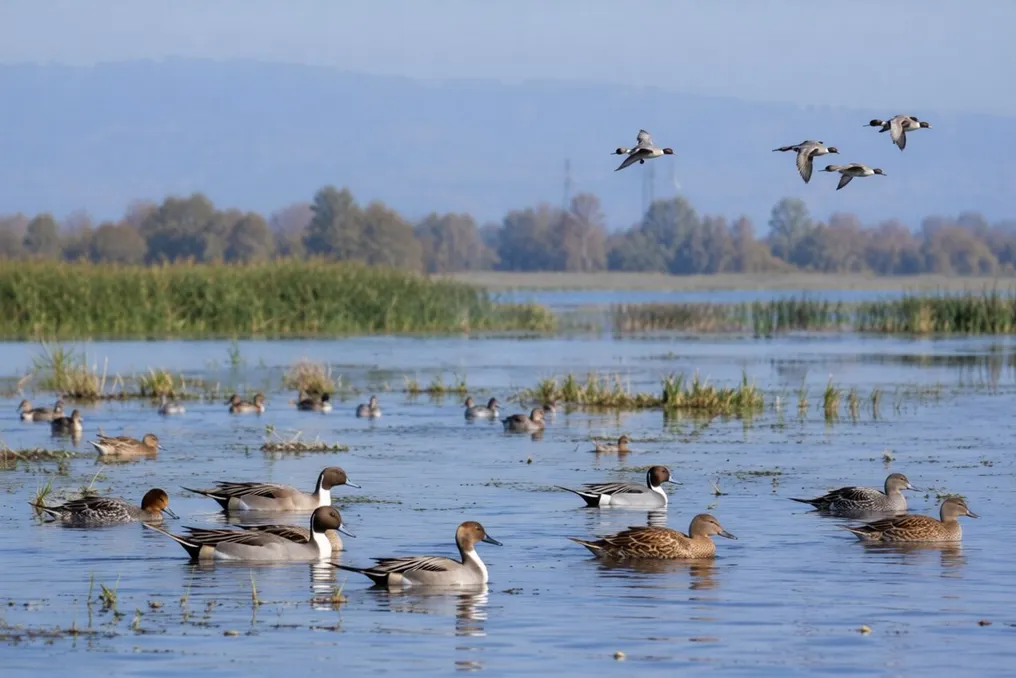
These habitats attract a wide range of species, including flamingos, pelicans, ducks, geese, swans, and storks. Their shallow waters, reed beds, and surrounding vegetation create suitable conditions for feeding, resting, and, in some cases, breeding. Estimates suggest that the population along the southern Caspian coast can exceed one million birds mid-winter, underscoring the ecological importance of this region.
Wetlands: Vital Habitats for Migratory Species
Among Iran's internationally recognized wetlands, Miankaleh holds particular importance. Located in Mazandaran province along the southeastern part of the Caspian Sea, the Miankaleh Peninsula is a major wintering site for numerous species of waterfowl. Its diverse habitats support flamingos, pelicans, geese, ducks, and other migratory birds.
This area was designated a Ramsar Convention site in 1975 and subsequently received UNESCO Biosphere Reserve status in 1976, reflecting its international ecological significance. Further west, the Anzali wetlands in Gilan province serve as another vital refuge for migratory waterfowl. Their extensive reed beds, freshwater bodies, and rich food resources make this location an important destination for birds arriving from northern regions.
In central Iran, the Mikan wetlands near Arak also represent an important seasonal habitat. According to information published in May 2026, this wetland receives approximately 12,000 migratory birds annually, including species arriving from Siberia. Southern wetlands are no less important. The Hur al-Azim wetlands in Khuzestan, and the Shadegan and Hamun wetlands in southeastern Iran provide habitat for numerous migratory species, especially those following routes toward the Persian Gulf and the Indian subcontinent.
Counting Every Bird, Protecting Every Habitat
Monitoring migratory bird populations is an integral part of conservation efforts. Reliable data on species diversity, population size, and migration routes allows conservation authorities to identify ecosystem changes and develop more effective protection strategies.
In January 2026, a survey of winter waterfowl was conducted in Mazandaran province, registering 54,889 birds belonging to 112 species across 36 sites. This study was part of the International Waterbird Census and involved environmental experts, conservation organizations, volunteers, and local communities.
The results also highlighted the importance of habitat security and the impact of anthropogenic influence on determining bird congregation and wintering sites. During Migratory Bird Day, under the slogan 'Every Bird Matters—Your Observations Count!', it was noted how observations by citizens, bird enthusiasts, researchers, and local communities can contribute to monitoring migration routes and population trends. Such participation is particularly valuable in countries like Iran, where migratory birds utilize hundreds of different locations during their seasonal journey.
Protecting these natural visitors requires coordinated actions, including the restoration of degraded wetlands, ensuring ecological water resources, preventing illegal hunting, reducing habitat disturbance, and strengthening scientific monitoring. Local communities can also play a significant role through public awareness initiatives, responsible ecotourism, and participation in conservation programs. Ultimately, the annual arrival of millions of migratory birds is more than just a seasonal natural phenomenon; it is an indicator of the ecological significance of Iran's wetlands and their connection to ecosystems far beyond the country's borders. Ensuring that these birds continue to find safe places to rest, feed, and winter depends on protecting the wetlands that sustain them. Their future is closely linked to the health of these ecosystems and the commitment to their preservation for future generations.