
Christa Pike was diagnosed with blood cancer before her failed execution
Read more
Noticias ao Minuto
noticiasaominuto.com

Christa Pike was diagnosed with blood cancer before her failed execution

Christa Pike, who was sentenced to death in the United States, was diagnosed with an unusual form of blood cancer months before her execution, which did not proceed as planned. The woman reports living with pain since that incident.

According to the Daily Mail, there were warnings about how her health condition could complicate the administration of the lethal injection, but those responsible for justice proceeded with the procedure. More recent details about Christa Pike, who survived a double attempt at lethal injection, were revealed in March data from her court case.

Her lawyers had warned that Pike's platelet count was abnormally high, likely a result of a rare blood cancer condition known as myeloproliferative disease. The legal team argued that the injection would have caused 'unnecessary and aggravated pain and suffering, terror, and dishonor.' Despite the arguments, the judicial system opted to proceed with the execution.

Myeloproliferative neoplasm (MPN) is characterized as a chronic and rare bone marrow disease in which genetic mutations lead to the excessive and uncontrolled production of mature blood cells, such as red blood cells, white blood cells, or platelets. No direct link has been established between this pathology and what happened in the execution chamber.

It is recalled that on September 30, the date set for the execution, Christa Pike, still conscious, talked and sang with her spiritual guide. Even after the first dose of the medication began, she continued to move and breathe audibly. Witnesses confirmed that Pike was alive and making sounds even after the second attempt at lethal injection, being subsequently transported by ambulance to a hospital.

The inmate remained hospitalized for almost two weeks but was discharged and returned to prison. Recently, she released a statement informing that she continues to feel pain since that day and is now looking for a purpose in her life.

Pike was sentenced to death for the murder of Colleen Slemmer, a 19-year-old colleague from the Job Corps vocational training program, which occurred in Knoxville in 1995. Slemmer was stabbed and beaten to death by Pike and her boyfriend, who was also a colleague at the same institution. The death sentence for the woman was pronounced in March 1996, while the boyfriend received life imprisonment with the possibility of parole due to his minority at the time of the crime.
Similar stories

Woman experiences seizures only during menstruation; brain lesion disappears after hormonal treatment
Read more
olhardigital.com.br

Woman experiences seizures only during menstruation; brain lesion disappears after hormonal treatment

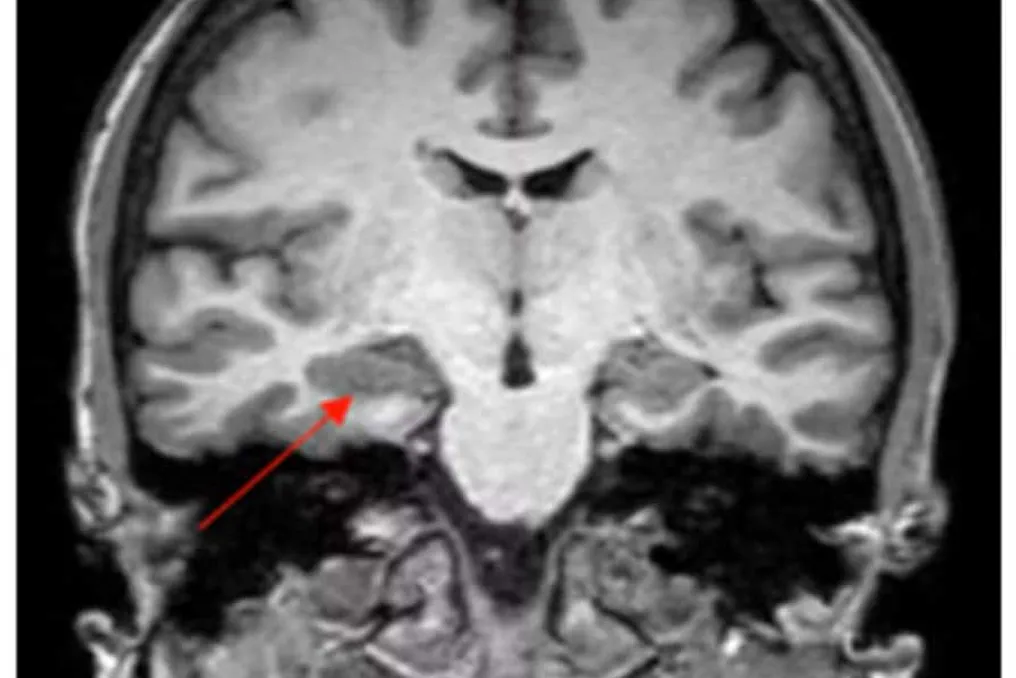
A 41-year-old woman began experiencing seizures that occurred exclusively during her menstrual period. After a long process of medical investigation, specialists suspected cerebral endometriosis, especially after exams detected a lesion in the hippocampus, an area associated with memory.

This case generated significant interest among researchers, as the seizures stopped after starting hormonal treatment and the lesion disappeared in an MRI performed in 2026. However, the hypothesis of endometriosis still awaits confirmation through a biopsy.

The first seizure episodes appeared in February 2019. During these occurrences, the patient would lose consciousness totally or partially, exhibit a fixed gaze, and suffer from confusion and memory lapses after the seizures.

Initially, she did not present typical symptoms of endometriosis, such as severe cramps or recurrent pelvic pain. Six months later, when she started recording the dates of the seizures and menstruation, the diary revealed that the events happened only during menstrual bleeding.

An MRI performed in August 2019 pointed to an alteration in the right hippocampus. Doctors investigated various causes, including tumor, infection, or cerebral malformation, but the tests did not define the origin of the problem. Anticonvulsant medications also proved ineffective in controlling the seizures.

In 2020, another MRI identified a nodule measuring about one centimeter, with characteristics that could suggest old bleeding. This discovery led healthcare professionals to include endometriosis among the diagnostic possibilities.

The patient started using dienogest and desogestrel in 2021, medications used in the treatment of endometriosis. The seizures ceased, and anticonvulsants were suspended three months later. In March 2026, a new MRI showed no longer evidence of the lesion.

The study was published on September 11th in the Journal of Clinical Medicine, conducted by researchers from the Grigore T. Popa University of Medicine and Pharmacy in Romania. Catamenial epilepsy is defined by the concentration of seizures in specific phases of the menstrual cycle, affecting between one-third and half of women of reproductive age with epilepsy, according to the cited literature.

The relationship between the condition and hormones involves their influence on neurons: estrogen tends to increase neuronal excitability, while progesterone acts by inhibiting brain activity. Near menstruation, the decrease of this latter hormone can predispose individuals to seizures.

However, this hormonal correlation alone does not prove endometriosis. The disease manifests when tissue similar to the endometrium, which lines the uterus, grows outside the uterine cavity. There is still no clarity on how this tissue can reach the brain, with theories raised such as cellular transport via blood or lymphatic vessels, or the persistence of displaced cells during fetal development.

Cerebral endometriosis is considered very rare; researchers have located only eight cases in previous studies, none of which presented a lesion clearly situated in the hippocampus like the one observed in this case.

The rarity of the condition and the location of the alteration complicated diagnosis confirmation. Doctors considered it risky to perform a biopsy to verify if the lesion was indeed composed of endometrial tissue, keeping other explanations open, such as a slow-growing tumor, inflammation, or changes caused by epileptic seizures themselves.

Marcos Tcherniakovsky, gynecologist and communications director of the Brazilian Society of Endometriosis, commented that the disease is no longer viewed only as pelvic, but is understood as a chronic, systemic, and inflammatory condition, even if cerebral involvement is uncommon.

Gustavo Leme, gynecologist and surgeon, emphasized that the positive response to hormonal treatment strengthened the suspicion but did not solve the issue. He stressed that the dark signal seen in the 2020 MRI could indicate residual iron from old bleeding, although this signal is not exclusive to endometriosis and does not allow confirming the origin of the lesion.

Another relevant piece of data is that hormonal treatment was suspended in September 2025, and seizures did not return in the reported follow-up. In March 2026, a new MRI, done without the use of hormones, also did not show the previous alteration. Despite this evolution, researchers could not determine the cause of the lesion's disappearance and the end of the seizures, leaving explanations related to controlling a possible focus of cerebral endometriosis or the interruption of hormonal fluctuations open without tissue analysis.

Popular