Growing Popularity of Elite Travel Based on Heritage and Authentic Experience
Read more
Getaway
getaway.co.za

Growing Popularity of Elite Travel Based on Heritage and Authentic Experience

Modern luxury tourism is focusing less on recognizable chain hotel brands and opulent interiors, and more on the stories behind the places people visit. As the high-end hospitality industry becomes increasingly standardized, travelers are placing greater value on cultural heritage, local culture, and the unique experience possible only in a specific location.

This shift towards more meaningful experiences is reflected in the Mastercard Economics Institute Travel Trends 2025 report, which indicates a growing demand for an authentic connection to a place, culture, and community. Furthermore, a Mastercard consumer study showed that in 2025, 89% of Europeans cited travel and tourism as a priority experience, with 79% prioritizing gastronomic experiences.

In its 2025 travel trend analysis, Deloitte also notes that personalization and memorable moments are key factors influencing travel decisions, as consumers seek something distinctive rather than interchangeable.

For Jessica Lowe, Marketing Manager at Steenberg Farm in the Constantia Valley in Cape Town, this signals a broader change in how travelers define luxury. According to her, 'Today, luxury is increasingly tied to the feelings it evokes in a person. Guests are looking for a personal, memorable experience rooted in a place.'

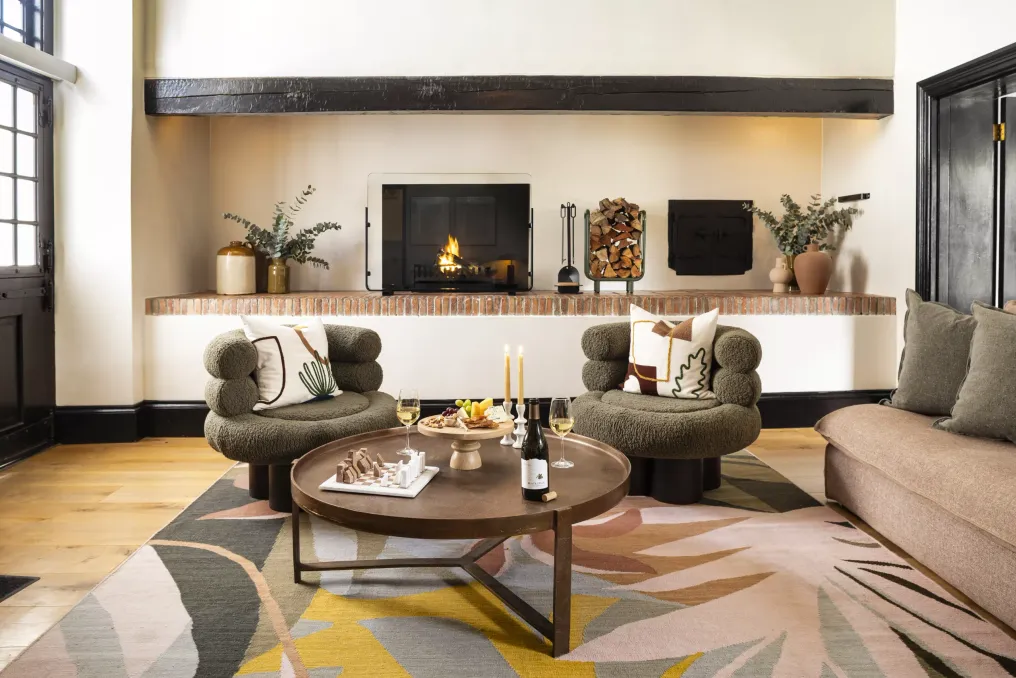
Historical sites, founding stories, and cultural heritage offer what cannot be easily replicated through modern design or investment. Around the world, hotels such as Borgo Santo Pietro in Tuscany, Babylonstoren in Cape Winelands South Africa, and The Newt in Somerset have built their appeal around their history, surrounding landscapes, and immersing guests in the atmosphere of the place.

At Steenberg, the experience encompasses accommodation, restaurants, spa, and estate vineyards. Visitors can come for lunch, book a wine tasting, or stay at the hotel; each experience offers a new way to interact with the history and surroundings of the estate.

This approach gained international recognition when Steenberg Hotel & Spa received a Michelin Gold Star for the second consecutive year in the Michelin Guide 2026. This award is given to hotels that offer exceptional and distinctive guest experiences.

Few industries demonstrate the importance of place feeling as vividly as winemaking. The character of the wine is shaped by the environment where its grapes grow, including soil, climate, vineyard location, and decisions made during the winemaking process.

As consumers show increasing interest in understanding the origin of their food and beverages, wine tourism provides an opportunity to feel this connection beyond the tasting room.

Carin Wiltshire, Marketing Manager at Steenberg Vineyards, notes: 'Wine has always been connected to place, but consumers have become much more interested in this connection. They want to understand not just what is in the bottle, but what makes it special. Where it comes from, how it was made, and why it tastes the way it does—all contribute to a deeper connection with the wine.'

At Steenberg, the estate's location in Constantia plays a vital role in shaping its wines. The region's cool maritime climate, ancient soils, and proximity to False Bay influence the character of their Sauvignon Blanc and cool-climate Bordeaux varietals.

Sauvignon Blanc has become a particular focus for the estate, with different expressions demonstrating the influence of vineyard plots, growing conditions, and winemaking methods.

Wiltshire states: 'We don't need to invent a story around the wine because the place gives us one. Our location, climate, and vineyards contribute to the identity of the wine we produce.'

Steenberg's history dates back to 1682, when it was founded by Catharina Ras. Today, this heritage is part of the broader experience offered on the grounds, including the hotel, spa, restaurants, and vineyards.

Storytelling connects visitors to the places they visit. Understanding the origin of a site, the people behind the wines, or the history of a particular landscape can add context to a stay or visit, making it more memorable.

Wiltshire emphasizes: 'What makes wine exciting is that you can taste the place. Through our different collections, guests can feel how a vineyard plot, climate, and winemaking approach influence the final wine. It turns provenance from an idea into something tangible.'

The growing interest in heritage and provenance points to a changing definition of luxury for destinations and hospitality businesses. While beautiful accommodations and excellent service remain important, travelers are increasingly interested in what makes a destination unique.

The history of a site, the landscape, the local flavor, and the people who shape its experience are difficult to copy. In the increasingly saturated market of elite tourism, these details are what can make a place worth visiting.

Similar stories

Trip to the West Cape: Impressions from a Stay at Southern Sun Waterfront and Arabella
Read more
iol.co.za

Trip to the West Cape: Impressions from a Stay at Southern Sun Waterfront and Arabella

The author shares impressions from a two-day trip to the West Cape, which allowed him to experience what it is like to be inside the Southern Sun Waterfront hotel, which he used to see daily from his office window.

For a long time, while observing the Southern Sun Waterfront from his office in the Portside building, the author wondered about life inside this place. He noted that knowing the exterior appearance, location, and the people entering and exiting does not provide an idea of the true guest experience.

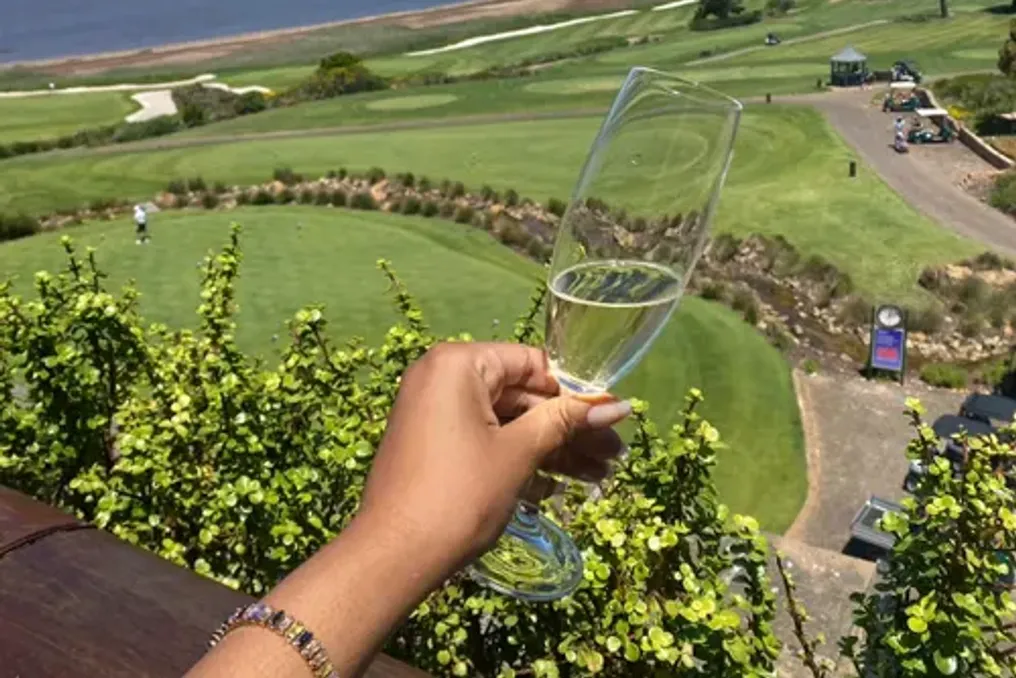
Before visiting the Southern Sun Waterfront, the author went to Arabella (Arabella Hotel, Golf and Spa). There, the pace of life seemed to slow down, and the atmosphere encouraged leisurely walks around the grounds, where one could explore different corners and enjoy the views.

During the visit to Arabella, the author visited various areas, including the golf club, pool, spa, hydrotherapy pool, and gym. He contemplated the contrast between how for some it is a luxurious vacation, and for others—just home.

The first experience of high tea was very pleasant: exquisite desserts and tea were accompanied by picturesque views. After this, the author checked into a premium suite with a view of the Bot River Lagoon.

The evening was dedicated to further enjoyment: after having sushi and wine, he went to the spa for a Swedish massage. The quiet atmosphere and the ability to disconnect made the treatment especially pleasant. Later, he relaxed in the hydrotherapy pool.

One of the memorable moments was the attention of the hotel staff: the employees prepared the room for his return, leaving slippers next to the bed, which the author called a display of thoughtful luxury.

The next morning, the author woke up at 5 am and stood on the balcony with a cup of tea, watching the Bot Lagoon illuminated by the first rays of the sun. This silence and beauty of the moment became one of the trip's most cherished memories.

The second day was dedicated to exploring the surroundings. The author joined a Cape Town Jeep Tours tour, heading to the Cape Point Vineyards. Upon arrival, they were greeted with glasses of wine, after which they had a picnic near the restaurant.

The journey then continued along Chapman's Peak, where the winding road and dramatic coastal landscape provided new impressions. The author noted that sometimes changing the route is enough to appreciate the surrounding beauty.

Finally, the author arrived at Southern Sun Waterfront Cape Town. The check-in was joyful, as he finally saw the hotel he had long observed from afar. A bottle of wine, refreshments, and gifts awaited him.

The evening continued at The Cullinan, where a tour of the hotel was organized. The atmosphere was lively: cocktails were served by the mixologist, and appetizers such as shrimp and antelope skewers added local flavor. Dinner consisted of three courses, including a Mediterranean nectarine salad, a beetroot tower, and a roasted seasonal salad as starters.

In conclusion, the author emphasized that the most valuable thing about the trip was the feeling of hospitality. Whether it was the attention of the staff at Arabella or the opportunity to enter a place that was long only an object of admiration, these details made the trip unforgettable.

Returning to the Portside building, the author looked at the Southern Sun Waterfront differently: it was no longer just a building visible from the window, but a place where he experienced its hospitality.

Overview of Bali's Outstanding Architectural Attractions
Read more
getaway.co.za

Overview of Bali's Outstanding Architectural Attractions

Bali is famous for its beaches, rice terraces, and tropical landscapes, but among the island's most amazing places are man-made structures. Ancient Hindu temples rise above the ocean, intricate stone gates frame volcanic mountains, and royal water palaces combine rich architecture with ponds, fountains, and meticulously planned gardens.

For travelers interested in architecture, Bali offers a unique blend of religious sites, traditional villages, historical royal residences, and modern cultural monuments. Many reflect the island's Hindu traditions and its close connection to nature, while others demonstrate the craftsmanship and design influence that has shaped Balinese life over centuries.

Some of these attractions, such as Uluwatu Temple and the famous Lempuyang Gates, are already well-known to tourists. However, there are other places, including an unusual temple in northern Bali and one of the island's largest Buddhist monasteries, that offer a different perspective on this destination.

If you are planning a trip to the Island of Gods in Indonesia, these architectural masterpieces of Bali must be included in your itinerary.

Uluwatu Temple

Located on a limestone cliff approximately 70 meters above the Indian Ocean, Uluwatu Temple is one of Bali's most recognizable architectural symbols. Its impressive location attracts visitors not only for the panoramic views, but the temple itself plays an important role in the island's Hindu heritage.

The local name for the temple is Pura Luhur Uluwatu. It features traditional Balinese stonework, richly decorated gates, and sacred courtyards situated on the edge of the cliff. The temple's design is closely linked to its spiritual purpose, as it is considered one of the island's important sea temples.

It is recommended to visit the complex closer to evening to see it in the changing light, and then stay to watch the traditional Kecak fire dance, which is often performed against the backdrop of the sunset. Be mindful of your belongings, as local monkeys are known to snatch unsecured items.

Tanah Lot Temple

Few things convey Bali's connection to the ocean as much as Tanah Lot Temple. This temple, built on a rocky promontory near the shore, appears almost separated from the mainland during high tide, creating one of the island's most photographed architectural scenes.

Tanah Lot is a Hindu place of worship with strong ties to Bali's coastal spiritual traditions. Its appeal is partly due to the contrast between the dark volcanic rock, the crashing waves, and the traditional rooflines of the temple.

The adjacent complex includes landscaped paths, small shrines, and viewpoints, allowing visitors to spend more time here than just taking a quick sunset photo.

Traveler's Tip:

Arrive well before sunset if you want time to walk around the grounds. Access to the rock depends on tidal conditions, and visitors should follow local instructions in sacred areas.

Pura Ulun Danu Beratan

One of Bali's most characteristic landmarks looks as if it is floating on the surface of a lake. Pura Ulun Danu Beratan is located near Lake Beratan in the cooler central highlands of the island, where its multi-tiered Meru shrines rise above the water against a backdrop of green mountains.

This temple is associated with the goddess Dewi Danu, a Hindu goddess connected to lakes and water. Its surroundings reflect the importance of water in Balinese spiritual life and agriculture, where religious rituals and irrigation management have long been closely intertwined.

The multi-tiered roofs, traditional pavilions, and meticulously maintained grounds make this stop valuable for anyone interested in sacred architecture. Early morning is particularly atmospheric, especially when mist hangs over the lake. Bedugul is also worth visiting for those heading inland, offering a cooler change of scenery compared to the busier coastal resorts of Bali.

Lempuyang Gates

The stunning split gates at Lempuyang Temple have become one of Bali's most recognizable tourist images. Framing Mount Agung in the distance, the tall stone portal creates a dramatic composition that draws visitors to the eastern parts of the island.

The complex is part of the sacred temple complex Pura Lempuyang Luhur, associated with Bali's important mountain sanctuaries. The split gates, known as Candi Bentar, are a signature element of Balinese architecture. Their two halves form a symbolic threshold between spaces, rather than a typical closed entrance.

Although tourists often call these gates the 'Gates of Heaven,' there is much more at this site than just a photo opportunity. The wider temple complex stretches up the mountain and includes additional shrines and gates.

Traveler's Tip:

Arrive early to increase the chances of a clear view of the mountains and to avoid the busiest periods. Remember that this is a sacred place of worship, not just a photo spot.

To grasp the scale of Bali's religious architecture, few things compare to Besakih Temple. Often called the Mother Temple, this vast complex is located on the slopes of Mount Agung, Bali's highest volcano, and consists of numerous temples and sacred structures.

Besakih is not a single building but a collection of interconnected shrines, staircases, courtyards, and temples situated along the mountain slope. Its multi-level Meru roofs, stonework, and elevated position create an impressive architectural landscape.

The complex holds immense religious significance for Balinese Hindus and remains an active place of worship. Ceremonies are held throughout the year, so visitors may encounter processions and devotees in traditional attire. It is recommended to allocate several hours for a visit, especially if you want to appreciate the various levels and viewpoints. A local guide can help explain the temple's layout and cultural significance.

Taman Ayun Temple

Not all architectural attractions in Bali require a dramatic cliff or volcanic backdrop. In Mengwi, Taman Ayun Temple offers a more measured view of beauty, featuring traditional temple towers, landscaped gardens, and a wide moat surrounding the complex.

Built as a royal temple of the Mengwi kingdom, Taman Ayun is an important example of Balinese religious and royal architecture. Its name is often translated as 'beautiful garden,' which perfectly matches the description of its greenery and water features.

The complex is also part of the UNESCO World Heritage Cultural Landscape of Bali, which recognizes the interconnection between traditional water temples, agriculture, and the island's spiritual philosophy. The carefully organized inner courtyards and multi-tiered shrines are particularly interesting to visitors who wish to understand how Balinese architecture organizes sacred space. It is a useful stop when traveling between South Bali and the central regions of the island and can be combined with visits to nearby traditional villages.

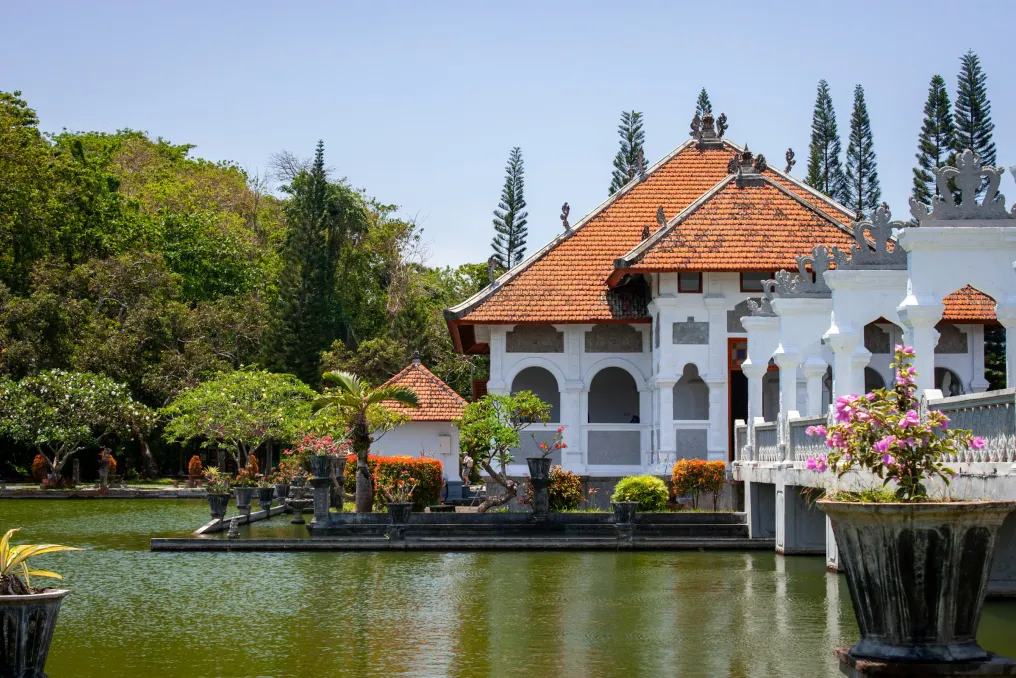
Tirta Gangga Water Palace

In eastern Bali, the Tirta Gangga Water Palace offers a different perspective on the island's architectural heritage. Built as a royal water garden, this complex combines pools, fountains, statues, paved walkways, and lush vegetation in a series of carefully arranged spaces.

The palace was created by the Karangasem royal family and derives its name from the sacred Ganges River in Hindu tradition. Water is a central element of the design, flowing through the gardens and connecting different levels of the area. The most photographed section includes stone pathways crossing a large pond filled with ornamental fish. However, look beyond the obvious photo spots to discover fountains, sculptural details, and smaller architectural elements that reward a slow stroll.

Tirta Gangga is an excellent choice for those interested in the relationship between landscape design and architecture. Its location in East Bali also makes it a natural addition to a trip that includes Lempuyang Temple or the nearby Taman Ujung Water Palace.

Taman Ujung Water Palace

If you enjoy historical buildings but prefer to avoid the crowds around Bali's most famous attractions, set aside time for Taman Ujung Water Palace. Also known as Taman Suakasada Ujung, this former royal secluded complex is one of the island's most fascinating architectural sites.

The complex was designed in the early 20th century by the Karangasem royal family. Its design blends Balinese, European, and Chinese influences, featuring elegant pavilions, bridges, and wide reflective pools set against hills and coastal landscapes. Unlike a traditional temple complex, Taman Ujung was designed as a royal garden and retreat. Its buildings are situated within an expansive landscape where water forms the central part of the overall composition. The result is a fascinating blend of architectural styles reflecting Bali's history and its connections with the outside world. Visit it together with Tirta Gangga to spend a day exploring the royal heritage of East Bali. Both sites offer contrasting interpretations of the water palace, each with its own character.

Bali's architectural heritage is not limited to Hindu temples. In the hills above Badung in northern Bali is the Brahmavihara-Arama, the island's largest Buddhist monastery—a tranquil complex of terraced courtyards, meditation areas, and decorative structures.

The monastery opened in 1971 and combines Buddhist symbolism with elements of traditional Balinese stonework. Its location on the hillside creates a natural progression across the grounds, with gardens and buildings situated on multiple levels. One of its outstanding features is a miniature replica of Borobudur, the famous Buddhist monument in Java. Built in 1999, it is located at the highest point of the complex and serves as a striking architectural focal point. The monastery remains an active place of worship and meditation, so visitors should maintain silence and dress modestly. Its serene atmosphere and views of North Bali make it an attractive stop for travelers seeking something beyond the island's more famous sights.

Penglipuran Traditional Village

Architecture in Bali is not limited to grand monuments. The layout of an entire community in Penglipuran gives insight into traditional Balinese design and daily life. This village is known for its orderly main road, traditional courtyard entrances, stone walls, and meticulously maintained gardens. Houses are arranged in a characteristic pattern, with entrances and buildings reflecting local customs and concepts of organizing domestic and public space. Instead of admiring a single building, visitors can see how architectural elements repeat throughout the settlement. The gates, inner courtyards, and traditional materials give the village a uniform appearance, while the adjacent bamboo forest adds another dimension to the landscape. Penglipuran is popular with visitors but remains a living community. It is essential to respect the privacy of the residents, follow local instructions, and remember that homes are residences, not museum exhibits. For those interested in vernacular architecture, it is a useful reminder that Bali's cultural heritage is as much about people's way of life as it is about monumental temples.

Garuda Wisnu Kencana Cultural Park

For a more modern architectural landmark, visit the Garuda Wisnu Kencana Cultural Park on Bukit Peninsula. The enormous statue of the Hindu god Vishnu seated on the mythical bird Garuda is one of Bali's most recognizable modern monuments. The monumental sculpture dominates the surrounding limestone landscape and serves as the center of the cultural park, dedicated to Indonesian heritage, performances, and events. Its scale sharply contrasts with the more intimate stone temples scattered across the island. The statue is also an example of how traditional religious imagery continues to shape modern Indonesian art and public monuments. Within the park, visitors can explore open spaces, cultural venues, and performance areas. Allocate enough time to view the monument from different angles and explore the rest of the grounds. It is a worthwhile addition for travelers.
Architectural Landmarks of Africa: From Rock Churches to Modernist Cities
Read more
getaway.co.za

Architectural Landmarks of Africa: From Rock Churches to Modernist Cities

African architecture tells stories of faith, trade, and cultural exchange, demonstrating diversity from churches carved into rock to cities filled with modernist buildings. These destinations invite travelers to look deeper than at ordinary sights to uncover the history embedded in the streets.

The capital of Eritrea, Asmara, is known for its impressive collection of modernist structures, most of which date back to the Italian colonial rule of the early 20th century. Among these stands the Fiat Tagliero car service, completed in 1938, with wide concrete wings resembling an airplane. The Impero cinema showcases Art Deco styling.

The city's architectural appearance earned it World Heritage status in 2017, although its history is inextricably linked to Italian colonialism and the segregation that shaped its development.

Lalibela hosts eleven medieval churches carved directly into volcanic rock, creating sacred spaces connected by trenches and passages. These churches, dating mainly from the 12th and 13th centuries, are traditionally associated with King Lalibela, who sought to create a holy city akin to Jerusalem.

The Church of St. George, or Bete Giyorgis, is particularly noteworthy: its cruciform roof is situated below ground level and surrounded by a deep trench. Lalibela remains an important pilgrimage site for Ethiopian Orthodox Christians.

On the southern side of the Atlas Mountains, Morocco features Ait Benhaddou, with its ochre walls and tall towers. This fortified village, known as a ksour, consists of densely packed earthen structures enclosed by defensive walls. Local materials and thick walls helped residents adapt to the harsh climate, while decorative patterns give the towers a distinctive look.

The settlement was part of historical trade routes connecting the Sahara with Marrakech through the Draa Valley and the Tizi n'Tilet pass. Its earthen buildings are a vivid example of traditional Moroccan architecture.

The narrow alleys of the Old City, carved wooden doors, and shaded inner courtyards reflect centuries of Indian Ocean trade. Here, influences from Swahili, Arab, Indian, and European cultures are combined in the buildings. Among the attractions are the Old Fortress and the Old Dispensary, although many of the city's best details are found in the traditional doors and courtyards.

The history of Zanzibar also includes its participation in the East African slave trade—a complex legacy that remains central to understanding this city.

Off the coast of the Namuha province in northern Mozambique, Mozambique Island lies in the Indian Ocean and is connected to the mainland by a bridge. It preserves the architectural heritage of centuries of Indian Ocean trade. The island became a Portuguese port in 1507 and later served as the capital of Portuguese East Africa.

In the Old Town, stone buildings made of stone and lime include former administrative, religious, and military structures. Further south, the Makuti district is known for traditional Swahili houses, historically thatched with palm leaves. The contrast between these two areas reflects the different communities and building traditions that have shaped the island.

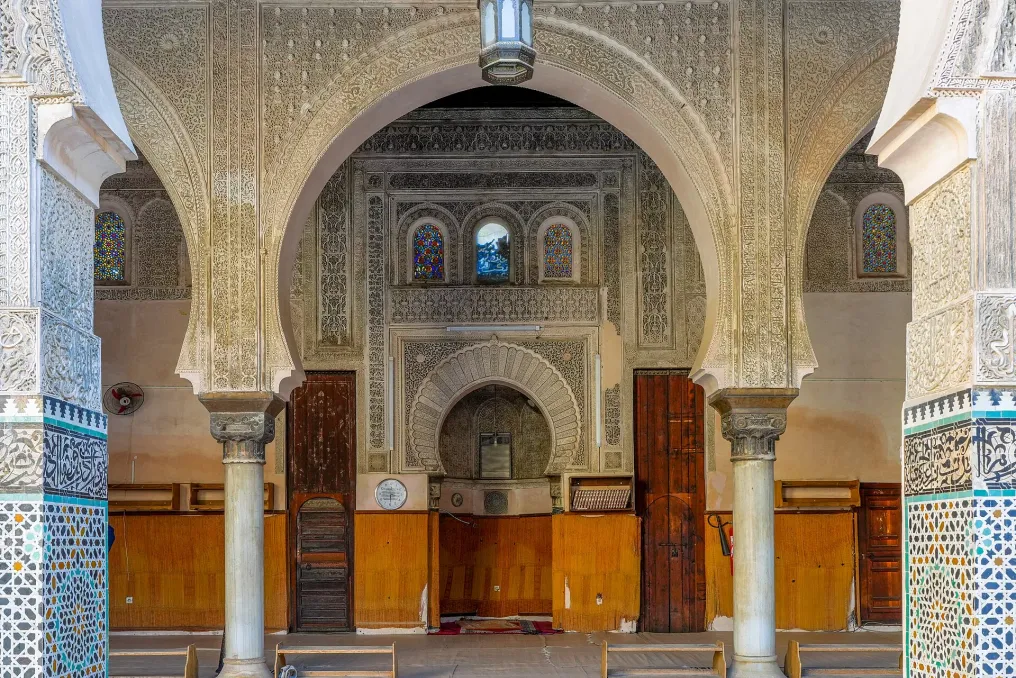
In Fez, some of the most exquisite architectural details are hidden behind simple exterior walls. Traditional inner courtyards reveal carved cedarwood, geometric mosaics, and intricate stucco work. The city, founded between 789 and 808 AD, has become an important cultural and spiritual center. Its historic medina contains mosques, madrasas, markets, and traditional homes.

The Bou Inania Madrasa stands out for its detailed tilework and carved wood, while the surrounding alleyways show how age-old crafts remain part of daily life.

Gondar offers a glimpse into Ethiopia's imperial past. In 1636, it became the permanent royal capital under Emperor Fasilides, whose successors expanded the fortified complex known as Fasil Ghebbi. The complex includes castles and palaces that blend Ethiopian traditions with Arab, Indian, and Baroque influences. Nearby, historical churches and a bathhouse associated with Fasilides complement the city's architectural heritage.

It is recommended to explore the historic districts on foot and consider hiring a local guide to explain the architectural details and history. It is important to respect local customs, especially at religious sites, and ask permission before photographing people.

Traveler's Note: The information in this article is current as of publication, but entry requirements, transportation access, and safety conditions may change. Before booking or planning a trip, check information with relevant official bodies and consult current travel advisories. This is especially important for destinations affected by conflicts or other security issues.

From the earthen villages of Morocco to the carved doors of Zanzibar—Africa's architecture shows how people lived, worshipped, and exchanged ideas across generations. One must look beyond famous landmarks, as the buildings themselves become a way to understand the history of each place.

Popular