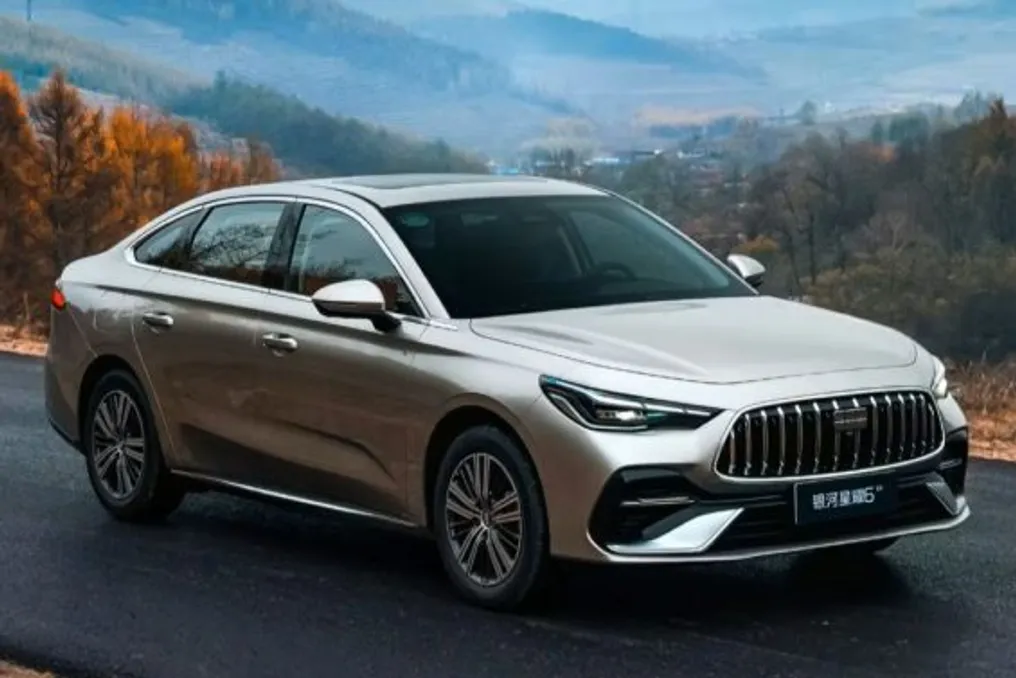
The Chinese manufacturer Geely presented the Xingyao 6 EF model in China on Tuesday, the 3rd. This hybrid sedan has the capability to operate using methanol, gasoline, or electricity.
According to the automaker itself, this represents the first globally manufactured methanol hybrid passenger vehicle. The two liquid fuels can be used in any proportion within the same tank, similar to the operation of Brazilian flex-fuel cars that use ethanol and gasoline.
The system features a sensor that monitors the methanol concentration in real-time, allowing the electronic control unit to adjust injection and ignition according to the mixture used. The engine achieves a thermal efficiency of 48.15%, meaning almost half of the fuel's energy is converted into motion. Geely states that this is the highest index among mass-produced methanol engines.
Thanks to 350 bar direct injection and high-power ignition, the vehicle can start combustion even at temperatures as low as -40°C. In the Chinese CLTC cycle, considered more optimistic than the INMETRO's, the sedan travels 230 km using only electric power. With a fully charged battery, the total range reaches 1,250 km using methanol in a full tank, and 1,880 km when fueled with gasoline. This energy difference is due to chemical composition, as one liter of methanol contains approximately half the energy of one liter of gasoline.
The dimensions of the Xingyao 6 EF are 4.8 meters in length and 2.76 meters in wheelbase. Methanol, also known as methyl alcohol, has characteristics similar to ethanol because it is liquid at room temperature. It can be stored, transported, and refueled comparably to gasoline, requiring a simpler infrastructure than that needed for hydrogen.
In China, interest in this fuel has a strategic character. The country has scarce petroleum resources but possesses an abundance of coal, which is the primary raw material for Chinese methanol, making China the world's largest producer of this fuel. In the city of Guiyang, located in the south of the country, over 90% of taxis operate on methanol, according to data provided by Geely.
Another motivating factor for Geely is the climate. During winter in northern China, electric vehicles suffer a significant loss of autonomy, and the methanol hybrid model offers a solution to this challenge.
Additionally, there is an environmental perspective involved. Geely, which has been researching methanol since 2005, is investing in the concept of green methanol. This is produced from captured carbon dioxide (CO2) and hydrogen generated through renewable energy sources. The brand reported developing a system capable of capturing carbon from the exhaust to reuse it in the fuel production process.
In contrast, in Brazil, methanol gained notoriety for different reasons. In 2025, Operation Hidden Carbon exposed a criminal scheme that diverted more than 10 million liters of methanol with the intent of adulterating gasoline and ethanol at stations linked to the PCC. In some of these locations, the methanol proportion reached 50% of the mixture, drastically exceeding the limit established by the National Agency of Petroleum, Natural Gas and Biofuels (ANP), which is only 0.5%.
In the same year, the consumption of counterfeit beverages containing methanol resulted in 76 confirmed cases of intoxication and 25 deaths nationwide, according to data from the Ministry of Health. This occurs because methanol is considerably more toxic than ethanol and cannot be distinguished from it by smell or taste. Even small ingestions can cause blindness and death, in addition to the substance being able to be absorbed through the skin and respiratory tract.
Handling methanol requires additional precautions: its flame is almost imperceptible under daylight, making fire detection difficult, and the liquid has corrosive properties for rubbers and certain metals, necessitating specific components in the fuel supply system.
Geely, which has a stake in Renault's operation in Brazil, has not disclosed plans to commercialize the Xingyao 6 EF in the Brazilian market.