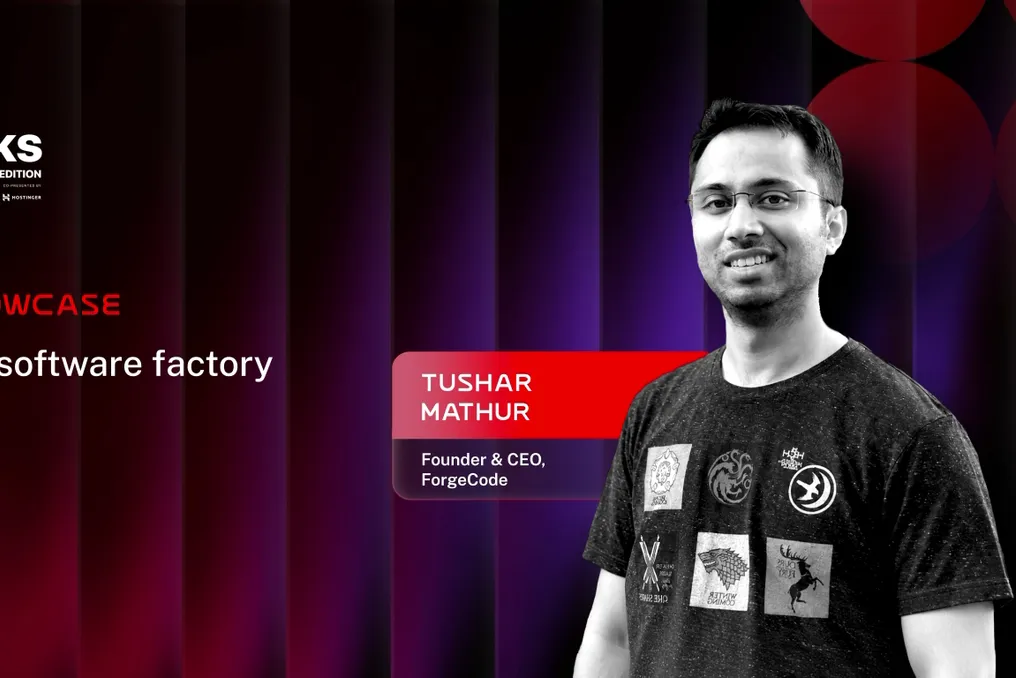
Tushar Mathur from ForgeCode proposes transforming software development into a factory model using AI
Read more
YourStory [india, en]
yourstory.com

Tushar Mathur from ForgeCode proposes transforming software development into a factory model using AI

Tushar Mathur from ForgeCode advocates for the software development process to function like a manufacturing factory rather than remaining a project. Traditionally, scaling development required an increase in engineers, time, and resources. However, artificial intelligence is changing this paradigm, making code writing faster and cheaper.

Nevertheless, accelerating code generation alone does not guarantee faster delivery of the finished product. The code still requires review, testing, and deployment, which creates new bottlenecks for engineering teams.

A question arises for heads of engineering departments: how to ensure the scaling of software delivery without a proportional growth in staff? ForgeCode solves this problem by creating what they call an AI-driven software factory. This platform uses AI agents to manage the entire software development lifecycle—from task definition and implementation to testing and deployment, with humans providing oversight.

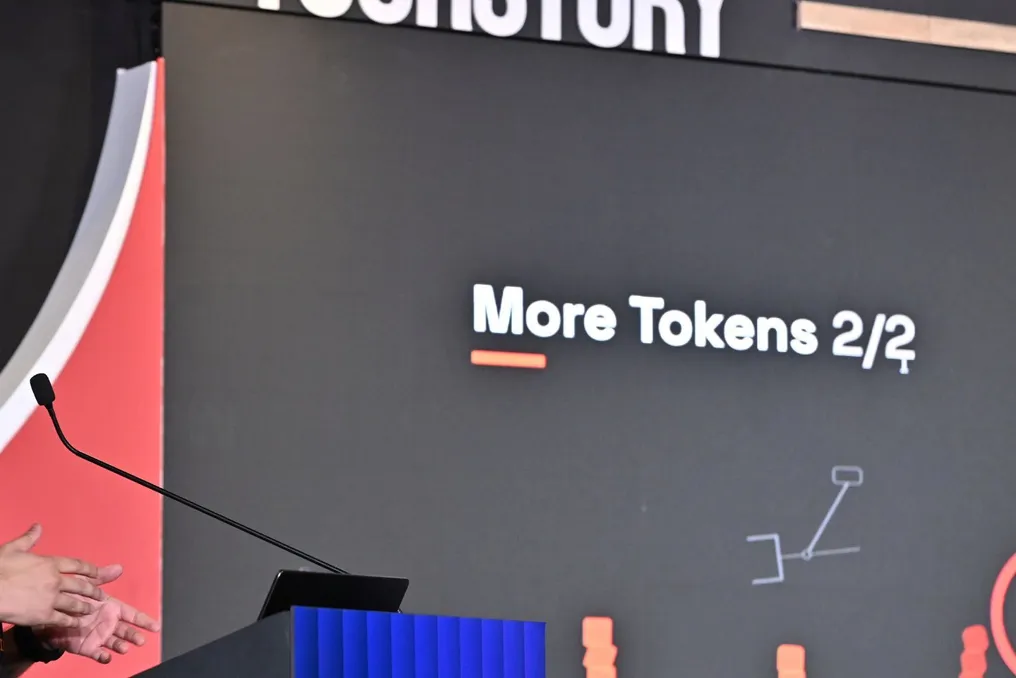
At the TechSparks 2026 event, founder and CEO Tushar Mathur demonstrated the platform's operation and explained why reducing the cost of writing code makes review, testing, and deployment processes more critical for software delivery.

Despite increased individual productivity due to AI, these improvements do not always translate into faster software delivery at the organizational scale. Mathur noted: 'The first thing we are seeing is that almost all code today is generated automatically.'

Engineering teams can quickly create thousands of lines of code, but subsequent stages—code review, testing, security checks, and deployment—struggle to keep up with this volume. In Mathur's view, the bottleneck has shifted from the coding process itself to managing what happens after creation.

He explained: 'Previously, the main fundamental bottleneck was writing the code. But today, the cost of writing code is so low that all these other aspects have become the bottlenecks.'

As a result, teams risk releasing more code that has low quality assurance, contains errors, or is uncoordinated, because the systems needed to manage the increased workload cannot keep pace.

To bridge the gap between individual productivity and overall organizational results, Mathur presented ForgeCode's approach to building an AI-driven software factory. The core idea is to move away from a software development lifecycle that depends on manual coordination of every stage by humans.

Instead, AI agents take on tasks such as task sorting, planning, implementation, and verification. Humans intervene only when decisions, direction, or more detailed feedback are required.

Unlike traditional automation, which links a sequence of predefined steps, the software factory uses continuous feedback loops. Data from C-level executives (CXOs), product managers, and production monitoring systems can flow directly into the development backlog. Agents then work around the clock on feature development, bug identification, and performance improvement, even when engineering teams are inactive.

The goal is to maintain continuous software development momentum without requiring engineers to manage every single task.

Mathur outlined six principles he believes are necessary for creating an effective AI-driven software factory. These principles aim to make software development more autonomous while maintaining alignment with business priorities.

During the Q&A session, the audience asked Mathur how engineering teams should approach trade-offs and complex non-functional requirements, such as database architecture and scalability. He replied that requirements that can be objectively verified, such as scale targets, can be delegated to the software factory. The system constantly checks results and optimizes them upon verification failure. However, trade-offs require human judgment. Questions about acceptable levels of risk or failure that a company is willing to accept remain the domain of engineers and business leaders who intervene to guide the agent when necessary.

ForgeCode asserts that this is possible because the platform operates on a self-improving feedback loop. Every task, decision, and fix contributes to a knowledge base that informs future work. Engineers remain closely involved in the early stages, but as the system learns the team's engineering practices and business context, it can operate with greater autonomy.

The platform also determines which decisions are critical and require expert oversight, especially those concerning security, reliability, performance, and competing business priorities. In such cases, it pauses operations and requests human input before proceeding. This growing ability to distinguish routine execution from decisions requiring expert judgment is central to the product's functioning.

ForgeCode's AI-driven software factory is designed to convert gains in individual coding productivity into faster software delivery across the entire organization. By using agents to manage coordination, code reviews, testing, and other development tasks, the platform aims to reduce bottlenecks that can slow down engineering teams.

For Mathur, this shift means a change in the role of engineers. Instead of managing every development stage, they will focus on defining requirements, making decisions, analyzing results, and guiding the overall process. The goal is not just to generate more code or build larger teams, but to achieve more efficient software development through autonomous systems operating continuously under human control.

Similar stories

Raghavan from IBM asserts that AI will create more software and change developer roles
Read more
business-standard.com

Raghavan from IBM asserts that AI will create more software and change developer roles

Sriram Raghavan, General Manager of IBM Software India and Software Innovation Lab, stated that artificial intelligence (AI) agents will accelerate the software creation process and transform developer functions. He also emphasized the necessity for enterprises to strengthen cybersecurity, governance, and personnel skills.

According to Raghavan's estimates, up to two billion AI agents could eventually be deployed globally, with AI writing half of all code. He clarified that the proliferation of these agents will not lead to the disappearance of software development but, on the contrary, will trigger the creation of significantly more software, fundamentally changing developers' work and technology building methods in companies.

At the IBM Think event in Mumbai, Raghavan told Business Standard that there is likely to be an increase in the volume of software produced. He noted that AI has already caused significant changes in software development concerning team organization, workflow management, and the software creation process itself.

The role of the developer is undergoing a fundamental shift: instead of writing code, specialists are now engaged in monitoring, verifying, and critically evaluating the results generated by AI. Raghavan stressed that this is a skills change requiring different training for developers.

He compared this trend to the automation of electronic design in the semiconductor industry. According to him, automation has allowed engineers to develop increasingly complex chips without eliminating the need for hardware engineers. Raghavan expects a similar transformation in the software sphere, where automation will enable the creation of more applications but will require new competencies.

Expertise in this area is now focused on verification, validation, strategy definition, setting constraints, and directing AI to perform the correct tasks. Raghavan believes that this is the direction software engineering is moving. He predicts that more software will be produced in the next two to three years than ever before, as innovation opportunities have become unprecedented, and value now lies in ideas and their implementation, rather than in the creation of code itself.

Nevertheless, Raghavan warned that the growing use of AI will not diminish the importance of fundamental engineering skills; on the contrary, judgment and core skills are becoming even more important.

Responding to questions about recent security issues related to new AI models, Raghavan stated that the adoption of AI is radically changing the cybersecurity landscape. He noted that one must think about cybersecurity in a completely different way because of AI. Raghavan emphasized that proactive, continuous integration of best practices and technologies into vulnerability management and risk prioritization based on AI is vitally necessary. He added that the company's proposals reflect this approach, insisting on the need to integrate AI into defense alongside concerns about AI misuse.

Regarding risks associated with unintended actions by AI agents, Raghavan advised enterprises to implement stricter controls over agent identifiers, permissions, and access to internal systems. Agents should only be granted the minimum necessary permissions to perform a specific task, rather than broad access to all corporate systems. He explained that an agent only needs a certificate and a token to perform an action on behalf of a user for 30 seconds. Furthermore, he highlighted the importance of constant monitoring, as AI systems do not always behave predictably, unlike traditional software.

AI Adoption in India

Referencing an IBM study conducted jointly with MeitY earlier this year, Raghavan reported that only about 15 percent of Indian enterprises have reached the stage of scaling AI adoption, while the remaining 85 percent continue to face difficulties. Companies that successfully scale AI have moved beyond isolated use cases and are integrating the technology across their entire structure.

According to Raghavan, approximately 15% of enterprises are truly scaling AI, meaning they have passed the stage of implementing one case that was integrated into the organization and may be moving to a second or third case. For the remaining companies, the main obstacles remain data governance, corporate governance, and a shortage of skilled personnel.

Forge Code Expert Explains Why an AI-Based 'Software Factory' is Necessary for Effective Software Development
Read more
yourstory.com

Forge Code Expert Explains Why an AI-Based 'Software Factory' is Necessary for Effective Software Development

Although artificial intelligence is capable of generating code at unprecedented speeds, the process of testing, verifying, and deploying it into a working environment remains a separate complex task. Engineering teams are increasingly using AI agents to write code, fix bugs, and create new features, but faster coding does not guarantee faster software delivery.

As code generation gains momentum, the volume of checks increases, testing slows down, and teams find it difficult to coordinate the growing amount of changes.

At the TechSparks 2026 conference, Tushar Matur, CEO of Forge Code, highlighted this issue in his session 'Anatomy of a Software Factory.' He explained how AI-focused engineering organizations can move beyond automating individual coding tasks and start creating systems that manage the entire Software Development Life Cycle (SDLC).

Matur noted that just because code generation has become easier and faster does not mean the overall SDLC will accelerate. He reminded that the traditional development approach focused on writing code efficiently, requiring teams to define requirements, prepare specifications, and design architecture to reduce the load on the implementation phase.

However, since AI takes on much of the coding work, bottlenecks shift to other areas. Matur described a situation where organizations face a huge number of pull requests awaiting review, longer testing cycles, and more errors than existing regression suites can detect.

He emphasized that solving the problem does not necessarily involve hiring more engineers or launching more AI agents. Additional staff can increase coordination costs, and adding agents without effective feedback mechanisms can lead to code that overwhelms the verification and testing systems.

'The reason for this is the lack of signal,' Matur explained, clarifying why simply connecting automated steps does not create an effective software factory.

Matur presented Forge Code as a software factory that coordinates AI agents throughout the development cycle. The process begins with sorting requests, creating specifications, and implementing features. Then, agents check the changes before they are deployed, with human engineers intervening when decisions or feedback are required.

The system also monitors in the working environment, using the gathered data to inform future tasks. This forms a feedback loop, allowing the factory to identify issues, improve its workflows, and generate new work based on the experience gained. During the presentation, Matur reported that Forge Code used about 100 agents in the background to work on features, compatibility, and bug detection.

He outlined six principles for building an effective software factory: autonomy, scalability, cost-effectiveness, measurability, self-improvement, and alignment with business goals. The last principle is particularly important.

The factory should not operate as a task of writing code for every request, but rather be aimed at achieving specific outcomes, such as increasing customer retention or meeting regulatory compliance. Teams can then prioritize features based on the value they bring. In this model, engineers spend less time managing each task and more time observing results, analyzing signals, and improving the system itself. Business leaders can also provide requests and priorities directly, allowing the factory to translate organizational goals into a development backlog.

Code writing speed is good, but creating better software is the real victory. For engineering teams, the key is transforming AI-driven speed into reliable products, measurable progress, and real business results.

Popular