Mohalla Tech reports 40% revenue growth for the 2026 fiscal year
Read more
YourStory [india, en]
yourstory.com

Mohalla Tech reports 40% revenue growth for the 2026 fiscal year

Mohalla Tech, the parent company of social media platforms ShareChat, Moj, and QuickTV, has reported significant revenue growth in the 2026 fiscal year. Revenue reached 1016 crore rupees, representing a 40% increase compared to 723 crore rupees recorded in the 2025 fiscal year.

The company's growth is driven by diversification into the micro-drama segment. These dramas are monetized through both advertising and subscriptions. This has created a third major source of income, supplementing existing streams of advertising and live streaming.

During the first full year, subscription revenue amounted to 293 crore rupees thanks to the QuickTV and Moj+ applications. Mohalla Tech also stated that its Annual Recurring Revenue (ARR) reached 1500 crore rupees in the first half of the 2027 fiscal year. The company forecasts that in the 2027 fiscal year, it will record net profit at EBITDA levels for the first time, amounting to nearly 25 crore rupees.

In the 2026 fiscal year, EBITDA losses decreased by 58%, totaling 91 crore rupees, compared to 219 crore rupees in the 2025 fiscal year. Furthermore, by the end of the first half of the 2027 fiscal year, the company noted four consecutive quarters of positive cash flow and two quarters of positive EBITDA.

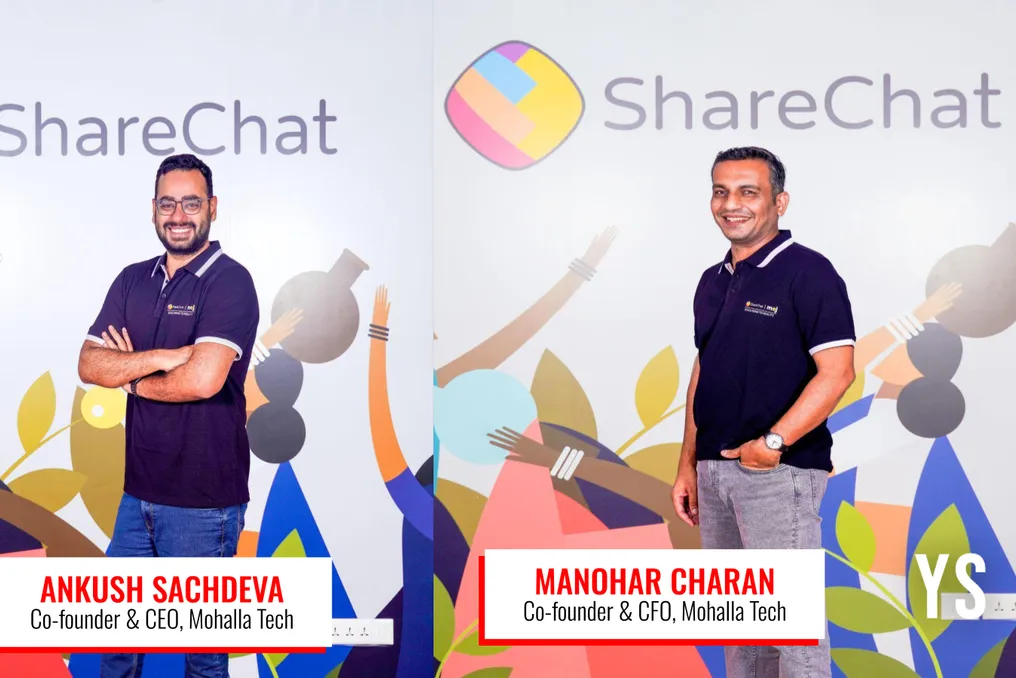
Ankush Sachdeva, co-founder and CEO of Mohalla Tech, noted that after several years of strategic discipline, the company has entered a path to profitability. He added that the goal of establishing a sustainable core business was achieved a year ago, and the company is now generating cash and funding the next stage of growth solely from its own earnings.

Although the growth in the 2026 fiscal year was supported by subscription revenue, the advertising business is also regaining momentum. Ad revenue increased by 40% year-over-year in the second quarter of the 2027 fiscal year and is expected to grow even faster during the festive season.

According to company data, daily consumption of micro-dramas has grown 6.5 times over 12 months, exceeding one billion units daily. Manohar Charan, co-founder and CFO of Mohalla Tech, emphasized that the advertising business has received a significant boost in the last two quarters, with further growth anticipated in the upcoming festive months. He also noted continuous improvement in profit margins while maintaining a strong revenue growth trajectory.

The company also reported that free, ad-supported micro-dramas have expanded their advertiser base on both the ShareChat and Moj platforms.


Similar stories

Lenskart's net profit in the second quarter of FY2027 exceeded doubling, revenue grew by 32.5%
Read more
business-standard.com

Lenskart's net profit in the second quarter of FY2027 exceeded doubling, revenue grew by 32.5%

Lenskart Solutions Limited reported a year-on-year revenue growth of 32.5%, reaching ₹2,845 crore for the quarter ending September 30, 2026. This figure is higher than the ₹2,147 crore recorded in the same period last year. Profit after tax more than doubled, amounting to ₹232 crore compared to ₹113 crore.

The profit growth is attributed to increased eyeglass sales volumes, product premiumization, and high demand in both Indian and international markets. EBITDA increased by 65.0% year-on-year, reaching ₹392 crore from ₹237 crore, while the margin expanded to 13.8% from 11.1%. This improvement reflects the growth in scale and operational efficiency supported by Lenskart's integrated business model covering brands, manufacturing, and distribution.

For the full fiscal year 2027, the company's revenue increased by 33.0% to ₹5,559 crore, and profit after tax reached ₹461 crore, equivalent to 87% of the company's profit for the full fiscal year 2026. Over the last 12 months, Lenskart's revenue surpassed the ₹10,000 crore mark.

Piyush Bansal, Chairman, Managing Director, and CEO of Lenskart, noted that a significant portion of the world's population still lacks access to vision correction, which limits people's ability to learn and develop.

Indian Domestic Market Situation

Revenue in India grew by 35.3% year-on-year, reaching ₹1,668 crore. The growth was supported by a 26.5% increase in eyeglass sales volume and growing demand for premium lenses. Growth in single-location store sales reached 20.8%, up from 14.8% the previous year, with growth observed in metro cities and Tier 1 and Tier 2 cities. Lenskart opened 143 new stores in India, including 94 in Tier 2 and Tier 2 Plus cities, and entered 61 new cities. The company's network in India now comprises 2,868 stores across 665 cities.

The company conducted 8 million eye examinations globally, a 40.4% increase compared to last year. The number of active participants in the Lenskart Gold program in India exceeded ten million, reaching 1.03 crore by the end of the quarter, a 38.6% year-on-year increase. Despite the continued weakening of the rupee, Lenskart maintained a consolidated product margin of 70.0% compared to 69.2% the previous year. In-house production of frames grew by 71.7% year-on-year, and lens manufacturing grew by 52.2%, helping to offset currency pressure and strengthen control over product quality and cost.

International Business

International revenue increased by 29.5% year-on-year, reaching ₹1,201 crore. This growth was driven by strong performance in Japan, Southeast Asia, the Middle East, and other regions. Growth was approximately 23% in constant currency terms, and eyeglass sales volume increased by 29.7%. International EBITDA rose by 86.8% to ₹127 crore, while the margin expanded to 10.6% from 7.3% the previous year. This marked the second consecutive quarter where the margin exceeded 10%, supported by scale and improved product mix.

Lenskart continued its international expansion, adding 22 new stores in the quarter, bringing its global network to 3,624 stores. Of these new stores, 12 were in Southeast Asia, three in the Middle East, two in Japan, and five in other markets.

In technology, Lenskart continues to develop vision care services using technology, making remote optometry available in 934 stores across India, up from 303 stores the previous year. Artificial intelligence is increasingly used in customer service, employee training, inventory planning, and manufacturing to enhance efficiency and improve the customer experience. During the quarter, the company expanded the availability of its smart glasses B to over 500 stores across India and online.

Lenskart's automated facility in Bhiwadi utilizes robotic manufacturing processes and AI-based quality checks to produce prescription glasses for both domestic and international markets. The company is also investing in its future facility in Hyderabad to meet future capacity needs and international growth. In the first half of FY2027, Lenskart generated ₹388 crore in operating cash flow, covering ₹187 crore in capital expenditures on stores, renovations, and remote optometry. Return on invested capital improved to 22.5% in the first half of FY2027 compared to 14.6% in FY2026, reflecting revenue growth and disciplined capital allocation. The company continues to invest in manufacturing, technology, retail, and brand building to support long-term growth.

Lodha Developers reports 28% rise in net profit in Q2 and forecasts exceeding annual profit
Read more
business-standard.com

Lodha Developers reports 28% rise in net profit in Q2 and forecasts exceeding annual profit

Lodha Developers Ltd, a Mumbai-based company, announced a significant year-on-year increase of 28.3% in its consolidated net profit, reaching INR 1013 crore. This strong first half allows the company to expect to exceed planned profit targets for the entire financial year, as stated in the report filed with the stock exchange on Friday.

The company's operating revenue also increased by 17.6% in the second quarter of the 2027 financial year, amounting to INR 4468 crore compared to INR 3798 crore in the same quarter last year.

For the first half of the financial year, Profit After Tax (PAT) grew by 63% year-on-year, reaching INR 2386 crore, which is higher than the previous year's figure.

Management Comments

Commenting on the results, Abhishek Lodha, Managing Director of Lodha, noted that this growth demonstrates the resilience and high profitability of the business. Based on the strong first-half performance, he expressed confidence that the company will easily surpass its annual profit forecast.

He also reported that preliminary sales reached INR 5037 crore, accounting for over 40% of the company's initial annual plan for the first half. Furthermore, he mentioned the successful launch of a project in North Bengaluru during this quarter.

Lodha emphasized that this market reaction confirms the high demand for the quality Lodha brand and helps dispel concerns regarding the impact of AI-induced disruptions on segments other than affordable housing.

The company plans to launch a project in the National Capital Region (NCR) during the festive season and has plans for further launches in new locations. Lodha also believes that the rental business can grow exponentially due to the construction of data centers and AI infrastructure. He forecasts a tenfold increase in annuity income, from the current INR 300 crore to INR 3000 crore by the 2032 financial year.

In response to concerns about rising interest rates, Lodha stated that they are unlikely to have a direct impact on housing demand in the segments served by the company, although the company continues to closely monitor secondary risks. Abhishek Lodha added that the company remains concerned about the ongoing conflict in the Middle East and is carefully tracking its geopolitical and macroeconomic consequences.

As of September 30, 2026, the company's net debt stood at INR 5279 crore, and the net debt to equity ratio remained stable at 0.2x, significantly below the set limit of 0.5x.

PB Fintech's net profit grew by 43% in the second quarter of fiscal year 27
Read more
yourstory.com

PB Fintech's net profit grew by 43% in the second quarter of fiscal year 27

PB Fintech, the parent company of the digital insurance platform Policybazaar and the credit aggregator Paisabazaar, reported a 42.5% increase in net profit in the second quarter of fiscal year 27. During the same period, the company's revenue increased by 35%.

In the second quarter of fiscal year 27, PB Fintech recorded a net profit of 192.4 crore rupees, compared to 135 crore rupees in the same period last fiscal year. Revenue for the second quarter amounted to 2177.7 crore rupees.

According to the company's data, the total volume of insurance premiums collected in the second quarter reached 9385 crore rupees, demonstrating a year-on-year (YoY) growth of 38%. The core online insurance business grew by 42% year-on-year, and new medical insurance premiums increased by 46% year-on-year. PB Fintech's total loan disbursement in the second quarter was 4739 crore rupees.

The company has about 5.5 lakh insurance consultants, whose numbers increased by 1.3 lakh during the quarter. These distributors helped expand access to insurance in small towns and villages, accounting for 76 percent of the total gross premium volume for the quarter.

These results were achieved against the backdrop of the Insurance Regulatory and Development Authority of India's (IRDAI) proposal to reduce commissions received by insurance agents, which could potentially affect PB Fintech's overall growth trajectory.

Utilizing artificial intelligence (AI) in its operations, the company stated that it processes 10 crore customer interactions daily. Approximately 21 lakh calls are processed daily entirely through AI, with call duration exceeding 60 seconds across 7 Indian languages. Thanks to AI, the company conducts 17 lakh minutes of conversations daily with eight times deeper analysis. Furthermore, the company processes seven lakh documents per day, leading to a saving of 1000 hours daily.

The changes driven by AI have led to an increase in the productivity of insurance consultants by more than 15% through AI-driven intent calls and a 20% improvement in conversion.

Popular