Mozambique installs eight gas supply points for transport in response to fuel crisis
Read more
Noticias ao Minuto
noticiasaominuto.com

Mozambique installs eight gas supply points for transport in response to fuel crisis

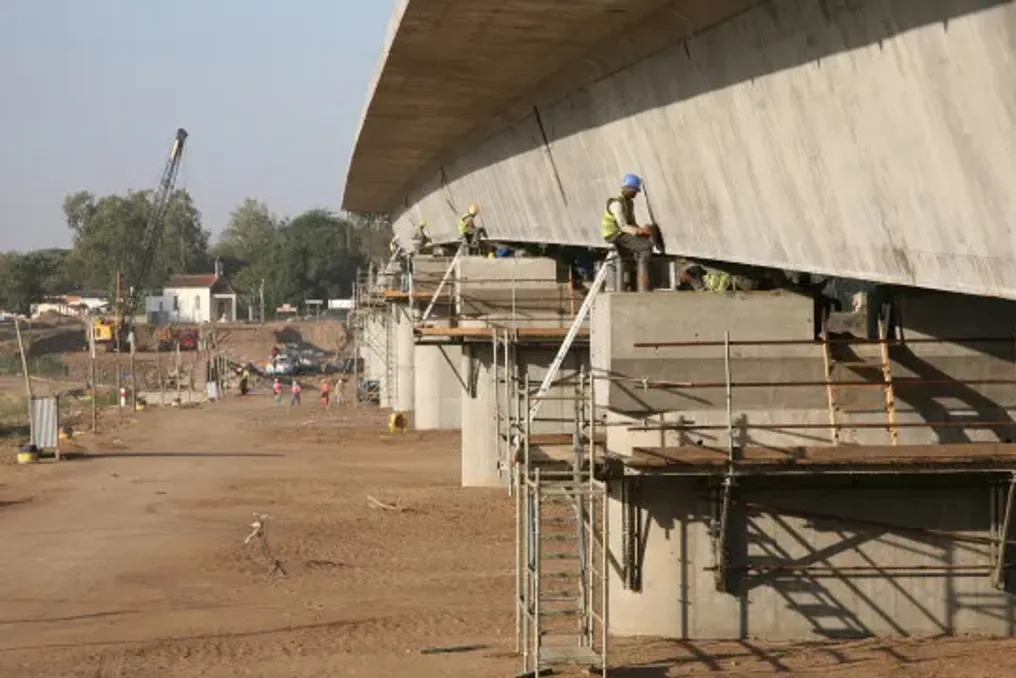
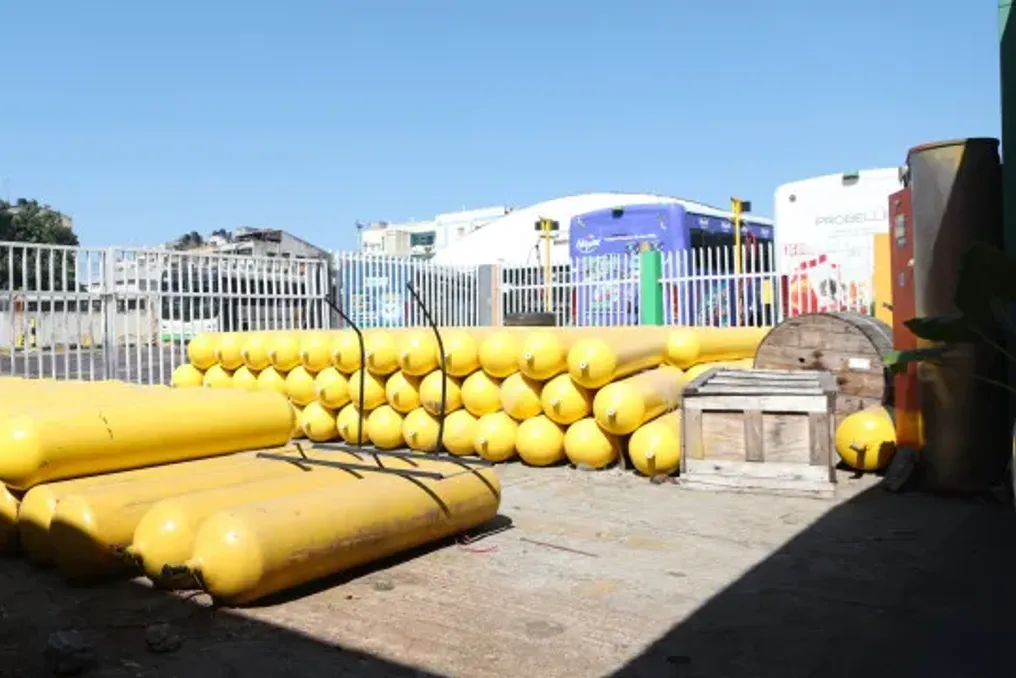
The Government of Mozambique has announced plans to install eight natural gas supply points for vehicles across three southern provinces of the country as a response to the current fuel crisis. These points are scheduled to become operational by 2027.

The Minister of Natural Resources and Energy, Estevão Pale, stated that the government is advancing expanded access to natural gas for transport through a structured program that includes funding for the expansion of gas supply infrastructure. Currently, three new points are being installed in Maputo city and provinces, two in Gaza province, and three in Inhambane province.

Responding to parliamentary questions regarding the fuel crisis, the head of government emphasized that the executive branch is already working on establishing these points in three southern provinces of Mozambique, which are set to operate in 2027. The Minister also noted that the government is focusing on increasing the use of natural gas buses in public transport to diversify energy sources in the transport sector, but clarified that these alternatives do not immediately resolve existing supply issues.

The government acknowledged that the fuel shortage negatively affects households, including the transport and agricultural sectors. Consequently, measures have been taken, such as a temporary ban on re-exporting fuel intended for domestic consumption, while maintaining regular transit to other countries.

Furthermore, the operational capacity of the company Petromoc has been strengthened, enabling it to supply additional volumes of fuel and service retail operators regardless of prior contracts with other distributors. The Energy Minister added that refueling operations are also being intensified at all terminals in the country—Maputo, Beira, Nacala, and Pemba—with the possibility of extending operating hours and conducting Saturday operations if necessary to accelerate product distribution.

Between April and May, the scarcity of gasoline and diesel fuel caused queues of dozens of vehicles, necessitating an increased presence of the Operational Police Group (UIR) at fuel stations that had fuel to ensure safety and control over the flow of drivers, motorcyclists, and consumers with containers.

At that time, the government attributed some difficulties to the impact of the Middle East conflict on international energy markets and supply chains, explaining that about 80% of the fuel imported by Mozambique originated from this region and passed through the Strait of Hormuz. Concurrently, the Bank of Mozambique recognized difficulties in accessing currency to finance fuel imports due to alleged shortcomings in some sector companies.

Data from the central bank shows that in the first quarter of 2026, Mozambique spent $236.4 million (203.5 million euros) on fuel imports, which was 1.4% less than $239.6 million (206.3 million euros) during the same period the previous year. In response to the consequences of the supply crisis and rising global prices, the government decided in May to increase administrative fuel prices, leading to a 45.5% increase in diesel fuel prices and a 12.1% increase in gasoline prices.
Similar stories

Mozambique could export over 35 million tons of natural gas per year
Read more
noticiasaominuto.com

Mozambique could export over 35 million tons of natural gas per year

The President of Mozambique stated that the country potentially could achieve liquefied natural gas (LNG) export capacity exceeding 35 million tons annually in the coming years, thereby strengthening its position in the international market.

Speaking at the 8th summit of heads of state and government of the Gas Exporting Countries Forum (GECF) in Moscow, Russia, Daniel Chapo noted that projects under development in the Rovuma Basin off the coast of Cabo Delgado province in the north of the country should establish Mozambique as one of the rising players in the global energy sector.

He emphasized: 'When these facilities are fully operational in the coming years, Mozambique will be able to reach an export capacity of over 35 million tons of LNG per year, becoming one of the significant producers in the international market.'

The President recalled that when Mozambique joined GECF as an observer in 2022, the country was preparing to start exporting LNG from the Rovuma Basin. He added: 'Today, Mozambican gas is already reaching international markets, contributing to the diversification of supply sources and global energy security.'

In his speech, Chapo advocated the idea that the use of natural resources should serve not only exports but also internal economic transformation. He stated: 'We want the gas coming from the depths of our land and sea to be turned into energy that lights up Mozambique, bringing light to our schools and medical institutions, producing fertilizers that strengthen agriculture, and creating jobs for our youth and women.'

The head of state reported that the country is promoting a 'paradigm shift,' moving from a resource extraction-based economy to a model focused on value addition, industrialization, and economic sovereignty.

He also believed that the gas industry should bring direct benefits to the population through job creation, technology transfer, and business development. Daniel Chapo drew attention to the expansion of electricity access, noting that national coverage has grown from 30% in 2018 to 70% currently, while maintaining the goal of achieving universal access by 2030.

The President also advocated for a 'just, balanced, and inclusive energy transition,' arguing that international financing mechanisms must take into account the different levels of development of countries and allow for the responsible use of natural gas in addition to renewable energy sources.

To the members of GECF, Chapo proposed four priorities for the future sector: 'a more stable and predictable international gas market,' technology transfer and human resource training, investments supporting local resource processing, and an energy transition that combines environmental protection and economic development.

Mozambique has three approved natural gas exploration projects in the Rovuma Basin, which are classified as some of the largest discoveries in the world in recent decades.

Mozambique plans to complete 10 electrification projects by 2027
Read more
noticiasaominuto.com

Mozambique plans to complete 10 electrification projects by 2027

Mozambique's National Energy Fund (Funae) intends to complete ten electrification projects by the end of the first half of 2027. This decision was made after resource availability constraints affected the implementation of construction work and infrastructure maintenance.

The Chairman of Funae's Board of Directors, Mati Gondola, stated that the institution is reviewing priorities. The focus is now on projects with completion levels ranging from 60% to 70%. Additionally, another 12 projects, currently at 30% to 40% completion, are scheduled to be finished by the end of 2027.

Fundo de Energia is a state organization of Mozambique responsible for financing and implementing energy projects, particularly those aimed at expanding electricity access in rural areas. These projects include small stations, including solar ones, that operate off the national grid.

Gondola specified that the ten projects refer to those whose implementation is between 60% and 70% complete. Among the twelve projects at 30%-40% completion is the Lúrio project, located in Nampula province, northern Mozambique, where civil construction still needs to be finalized. According to Gondola, Funae already has the necessary funds, but a contract review with the contractor is underway due to disagreements over the cost of resuming work.

"But what is guaranteed is that we will electrify Lúrio. It is on our list of urgent tasks," the head stated, adding that a team will go to the site to assess the situation and ensure the project's completion.

Funae is also prioritizing the restoration of power plants that have been out of service due to breakdowns and have not supplied energy for two or three years. Restoring this infrastructure is part of Mozambique's efforts to increase electricity access, especially in rural areas and communities far from the main grid.

In October, the national director of energy, Marcelina Mataveia, pointed to demographic dispersion, vast territory, and financial limitations as major obstacles to expanding energy access. According to data from the Ministry of Mineral Resources and Energy, Mozambique has reached an energy access level of 66.9%, of which 57.9 percentage points belong to the traditional grid, and nine percentage points to off-grid solutions.

Previously, Funae presented the National Program for Accelerating Electrification through Mini-grids (Promir), which involves installing 363 such facilities across the country with estimated investments of $250 million. Funding for 148 of these facilities is secured in the provinces of Nampula and Niassa in northern Mozambique, as well as Zambezia and Tete in the center.

The institution continues to evaluate projects where grid installation has advanced, but civil works are behind schedule. Funae recognizes the possibility of either renewing existing contracts or issuing new tenders to complete the infrastructure, depending on the specific case.

"First and foremost, finding resources. So that we can resume our activities," Gondola noted, speaking about mobilizing funding to restore installations and complete current projects.

In September, Mozambican President Daniel Chapo announced the creation of a coalition to attract 966.5 million euros designated for off-grid electrification, as part of the goal of universal energy access by 2030. The government plans to achieve approximately 2.5 million off-grid connections to meet this goal.

Mozambique will direct gas revenues to develop roads, schools, and hospitals
Read more
noticiasaominuto.com

Mozambique will direct gas revenues to develop roads, schools, and hospitals

The Government of Mozambique plans to allocate 3.071 billion meticais (42.6 million euros) from liquefied natural gas (LNG) revenues in 2027 to implement projects in the fields of infrastructure, education, healthcare, energy, and transport, including the construction of a new parliamentary capital.

According to data collected by Lusa based on the Economic and Social Plan and State Budget (PESOE) for 2027, this allocation of funds is due to the application of Law No. 1/2024. This law mandates that 60% of LNG revenues be directed to the State Budget through the Unified Treasury Account, while the remaining 40% goes to the Sovereign Fund of Mozambique.

The document notes that out of the total state revenues planned for 2027, 3.071 billion meticais are expected to come from LNG extraction. These resources will be used to finance 'structuring projects in areas such as infrastructure, agriculture, renewable energy, and industry, with an impact on improving living conditions.'

The largest share of gas revenues will be allocated to the Ministry of Transport and Logistics for the rehabilitation of National Road Number One (EN1), which is the country's main road corridor. 1.116.9 billion meticais (15.5 million euros) are earmarked for this work, accounting for more than a third of all LNG resources budgeted for 2027.

The second largest allocation is designated for the Ministry of Education and Culture for the construction, reconstruction, and equipping of schools, amounting to 579.7 million meticais (eight million euros).

Furthermore, the document provides for the allocation of 500 million meticais (6.9 million euros) for the construction of the future Parliamentary Capital in Zambezia province, in the central part of the country, through the Office of Reforms and Structuring Projects.

For the healthcare sector, the government plans to use 411.3 million meticais (5.7 million euros) from gas revenues. Of this amount, 295.5 million meticais (4.1 million euros) will go towards equipping and ensuring the functioning of district hospitals, and 115.8 million meticais (1.6 million euros) will be directed to the construction, reconstruction, and equipping of hospitals and sanitary facilities.

The water resources sector will receive 240.6 million meticais (3.3 million euros) for the construction of dams and reservoirs through the Regional Water Resources Directorate of Central and North.

The Mozambican tax authority will receive 116 million meticais (1.6 million euros) for the modernization and construction of tax and collection points. The Ministry of Mineral Resources and Energy anticipates two projects funded by gas revenues: the construction of gas fuel stations and the installation of natural gas components in existing fuel facilities, totaling 52.9 million meticais (734 thousand euros).

An additional 54.2 million meticais (752 thousand euros) has been allocated for the continuation of electrification of administrative centers. The proposal also includes another 10 million meticais (139 thousand euros) for the construction of the Muera dam through the Ministry of Public Works, Housing and Water Resources.

The direct use of gas revenues is part of a mechanism approved in 2024 for dividing the revenues from LNG project operations, during a period when the government seeks to convert part of natural resource revenues into long-term state investments.

Popular