The administration of the Tashkent Region reported that a delegation from Uzbekistan made a working trip to Belarus with the aim of strengthening bilateral cooperation and increasing trade and economic relations. The delegation was headed by regional governor Zoir Mirzaev.
At the beginning of the visit, Mirzaev met with Uzbek citizens working in Belarus. They discussed working conditions, as well as plans and issues causing them concern. Furthermore, the delegation familiarized itself with investment projects being implemented by Uzbek entrepreneurs in Belarus.
Subsequently, the delegation visited the Minsk Automobile Plant (MAZ), where it studied the company's production processes. During discussions with the plant management, led by General Director Valery Ivankovich, the parties spoke about industrial partnership, localization of specialized vehicle production, updating public transport fleets, and implementing joint investment projects.
Mirzaev emphasized MAZ's activities in the Uzbek market and proposed expanding cooperation through new production projects in the Tashkent Region and utilizing existing industrial capacities. According to the regional administration, the 'Nurafshon Special Technique' enterprise in Nurafshon could be used for assembling municipal and specialized vehicles on MAZ chassis. Potential localization areas mentioned included garbage trucks, tankers, and cranes based on trucks.
Another proposed area of cooperation is the modernization of passenger and cargo transport fleets in the region's cities. The Uzbek side suggested considering options for supplying buses and trucks using installment plans over several years or through leasing, depending on the region's needs. The regional administration noted that this approach would allow for gradual modernization of transport infrastructure while reducing the financial burden on transport companies.
The parties also discussed establishing a service center for MAZ equipment and a spare parts warehouse in the Tashkent Region. Other proposals included manufacturing vehicle body elements and various metal products at local enterprises, as well as training technical specialists, exchanging engineering experience, and improving personnel qualifications.
Mirzaev stated that interaction with MAZ is critically important for diversifying the region's industry, increasing local production, attracting investment, and expanding high value-added product output. MAZ is one of Belarus's major industrial enterprises, producing heavy trucks, buses, trolleybuses, municipal and specialized vehicles, as well as chassis for special equipment, modern buses, and electric transport.
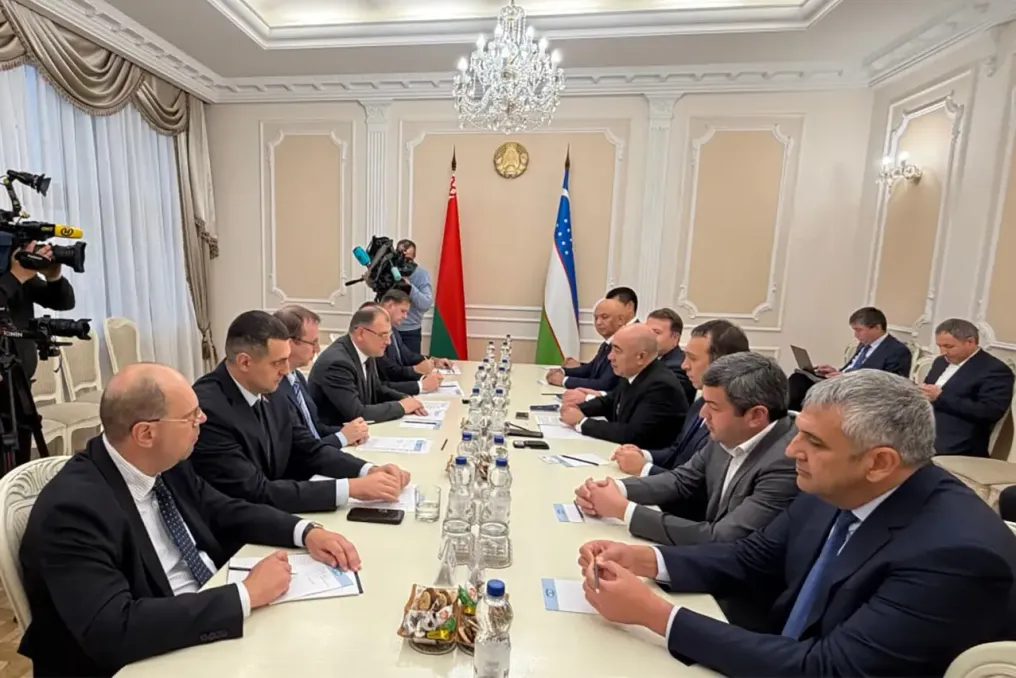
During the visit, Mirzaev also met with Deputy Prime Minister of Belarus Viktor Karankevich, who oversees the industries of industry, energy, forestry, and science in the government. Karankevich welcomed the delegation from the Tashkent Region. The parties stressed that friendly and trusting relations between the leaders of the two countries are important for expanding mutually beneficial cooperation, strengthening economic ties between regions, and implementing joint projects.
The dialogues focused on expanding industrial interaction in line with the economic potential of the Tashkent Region and establishing closer ties between production enterprises. Investment attraction and experience exchange were also discussed. Participants emphasized the significance of developing cooperation in areas of mutual benefit, effective utilization of existing opportunities, and turning new initiatives into practical results.