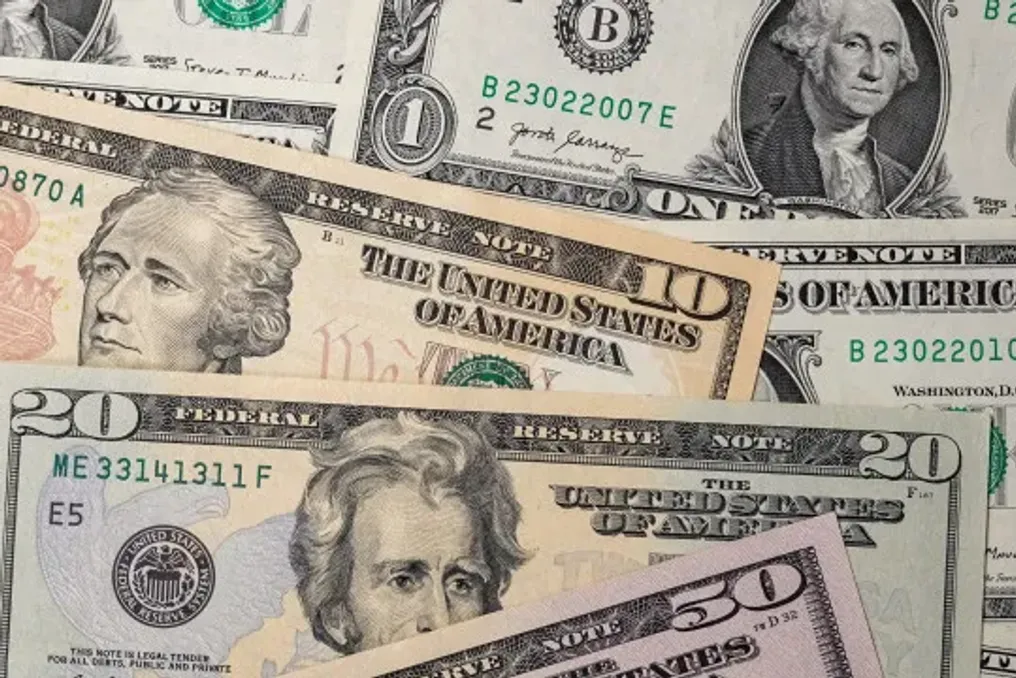
Dollar retreats amid Democratic gains, while Asian stock markets fall after US elections
Read more
Noticias ao Minuto
noticiasaominuto.com

Dollar retreats amid Democratic gains, while Asian stock markets fall after US elections

The US dollar retreated against major currencies, and Asian markets registered declines, driven by the Democratic party's advances in the initial results of the midterm elections held on Tuesday in the United States. These results have intensified concerns about possible political deadlocks.

Around 02:30 today, in Lisbon, the US dollar lost 0.41% against the euro, reaching 0.89 cents, and fell 0.65% against the Japanese currency, reaching 157.65 yen.

Simultaneously, on the Tokyo Stock Exchange, the main index of Japan's capital, the Nikkei, was down almost 3.6%. In Seoul, the capital of South Korea, the Kospi index showed a decline of 0.97%. In China, the main indicator of the Hong Kong Stock Exchange lost 0.24%, and in Shanghai, the Chinese financial capital, the SSE Composite Index, receded by 0.22%.

The voting assemblies in half of the American states have already closed, initiating the counting of the midterm elections, where the Democratic and Republican parties compete for control of Congress.

The first data from Tuesday's vote suggests a superior performance by the Democratic opposition in both the House and the Senate of the US parliament, when compared to the 2024 elections.

It is estimated that more than 250 million voters are eligible to participate in these midterm elections, aiming to renew the 435 seats of the House of Representatives and approximately one-third of the Senate (33 of 100 seats), in addition to two seats in the upper house representing Florida and Ohio.

The outcomes of these elections will determine the final two years of the administration of Republican President Donald Trump. More than 60 million American citizens have already voted early, a number that exceeds the figure recorded in the 2022 midterm elections by almost 15 million.

Similar stories

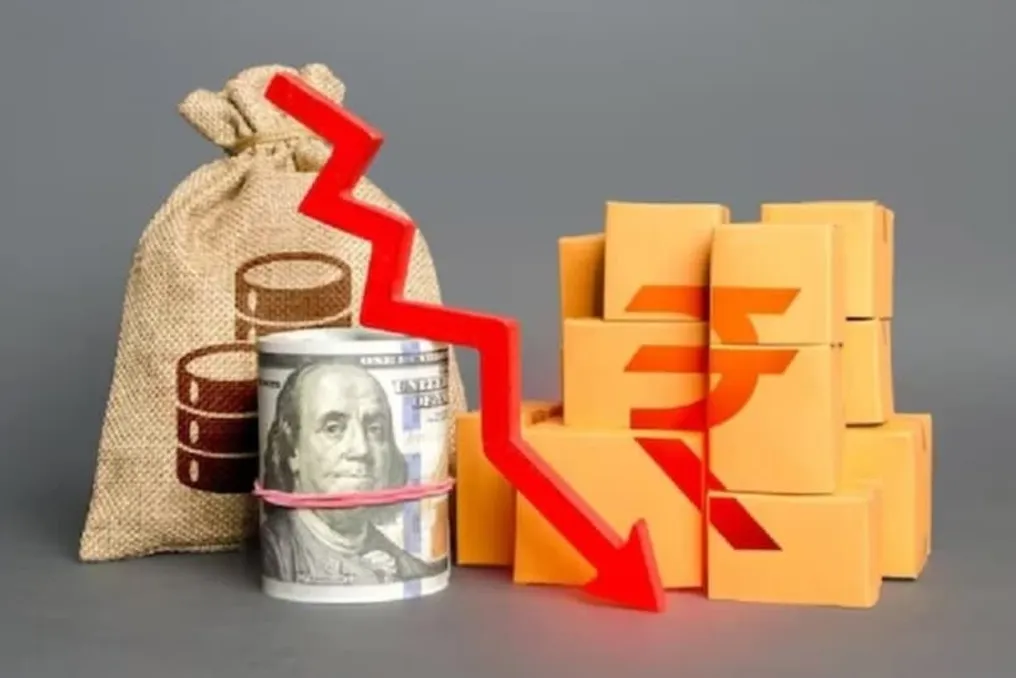
Experts predict significant weakening of the Indian Rupee against the US Dollar
Read more
www.aajtak.in

Experts predict significant weakening of the Indian Rupee against the US Dollar

Following a period of strengthening, the Indian currency, the rupee, has faced a serious warning that raises concerns for the Indian economy. Analysts from Axis Bank Research suggest that the rupee could significantly depreciate against the US dollar.

According to the forecasts, by December next year, the rupee could fall to the level of 102 against the US dollar. If these predictions materialize, it will have a substantial impact on the economy. Experts are also examining how this currency depreciation will occur.

The report presented by Axis Bank Research contains a forecast suggesting that by December 2027, the rupee could decline to ₹102 against the US dollar. However, the decline will not stop there; by the last month of 2028, the rupee could weaken to 106 against the dollar.

In its report published on Tuesday in The Middle (Kingdom) Path, Axis Bank Research confirmed its initial assessments, forecasting the USD/INR exchange rate in the range of 97–99 by March 2027 and 98–100 by June 2027.

The report explains the reasons for the expected weakening of the rupee. It indicates that the recent recovery of the Indian currency may only provide temporary relief, as structural pressure from the external sector, capital outflow, and the need to replenish foreign exchange reserves continue to put pressure on the rupee. Specialists expressed serious concern about the pressure on India's external financial positions.

It is noted that despite attempts by the central bank to stabilize rupee fluctuations, constant intervention by the RBI has led to a reduction in effective foreign exchange reserves. Consequently, replenishing these reserves remains a priority, which limits the potential for a strong rupee appreciation even with an improvement in foreign capital inflow. The report also highlights outflows of approximately $2–3 billion monthly under the Liberalised Remittance Scheme and about $3 billion from foreign direct investment.

Despite the long-term pessimistic outlook, the Indian rupee showed signs of recovery last week. Against the dollar, it strengthened by 37 points due to improved portfolio investments from the US, lower yields on US treasury bonds, and support from a stable dollar. Data from NSDL shows that the net inflow of portfolio investments last week was about $2 billion. Furthermore, the 10-year yield on US treasury bonds decreased to approximately 4.9%, reducing pressure on emerging market currencies. There was also a softening in crude oil prices, with Brent Crude reaching $105 per barrel.

Currency depreciation in any country negatively affects its economy. In the case of the Indian rupee, a decrease in its value makes all dollar-related expenses, such as importing crude oil and goods, more expensive. Rising oil prices increase the risk of inflation in the country. Additionally, studying abroad, international travel, and imported goods require more rupees.

For example, education expenses of $50,000 at an exchange rate of ₹95 per dollar would cost ₹47.5 million. However, if the rupee reaches the forecasted 102 to the dollar by December 2027, this amount will rise to ₹51 million, representing additional costs of ₹3.5 million. Since India imports most of its crude oil and pays for it in dollars, the rupee's weakening will lead to a significant increase in import costs, which could cause a rise in gasoline and diesel prices in the country. The increased cost of diesel, in particular, will raise the cost of transporting necessary goods and intensify inflationary pressure in the country.

GIFT Nifty signals negative opening for Nifty 50; Asian markets trade in the red; Brent crude holds at $115
Read more
business-standard.com

GIFT Nifty signals negative opening for Nifty 50; Asian markets trade in the red; Brent crude holds at $115

According to data from October 26, 2026, the GIFT Nifty indicated a possible negative opening for the Nifty 50 index, reflecting weakness in Asian and American markets. Oil prices fell by more than one percent but remained elevated, reaching the $115 per barrel mark. Meanwhile, GIFT Nifty was recorded at 22,601.5, showing a decline of 6.5 points.

Asian markets traded predominantly in a downtrend as oil prices remained high amid tensions in West Asia. Japan's Nikkei 225 and South Korea's Kospi indices showed declines of 0.34% and 1.25%, respectively. Overnight, the Dow Jones and S&P 500 closed lower by 1.23% and 0.52%, while the Nasdaq Composite finished the session 0.21% lower.

Crude oil prices slightly decreased but maintained the $115 per barrel level. It is worth noting that Brent crude reached a six-month high last week before falling by 1.39% to $115.1 on Monday. Meanwhile, WTI crude traded 1.76% lower, at $101.5. Gold futures fell by 0.30%, and silver futures showed a drop of 0.39%.

Second Quarter Company Earnings

On the day of publication, earnings reports are scheduled for several companies, including Mankind Pharma, REC, Paytm, Tata Consumer Products, Ather Energy, and ITC Hotels. Additionally, the Initial Public Offering (IPO) of EAAA India Alternatives has begun, which will open for applications on October 26 and close on October 28. This company plans to raise 1,200 crore rupees from the primary market.

Profit decline exacerbates Chinese stock market crash, losing $3.5 trillion
Read more
business-standard.com

Profit decline exacerbates Chinese stock market crash, losing $3.5 trillion

The Chinese stock market, the second largest in the world, has lost $3.5 trillion from its peak in May, according to data collected by Bloomberg. The downturn intensified last week, pushing the CSI 300 index on the mainland exchange into a bear market, and causing the Hong Kong technology sector index to erase all gains made since Beijing introduced a massive growth support package two years ago.

The primary reason for investor pessimism is the growing realization that prolonged consumption slump and downward pricing trends among businesses are putting increasing pressure on profits across all sectors—from banks to electric vehicle manufacturers and artificial intelligence model developers. This situation is worsened by the growing belief that Chinese leaders are not rushing to stimulate an economy that is slowing down, but doing so at an acceptable pace.

Ulrich Urban, Head of Multi-Asset Strategic Analysis and Research at Berenberg, noted: 'It is too early to conclude that the worst is behind us. The main problem remains profitability: China's strength in manufacturing and exports is not consistently translating into higher domestic demand, pricing power, or corporate profits.'

The third-quarter earnings season started poorly: battery giant Contemporary Amperex Technology Co. Ltd. (CATL) reported missing profit forecasts, which is symptomatic of both weak demand and fierce competition. According to Bloomberg data, consensus profit forecasts for MSCI China index members for 2026 have dropped by more than 4% since late March. The Hang Seng Tech Index, dominated by Chinese internet companies involved in e-commerce price wars, saw profit forecast declines of over 13% during this period.

Nevertheless, MSCI China constituents that released results missed consensus estimates by an average of 9%, marking the second worst quarterly performance in two years, according to Bloomberg calculations. Among them, AI infrastructure builder China Mobile Ltd. recorded an 8% year-on-year drop in net profit from January to September due to cost pressures, while major raw material company Ganfeng Lithium Group Co. also failed to meet expectations due to falling prices.

Jason Lemire, Chief Investment Officer at Bold Wealth Partners, commented on the CATL situation: 'CATL is a prime example of what is happening: an excellent innovative company that does wonderful things but is a victim of brutal competition and margin compression. Competition in China is encouraged and is generally harsh, rather than shareholder-friendly.'

Popular