The state of Tocantins accumulated exports exceeding R$ 13 billion in the period from January to September 2026. This amount represents a 3% increase compared to the same period last year. Regarding imports, there was a growth of 17.9%, totaling more than R$ 1.5 billion.
The data was compiled by the Federation of Industries of Tocantins (Fieto), with the values presented after converting the US dollar to the real, using the exchange rate valid on Friday, the 23rd.
Leadership of Soy and Beef
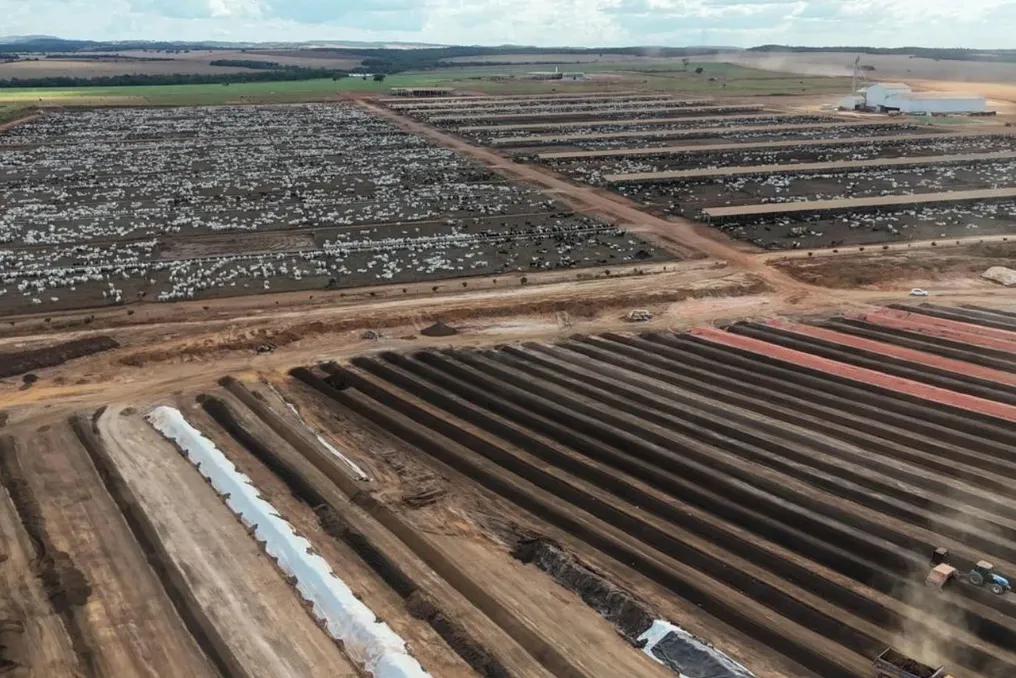
Soy has established itself as the main item in Tocantins' export agenda, accounting for 56.6% of the total value sent out of the country. Beef occupies the second position, contributing 16.6% of this value.
Thiago Amorim, director of livestock at Motta Agropecuária, highlighted that the state is consolidating itself as a reference in animal protein exports, competing equally with the main producing regions in Brazil. He emphasized that the Chinese market is the main buyer due to high demand, and mentioned that there are facilities capable of serving the United States, Chile, Russia, Egypt, and Indonesia.
According to the Brazilian Institute of Geography and Statistics (IBGE), Tocantins ranks ninth in the ranking of the largest beef production in the country. According to Thiago, Tocantins' potential for prominence may increase as economic development advances. He suggested that it would be more advantageous to send processed or packaged meat instead of live animals, aiming to add value to the exported product and promote the professionalization and verticalization of local livestock farming.
Nationally, Tocantins is in 15th place among exporting states and 22nd place in terms of imports. Within the North Region, the state is the third largest exporter, trailing only Pará and Rondônia.
Main Trade Partner: China
Thiago Facco, Vice President of Aprosoja Tocantins, emphasized that ensuring sustainable production is essential for achieving success and credibility in foreign trade. He stated that Brazilian soy, including Tocantins' soy, is considered one of the most sustainable globally, an achievement made possible by the local climate.
Although the state showed growth above the national average in planted area, Thiago Facco warned that growth in 2026 might be modest or even nonexistent due to concerns about climatic instability and the El Niño phenomenon.
China remains the most important trade partner for Tocantins, responsible for more than half of the total export value between January and September this year, according to Fieto data. This country also led Tocantins' import ranking, representing 21.4% of the total. Other important countries include the United States, Canada, Turkmenistan, and Venezuela, which together accounted for 66.2% of the state's imports during the period.
Amorim added that production and exports are aligned, and there is an expectation of a good harvest despite climatic risks. He observed that demand has warmed up again, especially from Asian markets like China, and that Brazilian soy is well-received internationally.
Logistical Challenges
Being located in the Matopiba region, Tocantins lacks its own port system, which implies that logistics for producers can become more expensive compared to competing states. Thiago pointed out that this situation reduces Tocantins' competitiveness, since the price of its soy is slightly lower than that of soy produced in Maranhão or Piauí, due to the distance from ports and logistical costs.
Among the municipalities with the highest performance, Porto Nacional led exports with 20.93%, followed by Santa Rosa do Tocantins (10.84%), Almas (8.77%), Campos Lindos (8.21%), and Araguaína (7.11%). In the import sector, Palmas was the most relevant municipality with 29.77%, followed by Palmeirante (26.95%), Miranorte (10.17%), Lagoa da Confusão (9.56%), and Gurupi (5.65%). Although Palmas is not among the top five exporters, it registered 6.62% of the state's external sales, exceeding R$ 821 million.