HongYun Company Releases HyperLM V2.5 with Support for Huawei Ascend 950DT and Atlas 850E SuperPoD
Read more
Pandaily
pandaily.com

HongYun Company Releases HyperLM V2.5 with Support for Huawei Ascend 950DT and Atlas 850E SuperPoD

Beijing-based AI company HongYun has unveiled HyperLM V2.5, a new version of its platform for combined training and inference of large models. This was reported by IT Home and ifeng Tech on November 3rd. The company claims to be the first to achieve deep adaptation to the Huawei Ascend 950DT chip, full compatibility with the air-cooled Atlas 850E SuperPoD system, and successful technical certification from Huawei for Ascend Native.

HongYun believes that defining support is often too vague, where a model is only considered supported after installation and token generation. The company aims to assist government and enterprise clients using private deployments in achieving maximum performance from new accelerators.

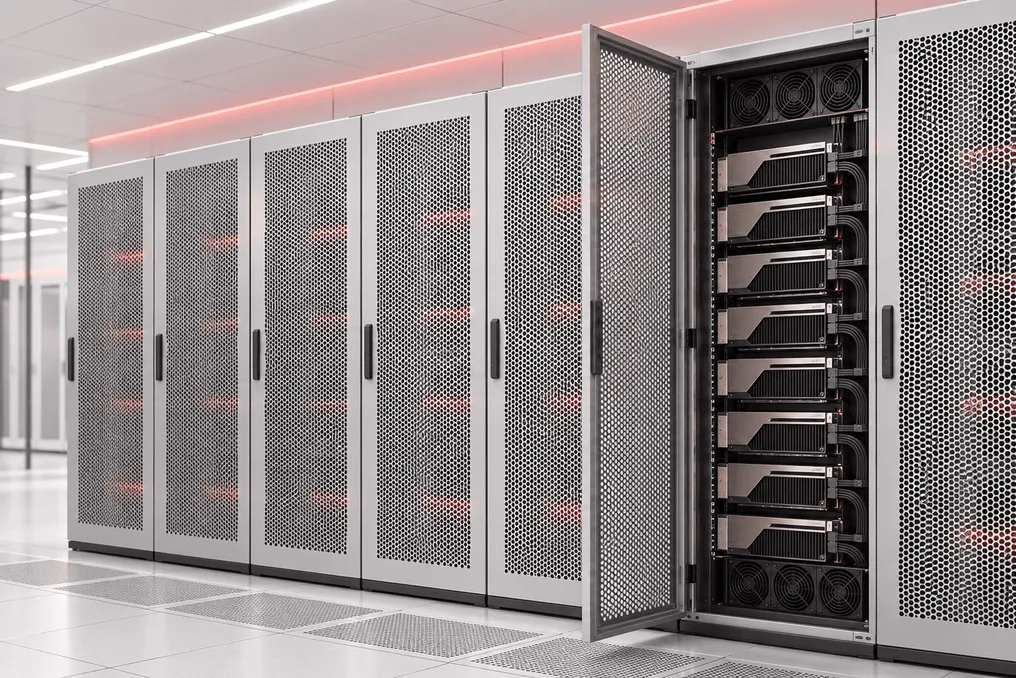
The company describes the Ascend 950DT as a flagship chip for high-throughput tasks such as extended chat interactions, processing long documents, and continuous agent reasoning. Furthermore, it is noted that the air-cooled Atlas 850E system can be integrated into existing data centers without requiring infrastructure upgrades.

HyperLM V2.5 adapts at multiple levels. At the interconnect level, the platform supports Huawei's UnifiedBus 2.0 technology, which provides a system interconnect bandwidth of 13.4 TB/s, preventing bottlenecks during traffic transfer between cards—a crucial factor for long contexts or splitting prefill and decoding stages. At the operator level, the system is optimized for mxFP4 inference, enabling 14.2 PFLOPS per node.

The platform supports the latest open-source models, including Qwen, GLM, and DeepSeek, and its scheduler has been rebuilt considering the memory profile and throughput of the 950DT.

The release of HyperLM V2.5 includes five new features. Prefill and decoding splitting allows the two stages to be isolated into independent resource pools so they do not compete during peak loads. Multi-level KV caching reuses system prompts, frequently encountered contexts, and fixed session templates to reduce redundant computations. vNPU virtualization segments the Ascend 950DT, 910C, and 910B chips, providing granular quotas and isolation for AI Core computation and HBM memory, and also supports hot migration and automatic rescheduling upon hardware failure.

A unified gateway model, compatible with the OpenAI protocol, has also been added, which manages routing, rate limiting, beta releases, and A/B testing. Comprehensive monitoring across the entire stack tracks load, memory usage, throughput, latency, and QPS, providing alerts and automated fault localization.

For regulated industries such as government administration, energy, transportation, and finance, the platform provides role separation for administrator, security officer, and auditor, multi-level classification control, complete operation logs, and tracking of computational resources, model call audits, and usage statistics per project.

HongYun was incubated by the Western Institute of Computing Technology of the Chinese Academy of Sciences, and its core team consists of employees from the Institute of Computing Technology and Sugon. In 2020, the company joined Huawei's Ascend partnership program. The company plans to continue development based on Ascend and Hygon DCU hardware, focusing particularly on heterogeneous scheduling, inference acceleration, caching, and agent applications.


Similar stories

DeepSeek plans to train V5 model on Huawei Ascend chips
Read more
technode.com

DeepSeek plans to train V5 model on Huawei Ascend chips

According to a report by STAR Market Daily on November 3rd, DeepSeek intends to use Huawei Ascend chips to train its next-generation model, V5. This plan, reported by several industry sources, suggests an expansion of the role of Ascend chips.

Previously, Ascend chips were primarily used for performing inference operations of DeepSeek models. However, their application in training V5 will be another step in integrating Chinese AI hardware into DeepSeek's infrastructure. This follows previous efforts by the company to adapt its software for domestic processors.

Huawei Cloud discontinues support for openPangu-2.0 models on MaaS platform and recommends alternatives
Read more
pandaily.com

Huawei Cloud discontinues support for openPangu-2.0 models on MaaS platform and recommends alternatives

Huawei Cloud has announced plans to decommission the openPangu-2.0-Flash and openPangu-2.0-Pro model services on its MaaS (Model as a Service) platform. According to the model deprecation notice, these services will stop being sold on November 6th Beijing time and will be completely disabled on November 30th.

IT Home reported this notice, which was published on the Huawei Cloud support website on November 3rd. As part of the schedule, new users will be unable to purchase or activate the specified services after November 6th, but existing customers will retain the ability to use them until the end of the month. After November 30th, access to both models will be closed for both new and existing users. The notice lists these services in the CN Southwest-Guiyang1 Huawei Cloud region.

The company offers recommended replacements for each model. Users of openPangu-2.0-Flash version 20260630 are advised to switch to DeepSeek-V4.1-Flash-1017, while users of openPangu-2.0-Pro version 20260730 are directed to Zhipu's GLM-5.3. Huawei Cloud emphasizes that the models differ in capabilities, API parameters, pricing, and real-world performance, and advises customers to review the documentation and conduct their own assessment before switching.

The migration guide indicates that customers using the standard MaaS V1 API will need to switch to an OpenAI-compatible endpoint, whereas those already using API V2 or an OpenAI-compatible interface only need to change the model parameter.

According to IT Home, Huawei Cloud plans to release a new generation of openPangu models incrementally but has not yet disclosed their names or timelines. These two models were among Huawei's largest open releases this year: openPangu-2.0-Flash with 92 billion parameters was released at the end of June, and the sparse openPangu-2.0-Pro model with 505 billion parameters, trained on Ascend NPUs, was released at the end of July. In September, Huawei also released code for pre-training, controlled fine-tuning, and reinforcement learning for this series. However, the deprecation notice applies only to hosted MaaS services and does not affect open releases.

Model changes on the platform happen frequently. In the same bulletin, Huawei Cloud scheduled the decommissioning of GLM-5.1 on November 16th, replacing it with GLM-5.3, and is also migrating users from DeepSeek-V4-Flash to DeepSeek-V4.1-Flash and decommissioning Kimi-K2.6 on November 8th, while also listing several Qwen and Wan models for retirement.

Previously, DeepSeek-V4-Pro was decommissioned in September, and several versions of DeepSeek, Qwen, and GLM were retired in the summer. For MaaS customers, this means that workloads built on openPangu-2.0 must be migrated to other hosted platform models, at least until the next generation of openPangu is available.

Huawei introduces Stellar AI Fabric design to alleviate KV Cache bottleneck in storage and network
Read more
pandaily.com

Huawei introduces Stellar AI Fabric design to alleviate KV Cache bottleneck in storage and network

At the Advanced Storage Conference (ASC) held on October 22nd in Shanghai, Huawei presented its solution to the problem limiting the inference of large models: moving the KV Cache between compute blocks, storage, and the network. The conference was organized by the Open Data Center Committee (ODCC).

In a presentation on storage and network convergence for new AI workloads, Huawei described the problem and provided laboratory test results. The KV Cache is used to store intermediate attention results, allowing the model to avoid recalculating earlier tokens. However, as agentic applications develop, which require very long contexts and multi-turn interactions, the size of this cache grows rapidly.

Huawei notes that the cumulative cache size per request, the amount of cache supported in memory, and the traffic between nodes lead to the total KV Cache volume of an inference cluster approaching the petabyte scale. The resulting spikes in inter-node cache traffic place additional strain on the data center's network infrastructure.

Three obstacles identified by Huawei

The company identifies this bottleneck through three barriers. From a computational perspective, accelerator cores have weak I/O performance, and I/O operations consume valuable computational resources. Regarding latency, data transfer between layers passes through multiple protocol and semantic transformations, which is exacerbated by long network delays. At the IOPS level, traditional software stacks prevent backend storage from achieving its native performance.

Huawei's solution covers three levels. On the accelerator side, the company aims for processors to directly initiate cache I/O operations, moving from direct access by AI CPUs and vector cores to highly granular SIMT-level I/O operations. On the data storage side, it proposes pushing operators down to vector acceleration, close to the storage itself. And at the network level, it utilizes the Hyper-Converged Fabric (HCF) architecture within the Stellar AI Fabric, with AI QoS scheduling configured in coordination with the end network specifically for KV Cache traffic. Huawei asserts that only the network layer can improve storage I/O performance by more than 30%.

Key figures were obtained during Huawei's internal laboratory tests. According to the company, in the GLM-5.2 model scenario, direct offloading of the KV Cache achieved 7.3 times higher inference throughput (TPS) compared to the traditional memory-based approach. An additional 20% improvement in inference efficiency was achieved through the coordination of I/O operations between storage and network. Huawei did not disclose the full testing configuration in its announcement.

The Stellar AI Fabric and HCF architecture were presented at HUAWEI CONNECT 2026 in September. The presentation at ASC does not signify a new product launch; its value lies in presenting the first dataset on KV Cache related to this design, as well as Huawei OceanStor's work on shared context memory storage for AI clusters.

Popular