The Central Bank of Uzbekistan has adjusted its inflation forecast for 2026, raising it from 6.5% to 7%. The main reason for this revision is the expected increase in the cost of heating and hot water.
This was announced on November 4th at a press conference by Samigjon Inogamov, Director of the Monetary Policy Department of the Central Bank. During the event, journalist Vaqt.uz asked whether the regulator takes into account the planned 30% increase in heating tariffs and how this will affect public expectations regarding inflation.
Nodirbek Achilov, Deputy Chairman of the Central Bank, confirmed that all announced changes in regulated prices, including heat supply tariffs, are already factored into the calculations. He explained that, similar to the case with liquefied gas, the one-time impact of the heating tariff increase has been accounted for in the current forecast, and all changes announced so far are included in next year's forecasts, which led to the 7% inflation forecast.
Samigjon Inogamov added that the increase in hot water and heating tariffs was initially factored into the original inflation forecast at 6.5%, but the actual declared parameters turned out to be higher than initial expectations, requiring an update of the end-of-year inflation estimate to 7%.
According to him, the tariff change became one of the key factors influencing the Central Bank board's decision to maintain tight monetary conditions and keep the key rate at 14%.
In response to press representatives' questions, Nodirbek Achilov specified that the Central Bank board did not consider raising the key rate on November 4th due to the rise in regulated tariffs. The Deputy Head of the Central Bank noted that, according to their calculations, the initial impact of the tariff changes would be short-term and insignificant, so the issue of raising the rate was not discussed.
Two scenarios were considered at the meeting: either maintaining the rate at 14% or lowering it to 13.5%. Achilov emphasized that when making the decision, the regulator analyzed not only the direct increase in the cost of individual services but also the potential risk of this growth spreading to other goods and services.
The regulator deems it necessary to continue tight monetary policy to curb secondary effects of the tariff changes. The Deputy Head of the Central Bank stressed that the direct impact of tariff adjustments is assessed as predominantly one-off, and maintaining tight conditions should limit their influence on stable components of inflation and inflation expectations.
Furthermore, Achilov mentioned that the government has prepared social support measures for the population, which are expected to help mitigate the impact of tariff increases on household purchasing power and income.
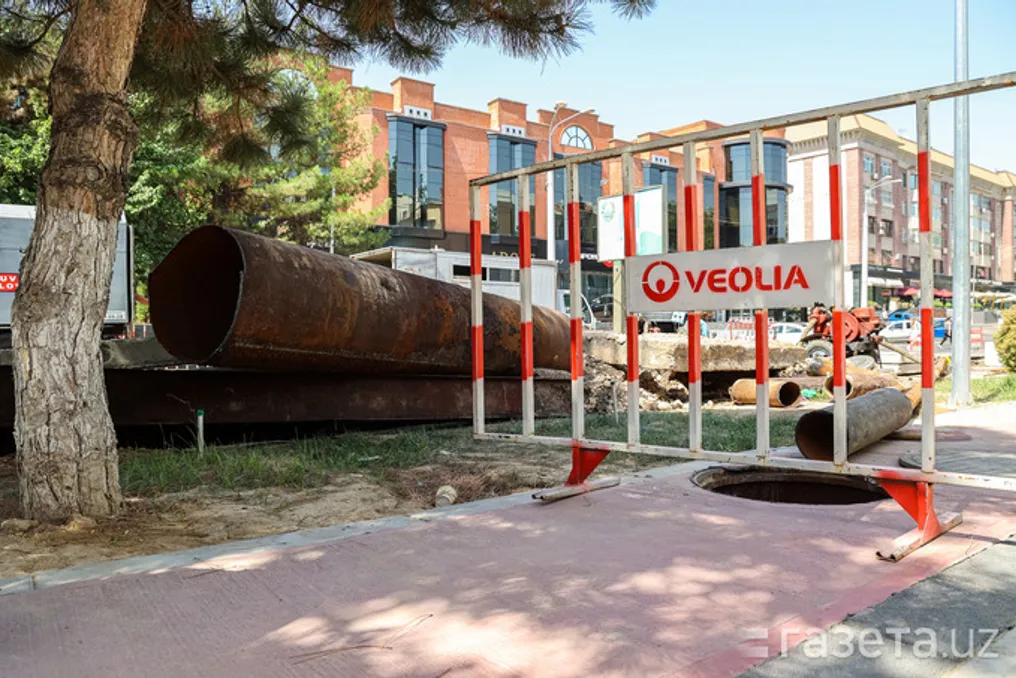
It should be recalled that previously, the Ministry of Construction and Housing and Communal Services presented a draft government decree for discussion, which provided for an increase in tariffs for centralized heating and hot water supply. In Tashkent, the company Veolia Energy Tashkent proposed increasing the cost of heating by approximately 30%: from 241.44 to 314 soms per square meter of heated area per day.
It was also planned to raise the hot water tariff with a meter by 30%, increasing it from 8928.67 to 11,607 soms per cubic meter. According to the draft, the fee for hot water without a meter could decrease from 52,303 to 45,330 soms per person monthly due to changes in the calculation methodology.
The draft proposed introducing new tariffs starting November 1st, but they have not yet received official approval. Previously, the Central Bank forecasted inflation for the end of 2026 at 6.5%; in September, annual inflation was 6.4%, which was higher than the August figure of 6.2%. The Central Bank's goal is to achieve a stable reduction in inflation to 5% in the second half of 2027 and maintain this level in subsequent years.