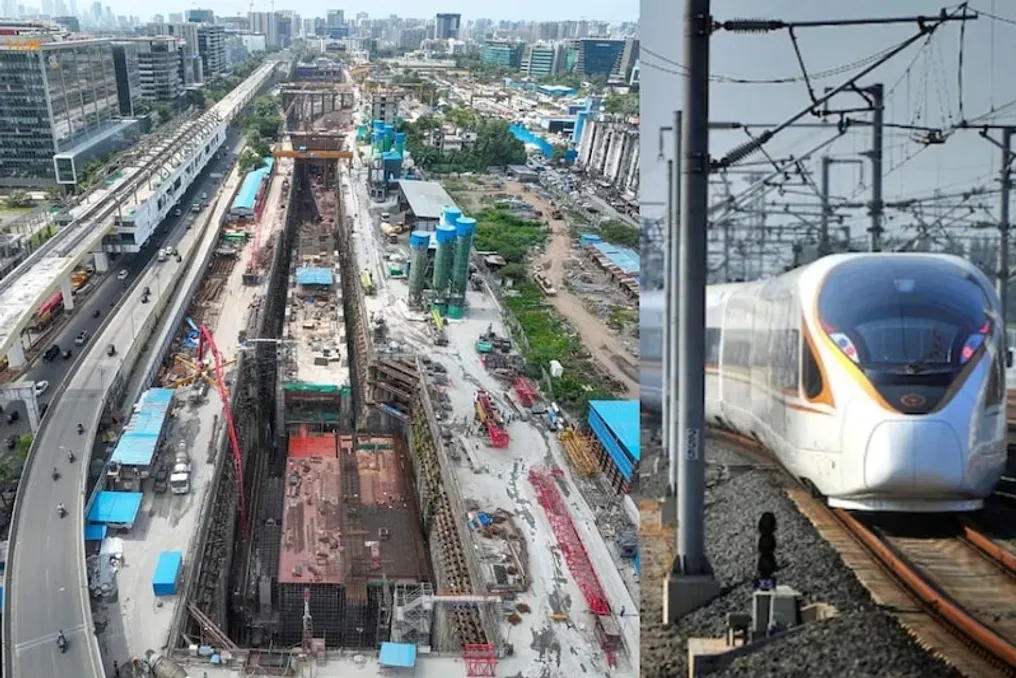
Separate station to be built for high-speed train; information on the station's location in Kanpur
Read more
Aaj Tak
www.aajtak.in

Separate station to be built for high-speed train; information on the station's location in Kanpur

Clarity has emerged regarding the construction of a station for the high-speed train in Kanpur. Kanpur MP Ramesh Awasthi stated that work has begun on projects to create the station either near Attal Ghat or within the city using a tunnel. Furthermore, a route connecting Agra to Kanpur, and then to Lucknow, has been developed, altering the previous high-speed train path.

Previously, Transport Minister Ashwini Vaishnaw mentioned the proposed Northern Corridor, which will reduce travel time between Kanpur and many other cities.

Kanpur residents have long questioned the location of the high-speed train station: whether it will be outside the city or if passengers can use it inside the city. Now, MP Ramesh Awasthi has shared important information. He announced on social media that he advocated for building the station in a location that would provide maximum convenience for the residents of Kanpur and ordinary citizens. According to this concept, work has started on proposals to build the station near Attal Ghat or through a tunnel inside the city. The emergence of this proposal has intensified discussions about the high-speed train station in Kanpur. If the option of building the station inside the city proves technically and practically feasible, it could ease the need for passengers to travel to the outskirts of the city.

Nevertheless, the final location of the station, the construction technology, and the timelines are still awaiting an official announcement.

In his statement, MP Ramesh Awasthi also provided another important piece of information. According to him, the initial route was adjusted to connect the high-speed train directly from Agra to Kanpur, and then link it with Lucknow. This change is considered very significant for Kanpur. Currently, traveling between Delhi, Agra, Kanpur, and Lucknow requires passengers to use various modes of transport. With the creation of the high-speed rail corridor, high-speed rail connectivity between these cities is expected.

It should be noted that Kanpur is a major industrial and commercial center of Uttar Pradesh state, home to a large number of businessmen, working people, students, and passengers arriving from other cities. Thus, direct high-speed rail connectivity could create new opportunities not only in trade but also in education, medicine, and tourism.

Earlier, in Varanasi, Union Transport Minister Ashwini Vaishnaw provided important information about the high-speed train Northern Corridor. He stated that after approval by Prime Minister Narendra Modi, the proposed Northern Corridor will connect Delhi with Agra, Kanpur, Lucknow, and further to Varanasi, Prayagraj, and Patna. The Transport Minister clarified that after the completion of this corridor, the journey from Delhi to Kanpur will take about 1 hour and 45 minutes. The travel time from Delhi to Agra will be 59 minutes, and to Lucknow—approximately 2 hours and 12 minutes. He also indicated that the journey from Varanasi to Lucknow will take 1 hour and 21 minutes, from Varanasi to Patna—one hour, and from Varanasi to Delhi—about 3 hours and 33 minutes. The distance from Varanasi to Prayagraj can also be covered by high-speed train in just 33 minutes. These specified travel times refer to the proposed corridor, and the actual time will depend on the final form of the project, the route, and the stations.

Transport Minister Ashwini Vaishnaw also mentioned that the proposed high-speed train services are planned to run at hourly intervals. This means passengers will not have to wait long for the train. This service is expected to benefit middle-class families, small entrepreneurs, the MSME sector, youth, students, and people who need to travel to other cities for medical treatment. For the business community of Kanpur, this connection is particularly important, as quick access to cities like Delhi, Agra, and Lucknow can give a new impetus to business meetings, cargo transportation events, and business contacts.

In his statement, the Transport Minister also mentioned the Mumbai-Ahmedabad high-speed train project. He reported that preparations for launching the first section of this route are planned for next year. Meanwhile, work is underway on the design of the Northern Corridor, which is intended to connect Delhi with Siliguri and subsequently with Guwahati. It was noted that there is a plan to standardize various construction elements used in the project and manufacture them in factories. This will help ensure uniformity and quality in the construction work.
Similar stories

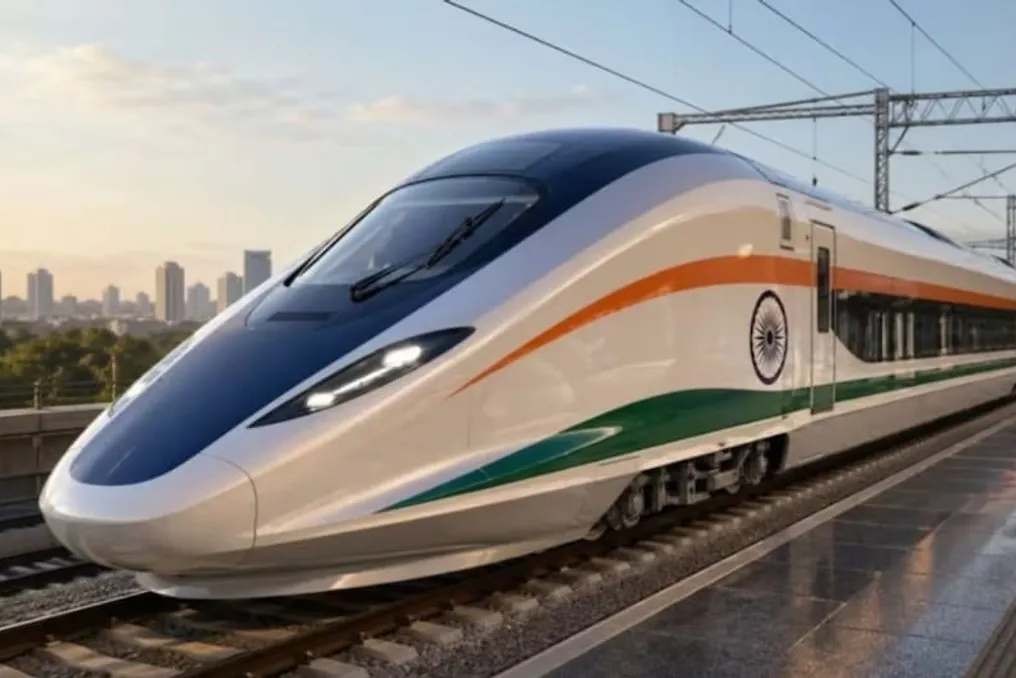
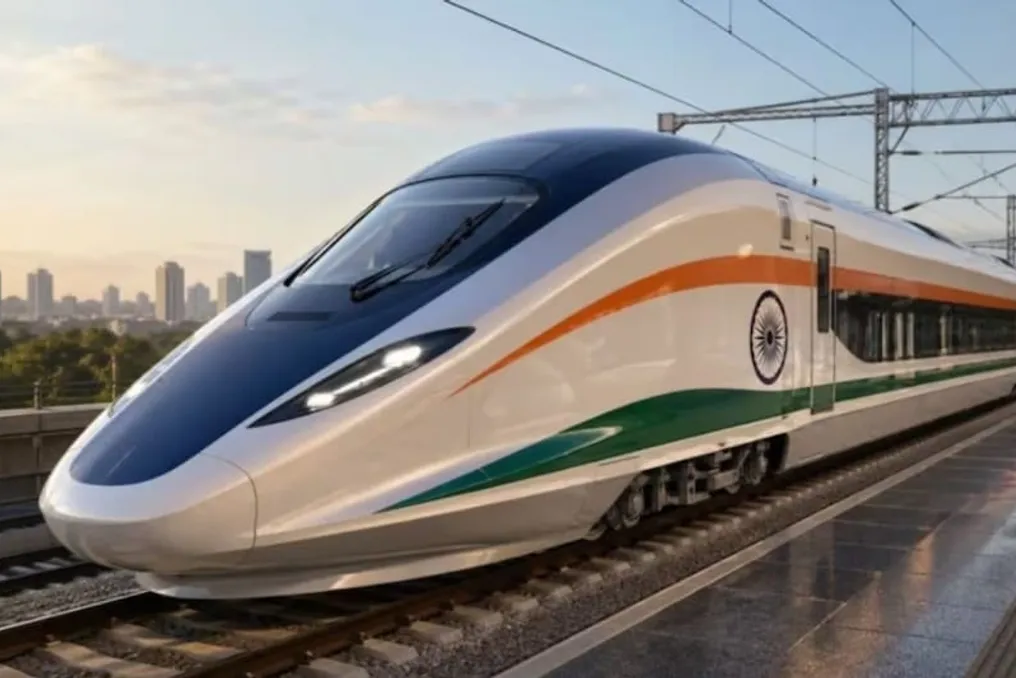
India begins production of high-speed train B28, designed according to local needs
Read more
www.aajtak.in

India begins production of high-speed train B28, designed according to local needs

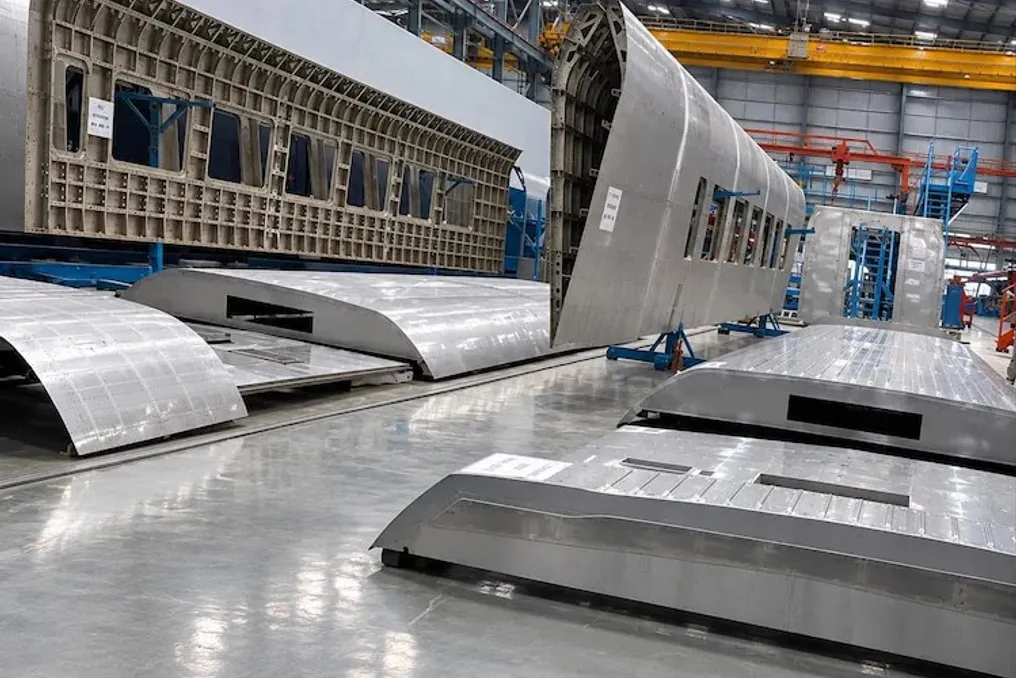
The first high-speed train developed in India is beginning to take shape. It is important to note that this train will be manufactured entirely in India. Indian engineers are working on the design of this train, taking into account the country's needs under the guidance of Japanese specialists. Transport Minister Ashwini Vaishnaw shared footage of the construction of the first such train at the Bharat Earth Movers Limited (BEML) factory in Bangalore. This train will operate on the Mumbai-Ahmedabad high-speed rail corridor.

The first indigenous high-speed train has been named B28. It is being created by combining modern technology and Indian engineering expertise. Structural tests are being conducted to verify strength and high-speed movement characteristics. The train's design considers the needs, comfort, and safety of Indian passengers.

The construction of this high-speed train is taking place at the Bharat Earth Movers Limited (BEML) production site located in Bangalore. Work is underway to manufacture and test various parts of the train. BEML, a public sector undertaking involved in the production of heavy machinery and equipment, plays a key role in creating India's first indigenous high-speed train. This project is also a step towards increasing India's potential in high-speed train manufacturing.

The B28 train is designed with a test speed of up to 280 kilometers per hour, although its intended operational speed will be 249 kilometers per hour. This approximately 202-meter long train will consist of 8 coaches: 4 motorized and 4 trailer cars. Driver cabins will be located at both ends, allowing the train to be operated in both directions. International standard seating is provided for passenger comfort.

At one time, the train can carry about 557 passengers. A computer three-dimensional view of the interior of this high-speed train has been shown, which is how it will look upon completion. The train will consist of 7 standard class coaches and 1 executive class coach. In the standard class, the seating arrangement will be 3x2, while in the executive class, it will be 2x2. Two special places are also provided for people with disabilities and mobility issues. If necessary, two 8-coach trains can be coupled into a 16-coach set.

The B28 interior is designed with an emphasis on passenger comfort. It includes comfortable seats, ample legroom, large windows, LED lighting, and overhead racks for luggage storage. Power outlets for charging mobile phones and laptops will be installed. A dedicated space for large luggage is also provided. Furthermore, modern toilets equipped with a biodigester will be used.

Passengers will have access to a Wi-Fi-based entertainment system. Through this system, they can view entertainment content during the journey. Necessary information will be displayed on LCD screens inside the carriage in English, Hindi, and regional languages. Updates will also be provided through audio announcements. In case of an emergency, passengers can contact train staff directly via a two-way communication function.

To reduce air pressure and noise during high-speed travel, the front section and the entire body of the B28 are designed with aerodynamics. Airflow around the train was studied using CFD computer modeling. This will help reduce air resistance, air pressure when passing through tunnels, and noise at high speeds.

This high-speed train will use a regenerative braking system for energy saving. The train will receive electrical power from a 25 kV, 50 Hz, single-phase alternating current overhead line. The regenerative braking system allows part of the energy generated during deceleration or braking to be returned to the electrical grid, contributing to energy savings. Each coach will also be equipped with two HVAC units to maintain temperature and humidity.

Second High-Speed Rail Corridor Approved: Delhi-Varanasi Route and Schedule
Read more
www.aajtak.in

Second High-Speed Rail Corridor Approved: Delhi-Varanasi Route and Schedule

Approval has been granted for a second high-speed rail corridor in the country. Transport Minister Ashwini Vaishnaw announced that Prime Minister Narendra Modi approved the high-speed train project for the Northern Corridor. This high-speed train will run from Delhi through Kanpur, Lucknow, Varanasi, and Patna to Guwahati.

Ashwini Vaishnaw presented this information on Saturday, noting that this decision will significantly simplify connectivity between the capital and residents of northern regions, as well as small business owners. The government made this decision with the aim of improving travel for ordinary citizens. This step will substantially reduce travel time between New Delhi and Varanasi, Lucknow, Patna, and Guwahati, as well as between Agra and New Delhi.

He specified that after the completion of the Northern Corridor construction in the coming years, the journey from Delhi to Agra will take only 59 minutes. The travel times will be as follows: Delhi to Kanpur – 1 hour 45 minutes; Delhi to Lucknow – 2 hours 12 minutes; Delhi to Varanasi – 3 hours 33 minutes; and New Delhi to Patna will require 4 hours 33 minutes.

Ashwini Vaishnaw refuted rumors that this high-speed train is intended only for the wealthy, emphasizing that its cost will be very affordable and significantly lower than airfare. Furthermore, the train will ensure faster arrival at the destination at a lower ticket price.

Under the Central Budget for 2026-27, the construction of seven new high-speed rail corridors is planned, including the Delhi-Varanasi, Mumbai-Pune, Pune-Hyderabad, Hyderabad-Bengaluru, Hyderabad-Chennai, Chennai-Bengaluru, and Varanasi-Siliguri (via Patna) lines.

India's first high-speed train, the Mumbai-Ahmedabad project, is actively being implemented, and its operation is planned to begin next year. The Mumbai-Ahmedabad high-speed railway corridor is scheduled to start running by August 2027. These trains are designed to travel at speeds of up to 320 km/h.

Currently, there is no information regarding a specific launch year or date. However, upon receiving this approval, the mapping and site demarcation process will commence, followed by work that may take several years. Work on this major route will be carried out in phases.

India's first high-speed railway: underground station 100 meters deep, tunnel under the sea
Read more
www.aajtak.in

India's first high-speed railway: underground station 100 meters deep, tunnel under the sea

Preparations for the launch of India's first high-speed railway are in full swing, including work on tracks, bridges, and railway stations. The Bullet Train is expected to begin operating on the high-speed route in 2027. Transport Minister Ashwini Vaishnaw announced on social media that India's first high-speed railway is taking concrete shape.

He detailed the railway stations being prepared for the high-speed train service, as well as the underwater tunnel. Specifically, a station is being built in Mumbai located 100 feet underground, and a 7-kilometer tunnel under the sea is being created through which the Bullet Train will pass.

The Transport Minister shared project details in a post on the social media platform Twitter (now X). He emphasized that India's first high-speed railway is no longer just an announcement; it is a 508 km construction project that is progressing at full speed. The first operation is scheduled for the fourth quarter of 2027. The Bullet Train will first run on the high-speed route between Ahmedabad and Mumbai.

According to the minister's statement, construction of the high-speed railway station is underway in the Bandra-Kurla Complex (BKC) area of Mumbai, situated about 100 feet (approximately 32 meters) below ground level. This underground station is a unique engineering achievement located in the heart of Mumbai's business district. Three levels are being prepared for this station: the platform, concourse, and service area. Six platforms are planned, each exceeding 400 meters in length.

Several kilometers from this underground station, under Thane Creek, India's first underwater railway tunnel system is being constructed using a rock-cutting machine. This is the tunnel through which the Bullet Train will travel at high speed. According to the minister, the high-speed rail corridor in Maharashtra passes through a 21 km tunnel, with 7 km of it located underwater under Thane Creek, making it India's first underwater railway tunnel system.

The post also noted that two tunnel boring machines were launched in Viroli and Savli in July 2026. These machines are among the largest ever used in India. Each machine is equipped with a 13.6-meter diameter cutter head, equivalent to the height of a four-story building. The weight of each machine exceeds 3000 tons, equivalent to approximately 500 Asian elephants. The length of each machine is 96 meters, comparable to five cricket fields.

At full speed, the Bullet Train will reach a speed of 320 kilometers per hour, and between Ahmedabad and Mumbai, it will travel at an average speed of about 300 kilometers per hour starting next year. The 508 km Mumbai-Ahmedabad corridor passes through the states of Maharashtra, Gujarat, and Dadra and Nagar Haveli, and includes 12 major stops. These include: Mumbai (BKC), Thane, Virar, Boisar, Vapi, Bilimora, Surat, Bhuchar, Vadodara, Anand, Ahmedabad, and Sabarmati.

Popular