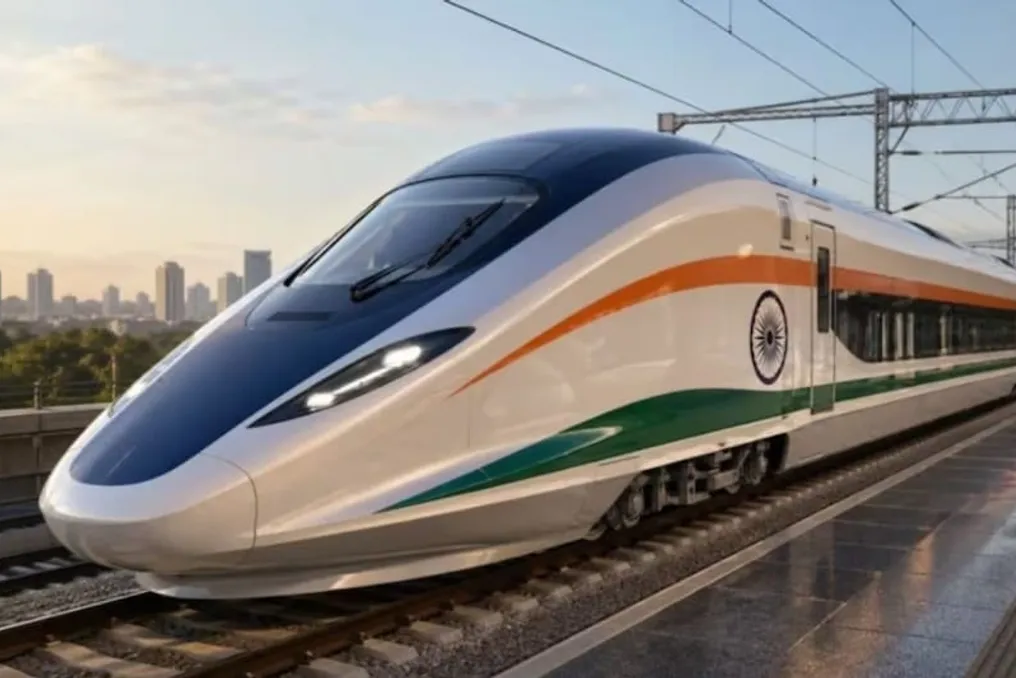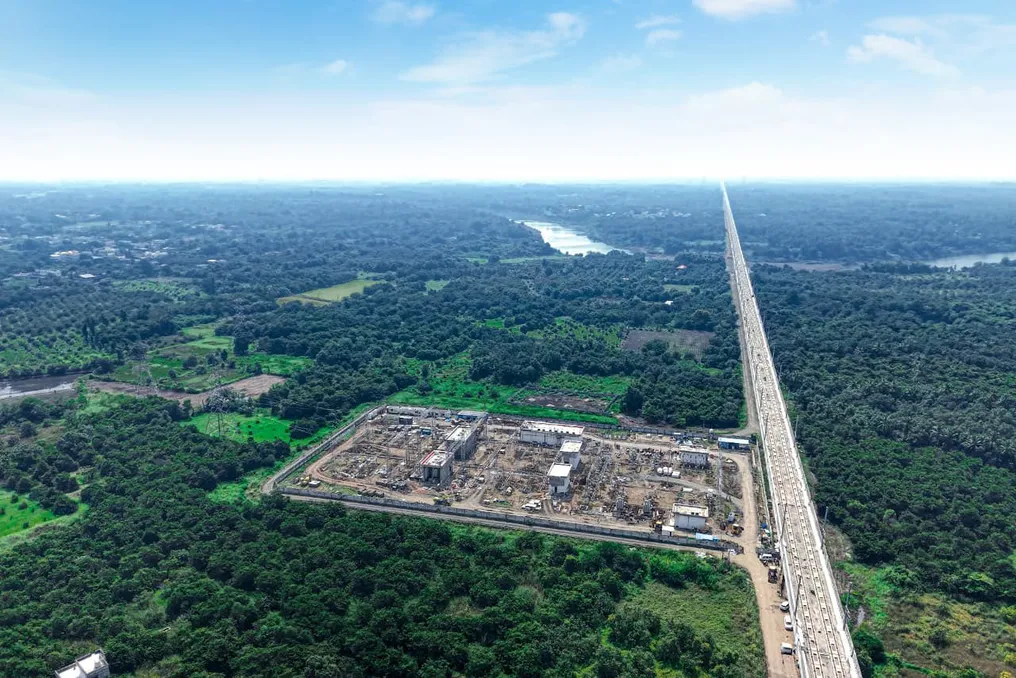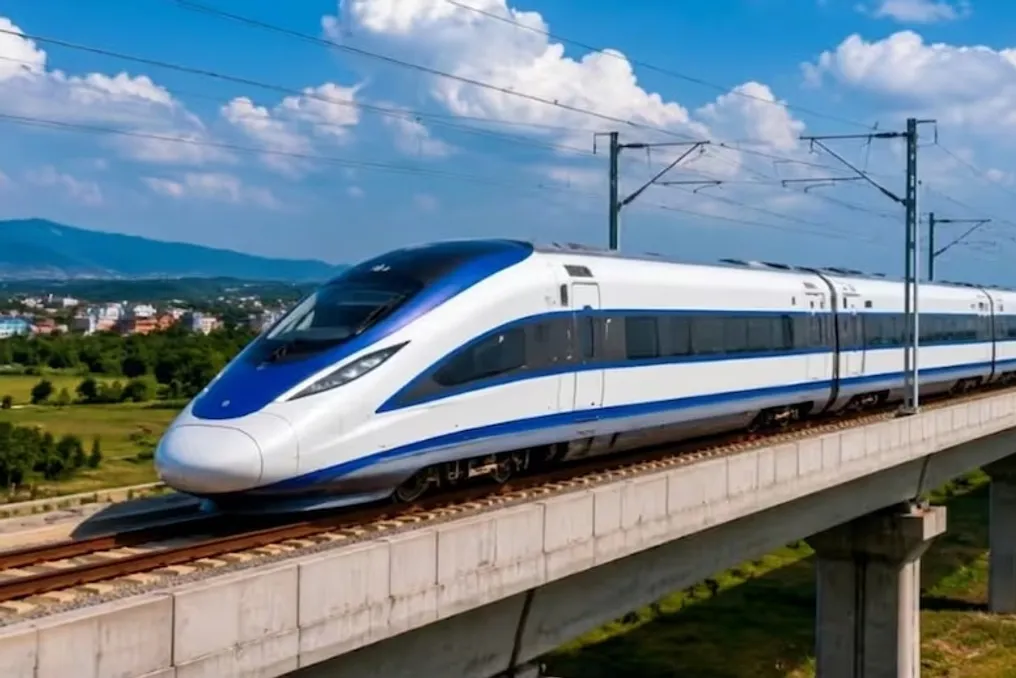
Prime Minister Narendra Modi approved the 'Southern Corridor High-Speed Rail' project, which will connect Bangalore, Hyderabad, Amaravati, and Chennai. This information was announced by Transport Minister Ashwini Vaishnaw during his speech following the inauguration of the Vande Bharat sleeper train between Bangalore and Mumbai on November 1.
The implementation of this project aims to improve transport accessibility between major cities in South India and stimulate business development. Residents who regularly travel between these cities for work, study, or business will benefit significantly from this.
According to Transport Minister Ashwini Vaishnaw, the proposed high-speed railway will allow covering the distance of about 359 kilometers between Bangalore and Chennai in just 73 minutes. Meanwhile, the journey from Bangalore to Hyderabad will take approximately 2 hours and 10 minutes. This will substantially save passenger time on intercity journeys. The minister noted that with this connection, Bangalore and Chennai will become like two ends of one megacity.
Currently, the fastest Vande Bharat train takes about 4 hours and 25 minutes to cover this distance, meaning passengers can save over three hours by using the high-speed train.
The Southern Corridor High-Speed Rail project envisions linking Bangalore, Hyderabad, Amaravati, and Chennai. Ashwini Vaishnaw emphasized that this corridor will bring major technological and economic centers of the country closer. The government's goal is to develop these cities as a single large economic zone, significantly reducing travel time between them.
Currently, the fastest train on this route is the Chennai-Mysore Vande Bharat Express (20607/20608), which takes about 4 hours and 25 minutes between Bangalore and Chennai. Its average speed is approximately 81 kilometers per hour.
The average direct flight time between Bangalore and Chennai is about 1 hour and 4 minutes. It is projected that the journey by high-speed train will take 1 hour and 13 minutes, making the travel time comparable for both modes of transport. However, considering the time required to reach the airport, check-in, and pass security when flying, the train offers the advantage of direct arrival from one city to another.
To cover the distance of 359 kilometers between Bangalore and Chennai in 73 minutes, the average train speed must be around 295 kilometers per hour. This is 3.6 times faster than the average speed of the current Vande Bharat train, which is about 81 kilometers per hour.
The National High Speed Rail Corporation Limited (NHSRCL) announced tenders in July this year for preparing the civil engineering design project for both the Bangalore-Chennai Southern Corridor High-Speed Rail and the Delhi-Varanasi Northern Corridor High-Speed Rail. This step is considered important for advancing these two high-speed rail projects. The central government had previously announced these two corridors as part of the next phase of expanding the high-speed rail network in the central budget for 2026-27.
Additionally, five new routes have been proposed. Besides Bangalore-Chennai and Delhi-Varanasi, they include the Mumbai-Pune, Pune-Hyderabad, Hyderabad-Bangalore, Hyderabad-Chennai, and Varanasi-Siliguri routes. According to NHSRCL, the total length of these seven corridors will be about 4000 route kilometers. Four of them have already received Detailed Project Report (DPR) approval, while surveys are underway for the remaining three. Geotechnical investigations are also being conducted to assess ground conditions before inspection and tendering for the proposed route.
National High Speed Rail Corporation plans to refine the design and construction methods used in the Mumbai-Ahmedabad High-Speed Rail corridor to accelerate the implementation of such a large-scale railway project. In this regard, standardization of various types of structures is being prepared. For these corridors, the operational speed of the train is set at 320 kilometers per hour, and the design speed is 350 kilometers per hour. During project development, aspects such as soil condition, ecology, and construction materials must be taken into account.