
Anshul Kamboj demonstrated outstanding bowling performance in New Zealand
Read more
Aaj Tak
www.aajtak.in

Anshul Kamboj demonstrated outstanding bowling performance in New Zealand

Amidst the rapid development of T20 cricket, where batsmen often score heavily, Anshul Kamboj made a strong impression with his bowling performance in New Zealand. During the first ODI match at Eden Park in Auckland, Kamboj took 2 wickets, conceding only 22 runs in 10 overs, resulting in an economy rate of 2.20.

The entire New Zealand team was eventually brought to a score of 185 runs after 40.2 overs. This match marked Kamboj's best performance in international competition at the age of 25, as he prevented the New Zealand batsmen from playing freely. His strength lay in his ability to move the ball in both directions: sometimes it went in, and sometimes it went out. He consistently bowled with good length, slightly shorter, and surprised the batsmen by varying his length, sometimes bowling full and sometimes short, which caused difficulties for the New Zealand players in scoring runs.

Kamboj secured the first wicket against Santner, dismissing the captain. This happened on the first ball of the 27th over when Kamboj's delivery touched the inside edge of Santner's bat and went into the wicket. Santner tried to stop the ball, but it came in and led to the loss of a wicket. After this, Kamboj celebrated very energetically.

The impact of Kamboj's play was also evident in the 28.3 over, when Nathan Smith fell victim to him. Kamboj bowled a good-length ball outside off-stump, which became straight after hitting the pitch. Smith tried to defend by moving forward, but the ball touched the outside edge of the bat and flew towards the second slip. Virat Kohli executed a magnificent one-handed catch there, diving to the right. The third umpire confirmed the catch, showing in replay that the ball was in Virat's hands before it hit the ground. After this, Virat celebrated the moment in his signature style, pointing towards the dressing room.

Indian captain Shubman Gill decided to start the game with bowling after the toss. In this match, India fielded four specialized fast bowlers: Anshul Kamboj, Akib Nabi, Guruon Barar, and Arshad Singh. These four combined had experience in 29 ODI matches. Mohammad Siraj was not included in the starting XI, and instead of all-rounder Nitish Kumar Reddy, spin all-rounder Naman Diar was selected. Facing this young attacking bowling attack, the task was to prove their worth in New Zealand conditions. However, the Indian bowlers did not allow the hosts to play freely.

The entire New Zealand team was brought to a score of 185 runs in 40.2 overs. The most outstanding performance, however, was demonstrated by Kamboj through his restrained bowling. He showed that even in modern aggressive cricket, control of the ball, correct length, and movement in both directions can create serious problems for batsmen. In New Zealand, Kamboj strengthened the trust in the Indian team.

Guruon Barar took 3 wickets, conceding 44 runs in 9.2 overs. Arshad Singh took 4 wickets, conceding 70 runs in 10 overs, while Akshar Patel conceded only 12 runs in 5 overs. Akib Nabi failed to take any wickets, conceding 33 runs in 6 overs.

Although Arshad Singh conceded 70 runs in 10 overs, his performance was not bad throughout the day. His last over proved quite expensive, which affected his statistics, despite him taking 4 wickets. After New Zealand reached a score of 185 runs, a good opportunity opened up for the Indian batsmen to chase the target at Eden Park. Considering how the bowlers restricted the home team's score, achieving this target looks relatively easy for India.
Similar stories

India defeats New Zealand, reaching the target of 199 runs in 13.2 overs.
Read more
www.aajtak.in

India defeats New Zealand, reaching the target of 199 runs in 13.2 overs.

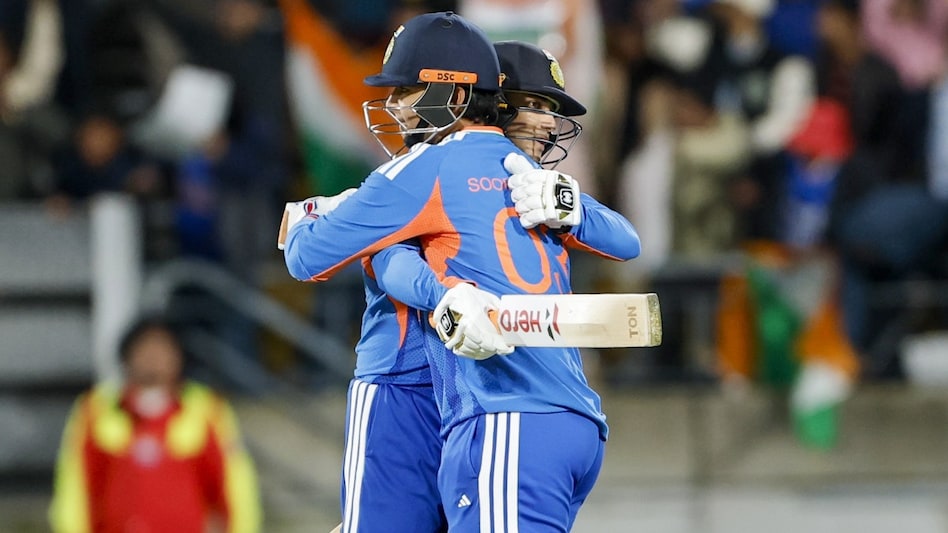
The Indian team demonstrated powerful play against New Zealand in Wellington, completely suppressing the attack of the Kiwi bowlers. Abhishek Sharma played an explosive innings, scoring 113 runs off 38 balls, while Vaibhav Suryavanshi added 45 runs from 19 balls. India managed to reach the target of 199 runs in just 13.2 overs, losing four batsmen in the process.

Thanks to this victory, the Indian team secured an undeniable 3-0 lead in the five-match T20 series.

When chasing the target of 199 runs, Abhishek Sharma and Vaibhav Suryavanshi immediately put pressure on the New Zealand bowlers. Both players managed to score 133 runs in the first 7.1 overs, setting an aggressive run rate of 18.13. This rate is the highest among all opening innings in Mains T20 International matches where over 100 runs were scored.

In his innings, Vaibhav scored 45 runs, utilizing 4 fours and 4 sixes. His performance ended when Matthew Fisher took a brilliant catch.

After this, Abhishek continued his aggressive style, scoring 113 runs off 38 balls.

Abhishek's innings included 11 sixes. He approached his personal record for the most sixes in a single T20 International innings for India. Previously, in 2025, he hit 13 sixes against England in Mumbai, and in 2026 against Afghanistan in Delhi—11 sixes. Now, playing against New Zealand, he hit another 11 sixes.

Abhishek is now in the list of players who have hit 10 or more sixes in a single Mains T20 International innings for the third time. In this ranking, Ranbir Singh from Australia leads with five innings, while Abhishek has three. Chris Gayle and Aaron Finch have achieved this feat twice.

Considering all Mains T20 matches, Abhishek has achieved this feat seven times. In this list, Chris Gayle tops the charts with 18 innings. Vaibhav Suryavanshi and Ranbir Singh each have five such innings.

With this century, Abhishek Sharma reached 11 centuries in Mains T20 cricket. In this list, Chris Gayle is at the top with 22 centuries, Babar Azam has 13, and Abhishek has 11. Following him are Quinton de Kock, Virat Kohli, and David Warner, each with 10 centuries.

In the Mains T20 International ranking for centuries, Abhishek has four centuries. The leaders in this list are Glenn Maxwell and Rohit Sharma, both with five centuries. Ranbir Singh, Phil Salt, Suryakumar Yadav, and Abhishek Sharma each have four centuries.

Abhishek completed his century in 35 balls. This is his personal best in Mains T20 International for the fastest century among full teams, which he set in 2026 against Afghanistan in Delhi in 30 balls. This list also includes Sikandar Raza and Finn Allen, who scored a hundred in 33 balls.

India scored 118 runs in the first six overs during the powerplay without losing any batsmen. According to the data presented, this is the highest figure among teams that scored over 100 runs in the powerplay in Mains T20 International. Previously, Romania scored 116 runs without loss against Serbia.

India reached the 50-run mark in just 2.2 overs and crossed the 100-run barrier in five overs. Both achievements meet or exceed the records for the fastest fifty and one hundred in Mains T20 International. Earlier, in 2026 in Delhi against Afghanistan, India also scored 100 runs without losing a wicket in the powerplay.

In the match against New Zealand, the Indian team continued to display its aggressive play.

India reached the target of 199 runs in 13.2 overs, meaning there were 40 balls remaining in the match. Successfully chasing a target of 190 runs or more with balls remaining is one of the most outstanding moments in the history of Mains T20 cricket. In this list, Estonia reached the target of 192 runs against Cyprus in 2024, leaving 42 balls. India's chase of 199 runs ranks second on this list. India's previous record in this aspect was set against New Zealand in Raipur, where 209 runs were scored with 28 balls remaining.

Earlier, New Zealand, having lost the toss, came out to bat and scored 198 runs in 20 overs, losing three batsmen. Daryl Mitchell played without getting out, scoring 89 runs, and Finn Allen made 40 runs off 25 balls. For India, Arshdeep Singh and Axar Patel took one wicket each. In response, India scored 199 runs in 13.2 overs, losing four batsmen. Kyle Jamieson of New Zealand took two wickets, but the aggressive start by Abhishek and Vaibhav tipped the scales in favor of India.

India A lost to New Zealand A in the first unofficial test match
Read more
www.aajtak.in

India A lost to New Zealand A in the first unofficial test match

The first match of the three-match unofficial test series between India A and New Zealand A started on October 24th at Bert Sachliff Oval in Lincoln. In the first game, India A faced serious difficulties in batting, as the local fast bowlers did not allow the Indian batsmen to play freely on the grass pitch.

In the first innings, the entire India A team scored only 113 runs. Simen King played a key role, taking five wickets, which put India A in a defensive position. Jack Gibson also achieved three wickets, while Christian Clark and Fraser Smith took one wicket each. Thus, all ten wickets were taken by fast bowlers.

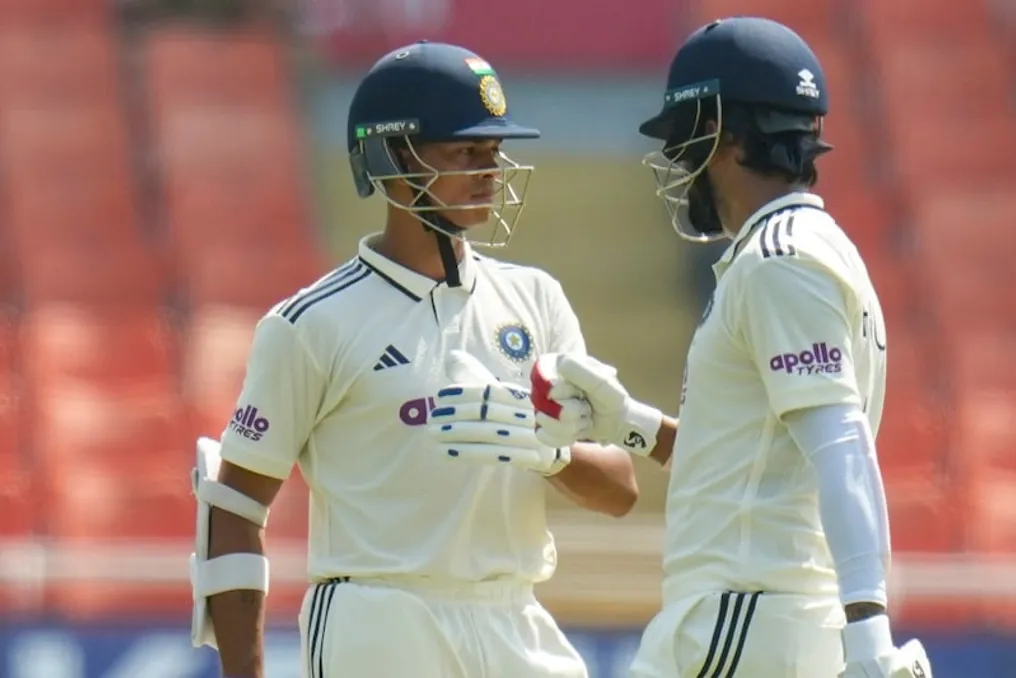
New Zealand A, having won the choice, decided to start with bowling. Fraser Smith secured the first wicket, dismissing Kel Rahul (0 runs). Yashasvi Jaiswal (17 runs) and Devdutt Padikkal (32 runs) stabilized the innings for some time, but Jack Gibson managed to stop this partnership by dismissing Jaiswal.

After this, Simen King began to put pressure on the Indian batting lineup with his spin and accurate length of delivery. The India A players could not form stable partnerships and lost wickets at regular intervals.

Amidst the constant fall of wickets, Yash Rathore took the initiative. He aggressively scored runs and, along with Mukesh Choudhary, built an important partnership of 32 runs for the last wicket. Rathore scored the majority of the runs in this game, bringing the team to a score above 100. He remained unbeaten, scoring 44 runs off 49 balls, including three sixes and three fours.

Despite Yash Rathore's efforts, it was not enough to take India A to a respectable score. The first innings of the Indian team concluded before the end of two sessions. In the first innings, India A players Kel Rahul, Sai Sudarshan, Washington Sundar, Mukesh Choudhary, and Akash Dip could not score any runs. Captain Dhruv Jurel managed to score only 1 run.

The India A squad for the match included: Yashasvi Jaiswal, Kel Rahul, Devdutt Padikkal, Sai Sudarshan, Dhruv Jurel (captain/vice-captain), Yash Rathore, Washington Sundar, Anshul Kamboj, Akib Nabi, Akash Dip, and Mukesh Choudhary. The New Zealand A squad included: Rhys Marius (captain), Curtis Hiffin, Tim Robinson, Matthew Boyle, Dan Foxcroft, Mitchell Hayes (vice-captain), Simen King, Christian Clark, Fraser Smith, Hayden Lennox, and Jack Gibson.

India's New Philosophy in T20: Team Ready to Attack Despite Bowling Issues
Read more
www.aajtak.in

India's New Philosophy in T20: Team Ready to Attack Despite Bowling Issues

India won the first T20 match against New Zealand, achieving a target of 226 runs in 19.4 overs.

This victory was achieved not only through strong batting but also demonstrates the Indian team's aggressive approach to chasing targets, unafraid to take risks. Despite shortcomings in the bowling game, the batsmen managed to compensate for these weaknesses with their power.

India's strategy became clear: instead of restricting the opponent to a low score, the team found it more advantageous to surpass their total. However, such a tactic will only be effective if there are consistent high performances in the attack, as chasing a target of 225 runs every day will not be easy.

The target of 226 runs indicates that serious questions face the Indian bowling unit. Allowing over 200 runs in T20 itself is a signal that the strategy, length, and line of the delivery need improvement, especially towards the end of the match. Nevertheless, India's batting completely changed the course of the game.

By reaching 230/6, India proved that its batting does not depend solely on stars. The squad includes players capable of increasing aggression under the pressure of a difficult task.

This victory is more of a statement about batting strength than a success of bowling.

Sanjju Samson laid a solid foundation for the chase, scoring 67 runs off 33 balls, including eight fours and four sixes. His key contribution was preventing the pressure of a large score from overwhelming the Indian batting.

Samson showed from the beginning that simply preserving wickets is insufficient to achieve a target of 226 runs; maintaining tempo and putting pressure on the bowlers is necessary. His play allowed subsequent batsmen to play in a more open manner.

The performances of Shreyas Iyer with 42 runs and Naman Dira without getting out for 42 runs (off 15 balls) were important elements of this victory. Axar Patel also made a useful contribution of 24 runs.

The significance of these innings is not limited to the runs scored. When chasing a big score, the quick start of one batsman must be supported by others. This is where Shreyas and Naman played their role.

Naman's unbeaten knock was particularly crucial, as the match needed to be concluded even after approaching the target. India demonstrated that it has options to score runs at different stages of the match, winning in 19.4 overs.

Despite the brilliant victory, it is crucial to understand the other side of the coin. Reaching a target of 226 runs shows India's strength, but this does not allow for ignoring the bowling deficiencies.

India's aggressive strategy is its strength, but a truly strong team is one that can control the game with both batting and bowling. India has shown that a large score is an opportunity to attack, not a cause for fear.

However, to maintain this dominance in the series, the bowlers will have to raise their level. India's new T20 declaration is this: if you make 225, we will make 226. But true dominance will come when the ball rules over the opponent alongside the bat.

Popular