Improvement of South African logistics recognized as a key factor for agricultural growth
Read more
Food For Mzansi
foodformzansi.co.za

Improvement of South African logistics recognized as a key factor for agricultural growth

The growth and commercialization of agriculture in South Africa are directly dependent on the reliability of transport infrastructure, strengthening partnerships between the public and private sectors, and better coordination to connect producers with markets.

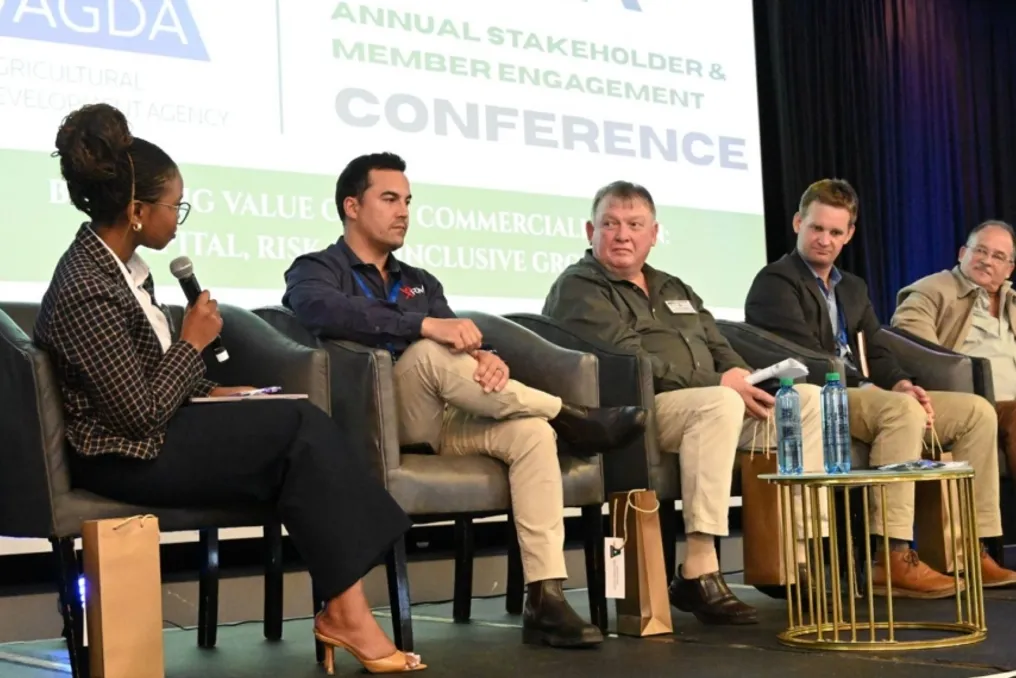
At a recent conference of the Agricultural Development Agency (Agda) in Boxburg, Gauteng, industry representatives emphasized the need to modernize road and rail networks. Furthermore, they pointed out structural obstacles hindering small and emerging farmers from participating in formal agricultural value chains.

Theo Boshoff, CEO of Agbiz, noted that the pace of agricultural growth has outpaced the growth of the broader South African economy over the last decade. This makes efficient logistics an increasingly vital task for sustaining expansion and supporting exports.

He stated that ensuring export capability is necessary for this growth to continue and for creating additional opportunities. Boshoff also highlighted that approximately 80% of agricultural produce has shifted from rail to road transport, placing additional strain on road infrastructure and increasing transportation costs for producers.

He mentioned ongoing reforms under Operation Vulindlela, including the creation of an independent manager for rail infrastructure, ensuring open access to the rail network, and developing public-private partnerships aimed at improving port and transport efficiency. Boshoff also pointed to opportunities for private sector involvement in 94 railway lines that could be transferred to private operators, adding that improved logistics can enhance the competitiveness of the entire agricultural sector.

Program Manager at the South African Infrastructure Excellence Centre (ISA), Dr. Hubert Joint, reported that the organization focuses on preparing and prioritizing projects rather than directly financing or implementing them. He discussed collaboration with AgriSA and Agbiz to assess rural roads in the Free State. Over 5,000 unique roads were analyzed using economic models to determine their significance for agricultural production and distribution.

Joint stressed that all these roads were prioritized, providing a clear picture of their actual condition. The assessment considered agricultural transport routes to silos, production facilities, and export markets, as well as other economic activities such as mining and manufacturing. He also noted that ISA supported struggling municipalities through project preparation and feasibility study initiatives.

Turning to livestock logistics, Dr. Philip Oosthuizen, COO of Red Meat Industry Services (RMIS), stated that improving market access for emerging livestock farmers requires more than just repairing physical infrastructure. He argued that individual farmers selling one or two animals at a time are often limited to local buyers, which reduces their bargaining power and access to better prices.

His proposal was to sell livestock in groups and attract large buyers—whether feedlots, abattoirs, or auction houses—to purchase large volumes of animals. Oosthuizen also identified traceability as a critical requirement for connecting small livestock producers with formal markets, especially given current animal disease concerns. He suggested that digital systems providing information on animal identification, vaccination status, and genetic potential could strengthen buyer confidence and simplify transport coordination. Then, large buyers could send trucks to rural communities to collect 100 or 150 animals, making transport more economical.

Gehard Diederik, Director of Agri-X, called for increased interaction between government, the industry, and agricultural stakeholders to address infrastructure and investment challenges. He cautioned against the assumption that simply increasing funding will solve long-standing problems, insisting that projects must be based on the real conditions faced by farmers. He emphasized the importance of investing in skills, expertise, and practical solutions that support emerging farmers. Diederik added that collaboration is necessary to solve problems across the entire agricultural value chain, from ensuring timely access to resources to delivering products to markets.

Similar stories

Climate change may require a review of South Africa's agricultural regions
Read more
foodformzansi.co.za

Climate change may require a review of South Africa's agricultural regions

Researchers from the Agricultural Research Council (ARC) explained how shifting crop production to new suitable areas can enhance food security and economic returns amid rising climate risks in South Africa.

As temperatures rise and rainfall patterns become less predictable, some traditional agricultural zones in South Africa may become unsuitable for growing current crops. New research suggests that a careful transition to new suitable areas could bring economic, employment, and food benefits, although the optimal solution will depend on the specific crop.

Agricultural lands, such as maize fields, wheat farms, or citrus orchards, cannot simply move due to climate change. Nevertheless, in the coming decades, South African agriculture may need to reconsider not only cultivation methods but also where crops are grown.

Rising temperatures, changing precipitation patterns, water stress, and increased extreme weather events are already increasing uncertainty for farmers. A region that has supported a particular crop for decades may not provide the same growing conditions in 2055 or 2080.

This raises a complex but increasingly pressing question: is it economically viable to gradually shift some agricultural production to areas expected to remain or become more suitable under changing climate conditions?

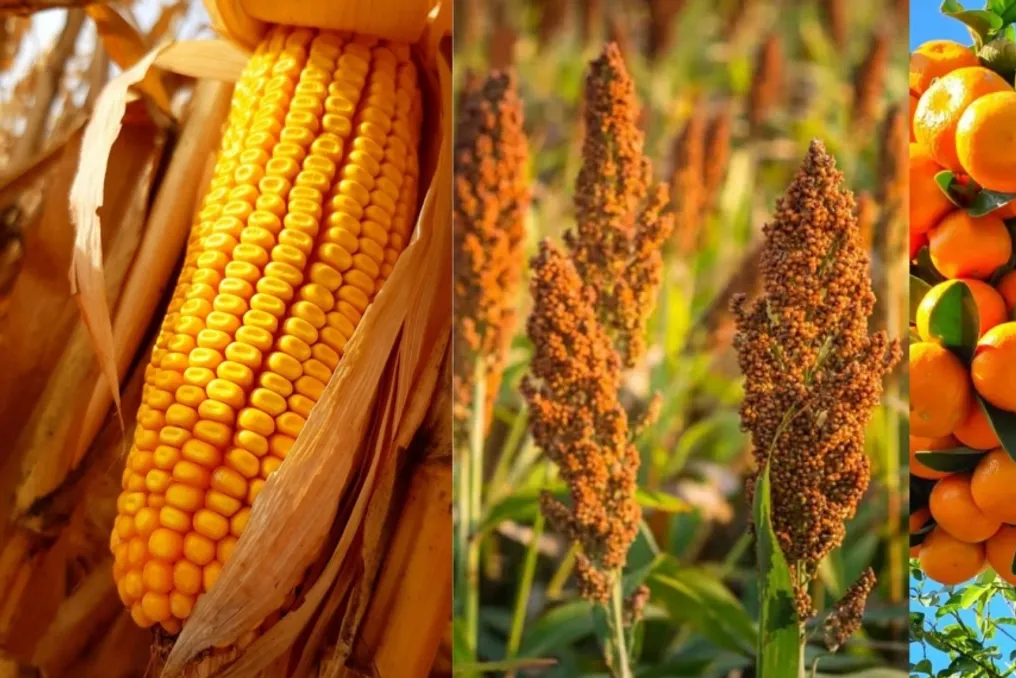
ARC researchers studied this issue for six important South African agricultural products: maize, wheat, sorghum, citrus, avocado, and macadamia. The study combined climate and crop suitability modeling with cost-benefit analysis.

Simply put, scientists compared the long-term value that could be created by relocating some production against the costs of establishing and operating farms in new locations. The results contain both encouragement and caution. Shifting production can be a justifiable strategy for climate change adaptation, but its feasibility depends on the climatic requirements, water needs, production cycle, infrastructural needs, and market prospects of each crop.

Relocating production does not imply an immediate abandonment of established South African agricultural areas. It means planning a gradual transition as climate suitability changes. The study modeled a hypothetical scenario where 10% of the current production area for each crop moves to new suitable agro-ecological zones. This percentage is a modeling assumption to test the potential economics of adaptation, not a recommendation to relocate 10% of national production.

The analysis considered future climate conditions centered on 2030, 2055, and 2080, within moderate and high emission scenarios, assessing the costs and benefits of adaptation over 30 years. Depending on the crop and climate scenario, the modeling identified potential opportunities in cooler and higher altitude areas, including parts of the Eastern Cape, KwaZulu-Natal, Limpopo, and Free State. These areas represent modeled possibilities, not farm-level recommendations.

These broad zones should not be viewed as farm-level planting recommendations. Before making any investment decision, local water availability, soil quality, infrastructure, market access, and land use conditions must be examined. It is also necessary to consider whether the receiving areas possess the necessary infrastructure, water resources, services, and institutional capacity to support additional agricultural production. A shift in production may increase demand for irrigation water, roads, electricity, warehousing, processing facilities, and agricultural services. Therefore, planning must consider not only where crops can grow but also whether the surrounding agricultural system can support production at the required scale.

Researchers used a metric called the Benefit-Cost Ratio (BCR). A ratio above 1 means that the anticipated benefits exceed the costs. For example, a ratio of 1.50 means that for every rand invested, approximately 1.50 is expected in broader economic and social benefits. The study considered not only farmer income but also broader advantages such as food security, employment, and export earnings. According to the study's central estimates, maize and citrus showed some of the strongest return indicators, with a benefit-cost ratio of around 1.50. Sorghum also showed good results, with a ratio of approximately 1.41.

These findings are important because crops play very different roles in the economy. Maize is central to South Africa's food security, livestock feed, and agricultural processing. Citrus is a major source of export revenue and supports numerous jobs in rural communities. Thus, protecting these sectors from future climate risks will benefit far beyond the farm.

However, high-value crops are not automatically the safest investments for adaptation. Avocado and macadamia orchards require significant initial establishment costs and take several years to reach full productivity. This creates a long period between initial investment and expected return. Furthermore, it exposes producers to risks from future changes in water availability, temperatures, resource costs, export prices, and market access. The conclusion is clear: a crop may have high market value but carry significant long-term adaptation risk.

Sorghum represents a much smaller industry than maize or wheat, but its ability to tolerate heat, drought, and unreliable rainfall gives it strategic value in a changing climate. In the study, sorghum remained relatively resilient under harsh climatic conditions, even when prospects for several other crops worsened. However, this does not mean farmers can plant sorghum anywhere and expect easy profits. This crop still faces challenges, including limited markets, low consumer demand, and pressure on farm-level profitability. Climate resilience alone will not create a successful industry. Sorghum requires functioning value chains, meaning investment in seed systems, processing, product development, procurement capabilities, and consumer awareness. Higher demand for sorghum-based foods, beverages, and feed could help translate its climate advantages into real income for farmers. This may be particularly important for small and emerging farmers in water-scarce areas. A more diversified cropping system can reduce dependence on a small number of climate-sensitive commodities.

Modeling shows that economic prospects generally become more complex as climate change intensifies toward the middle and end of the century. Under a high-emission scenario, projected yields drop sharply for several crops. Maize, citrus, avocado, and macadamia are particularly sensitive to the combination of heat and water stress, while perennial orchards face the added risk that conditions may change significantly during the trees' productive lifespan. This is why adaptation decisions cannot be based solely on current growing conditions. An orchard planted today may continue to yield harvests decades later. Infrastructure, such as irrigation systems, packing sheds, roads, and warehouses, also represents a long-term commitment. If these investments are made without considering future climate suitability, producers and governments could push themselves into increasingly risky situations. Conversely, shifting production requires roads, irrigation, electricity, warehousing, processing capacity, expanded services, and market linkages in new areas. Farmers may also require financing during the establishment years when costs are high and income is limited. Therefore, adaptation requires coordinated planning. Individual farmers cannot bear the burden of a national transition.

South Africa needs a practical, regularly updated crop suitability monitoring system that incorporates new information on climate, soil, water, and production. Such a system could help farmers, financiers, and government determine where risks are increasing and where new opportunities may arise. It could also guide land-use planning, infrastructure investment, agricultural financing, insurance, and extension support. The information must be detailed enough to support local decisions yet accessible enough to be useful outside research institutions. For farmers, the question is not just whether the climate is changing; it is how quickly local conditions are changing, what this means for a specific crop, and which adaptation options are financially realistic. For policymakers, the task is to avoid one-size-fits-all solutions. Maize, sorghum, and macadamia have different production cycles, water needs, markets, or investment risks. Support measures must reflect these differences.

South African agriculture has historically adapted to challenging conditions. Farmers have changed varieties, planting times, irrigation methods, production systems, and markets in response to drought, prices, and new technologies. Climate change adds another layer of pressure, but it also strengthens the argument for better information and earlier planning. The study shows that shifting some production to more suitable areas can bring significant economic and social benefits. This can safeguard food supplies, support rural jobs, and help vital export industries remain competitive. However, successful adaptation will depend on choosing the right crop, in the right place, at the right time, and understanding the full cost before planting the first seed or tree. South Africa does not need to move its agricultural sector overnight. It needs to begin preparing for a crop map that may look very different by the middle of this century. The future of South African agriculture will depend not only on how farmers produce, but increasingly on where they produce, and whether those locations remain economically, ecologically, and socially viable as the climate changes.
Nedbank asserts that agricultural transformation must contribute to the creation of sustainable farms
Read more
foodformzansi.co.za

Nedbank asserts that agricultural transformation must contribute to the creation of sustainable farms

Cobus de Bruyn from Nedbank argues that significant agricultural transformation must go beyond mere land redistribution and focus on creating productive, profitable, and commercially viable farming enterprises. He details the obstacles faced by Black farmers, the necessity of blended finance, and the importance of strengthening partnerships across the agricultural value chain to achieve long-term change.

According to Cobus de Bruyn, Head of Value Proposition for Agriculture Clients at Nedbank, a more inclusive economy in South Africa is necessary to create opportunities for new entrants, develop smallholder farmers into sustainable commercial enterprises, and support the growth of large agribusinesses owned by Black owners. He believes that true transformation should be measured by the success of the farms, not just by land ownership metrics.

Speaking on the Food for Mzansi’s Farmer’s Inside Track podcast, De Bruyn highlighted the progress made since 1994, the ongoing barriers for farmers, and the critical importance of collaboration within the agricultural value chain.

He stated that South Africa needs a more inclusive agricultural economy that can attract new participants and transform small farmers into commercially sustainable businesses while supporting the growth of large-scale agribusinesses owned by Black owners.

De Bruyn identified six drivers for achieving inclusive agriculture: expanding production and stimulating growth, building a broader and more resilient agricultural economy, improving access to finance, markets, and technology, job creation, enhancing resilience and climate adaptability, and boosting South Africa's international competitiveness.

In his view, transformation must build upon existing commercial agriculture while opening real opportunities for farmers across the sector. He emphasized that inclusive agriculture should be measured not only by land transfer or the number of Black farmers, but by how many farmers manage to become productive, profitable, creditworthy, and commercially sustainable.

De Bruyn acknowledged that progress has been made in land transfer in South Africa since 1994. He referenced a 2024 study by Vandile Sikhlobo and Professor Johan Kirsten. According to this study, approximately 19.3 million hectares have been transferred through various mechanisms, accounting for 25% of the country's available agricultural land. These mechanisms included restitution, government land redistribution, private deals, Proactive Land Acquisition Strategy, and government acquisition for agricultural use.

Nevertheless, he countered that land ownership alone does not guarantee long-term economic transformation. Secure title deeds are particularly important as land has the potential to generate wealth across generations, supporting business development and creating additional income.

Addressing this issue, De Bruyn mentioned the argument by Minister of Agriculture Willie Aukamp that transformation cannot be achieved by lifting one part of the sector at the expense of another. He noted that the solution lies in simultaneously uplifting both parts, with the one requiring more attention and resources being accelerated.

He also welcomed President Cyril Ramaphosa's announcement of 2.5 million hectares being transferred to farmers, stressing that careful planning will be required to ensure these lands reach people who can utilize them productively. Nedbank is ready to contribute its expertise to this process, aiming to ensure that transferred land genuinely goes to farmers capable of running operations and that these farmers turn their farms into productive enterprises.

One of the hurdles to transformation, according to De Bruyn, is the terminology used to describe farmers who are still developing their businesses. He opposes the term 'emerging farmer,' believing it risks defining people by what they have not yet achieved rather than recognizing them as farmers. Instead, De Bruyn prefers to refer to them as small, medium, and large commercial farmers. For him, a farmer who produces surpluses and sells them commercially qualifies as a commercial farmer.

He listed several challenges facing farmers, including access to suitable land and secure tenure, delays in title deed transfer, affordable financing, water infrastructure, technical skills, extension services, machinery, production technologies, and market access. However, access to finance remains a particularly acute problem.

De Bruyn reported that commercial banks participated in developing a conceptual document on blended finance with the Department of Agriculture but were largely excluded from this scheme. This limits their ability to finance Black farmers at various stages of commercial development. He explained that a new farmer often lacks the financial backing available to established businesses. Without grants or subsidized loans in addition to commercial financing, growth can slow down. He insisted on the need for access to blended finance to support the government's efforts in implementing transformation.

For De Bruyn, meaningful transformation requires coordinated efforts between the government, organized agriculture, commercial farmers, financiers, and other value chain participants. He stressed that partnerships are crucial for building a sustainable and inclusive agriculture, demanding coordinated action.

He believes that collaboration between commercial banks and the government could yield substantial benefits, especially if they are included in blended finance schemes. Such cooperation could help create new farming enterprises and allow existing African businesses to expand. Partnerships across the value chain can also help farmers overcome barriers in markets, production, and commercial growth.

Nedbank implements this approach through a differentiated inclusive agriculture strategy, investing in resources and processes to support transformation. De Bruyn noted the bank's collaboration with PALS (Partners in Agricultural Land Solutions), under which farmers receive support in training and mentorship, company structuring, legal agreements, and equity arrangements. This partnership also helps farmers gain market access, apply for water rights, and direct loan applications to financiers.

He observed that this collaboration has already yielded significant benefits through transformation projects, allowing the bank to see results on the ground rather than just discussing transformation in theory. Nevertheless, he believes the impact could be greater if commercial banks were included in the blended finance scheme.

Looking ten years ahead, De Bruyn hopes that South African agriculture will reach a point where transformation ceases to dominate the conversation because its results will be evident in thriving farms. His vision is an agricultural sector with active small, medium, and large Black farming operations that can access finance, reach markets, and overcome current growth constraints. For him, the goal is not merely land transfer or increased participation on paper, but building enterprises capable of producing, generating income, creating opportunities, and growing sustainably. He concluded that the path forward depends on the collaborative work of stakeholders to develop agriculture.

Barriers for Small Farmers in the Western Cape: Conflict Between Regulations and Livelihoods
Read more
foodformzansi.co.za

Barriers for Small Farmers in the Western Cape: Conflict Between Regulations and Livelihoods

Although settlements and informal areas were not originally intended for agriculture, small farmers continue to create agricultural sources of income in these locations. MPL Nobulumko Nkondlo examines how municipal enforcement and lack of land threaten small farmers in the Western Cape, calling for access to land and fair regulation.

The issue of land remains a fundamental problem and a historical grievance for most Black populations, many of whom remain on the periphery of the prosperous agricultural economy of the Western Cape. Small, subsistence, informal, and new farmers are often perceived as an impediment to the main economy rather than as participants who deserve recognition and support.

Across the province, municipalities are increasingly preferring to respond to informal agriculture through the application of laws rather than through engagement. Norms, regulations, and legislation are applied strictly, while the material realities that make compliance difficult are largely ignored. The question arises: when does a lack of land become a crime?

The Western Cape has a strong agricultural economy, but many small and informal farmers cannot secure the most basic condition for farming—access to land. During monitoring work in Garden Route and conversations with farmers across the province, a common picture emerged: these farmers are trying to build livelihoods with limited access to land, capital, infrastructure, markets, and state support.

With farmers in George and Knysna, we spoke about those who keep livestock as a source of income and food for their households. Others cultivate small plots or combine farming with other forms of employment. Their activities may be informal, but the livelihoods they sustain are real. The author does not argue that municipalities should not enforce their rules. They are responsible for regulating public spaces, protecting communities, and ensuring animal health and safety.

However, law enforcement must not become an end in itself. Laws must be applied fairly and with an understanding of the circumstances of the people they affect. When the response to informal agriculture is reduced to fines, confiscation, or animal destruction, the government risks destroying the very livelihoods it should be helping to develop.

For example, in the municipality of Witzenberg, on July 20, 2026, more than ten emerging farmers, owning over 300 sheep and cattle, received a 14-day notice warning that livestock grazing on municipal land could be confiscated. It is reported that these farmers had used the land for many years and were known to the municipality.

Removing livestock without providing a realistic alternative does not solve the root cause of the problem; it merely shifts it from one place to another. A similar experience was shared by Mr. Fezile Phama, who used open land along the N7 highway after being unable to find pasture for his livestock. He approached the City of Cape Town for clarification regarding land and the possibility of purchase. Receiving an unclear answer, he continued to use the land. Subsequently, the property was acquired by a commercial farmer, and Mr. Phama's livestock was confined on the premises for several days. He reported that the animals subsequently died due to the inability to obtain adequate food and water.

In George and Knysna, small farmers expressed similar concerns about the shortage of pastures. In Tambaletu, farmers faced livestock confiscation and fines of up to 20,000 rand if animals were found on roads. For farmers operating at a subsistence or small scale, such fines can wipe out a month's income. If they cannot afford to retrieve their animals, the consequence is effectively the loss of their livelihood.

This reflects the reality of the informal economy that municipalities cannot ignore. The problem becomes even more serious when animal health legislation is applied without considering the conditions under which informal farmers operate. Animal health laws and biosecurity measures are important tools for protecting the agricultural sector from infectious diseases.

However, these measures must not turn into instruments by which lack of land and informality become permanent non-compliance. This creates a cycle: no land, no official recognition; no official recognition, no support; no support, continued non-compliance; and continued non-compliance leads to further coercion.

The experience of pig farmers in Cape Agulhas illustrates the devastating consequences. In 2025, about 900 pigs in Zwelitshe, Bredasdorp were destroyed due to fears of African swine fever. Farmers questioned whether they had been properly informed and expressed concern about the process and testing. This incident left small farmers facing significant economic losses.

Recently in Kwanonkab, Mossel Bay, nine pigs were seized from a piggery following concerns about animal welfare, including shelter, bedding, water, drainage, and pen construction. The SPCA indicated that warnings had been issued for several years. Nevertheless, farmers also pointed to physical limitations of the site, including its slope, clay soil, and inadequate drainage, and requested engagement with the municipality and SPCA to find a workable solution.

The lesson taught by these cases is not that regulation should be abandoned. Rather, that regulation without a path to compliance can become a mechanism of exclusion. Municipalities often view the informal economy as something that needs to be formalized, controlled, or eliminated. But you cannot simply expect informal farmers to mimic the commercial agricultural sector.

They require a different, practical ecosystem that recognizes their scale and circumstances while gradually improving standards. This requires municipalities to provide land, define grazing areas, ensure basic infrastructure, establish clear registration systems, and engage with farmers before coercion reaches a critical point.

It also requires us to resist the spatial legacy of apartheid. Settlements and informal housing areas were not designed as productive economic spaces. They were primarily designed as dormitories for cheap labor. Decades later, municipalities still have not adequately reorganized land, infrastructure, and planning systems to support the economic activities of the people living there.

The issues raised here are based on monitoring conducted in places like George, Witzenberg, and Cape Agulhas, as well as direct conversations with informal farmers. What is consistently evident is that these farmers are not asking the government to abolish regulations or lower standards. They are asking for land where they can farm, infrastructure that allows them to comply with rules, clear guidance from municipalities, and a real opportunity to participate in dialogue when difficulties arise.

Therefore, the Western Cape government must move away from an approach based primarily on coercion. Fines, confiscations, and destruction may ensure compliance, but they do not create livelihoods. If municipalities continue to use rules and legislation as blunt instruments against people working in the informal economy, they risk turning regulation into a mechanism that destroys the very economic activity they are supposed to support.

Popular