Impact of US Midterm Elections on Trump's Political Authority and Market Consequences
Read more
Business Standard
business-standard.com

Impact of US Midterm Elections on Trump's Political Authority and Market Consequences

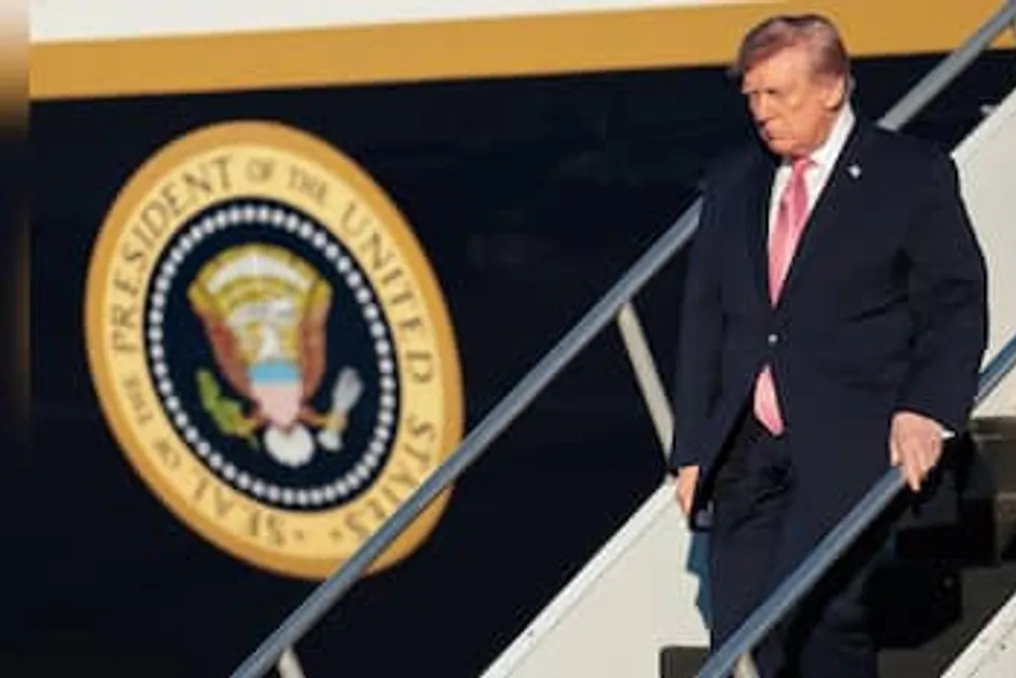
As markets await the results of the US midterm elections, analysts note that a Democratic Party victory in the House of Representatives and Senate could significantly weaken President Donald Trump's political power, potentially turning him into a puppet president for the last two years of his term.

According to analysts, this could provoke a prolonged political confrontation in Washington, leading to consequences for global markets and potentially creating opportunities for Indian stock markets.

A Democratic triumph might force Trump to rely more frequently on his veto power and executive actions to advance his agenda, thereby increasing the risk of political and constitutional clashes.

V K Vijayakumar, Chief Investment Strategist at Geojit Investments, stated: 'This could even trigger a constitutional crisis with adverse consequences for the US market. India might benefit from this turmoil.'

Historically, in the last 80 years, the party holding the White House has only gained seats in Congress in two midterm elections. Trump experienced a significant reversal in 2018 when Republicans lost 41 seats in the House, and Democrats took control, after which investigations and impeachment began in 2019.

Other major setbacks include the loss of 54 House seats by Democrat Bill Clinton in 1994 and the loss of 63 seats by Democrat Barack Obama in 2010.

Balance of Power

According to Emkay Global, the US midterm elections could lead to Democrats taking control of the House of Representatives and Senate from Republicans, ending the Republican triumvirate and potentially turning President Donald Trump into a puppet leader for the remainder of his term.

However, the brokerage firm warns that the typical puppet presidency dynamic may not work for Trump, given his tendency to challenge political norms and extensive use of executive measures.

Madhavi Arora and Harshal Patel from Emkay Global noted in a memo dated October 30: 'The usual puppet presidency dynamic may not apply, given Trump's inclination to violate long-established norms and his extensive use of executive actions, which could only accelerate in the event of a Democratic victory.'

Impact on Stock Market

For stock markets, political uncertainty arises at a time when US stocks are showing significant momentum, yet financial conditions have tightened, and energy prices remain high. These factors, according to the brokerage house, could limit capital appreciation.

However, historical trends offer some reassurance. According to Emkay Global, the S&P 500 index has historically risen by an average of about 6 percent over 60 trading days following previous midterm elections, reaching 12 percent over 120 days and 17 percent over 180 days.

The brokerage firm also believes that a period of heightened political instability in the US could increase the relative attractiveness of other emerging markets, including India. Nevertheless, the extent of the benefit will depend on how the political confrontation affects the dollar, US Treasury yields, global risk appetite, and foreign investment inflows.

Impact on Commodities

For commodities, the impact of the elections will depend more on policy outcomes than on the political result itself. Analysts at Motilal Oswal Financial Services believe that a Republican victory could signal broader fiscal expansion, persistent uncertainty regarding tariffs, and higher inflation risks, which could potentially support US Treasury yields and the dollar, while creating short-term headwinds for gold and silver.

On the other hand, Democratic control could limit further fiscal expansion and ultimately temper expectations for economic growth, bond yields, and the dollar. Simultaneously, increased political confrontation in Washington could boost demand for safe-haven assets, potentially supporting precious metals.

Navneet Damani and Manav Modi from Motilal Oswal Financial Services wrote in a memo dated October 30: 'For crude oil, the elections matter primarily through US foreign policy, Iran, and sanctions, while copper and other base metals will remain between the US growth forecast and tariff direction.'

Geopolitical events could further complicate the outlook. Damani and Modi added that any resumption of escalation in the Middle East conflict could restore a geopolitical risk premium for crude oil, increase inflation expectations, and raise Treasury yields.

This could create a complex environment for financial markets, where geopolitical uncertainty supports demand for gold, while higher bond yields simultaneously act as a counterweight to precious metals.

Similar stories

Priyank Hardge calls on electric vehicle companies to participate in shaping Karnataka's growth roadmap
Read more
yourstory.com

Priyank Hardge calls on electric vehicle companies to participate in shaping Karnataka's growth roadmap

Creating an ecosystem for electric vehicles requires more than just putting new vehicles on the road; it also needs battery research, specialized engineering talent, testing centers, and a manufacturing base capable of supporting a growing industry.

In line with Karnataka's ambition to strengthen its position in the electric vehicle sector, Minister for Home Affairs, Electronics, Information Technology, Biotechnology, and Electronic Governance Priyank Hardge appealed to industry representatives to help develop a roadmap for the state's electric mobility ecosystem.

Ahead of the Technology Summit in Bengaluru in 2026, Hardge organized a roundtable with companies and stakeholders from Karnataka's electric vehicle industry. The meeting aimed to ascertain participants' priorities, identify areas for collaboration, and discuss ways to accelerate sector development.

Representatives from companies such as Exponent Energy, Ultraviolette, Simple Energy, Sun Mobility, Moonrider, and Multiplex EV, along with other manufacturers, technology firms, battery and energy solution providers, and startups, participated in the event.

The topics discussed covered several areas that could strengthen Karnataka's electric vehicle ecosystem. These included industry-led research and development, advanced testing and certification facilities, professional training programs, incubation support, and manufacturing infrastructure.

Priyank Hardge emphasized that government support must be based on the real needs of companies operating in the electric vehicle value chain. He stated: 'The government is ready to support the growth of the electric vehicle sector in Karnataka. However, our interventions must be guided by what the industry truly needs.'

He strongly urged companies to unite, define common priorities, and present a consolidated roadmap to the government. This will help determine which support measures and infrastructure projects should be implemented.

During the interaction, talent development was a key issue. As the electric vehicle industry expands, companies require specialists in areas such as battery technology, embedded systems, firmware, power electronics, vehicle diagnostics, manufacturing, and after-sales service.

To meet this demand, Hardge proposed an industry-supported training model where companies could assist in developing curricula, certifying candidates, and providing job opportunities. This approach would bring employers closer to the training process, ensuring that taught skills meet industry requirements.

The Minister also encouraged companies to examine existing policy incentives in Karnataka designed for R&D in manufacturing and engineering. Discussions included opportunities to strengthen local manufacturing capacity and reduce import dependence.

Since the electric vehicle industry encompasses vehicle manufacturing, battery systems, electronics, software, and energy infrastructure, Karnataka aims to integrate these capabilities to support innovation and production within the state. This roundtable is part of the state's engagement with the industry ahead of the Technology Summit in Bengaluru in 2026, and the proposed roadmap is expected to help define priorities for the next phase of the electric vehicle ecosystem's development.

Capital of Uzbekistan's banks grew by 17.3% over the year, reaching 152.9 trillion soms
Read more
uzdaily.uz

Capital of Uzbekistan's banks grew by 17.3% over the year, reaching 152.9 trillion soms

According to data from the Central Bank of Uzbekistan, the total capital of commercial banks in Uzbekistan reached 152.9 trillion soms as of October 1, 2026. This represents an increase of 17.3% compared to the same period last year, when the figure was 130.4 trillion soms.

The regulatory capital in the banking sector increased by 17.6%, amounting to 169.4 trillion soms. Since assets grew at comparable rates, the capital adequacy ratio remained virtually unchanged at 18.18%, compared to 18.19% the previous year.

Tier 1 capital adequacy indicators showed a slight decrease. The Tier 1 capital adequacy ratio was 14.99% compared to 15.06%, and the total Tier 1 capital ratio decreased to 14.61% from 15.02% previously.

Tier 1 capital increased by 17.6%, reaching 140.3 trillion soms, which accounts for 82.8% of the regulatory capital. Meanwhile, the total Tier 1 capital grew by 14.4% to 136.2 trillion soms. Additional Tier 1 capital increased almost elevenfold, rising from 0.38 trillion to 4.1 trillion soms.

Tier 2 capital increased by 20%, reaching 29.7 trillion soms. Profit was the main source of growth in banks' equity. Undistributed profit grew by 55.4% year-on-year, reaching 34.6 trillion soms, and its share in the total bank capital increased from 17.1% to 22.6%.

Shareholder capital increased by 9.6% to 101.2 trillion soms, while reserve capital grew by 10.6%, reaching 15.9 trillion soms.

Four banks had capital exceeding 10 trillion soms: National Bank of Uzbekistan with 21.2 trillion soms, Agrobank with 13.9 trillion soms, Uzpromstroybank with 13.1 trillion soms, and People's Bank with 11.5 trillion soms. Together they accounted for 39% of the total banking system capital, down from 42% the previous year.

Seven banks had capital in the range of 5 to 10 trillion soms, accounting for 33.8% of the total. Another eight banks had capital between 2 and 5 trillion soms, representing 18%. Five banks had capital from 1 to 2 trillion soms, and ten had capital from 500 billion to 1 trillion soms. Only one bank had capital below 500 billion soms, compared to four such banks the previous year.

Smaller banks demonstrated the highest capital buffers. The capital adequacy ratio among six banks with assets up to 3 trillion soms was 27.2%, and among six banks with assets from 3 to 10 trillion soms, it was 20.8%. Among the 12 largest banks, each with assets exceeding 30 trillion soms, this ratio was 17.6%.

Dollar retreats amid Democratic gains, while Asian stock markets fall after US elections
Read more
noticiasaominuto.com

Dollar retreats amid Democratic gains, while Asian stock markets fall after US elections

The US dollar retreated against major currencies, and Asian markets registered declines, driven by the Democratic party's advances in the initial results of the midterm elections held on Tuesday in the United States. These results have intensified concerns about possible political deadlocks.

Around 02:30 today, in Lisbon, the US dollar lost 0.41% against the euro, reaching 0.89 cents, and fell 0.65% against the Japanese currency, reaching 157.65 yen.

Simultaneously, on the Tokyo Stock Exchange, the main index of Japan's capital, the Nikkei, was down almost 3.6%. In Seoul, the capital of South Korea, the Kospi index showed a decline of 0.97%. In China, the main indicator of the Hong Kong Stock Exchange lost 0.24%, and in Shanghai, the Chinese financial capital, the SSE Composite Index, receded by 0.22%.

The voting assemblies in half of the American states have already closed, initiating the counting of the midterm elections, where the Democratic and Republican parties compete for control of Congress.

The first data from Tuesday's vote suggests a superior performance by the Democratic opposition in both the House and the Senate of the US parliament, when compared to the 2024 elections.

It is estimated that more than 250 million voters are eligible to participate in these midterm elections, aiming to renew the 435 seats of the House of Representatives and approximately one-third of the Senate (33 of 100 seats), in addition to two seats in the upper house representing Florida and Ohio.

The outcomes of these elections will determine the final two years of the administration of Republican President Donald Trump. More than 60 million American citizens have already voted early, a number that exceeds the figure recorded in the 2022 midterm elections by almost 15 million.

Popular