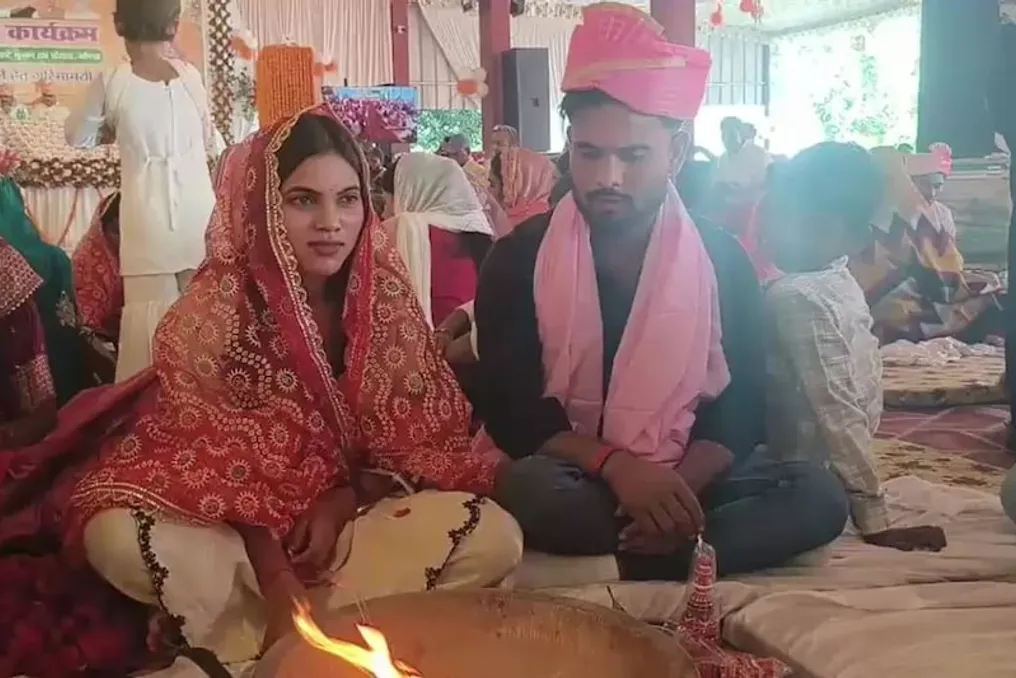
The story of Rani and Ranjit illustrates the difficulties faced by low-income families when preparing for a wedding. Although their wedding was planned, their families' financial situation made organizing the celebration extremely difficult. Rani comes from a poor family, and Ranjit works in the cosmetic business.
Thanks to participation in the government's mass marriage program, their wedding took place. This story is not unique; 7,218 weddings have already been held under the mass marriage program in the Gonda district of Uttar Pradesh. The goal of this initiative is to assist economically weaker families in covering wedding expenses so that lack of funds does not become an obstacle to marriage.
Rani lives in Tanepur, Gonda district, and her family is in a vulnerable financial position. Ranjit also lives in Tanepur and works in the cosmetics sector. Despite their wedding being approved, financial difficulties complicated the preparations. The mass marriage program became a support for their families, allowing them to get married after being selected for the program. Rani and Ranjit noted that without this program, holding the wedding would have been very difficult, and now both families are happy they could marry despite the financial problems.
During the mass marriage ceremony, various couples held their weddings while following their traditions. In some places, rituals were performed in a mandap, while in others, the groom performed the ritual of washing the bride's hands and completed seven rounds, and in third places, the Nikah ritual concluded. The couples who got married were also provided with household items to start their new life together.
According to SP Singh, an official from the Gonda District Social Welfare Department, each bride receives 64 thousand rupees into her account under the mass marriage program. Additionally, they are provided with a set of household items worth 15 thousand rupees. This officer also reported that, as of now, the program has helped 7,218 couples in Gonda district get married, thereby supporting thousands of economically vulnerable families in the district.
Thus, for many couples like Rani and Ranjit, this program opens up the opportunity to start a new life by overcoming financial barriers.