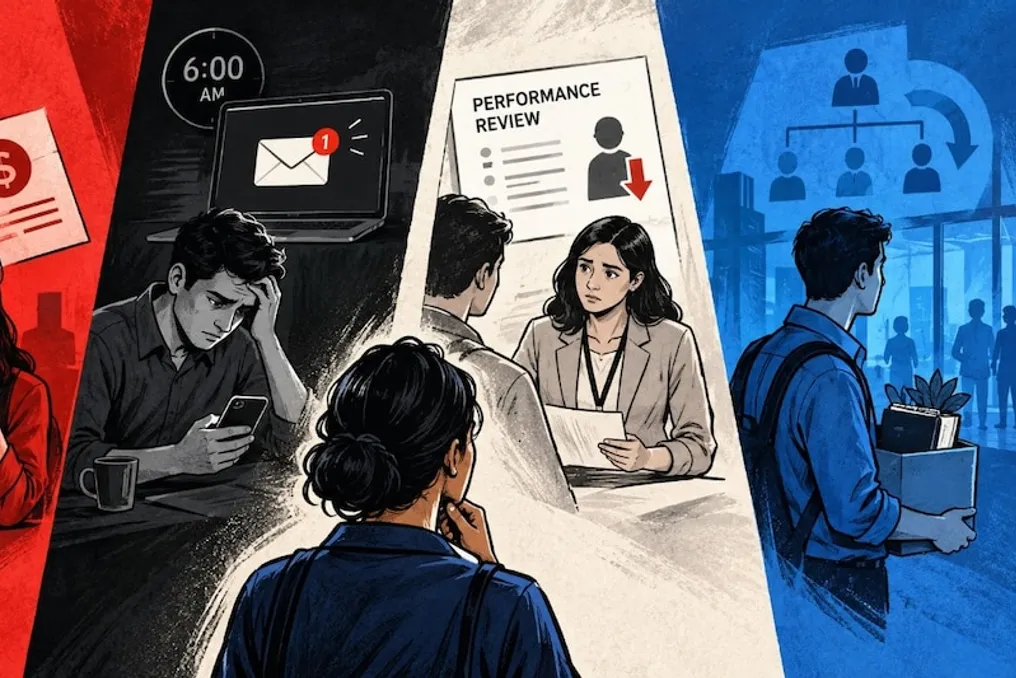
Canva is undertaking a large-scale workforce restructuring affecting 1,271 employees, which accounts for 22% of its total staff, as it reorganizes its business to align with rapid technological changes. These changes include staff reductions, role modifications, and relocation requests, although the company has not yet disclosed the exact number of laid-off employees.
CEO Melanie Perkins stated that this restructuring followed the company's first growth slowdown in the last decade and reflects the need to rethink working methods and team organization. In a memo to employees published on November 4th, Perkins called this the most challenging moment in Canva's 13-year history. She noted that 'new technologies are transforming what people can create, how they do it, and what they expect from the products they use.'
The memorandum did not directly blame artificial intelligence for the staffing changes. It also cited slowing growth and a fragmented organizational structure that arose during the company's expansion. Perkins wrote: 'After studying a wide range of alternatives, I came to the difficult conclusion that small changes would not be enough. To prepare for the next decade, we need to restructure Canva by returning to our roots—small, empowered teams that have the freedom to make decisions, take responsibility, and focus on what is most important to our community.'
Canva will merge its product, growth, and platform teams into a single product organization, reduce narrow specialization, and eliminate management layers. Sydney will become the main base for more product teams. Starting in January, most hybrid employees will be required to work in the office two to three days a week, depending on their location.
Founded in Australia in 2013 by Perkins, Cliff Obrecht, and Cameron Adams, Canva has evolved into a global design platform. The company claims that its platform is used by over 250 million people monthly. Canva is now striving to move beyond template-based design. This year, Canva AI 2.0 was introduced, allowing users to create and edit multi-layered designs through dialogues with an AI assistant. In October, the company also announced new AI-powered tools and a design-focused model.
In August, Canva lowered its revenue growth forecast for 2026 from 30% to 20% because the cost of implementing AI features proved higher than expected. Competitors are also expanding their offerings. On November 3rd, Figma announced an AI feature that uses prototype interactions as context when generating code. In March, Atlassian announced layoffs of about 1,600 jobs, or 10% of its staff, partly to fund larger investments in AI. This week, the Squarespace platform announced a voluntary staff reduction of 19%, citing the need to streamline operations.
Regulation is developing parallel to technology. As of August 2nd, transparency requirements under the EU AI Act apply to certain AI systems. These include informing users about interaction with AI and ensuring machine-readable labels for AI-generated results. Canva assured that departing employees will receive at least six months' salary, 12 months of health insurance in countries where it is provided, career support, and access to $10,000 grants for those wishing to start their own business.