Differences Between CFRP and GFRP Rebar: A Comparison of Characteristics and Cost
Read more
Aaj Tak
www.aajtak.in

Differences Between CFRP and GFRP Rebar: A Comparison of Characteristics and Cost

In the market, besides TMT steel rebar, many types of fiber reinforcement are now available. Each type of fiber reinforcement possesses its unique properties. CFRP and GFRP are such fiber reinforcements, and it is important to understand which one will be more cost-effective and accessible.

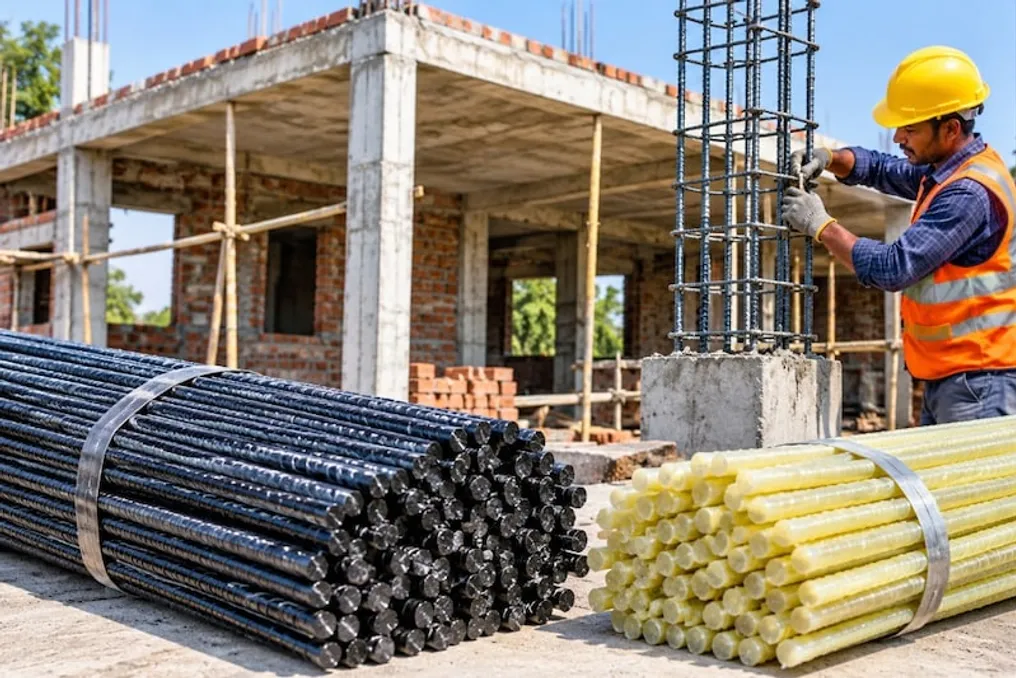
CFRP rebar consists of carbon fiber reinforced with polymer, while GFRP stands for glass fiber polymer rebar. Both these rebars belong to FRP (Fiber Reinforced Polymer) reinforcement based on fibers. The main differences between them lie in strength, material composition, and price.

CFRP rebar is manufactured by bonding carbon fibers with resin. Its tensile strength and modulus of elasticity are significantly higher than those of GFRP. It bends less and is ideal for high-load or prestressed applications.

It is important to note that CFRP is a good electrical conductor, meaning there is a possibility of current penetration. It is usually not used as primary reinforcement in standard construction; rather, it is applied to strengthen old structures or in specialized projects with high technical requirements.

When renovating a house that requires the installation of new columns or beams, using CFRP rebar would be preferable because it doubles the strength of the old house.

On the other hand, GFRP rebar, or glass fiber polymer rebar, is created by combining thousands of thin glass fibers using resin. It looks like plastic or a yellowish, light-colored material. It is about four times lighter than steel and is completely resistant to corrosion.

Although its stiffness is lower than CFRP, GFRP is an excellent insulator and does not cause magnetic interference. Therefore, it is more often used on coastlines, bridges, sewage systems, and in areas with a high risk of rust. It is most frequently used in buildings where magnetic laboratories are installed, such as MRI machines.

Compared to CFRP, GFRP rebar is significantly more affordable. CFRP is quite expensive due to the high cost of the carbon fiber itself and its production process, as well as its limited application in general residential construction.

Generally, the cost of GFRP rebar material is 40% to 60% lower than that of CFRP. It is used in the construction of ordinary houses. If compared to steel rebar, which costs around 54–66 rupees per kilogram in the market, the price of GFRP rebar ranges from 150 to 300 rupees per kilogram depending on quality and size. However, due to its lightness and lack of corrosion, GFRP can be more economical in the long run by reducing maintenance costs.

Similar stories

What are MLP sheets and why are they more in demand than fiberboard and plywood?
Read more
www.aajtak.in

What are MLP sheets and why are they more in demand than fiberboard and plywood?

Currently, people increasingly prefer MLP sheets to traditional wooden alternatives, such as standard fiberboard and plywood, when building, decorating interiors, and making furniture. Demand for them is growing rapidly in the construction and furniture manufacturing sectors. This article examines what MLP sheets are, why their popularity has increased, and where they are used.

MLP sheets are multilayer plastic sheets or boards made from recycled plastic waste. They are produced by compressing plastic trash, such as chip bags, snack wrappers, and packaging foil, under high temperature and pressure. MLP sheets are distinguished by their eco-friendliness and durability.

These sheets have become widely used in interior design, construction, and outdoor furniture production for several reasons. Primarily, MLP sheets are completely waterproof and moisture-resistant. Unlike plywood or fiberboard, which swell, rot, or delaminate when exposed to water or humidity, MLP sheets, being entirely plastic, are unaffected by water.

Furthermore, there is always a risk of termite infestation in wooden products. Since MLP sheets lack any natural fibrous component, they are completely protected against termites. Whereas fiberboard is made from wood chips, which also creates a risk of termite infestation.

On construction sites, standard plywood boards can only be used a limited number of times for formwork. However, MLP sheets can be reused far more often than standard boards, significantly reducing project costs. These materials are also very strong and dense; they can withstand loads from 250 to 5000 kilograms, making them suitable for heavy-duty work. The material does not rot or deteriorate over time, so MLP sheets last four times longer than traditional wood or plywood.

The main advantage of these sheets is their environmental friendliness. Nowadays, people are highly environmentally conscious. MLP, which is multilayered plastic waste that was difficult to recycle and accumulated in landfills, is now turned into useful boards.

Furniture or cabinets made from MLP sheets require zero maintenance. Furniture made from these sheets, especially garden or outdoor furniture, does not need painting or periodic polishing. Their applications are diverse: they can be used for small partitions in homes, as panels in suspended ceilings, and for making kitchen and bathroom cabinets. In humid areas, such as kitchens and bathrooms, they can be used as wall panels.

MLP sheets are used to create wardrobes near damp walls to keep clothes safe. They are also used for temporary walls or partitions, as well as in construction for formwork and barriers. They are used to make furniture such as tables, chairs, and benches. Thus, in every aspect, MLP sheets prove to be more economical, durable, and stronger compared to plywood and fiberboard. They are completely protected from termites and water, and they have a low cost, requiring zero maintenance expenses.

Scientific study points out that peels and discarded parts of fruits and vegetables are richer in fiber
Read more
super.abril.com.br

Scientific study points out that peels and discarded parts of fruits and vegetables are richer in fiber

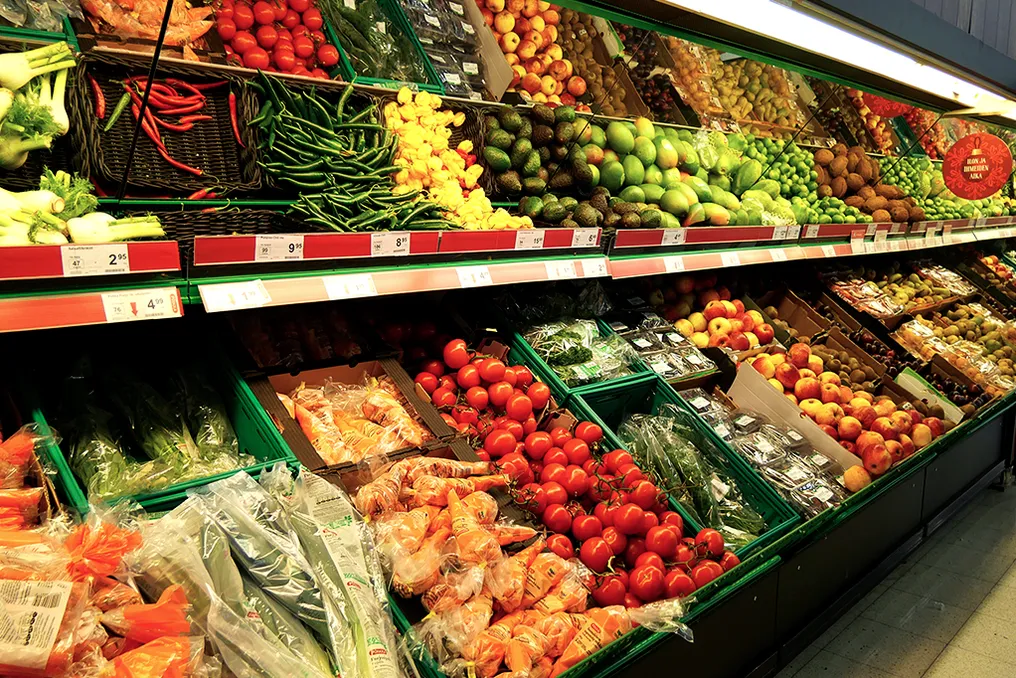
There is a debate about whether consuming the peels of fruits and vegetables brings health benefits, and a new study reinforces this hypothesis. Parts such as peels, seeds, and stems are often thrown away after consuming fruits and vegetables, but some people already suspected that these residues could be more nutritious than the pulp.

The research, published in the scientific journal International Journal of Food Sciences and Nutrition, demonstrated that, in fact, the peels, seeds, and stems contain a higher concentration of fiber than the habitually ingested parts of these plants.

A group of scientists from King's College London initiated an analysis focused on the fiber content of twelve types of fruits and vegetables, including pumpkin, kiwi, watermelon, broccoli, bell pepper, pineapple, leek, fennel, cabbage, celery, cauliflower, and beetroot. The objective was to quantify and compare the amount of fiber in both the most consumed portions and the usually discarded parts, such as peels, seeds, and stems.

The investigation results indicated that, in ten of the twelve tested foods, the unconsumed portions showed a higher fiber content. A notable example was pineapple, where the peel and core had approximately 450% more fiber compared to the pulp. In pumpkin, the seeds and peel registered 9.25 grams of fiber per 100 grams, while the pulp contained only 2 grams.

Utilizing these food parts through an approach called 'root-to-tip' by the authors has the potential to significantly increase fiber intake among the population. This aspect is particularly relevant given that a significant portion of people do not meet the recommended daily fiber goal. Data from the Family Budget Survey (POF) reveals that 68% of Brazilians consume insufficient fiber.

However, one obstacle is that these parts of fruits and vegetables tend to be hard, difficult to chew, and often do not have a very palatable taste when eaten raw. For this reason, researchers suggest that these parts can be incorporated into recipes, being grated, crushed, baked, or using other preparation methods. In addition to potential nutritional gains, this practice can also contribute to reducing food waste and, in the context of restaurants, reducing kitchen operational costs.

The authors concluded that, although fruit and vegetable byproducts have been studied to increase fiber content, the level of fiber in many 'root-to-tip' components is still unknown. They state that these findings suggest that 'root-to-tip' consumption can promote higher dietary fiber intake while helping to reduce food waste.

Low Price on Supplements: Savings or Potential Health Risk?
Read more
g1.globo.com

Low Price on Supplements: Savings or Potential Health Risk?

When choosing dietary supplements, price often attracts the attention of consumers who compare the cost of various products, striving to find an option that fits their budget. However, a low price does not guarantee better savings, as neither a cheaper nor a more expensive product is automatically superior in quality.

A complex set of factors is key, including composition, amount per dose, label data, presence of approvals, manufacturer information, and quality control. Therefore, focusing solely on price can lead to overlooking important details for making an informed decision.

What Should Be Checked Before Looking at the Price?

The first piece of advice is to analyze the product as a whole. The Anvisa agency requires that dietary supplements contain information such as an ingredient list, nutritional table, usage recommendations, warnings, consumption limits, as well as batch number and expiration date. Furthermore, starting in September 2024, dietary supplements began following new registration rules requiring notification to Anvisa.

This allows the consumer to look beyond the price tag and ensure they are purchasing exactly what they expect. It is also important to compare the number of servings. Two products may have different prices but offer a different amount of ingredient or a different number of doses. In this case, looking only at the package cost can create a false impression of savings.

Is Low Price Always a Problem?

No. A more affordable supplement can be a good choice because price itself does not determine the quality or safety of the product. The problem arises when a very low cost is accompanied by signs of irregularity: absence of mandatory information, unknown manufacturer, overly optimistic promises, or sale through unreliable channels.

Anvisa itself advises purchasing supplements in physical stores or on verified websites and warns that irregular products can cause issues related to composition, production, or safety. Thus, perhaps the more interesting question is not 'what is the cheapest?', but 'what am I considering besides the price?'

What Factors Can Influence the Choice?

There is a range of criteria that help conduct a more comprehensive evaluation of products:

  • Composition: It is necessary to check which ingredients are present and in what quantities.
  • Dose and Yield: Attention should be paid to the number of servings in the package and the content of the ingredient in each serving.
  • Labeling: It is important to study the nutritional information, ingredients, expiration date, batch, method of use, and warnings.
  • Registration: One needs to look for information about the product's status with relevant regulatory bodies.
  • Manufacturer and Origin: Preference should be given to official channels and reliable enterprises.
  • Quality Control: Choosing brands that pay attention to quality in production processes and apply control criteria throughout the manufacturing process contributes to a more conscious choice.

What Role Does Maltta Nutrition Play?

Maltta Nutrition operates based on the principle that taking supplements should combine accessibility, formula, and care for quality. The brand states that its history is linked to Grupo DUOM, which has 17 years of experience, and emphasizes the use of selected ingredients, as well as conducting tests and quality control of its products.

An example is Maltta Creatine Monohydrate, a product that is 100% pure and monohydrated, without other additives, and undergoes long-term stability testing. This creatine was monitored for 24 months under controlled temperature and humidity conditions and underwent analysis and quality control for every batch. Additionally, it comes with information on usage restrictions: creatine is not suitable for pregnant women, nursing mothers, or children.

These features help understand that the value of a supplement is determined not only by the price on the shelf but by all the processes that precede its arrival to the consumer. Moreover, quality starts with the selection of raw materials: at Maltta Nutrition, the raw materials used are accompanied by protocols that allow checking their content, purity, and origin, which contributes to the control and quality of the offered products.

Price-to-Quality Ratio Differs from Low Price

Thinking about the price-to-quality ratio means assessing how much you are paying relative to what the product offers. Imagine two products: one costs less but has fewer servings; the other is slightly more expensive but offers more ingredient or more doses in the package. Comparing by total price may lead to a different conclusion than comparing by the cost of a single serving.

Furthermore, aspects such as origin, clear information, stability, and quality control are also part of the consumer experience and are not always displayed on the price tag.

A Good Choice Does Not Mean Choosing the Most Expensive

There is no rule that dictates that more expensive supplements are better. Likewise, one should not automatically consider a cheap product suspicious. The most important thing is to evaluate the available information and conduct a conscious comparison. A competitive price can fully correspond to a quality product if the formula and production are backed by a proper structure.

Ultimately, true savings are not just about paying a smaller amount. It is about buying a product that suits your needs, has a reliable origin with clear composition and information, and at a price that makes sense to you. And before starting any supplement regimen, one should remember: the need for the product and the way it is taken must take into account individual characteristics and, if necessary, consultation with a healthcare specialist.

Popular