Leaders of DeepSeek, Qwen, and MiniMax Discuss Risks of Open Models at Uzhchen Summit
Read more
Pandaily
pandaily.com

Leaders of DeepSeek, Qwen, and MiniMax Discuss Risks of Open Models at Uzhchen Summit

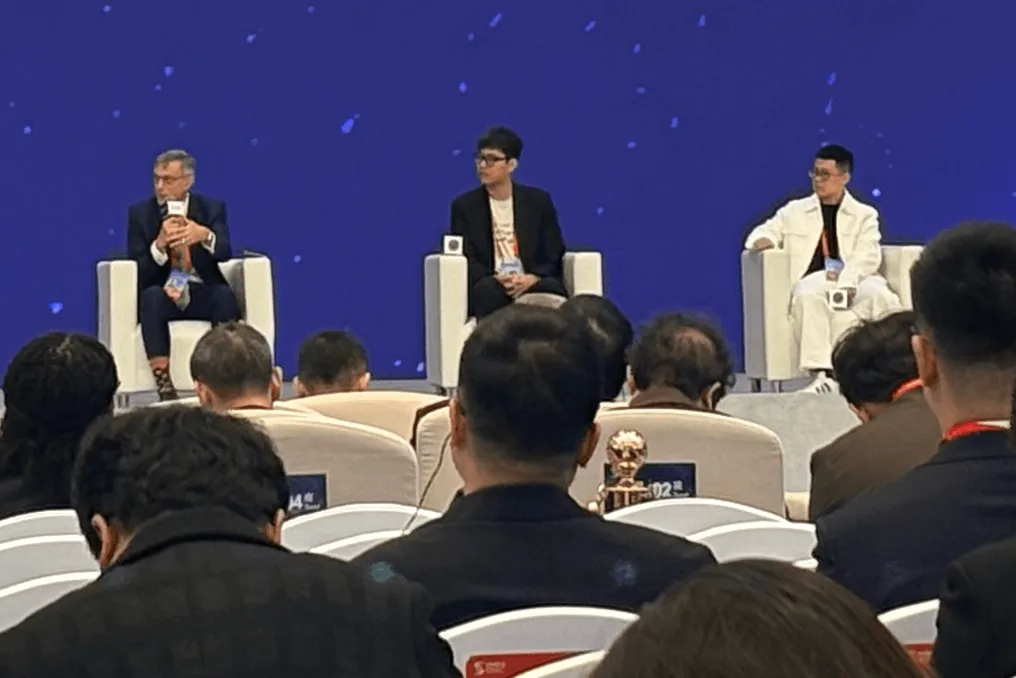
Representatives from three leading Chinese open model developers—DeepSeek, Alibaba's Qwen team, and MiniMax—participated in a discussion about the reasons for releasing their models as open source and how open models should be regulated. The event took place on November 3rd at the World Internet Conference Summit in Uzhchen.

The session, titled 'Uzhchen Dialogue on Artificial Intelligence,' was moderated by Wang Jian, an academician of the Chinese Academy of Engineering and director of Zhejiang Lab. Participants included DeepSeek engineer Si Gao, Qwen LLM project lead Daiheng Liu, MiniMax chief architect and head of the open platform Wen Feng, and John Higgins, chairman of the International AI Governance Association.

Si Gao stated that DeepSeek's goal for open access is simple: to achieve artificial general intelligence faster. In his view, time, rather than other companies, is the main competitor for AI laboratories. He noted that technical hurdles might temporarily slow down rivals, but publishing research attracts capable colleagues to build more advanced models based on DeepSeek's work.

Daiheng Liu reported that Qwen has released over 460 models since the first generation appeared three years ago, accumulating over 4 billion global downloads and more than 330,000 derivative models. He argued that open source code accelerates innovation and makes AI widely accessible, allowing not only for the use of models but also for participation in their creation.

In turn, Wen Feng explained that MiniMax aims to bring differentiated value by releasing models for various modalities and sharing engineering experience, including information on encountered problems, experiments conducted, data modifications, and tools.

Regarding risks, Liu highlighted two characteristics inherent to open models. The first is irreversibility: once released, the model spreads everywhere and cannot be fixed as easily as a deployed model. The second problem is the lack of external protection systems, as security depends on built-in precautions that third-party developers may attempt to bypass. He stressed that model limitations alone are insufficient to address governance issues, calling for the adoption of laws, industry standards, and the creation of supporting infrastructure.

Liu also added that openness contributes to security because models with transparent architectures allow a larger number of researchers to study them, and open models can be used in cybersecurity. He suggested that current capabilities might be underestimated, noting that even models with 1.5 billion parameters can be activated using new post-training methods.

Wen Feng countered that open models are often a more controlled choice for the industry, as companies can fine-tune and deploy them privately. Si Gao acknowledged that open source code can increase AI security risks and stated that DeepSeek is responsible for preventing their proliferation and is actively seeking solutions.
Similar stories

WIC Wuzhen 2026 Summit Opens with Focus on Open Artificial Intelligence
Read more
cgtn.com

WIC Wuzhen 2026 Summit Opens with Focus on Open Artificial Intelligence

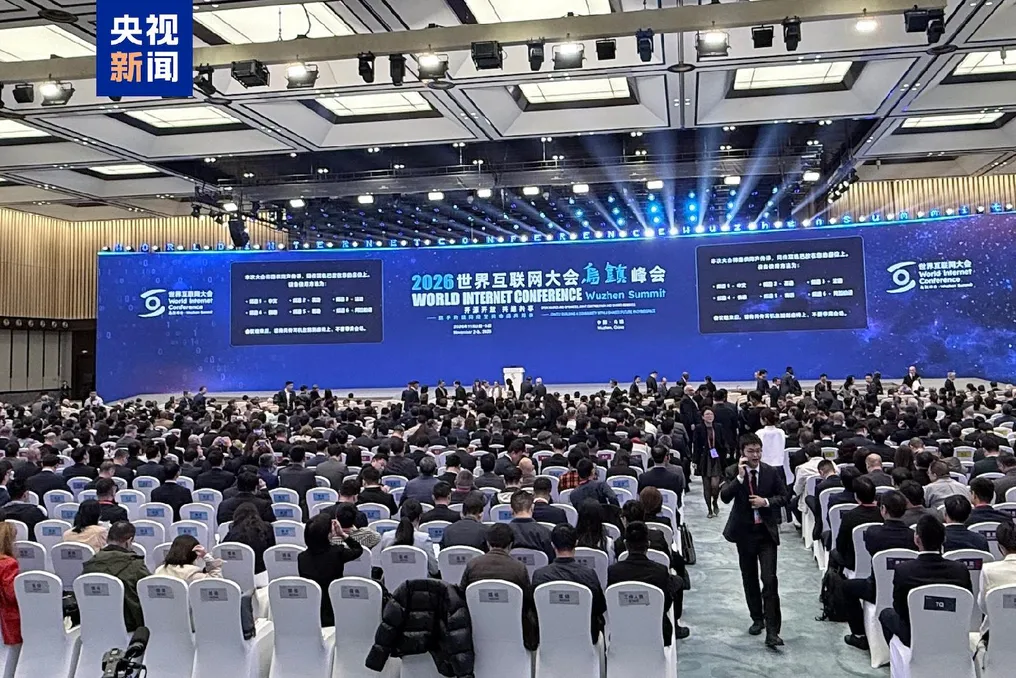
The World Internet Conference (WIC) Wuzhen Summit opened in Uchen City, Zhejiang Province, eastern China, on Tuesday. The event gathered representatives from governments, international organizations, business, and academic circles from around the world.

This year's theme was formulated as 'Open Source and Openness, Collaborative Development and Shared Benefits – Jointly Building a Community with a Common Future in Cyberspace.' The summit places a primary focus on open artificial intelligence, covering areas such as technological innovation, security management, cultural exchange, and international cooperation.

A central element of the main forum was the AI Dialogue in Uchen, which brought together leading global technology companies, executives of open-source large language model companies, and AI scientists to explore ways to create a global ecosystem for open AI. Furthermore, the summit includes 27 subforums dedicated to topics such as cyberspace cooperation within the Global Governance Initiative, theory and policy in the digital and intelligent era, and robotics and embodied intelligence.

International participation was noted in case competitions and technology awards. The call for submissions showcasing outstanding examples of jointly building a community with a common future in cyberspace received 360 applications from 80 countries and regions, with 22 countries participating for the first time. Eleven top cases were selected. Meanwhile, the World Internet Conference awards for innovative science and technology received over 430 applications from 43 countries and regions; eighteen countries and regions presented their work for the first time, and the number of international submissions increased by 21% compared to the previous year. In total, 20 projects were awarded.

Wan Jian, an academician of the Chinese Academy of Engineering, expressed his view that WIC will continue to play a significant role in the development of AI in China. He noted that since open source and openness are global in nature, the Uchen Summit can contribute to China's involvement in the global development of AI.

John Hoffman, CEO of GSMA Ltd., stated that the Uchen Summit serves as a platform for exchanging information and uniting ideas on how to create an open internet accessible to all. He added that this year's theme reflects the summit's long-standing commitment to the principle of 'leaving no one behind' and creating opportunities for the future world.

QpiAI Founder Nagendra Nagaraja Advocates for Intelligence Modeling Over Traditional AI
Read more
yourstory.com

QpiAI Founder Nagendra Nagaraja Advocates for Intelligence Modeling Over Traditional AI

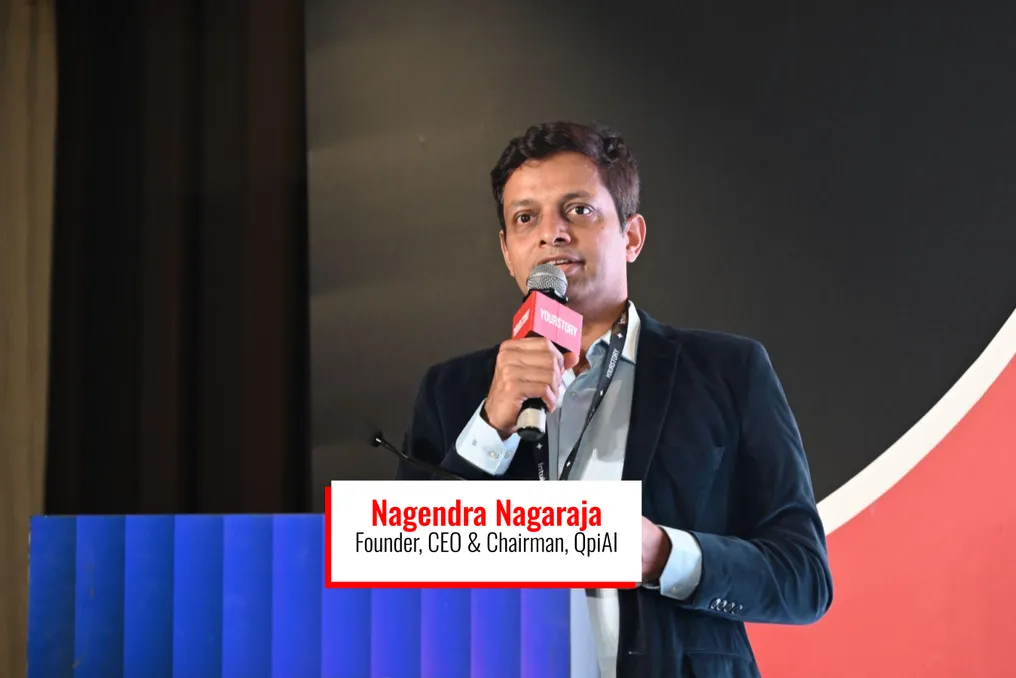
Nagendra Nagaraja, founder, CEO, and Chairman of the Board of Directors of QpiAI, believes that artificial intelligence is misunderstood. He stated that he prefers to use the term 'intelligence modeling' instead of 'AI' during his keynote speech at TechSparks, which is YourStory's flagship technology startup event.

According to him, traditional AI primarily focuses on automating tasks by using digitized human knowledge, rather than expanding human understanding. Nagaraja asserts that true intelligence requires a fundamental paradigm shift. He defines intelligence as the ability to learn new things that were previously unknown.

Today's AI boom relies on classical microprocessors that process information using binary codes (zeros and ones). However, silicon semiconductors face physical limitations as chip performance scales. Heat generation due to electrical resistance creates design challenges in chips, forcing companies to adopt advanced packaging methods, including three-dimensional chip stacking.

Concurrently, large data centers are placing increasing demands on power grids, some of which consume gigawatts of electricity. Nagaraja noted that many AI companies are forced to pay an 'NVIDIA tax' for using GPUs.

Furthermore, Large Language Models (LLMs) trained on human text are reaching data saturation and yielding diminishing returns despite the need for trillions of dollars in investment. In Nagaraja's view, the fundamental limitation of current AI is its complete dependence on digitized human text, which represents a minuscule fraction of global information.

Most of the data in the universe, encoded in electrons, molecules, DNA, and crystalline materials, exists in a non-quantum, quantum state that classical GPUs cannot process. Processing complex mathematical problems like NP-hard on classical supercomputers could require calculations spanning $10^{25}$ years. Quantum computing solves this problem by using qubits, which process multidimensional data exponentially faster.

Nagaraja emphasized the urgency of the task: 'As humanity, over the last 5000 years we have known $10^{10}$ molecules... We need to know $10^{50}$ molecules. And we don't have 25,000 years. We must do it in one decade.'

Nagaraja argued that transitioning from human-generated text to modeling natural systems has the potential to transform entire industries. He pointed out that there are only two major industries in the world—energy and computation; all others are derived from them.

He cited the example of modeling complex chemical reactions related to plant nutrient uptake and processing. According to Nagaraja, such problems may be inaccessible to classical computation at a large scale. He suggested that a quantum system with 3000 logical qubits—error-corrected qubits designed for more reliable operation than physical qubits—could model such reactions, potentially changing agricultural production.

Similarly, quantum hybrid models, combining classical software with quantum hardware, are already improving the efficiency of financial fraud detection in large banks with significantly lower energy consumption.

Unlocking these capabilities requires advanced hardware and rapid error correction, meaning eliminating quantum noise in real time. Nagaraja reported that QpiAI operates what they call Asia's largest quantum fabrication facility in Bengaluru, producing 25 and 64-qubit chips with an error correction rate of 1.4 microseconds, surpassing international standards. The company is currently building a ten-acre quantum data center equipped with 100 quantum computers and plans to develop 1000-qubit chips.

In conclusion, Nagaraja stated that India has made significant progress, becoming one of five countries in the world that produces over 50 qubits. Ultimately, overcoming the current limits of AI requires humanity to become a 'very good student of nature' to utilize its infinite data.

DeepSeek released DeepInfer framework for inference supporting Nvidia and Huawei chips
Read more
technode.com

DeepSeek released DeepInfer framework for inference supporting Nvidia and Huawei chips

DeepSeek has released DeepInfer, an inference execution framework that forms the basis of its large model services. This release occurred on October 20th.

DeepInfer supports Nvidia GPUs as well as Huawei Ascend processors. The framework provides several features, including distributed inference, speculative decoding, and structured output.

According to DeepSeek's statement, the goal of this release is to help developers and enterprises increase throughput and reduce latency while decreasing computational costs and energy consumption.

Furthermore, the company made the deepseek-recipe component publicly available. It is responsible for transforming API requests and handling model input and output in accordance with DeepSeek's proprietary services. Currently, DeepInfer supports the DeepSeek-V4.1-Flash-1017 model, and the company intends to continue releasing inference code and optimizations for future models through this project.

Popular