Brazilian fossils from 115 million years ago may show traces of dinosaur blood
Read more
Super Abril
super.abril.com.br

Brazilian fossils from 115 million years ago may show traces of dinosaur blood

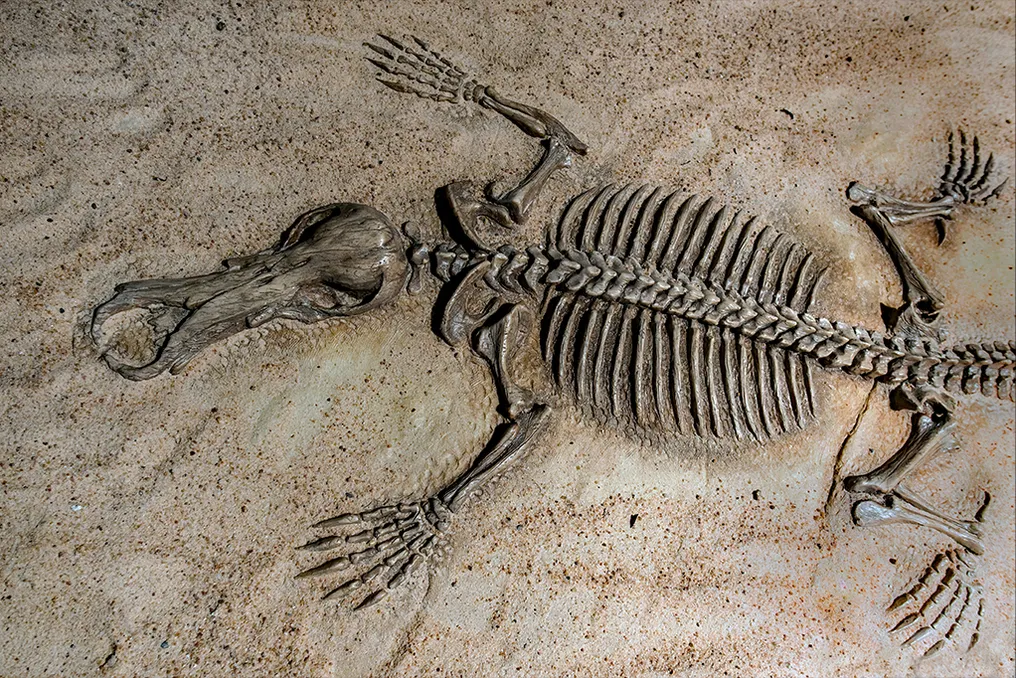
Evidence that dinosaurs inhabited Earth is abundant, ranging from massive bones and serrated teeth to feather impressions, fossilized eggs, and petrified feces. However, a crucial element for understanding the life of these animals—blood—is rarely found in fossil records.

For decades, scientists have searched for blood traces in dinosaur fossils. Such investigations require rigorous exclusion of any possibility of contamination by blood from other species or the presence of structures that merely mimic blood cells.

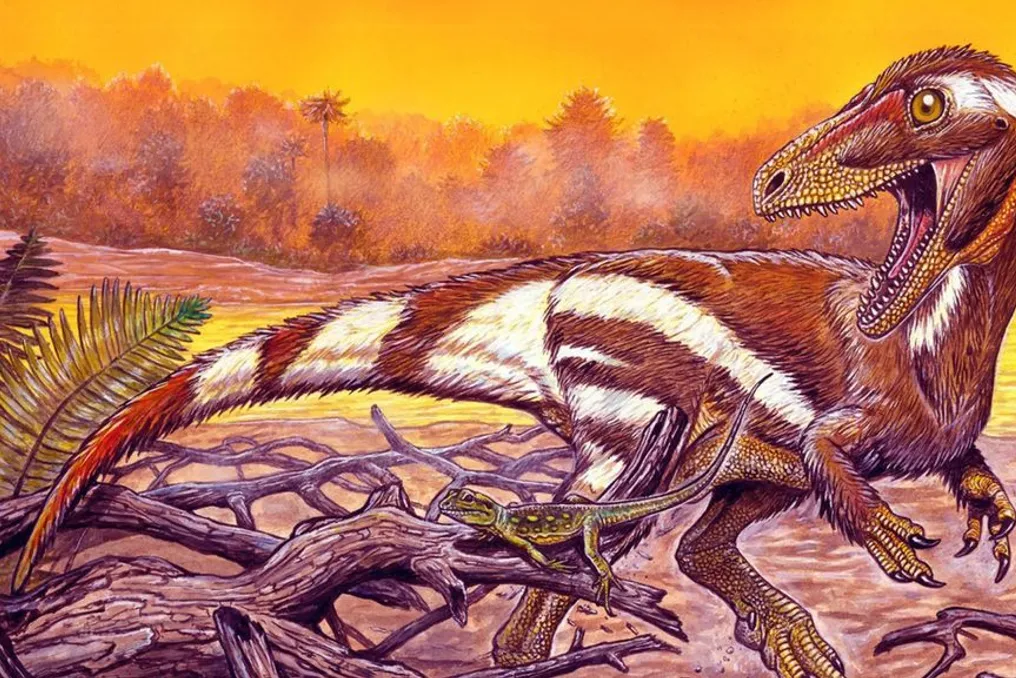
Recently, a study involving the Regional University of Cariri (URCA) and the Federal University of Rio de Janeiro (UFRJ) reported the identification of what appear to be fossilized red blood cells in a Brazilian dinosaur dated to 115 million years ago. The analyzed material comes from a leg bone of an Aratasaurus museunacionali, which inhabited the Chapada do Araripe region, on the border between Ceará, Pernambuco, and Piauí.

According to the researchers, this dinosaur was about three meters long and weighed approximately 34 kg. After its death, the body sank into an aquatic environment, where a layer of microorganisms grew over the carcass, burying it and allowing the preservation of its remains.

Paleontologist Alexander Kellner, director of the National Museum of UFRJ and co-author of the article published in the Proceedings of the National Academy of Sciences, stated that finding biochemical traces linked to biological components in a fossil older than 100 million years helps expand knowledge about what can be preserved over time. He emphasized that this offers a chance to investigate the history of these animals beyond their anatomical and skeletal characteristics.

Under the microscope, the team detected several microscopic structures located within vascular channels, which previously functioned as conduits for blood vessels in the bone. The morphology, size, and location of these structures were consistent with red blood cells.

This hypothesis gained greater support after chemical tests confirmed the presence of heme, a compound inherent to hemoglobin, the protein responsible for oxygen transport in blood.

Kliti Grice, the research author, explained to Live Science that the red blood cell-like structures were mineralized with hausmannite, a manganese oxide mineral (Mn3O4). Mineralization is the process by which fragile biological structures, which degrade easily, are replaced by more durable substances, allowing for the formation of fossils.

The researchers believe that this early mineralization contributed to stabilizing or replicating microscopic biological structures before they were completely destroyed, and that aspects of the associated chemistry survived, albeit modified.

However, not all experts agree that this discovery truly represents traces of blood. There is a reason for the skepticism: blood cells do not fossilize easily. Without the rigidity provided by bones and teeth, they decompose rapidly after death, leaving few traces for future studies.

For such cells to survive, exceptional conditions are necessary, such as anoxic environments that inhibit microbial activity, or minerals capable of stabilizing their structure. Even under these circumstances, proving their origin is a challenge, as certain minerals can imitate the rounded shape of cells under a microscope, generating distrust in any claim of 'ancient blood.'

Mary Schweitzer, a paleontologist at the North Carolina State University, USA, who did not participate in the study, raised objections. She pointed out to Live Science that the structures do not correspond to the expected appearance of red blood cells in non-mammalian animals. Unlike what occurs in mammals, birds, and reptiles, the Aratasaurus museunacionali did not exhibit this characteristic mark.

Additionally, it is possible that the microstructures found are remnants of fungi or other microbes that colonized the bones after death but before fossilization. However, if this were the case, the team found no signs of filaments, spores, biofilms, or other associated structures.

For the authors, the divergence of opinions is welcome. The Aratasaurus museunacionali fossil has been under investigation for at least 18 years, since its discovery in 2008. A notable aspect is that this specimen survived the 2018 fire that devastated the National Museum of UFRJ and part of its collection. Its name literally means 'lizard born of fire.'

Kellner informed Science that during this period, he sought a collaborator capable of analyzing the biomolecules and microstructures present in the National Museum's fossils. It was in this context that Grice emerged and accepted the challenge last year.
Similar stories

Brazilian fossil reveals structures similar to red blood cells and chemical traces of dinosaur hemoglobin
Read more
olhardigital.com.br

Brazilian fossil reveals structures similar to red blood cells and chemical traces of dinosaur hemoglobin

Brazilian researchers identified microscopic structures in a dinosaur fossil dating back approximately 115 million years, found in Brazil, that resemble red blood cells. This finding was made after analyzing a leg bone from Aratasaurus museunacionali, a species that inhabited the Northeast region of Brazil at the time.

The study not only pointed out these structures reminiscent of blood cells but also detected heme, an organic compound linked to hemoglobin, the protein responsible for oxygen transport in the blood. Scientists state that this is the first time such structures have been found in a fossil along with chemical evidence related to heme.

This work, conducted by scientists from Curtin University (Australia) and published in the Proceedings of the National Academy of Sciences (PNAS), opens new avenues for investigating the biological characteristics of prehistoric beings, covering topics such as metabolism and level of physical activity.

One of the most fascinating aspects of this discovery is the preservation capacity of biological materials over such an extended period. Generally, tissues and organic molecules deteriorate during the fossilization process, making it difficult to locate traces in such ancient fossils.

A possible explanation for this preservation involves hausmannite, a manganese mineral present in the analyzed material. Researchers suggest that this mineral may have aided in stabilizing or reproducing the cellular structures during fossilization, maintaining chemical signs that would normally be lost.

The team also speculates that the environmental conditions of preservation were crucial. The hypothesis raised in the study includes rapid burial in a location with low oxygen availability and microbial activity.

It is important to note, however, that this does not imply that the blood cells remained intact for 115 million years. The researchers' interpretation is that structures and chemical components linked to the animal's original biology left a mineralized record in the fossil.

Despite the results, the identification of these possible blood cells is not yet a consensus among all specialists. Mary Schweitzer, a paleontologist at the University of North Carolina State (USA), expressed caution when commenting to The Guardian. She observed that dinosaur red blood cells should possess a projection in the nucleus, resulting in a bulging appearance on both sides. In contrast, the structures found in the fossil are concave, which could suggest a different origin.

Nevertheless, researcher Schweitzer considered the chemical indicators of heme and collagen-associated components to be stronger. This debate underscores the need for further analyses to confirm the exact nature of the discovered structures.

Kliti Grice, the study leader, also advocates for prudence. She clarifies that the discovery does not mean that large and complex molecules, such as proteins or DNA, survived in such ancient fossils.

If the findings are validated by future research, the knowledge gained could help scientists investigate aspects of dinosaur physiology that are difficult to study using only bones and other conventional remains. The presence of molecular data can enrich studies on blood evolution, the metabolism of prehistoric animals, and their activity patterns.

The work also serves as a warning for fossils already stored in museums and universities. According to Grice, old collections may contain mineral, chemical, and microscopic information that has been overlooked in past evaluations. The researcher emphasizes that the purpose is not to find dinosaur DNA to recreate extinct species, but rather to understand how much molecular information can persist over millions of years.

Discovery of dinosaur bone in Peru may provide information about Earth's history
Read more
g1.globo.com

Discovery of dinosaur bone in Peru may provide information about Earth's history

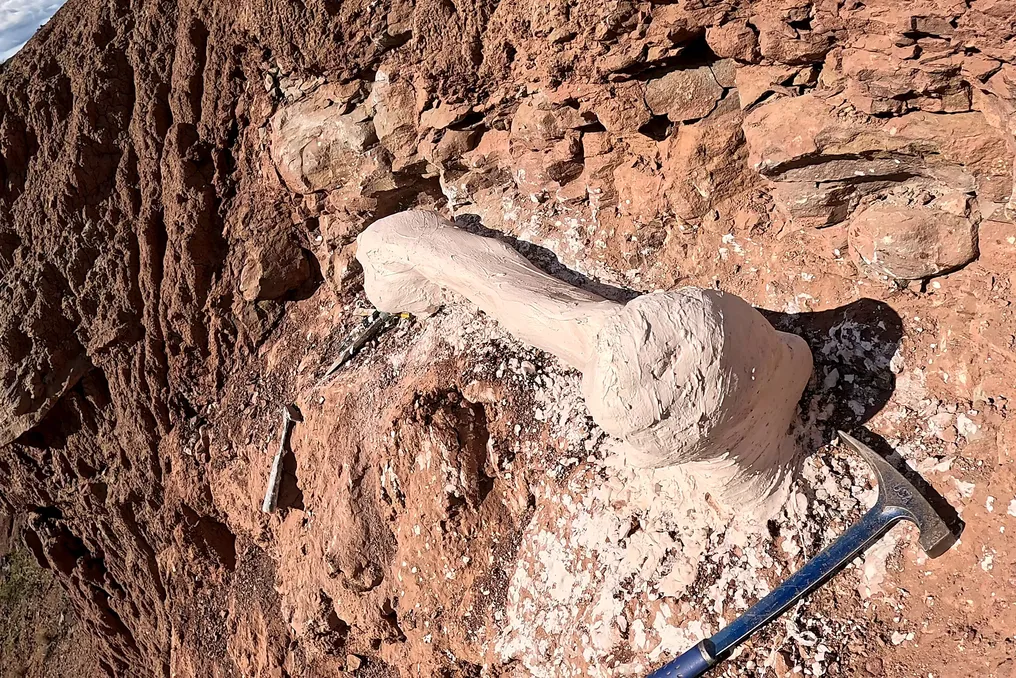
Near the end of a scientific expedition conducted in northern Peru, Brazilian and Peruvian researchers located traces of animals that lived on Earth millions of years before the emergence of humans. Among these findings, a very rare dinosaur bone stood out, surprising the scientists.

This fossil, identified as possibly the femur of a titanosaur, was found in July 2026 in the area of Bagua Grande, located approximately one thousand kilometers from Lima. The research involved the collaboration of specialists from the State University of Campinas (Unicamp).

Geologist Alessandro Batezelli, from Unicamp, commented that finding such a large and well-preserved fossil is an extraordinary feat, comparable to winning the lottery.

Titanosaurs were herbivorous dinosaurs notable for their long necks and enormous size, although questions remain about the animal to which this bone belonged.

An expedition, different discoveries

In addition to the possible titanosaur femur, scientists also recovered crocodile fossils, including a skull that, according to Batezelli, was unprecedented in that location. For Batezelli, the discovery of the dinosaur bone at the end of the work was a cause for celebration, and the material was publicly displayed for the first time through the EPTV report.

What happens after finding a fossil?

Locating the fossil in the field is only one phase of the paleontologists' work. Before any study, the material requires meticulous preparation, as fossils are found still encased in the rocks where they were preserved. It is essential to remove this rock matrix to expose the structures that will be subjected to analysis.

Paleontologist Max Cardoso Langer, from USP Ribeirão Preto, detailed that this process consists of removing the rock to allow for the fossil's analysis, aiming to determine if it is a new species or not, in addition to examining its anatomical characteristics.

This detailed analysis is what can offer more information about the dinosaur found in Peru and help scientists understand the fauna that inhabited that region.

For the researchers, investigating the extinct animals of Earth also serves as a way to understand the transformations undergone by the planet. Langer reflected that the Earth is not static, but rather a body that has undergone countless changes in the past and will continue to change in the future.

Millions of years separate dinosaurs from humanity, a period during which various species emerged, disappeared, and gave rise to new forms of life. The bone found in Peru is another element of this past that science seeks to reconstruct, and, as Batezelli pointed out, there is much more to be discovered.

Dinosaur Footprints Discovered at Paleontological Site in Chapada das Mesas, Maranhão
Read more
g1.globo.com

Dinosaur Footprints Discovered at Paleontological Site in Chapada das Mesas, Maranhão

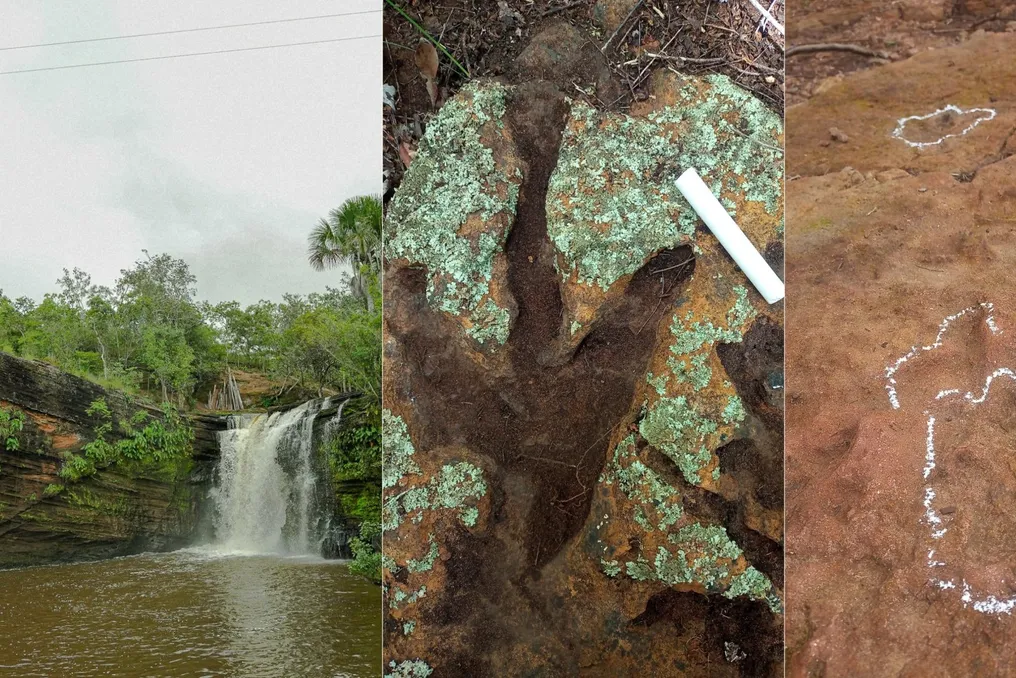
The Chapada das Mesas region, located in southern Maranhão, known for its waterfalls, canyons, and natural pools, also holds important vestiges of prehistory. In Fortaleza dos Nogueiras, visitors have the opportunity to see fossilized dinosaur footprints preserved in rocks at a paleontological site situated in Tangará Ecopark.

This paleontological site at Tangará Ecopark contains records where researchers identified a minimum of 78 dinosaur footprints, spread across seven areas of rocky outcrops.

The discovery was the subject of a scientific study published in June 2025 in the international journal Italian Journal of Geosciences. Scientists from the Federal University of Maranhão (UFMA) and other Brazilian institutions participated in the research.

The footprints were located in early 2024 during a tourist attraction survey conducted along the banks of the Mosquito River, in Fortaleza dos Nogueiras. A tourism professional from the Federal University of Maranhão (UFMA) noticed unusual marks on the rocks and sought out Professor Manuel Medeiros, who belongs to the Biology Department of the university.

After a technical inspection, researchers confirmed that the marks were indeed fossilized dinosaur footprints. This finding generated significant international repercussion.

The investigation involved a multidisciplinary team composed of researchers from UFMA, the Federal University of Rio de Janeiro (UFRJ), the Federal University of Rio Grande do Sul (UFRGS), and other entities. The results were published in the scientific article titled 'Jurassic dinosaurs from Brazil: the footprints from Parnaíba Province, Mosquito Formation,' which was part of a special edition of the Italian journal dedicated to 200 years of scientific studies on dinosaurs.

The research detailed five distinct types of footprints, called morphotypes, presenting variations in size and shape; some of them exhibit three-toed marks and traces of claws.

In addition to its scientific value, the paleontological site has been incorporated into the tourist offerings of Tangará Ecopark. The park's administration reports that visitors can examine the fossilized records through an activity called 'Trilha das Pegadas' (Footprint Trail), which is guided with specialized instruction. This route allows for the observation of the marks preserved in the rocks and knowledge of part of the region's geological history.

The monitored visitation also serves as a conservation strategy, since the fossils constitute a scientific heritage, and access control aims to prevent damage to the surfaces containing the marks of prehistoric animals. Tangará Ecopark recommends that this activity be scheduled and consulted with the park's team in advance.

The park also provides complete infrastructure for those wishing to enjoy other natural tourist spots, such as waterfalls, natural pools, trails, leisure and rest areas, in addition to offering restaurants and accommodation options.

Tangará Ecopark is located in the rural area of Fortaleza dos Nogueiras, a municipality in southern Maranhão, within the Chapada das Mesas tourist area. According to the administration, access is made starting from the municipal headquarters, traveling about 10 kilometers along highway MA-006 and another 4 kilometers on a dirt road to the destination.

To facilitate the journey, it is advisable to check the official location and ask the park staff for directions before starting the trip. The inclusion of the footprints expands the range of attractions in Chapada das Mesas, which is already sought after by tourists interested in natural landscapes, rock formations, and waterfalls. The marks preserved at Tangará Ecopark provide visitors with the chance to learn about a segment of Maranhão's prehistory, adding a historical and scientific appeal to ecotourism routes in the south of the state.

Popular