Success of asteroid deflection by nuclear explosion depends on radiation exposure detail
Read more
Olhar Digital
olhardigital.com.br

Success of asteroid deflection by nuclear explosion depends on radiation exposure detail

The possibility of preventing a dangerous asteroid from colliding with Earth using a nuclear explosion exists, but the success of this strategy critically depends on one unexpected factor: the side of the celestial object exposed to radiation. A new study showed that the incorrect shape of these heavenly bodies directly affects the maneuver's effectiveness.

The research, published in the scientific journal Icarus, was conducted by scientists from the Sandia National Laboratories in the United States. Using computer modeling, the team demonstrated that irradiating different parts of the same asteroid can lead to completely different results in its trajectory and rotation.

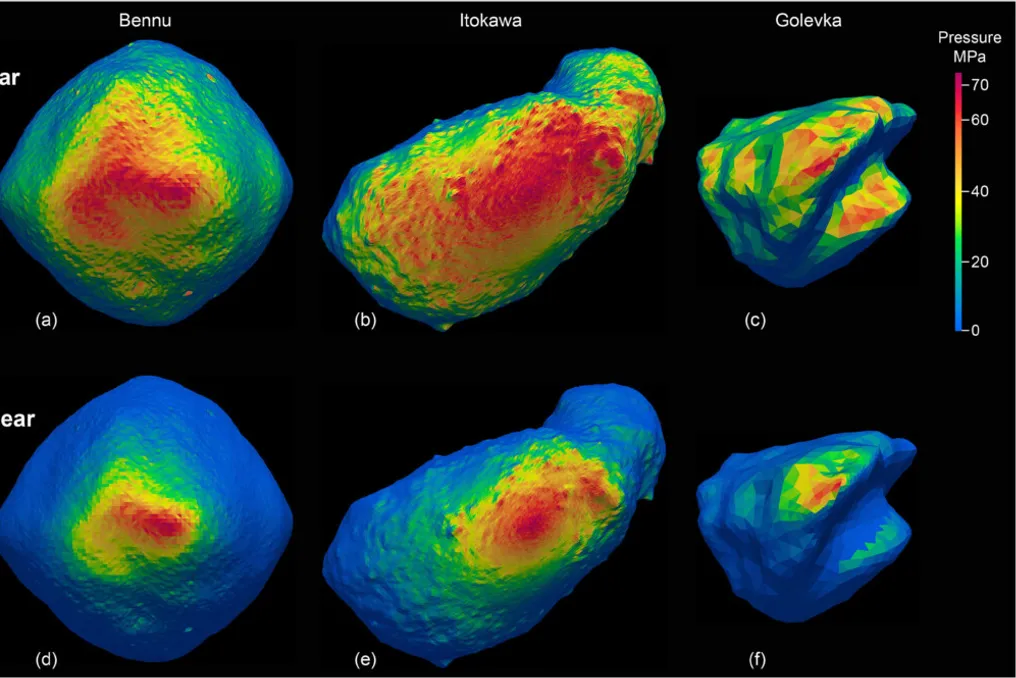
A difference of almost five times in the deflection speed of the same object was identified, which depended on the angle of the explosion. In one simulated scenario, the change in speed was 3.9 millimeters per second in one direction, but only 0.8 millimeters per second in another.

For another analyzed asteroid, the change in rotational speed varied by 17 times depending on the impact location.

The strategy under consideration is not simply destroying the celestial body. The idea is to cause a nuclear explosion at a certain distance, causing the X-rays released by the blast to reach part of the asteroid's surface. The radiation intensely heats the surface material, causing it to evaporate. The ejected material acts as a kind of engine, creating an impulse capable of changing the object's movement.

Modeling allows for tuning parameters such as the size and distance of the explosion, as well as the area receiving radiation. Based on this data, the program calculates how much material will evaporate, what impulse will be created, and how the asteroid's rotation will change. Furthermore, researchers can estimate the pressure exerted on different parts of the surface and determine the risk of material fragmentation.

The last aspect is particularly important. The goal of planetary defense is to deflect the asteroid, not to destroy it into smaller pieces that could still pose a threat to Earth. Despite promising results, the tool still has limitations. Currently, the model accounts for the fragmentation of surface rocks but cannot accurately predict the rupture of the entire asteroid body.

Scientists also emphasized that high-resolution three-dimensional images of the object, containing information about its shape from all sides, are necessary for operation. In a real emergency, there may not be enough time to collect such data. Another problem is placing the explosive device at the optimal distance and in the correct direction while the asteroid is moving in space.

Despite these difficulties, this study represents progress in preparing for potential cosmic threats. This tool can help calculate the most suitable intensity, distance, and direction of a nuclear explosion, thereby increasing the chances of deflecting a dangerous object before it reaches our planet.

Similar stories

Structure around dead star may predict the future of the Solar System
Read more
g1.globo.com

Structure around dead star may predict the future of the Solar System

Astronomers have discovered an unprecedented structure around a dead star in our universe: two separate rings formed by the remnants of ancient planetary bodies. This system orbits the white dwarf J1328−1450 and could potentially help scientists understand the fate of planets and other celestial bodies after a Sun-like star completes its life cycle.

A white dwarf is an extremely dense core left behind after a star like the Sun has exhausted its fuel, expanded, and lost its outer layers. During this process, nearby planets can be destroyed, while other bodies might survive only to fragment later, forming disks of dust and gas around the star.

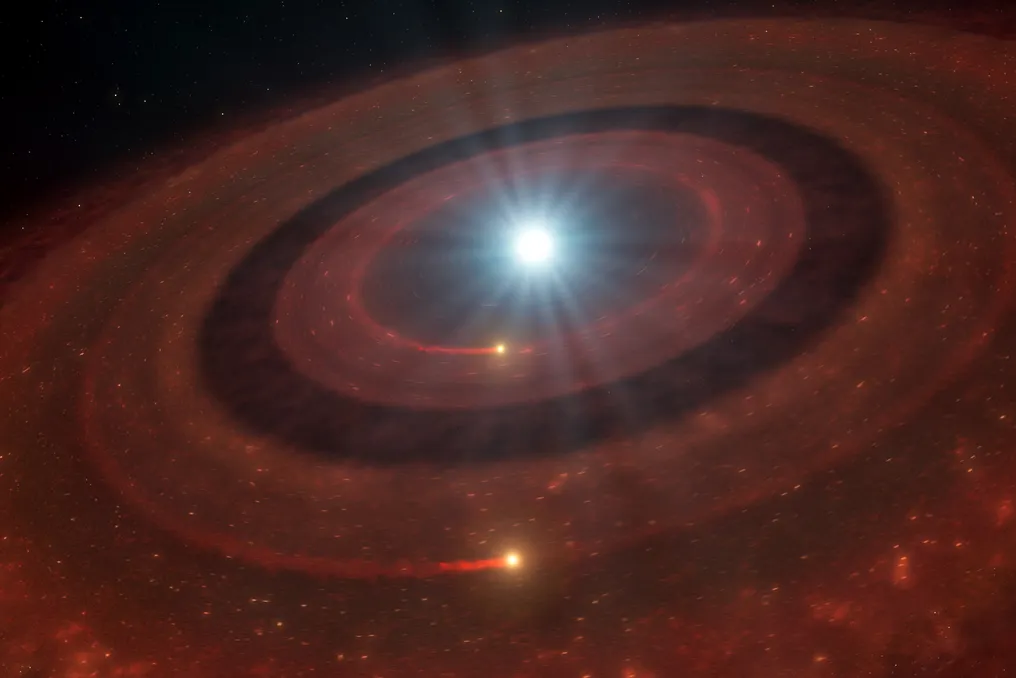
However, in the case of J1328−1450, astronomers found something different. Instead of one continuous disk, the remnants are distributed across two distinct rings separated by clear space. According to the authors, such a configuration has never been observed around a white dwarf before.

Bodies may survive the death of a star

“This is the first observation of a complex system with a double remnant disk and potentially two surviving planetesimals,” stated Nicola Gentile Fusillo, an astronomer from the University of Trieste in Italy and the study's lead author.

The researchers' main hypothesis is that two planetary bodies are still orbiting the white dwarf and helping to maintain the separation of the two rings. These objects were not directly detected; their existence was inferred based on the shape and behavior of the observed gas around the star.

The closest body could be asteroid-sized, while the farthest could be comparable to Ceres, Pluto, or even the Moon, depending on its composition and exact distance from the star. The study suggests that the presence of two bodies in different orbits also helps explain why the gas remains concentrated in two separate regions without filling the space between them.

Astronomers also identified differences in the composition of the two rings. The ring closer to the star is rich in magnesium, whereas the more distant one contains significantly less of this element. For the researchers, this may indicate that the remnants originated from two different planetary bodies. Another possibility is that they come from different parts of a single object, such as the inner and outer layers of an ancient planet or rocky body.

In addition to magnesium, elements such as calcium, oxygen, and iron were identified. The overall composition is similar to materials found in the inner part of our Solar System.

How does this relate to the future of the Solar System?

This system could serve as a kind of portrait of a very distant phase in the future of our own Solar System. In billions of years, the Sun will also turn into a white dwarf. Before this happens, it will expand and drastically change the surrounding system, potentially destroying the nearest planets.

Some bodies that survive this transformation may continue to orbit the Sun's remnant. Over time, collisions and other interactions can fragment them and scatter the remnants around the star. This is the scenario astronomers observe in J1328−1450.

Filipe Lagos-Vilches, a co-author of the study, noted: “This system offers a remarkable view of what the future of planetary systems, including ours, might look like.” The discovery also demonstrates that the end of a planetary system can be more complex than previously assumed.

According to the researchers, the ring structure found around the dead star resembles formations observed in disks around young stars where planets are still forming. This similarity suggests that processes capable of organizing matter into rings may operate during both the birth and final stages of planetary systems.

Chernobyl Particles Retain Nuclear Fuel After 40 Years Since the Accident
Read more
olhardigital.com.br

Chernobyl Particles Retain Nuclear Fuel After 40 Years Since the Accident

Four decades after the nuclear disaster in Chernobyl, microscopic particles released by the destroyed reactor continue to retain a significant portion of the original nuclear fuel structure. This finding surprised researchers from Leibniz University Hannover in Germany, who discovered higher chemical stability than expected in six radioactive fragments.

The results obtained may help understand how disaster waste transforms over time and assess the environmental risks associated with radioactive contamination. However, the discovery does not mean the region is safe; the material remains hazardous, and scientists emphasize the need for more comprehensive studies, according to information from Science Alert portal.

The analyzed particles range in size from 8 to 50 micrometers and were collected at two locations in the Chernobyl Exclusion Zone in Ukraine. Researchers divided the fragments into three categories based on the changes caused by the 1986 accident and the extreme conditions inside the reactor.

The first group includes particles that remain chemically and physically similar to the original uranium dioxide nuclear fuel. The second category consists of fragments partially or completely covered with a protective layer of zirconium, or fused with it due to high temperatures during the catastrophe. The third class resulted from the burning of graphite, which was used as a reactor moderator. This fire lasted ten days and contributed to the oxidation of the fuel, forming various uranium compounds.

These differences in chemical composition may affect the rate of degradation of each type of particle in the environment. To study the state of the fragments after four decades, scientists used X-ray diffraction—a method that allows the study of the material's crystalline structure through its interaction with radiation.

The procedure required rotating each particle within a concentrated beam of X-rays in the 100-micrometer range, which is approximately the thickness of a hair. Researchers conducted measurements at 200 different angles to record reflections and reconstruct the internal structure of the fragments.

The analysis showed that the crystalline structure responsible for retaining the nuclear fuel remained virtually undamaged in the samples studied. This indicates that these particles are chemically more stable than scientists had assumed and may act as permanent reservoirs of radioactive material.

This characteristic may have a positive environmental aspect: since part of the radioactive product remains contained within the fragment structure, its release into the soil and other environmental components may occur slower than previously thought. However, the observed stability does not eliminate the danger. Radioactive material is still present and can remain in the environment for decades. If the particles are lifted into the air by wind, erosion, or animals, they can be inhaled, posing a serious health threat.

Furthermore, the results are based only on six fragments obtained from two locations. Since each particle has its own characteristics, the sample is too small to draw general conclusions about the behavior of all radioactive waste dispersed in the region. According to the researchers, even future studies revealing average degradation patterns will not allow predicting the behavior of all fragments, as some particles may be more resistant and release radionuclides later.

Cosmic explosion 2.4 billion light-years from Earth may have affected the planet's atmosphere
Read more
olhardigital.com.br

Cosmic explosion 2.4 billion light-years from Earth may have affected the planet's atmosphere

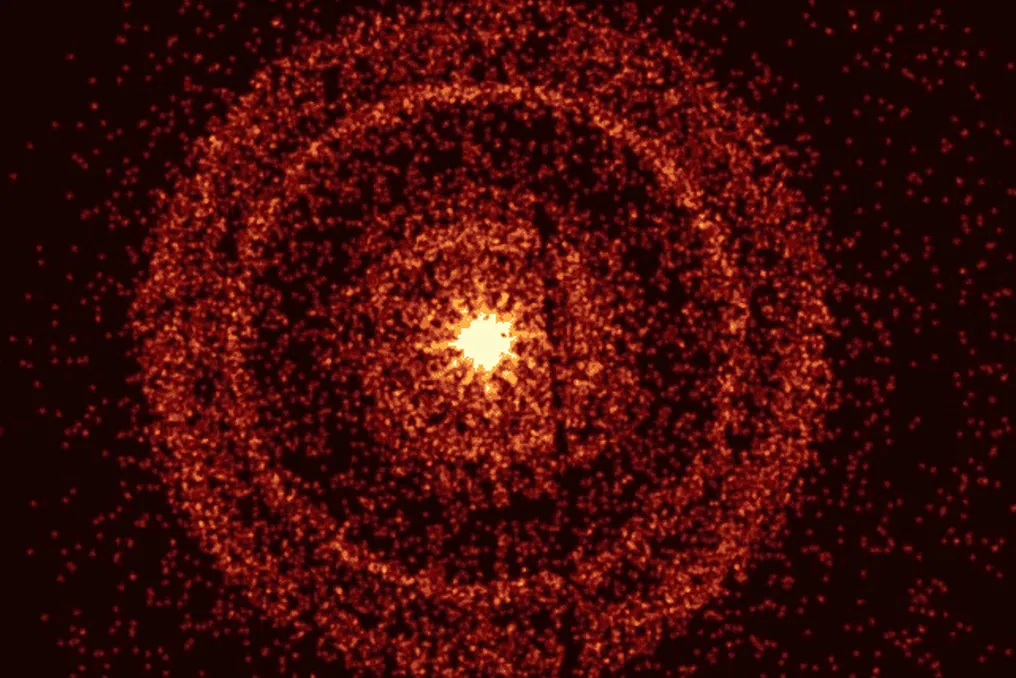
An intense cosmic explosion, known as BOAT (The Brightest of All Time), occurred on October 9, 2022, and reached Earth with a radiation wave capable of altering the ionosphere, one of the atmospheric layers. This phenomenon has attracted the attention of astronomers and continues to spark debate regarding its actual impact on the planet.

This event was identified as GRB 221009A and belongs to the category of Gamma-Ray Bursts (GRBs)—some of the most powerful energy releases in the Universe. They occur when very massive stars collapse, forming a black hole and ejecting jets of particles at speeds close to the speed of light.

Estimates suggest that this event could have been the brightest observed on Earth in approximately the last ten thousand years. According to NASA data, the explosion was so powerful that it temporarily overloaded gamma-ray detectors on various spacecraft.

One example is NASA's Fermi Gamma-ray Space Telescope. Two instruments on the observatory—the Gamma-ray Burst Monitor (GBM) and the Large Area Telescope (LAT)—encountered limitations in registering radiation during the most intense moments of the event.

The INTEGRAL mission, representing the European Space Agency's (ESA) International Laboratory for Gamma-ray Astrophysics, was also affected by BOAT. A study conducted by the Institute of Astrophysics of Andalusia in Spain and published in the journal Astronomy & Astrophysics in 2024 showed that the received radiation was sufficient to saturate the Anti-Coincidence Shield (ACS) and parts of the Imaging Spectrometer (ISGRI) detectors, which degraded data collection during the burst.

To overcome this issue, researchers used data from another INTEGRAL detector—the Microcalorimeter (MCAL)—which was not affected by saturation, to estimate the radiation intensity. Furthermore, they referred to data from the European probe BepiColombo, heading to Mercury, which registered the burst using the Mercury Gamma-ray and Neutron Spectrometer (MGNS). This instrument detected radiation in the energy range of 280 to 460 kilo-electron volts, recording a sequence of pulses lasting about 6.6 minutes.

Scientists combined measurements from two spacecraft to estimate the burst intensity during times when other INTEGRAL detectors were overloaded. This comparison allowed for the reconstruction of part of the signal that could not be measured directly.

Despite the exceptional intensity of the radiation, no signs of permanent physical damage to the spacecraft were found; the problem lay in the temporary overloading of the detectors, which affected some measurements.

The first signal was recorded at 13:16:59 UTC by the Fermi GBM instrument. Other space installations, including the Neil Gehrels Swift Observatory, also detected this radiation. The combination of observations allowed for the study of the phenomenon across different wavelengths and tracking the radiation after the initial flare.

Data indicated that the explosion occurred in a distant galaxy, approximately 2.4 billion light-years from Earth, although this distance may vary depending on the cosmological measurement method used. Even traversing such a vast distance, the radiation reached Earth with enough intensity to cause detectable effects in the atmosphere.

A spectroscopic measurement published in 2025 estimated the light distance at approximately 745 megaparsecs, equivalent to about 2.43 billion light-years. The ionosphere is a region of the atmosphere located between altitudes of 50 and 1000 kilometers. In it, solar radiation and other energy sources knock electrons out of atoms and molecules, forming charged particles. These changes affect the propagation of radio waves and can be detected by scientific instruments.

In November 2025, a study published in Geophysical Research Letters presented evidence that the explosion increased the electron density in the lower ionosphere, at an altitude of 50 to 90 kilometers. Researchers noticed changes in the propagation speed of extremely low frequency radio waves caused by lightning. This disturbance lasted for about 40 minutes.

The team also identified discrepancies between monitoring methods: some measurements showed signals related to radiation passage, while others, such as Schumann resonance observations, did not show obvious changes. The results suggested that the explosion caused a specific reaction in the ionosphere, different from what is usually observed during solar storms.

However, a study placed in the arXiv preprint repository in May of this year revised other changes previously attributed to BOAT. The authors analyzed data from different altitudes and concluded that some anomalies in satellite measurements, electron content, and equatorial electric circulation could be explained by natural conditions and instrumental limitations. The work did not find a consistent increase in total electron content that could be directly linked to the explosion. The authors also identified variations that occurred regularly under certain lighting conditions or began before the event itself. Since the text is still awaiting peer review, its conclusions should be considered in the context of independent scientific evaluation.

According to Marcelo Zurita, president of the Paraiban Astronomy Association (APA), member of the Brazilian Astronomical Society (SAB), technical director of the Brazilian Meteor Observation Network (BRAMON), and columnist for Olhar Digital, it is important to emphasize that this study does not call into question the fact of BOAT or the data recorded by the Institute of Astrophysics of Andalusia's gamma-ray detectors.

The expert explained: 'It disputes the effects of this GRB, and consequently, other gamma-ray bursts on the Earth's ionosphere in the 2025 paper.' He added: 'The ability of these explosions to affect the atmosphere has been discussed in the scientific community for many years. Thus, this study may finally resolve this controversy. If it is proven that the most powerful gamma-ray burst did not cause significant effects in our ionosphere, we can conclude that none of the others will be able to do so.'

This event remains important for astronomy as it helps investigate the interaction of extragalactic explosions with the Earth's environment. The research also highlights the need to use various instruments and independent analyses to separate the effects of cosmic phenomena from natural atmospheric fluctuations.
Popular